Lithium Toxicity in Adults
Comprehensive evidence-based guide to lithium toxicity covering pharmacokinetics, acute vs chronic presentations, clinical features, EXTRIP hemodialysis criteria, and critical care management.
What matters first
Comprehensive evidence-based guide to lithium toxicity covering pharmacokinetics, acute vs chronic presentations, clinical features, EXTRIP hemodialysis criteria, and critical care management.
Check the red flags, emergency triggers, and escalation points before using the deep-dive material.
17 Jan 2026
Generated educational material; verify before clinical use.
Visible references section
See the concept before reading it
Study the key anatomy, imaging, and decision pathways as full teaching plates.
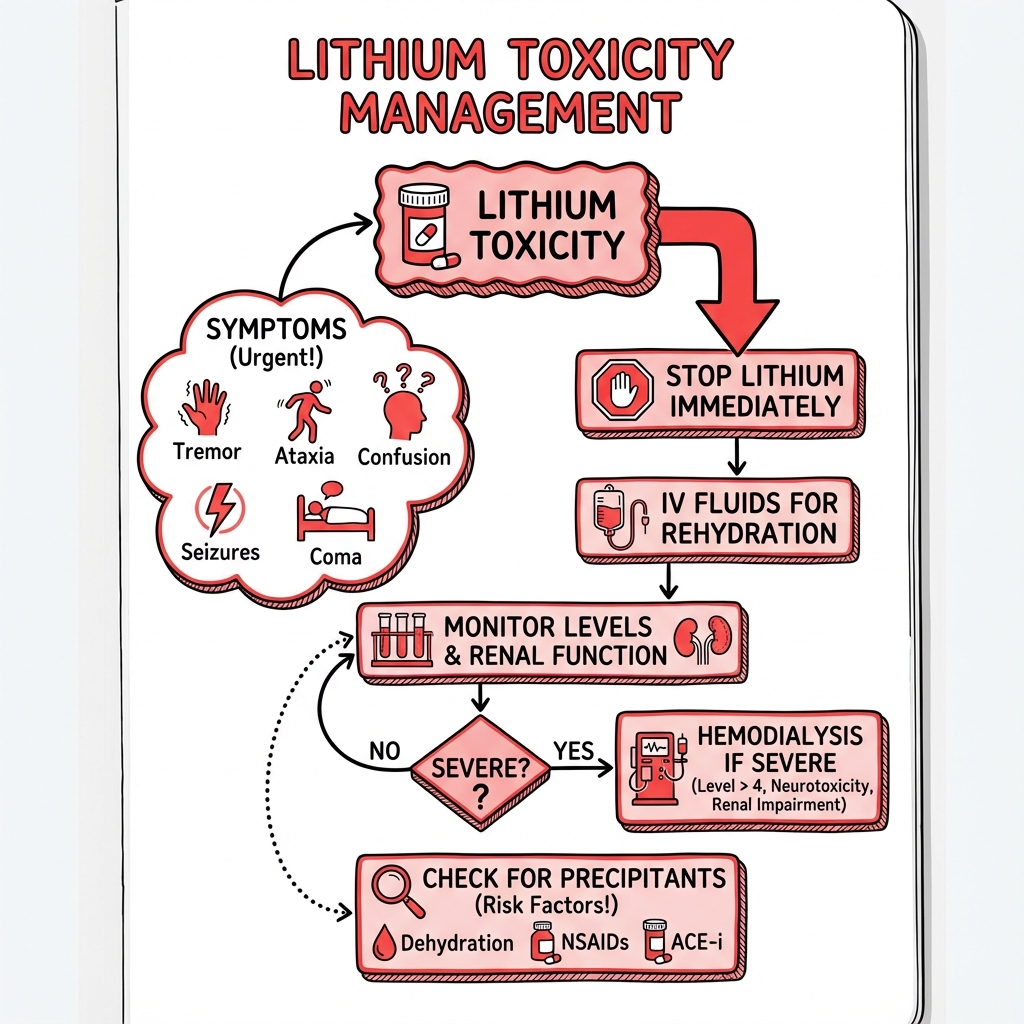
Clinical board
A visual summary of the highest-yield teaching signals on this page.
Exam focus
Current exam surfaces linked to this topic.
- MRCP
Linked comparisons
Differentials and adjacent topics worth opening next.
- Serotonin Syndrome
- Neuroleptic Malignant Syndrome
Content status and exam context
This page is AI-generated educational content. It may contain errors or omissions and is not a substitute for current guidelines, local protocols, senior clinical judgement, or professional medical advice.
MedVellum does not claim an individual clinician reviewer, board certification, or professional credential for this page unless a future version names a real, verifiable reviewer.
Clinical explanation and evidence
Lithium Toxicity in Adults
Quick Reference Card
Critical Alert: LIFE-THREATENING EMERGENCY: Lithium toxicity causes severe neurotoxicity that may be irreversible. Chronic toxicity is paradoxically more dangerous than acute overdose at the same serum level due to established tissue distribution. [1]
Critical Decision Points
| Parameter | Threshold | Action |
|---|---|---|
| Serum lithium | > 4.0 mmol/L | Emergent hemodialysis regardless of symptoms |
| Chronic toxicity | > 2.5 mmol/L with symptoms | Hemodialysis indicated |
| Acute overdose | > 5.0 mmol/L | Hemodialysis indicated |
| Neurological symptoms | Altered consciousness, seizures | Hemodialysis + ICU |
| Renal impairment | eGFR less than 45 with toxicity | Lower threshold for dialysis |
| Rebound | Rise > 1.0 mmol/L post-HD | Repeat hemodialysis |
Key Diagnostic Triad
- History of lithium use (therapeutic or overdose)
- Neurological dysfunction (tremor → ataxia → coma)
- Elevated serum lithium level (interpret in clinical context)
Emergency Management Summary
IMMEDIATE ACTIONS:
1. IV access, cardiac monitoring, ECG
2. Serum lithium level + BMP + calcium + TSH
3. Volume resuscitation with 0.9% NaCl
4. Stop lithium and precipitating medications (NSAIDs, ACEi, diuretics)
5. Consider whole bowel irrigation for sustained-release ingestion
6. Early nephrology consultation for hemodialysis criteria
7. Serial lithium levels every 2-4 hours until declining
8. Post-dialysis level at 6 hours (expect rebound)
Overview
Lithium toxicity represents a critical toxicological emergency arising from lithium's exceptionally narrow therapeutic index, with therapeutic levels of 0.6-1.0 mmol/L separated by only a small margin from toxic concentrations. [1,2] First introduced for psychiatric treatment in 1949 by John Cade, lithium remains the gold-standard mood stabilizer for bipolar disorder, with proven efficacy in reducing suicide risk that no other medication has demonstrated. [3]
Despite its clinical benefits, lithium's toxicological profile creates significant challenges. The drug is handled by the kidney similarly to sodium, meaning any condition affecting sodium balance or renal function directly impacts lithium clearance. [4] This pharmacokinetic vulnerability, combined with lithium's extensive CNS penetration over time, creates a scenario where chronic toxicity paradoxically causes more severe clinical manifestations than acute overdose at equivalent serum levels. [1,5]
Understanding this distinction between acute and chronic toxicity is fundamental to appropriate management. In acute overdose, high serum levels may be observed before significant tissue distribution has occurred, allowing time for intervention. In contrast, chronic toxicity develops insidiously with tissue equilibration, meaning even modest elevations in serum lithium reflect substantial intracellular accumulation, particularly in the brain. [5,6]
Clinical Pearl: The clinical pearl that distinguishes experienced toxicologists: "Treat the patient, not the number." A patient with chronic lithium toxicity and altered mental status at 2.0 mmol/L requires more aggressive intervention than an alert patient with acute overdose at 3.5 mmol/L.
Epidemiology
Incidence and Prevalence
Lithium toxicity affects a substantial proportion of patients on long-term therapy, reflecting both the drug's narrow therapeutic window and the complexity of factors influencing lithium pharmacokinetics. [7]
| Epidemiological Parameter | Value | Source |
|---|---|---|
| Patients experiencing toxicity during treatment | 75-90% (at least once) | [7] |
| Incidence of severe toxicity requiring intervention | 0.1-0.2% per treatment year | [8] |
| Hospital admissions for lithium toxicity | 0.14-0.82 per 100,000 population annually | [9] |
| Mortality in severe toxicity with treatment | less than 1% | [1] |
| Mortality without appropriate treatment | Up to 25% | [6] |
| SILENT syndrome (permanent neurological sequelae) | 10-15% of severe cases | [10] |
Risk Factor Profile
Exam Detail: High-Yield Risk Factors for Examinations:
The EXTRIP workgroup identified key precipitants that should trigger heightened vigilance: [1]
Patient Factors:
- Age > 60 years (reduced GFR, decreased total body water)
- Baseline CKD (eGFR less than 60 mL/min/1.73m2)
- Heart failure (reduced renal perfusion)
- Hypothyroidism (lithium-induced, reduces clearance)
- Cognitive impairment (medication errors)
Pharmacological Precipitants (crucial exam content):
- NSAIDs: Reduce prostaglandin-mediated renal blood flow, decrease GFR by 15-25%
- ACE inhibitors/ARBs: Reduce GFR and enhance proximal tubular lithium reabsorption
- Thiazide diuretics: Increase proximal tubular sodium and lithium reabsorption (30-40% increase in lithium levels)
- Loop diuretics: Less effect but volume depletion still problematic
- COX-2 inhibitors: Same mechanism as traditional NSAIDs
Physiological Stressors:
- Dehydration (any cause: gastroenteritis, fever, heat exposure, reduced intake)
- Sodium depletion (low-salt diet, vomiting, diarrhea)
- Acute intercurrent illness (infection, surgery, trauma)
Type Distribution
Analysis of lithium toxicity presentations reveals distinct patterns: [8,11]
| Type | Percentage | Typical Precipitant | Prognosis |
|---|---|---|---|
| Chronic toxicity | 40-50% | Drug interaction, illness, dehydration | Worse at lower levels |
| Acute overdose | 25-35% | Intentional self-harm | Better with prompt treatment |
| Acute-on-chronic | 20-30% | Additional ingestion on maintenance | Intermediate |
Pathophysiology
Pharmacokinetics
Understanding lithium pharmacokinetics is essential for predicting toxicity patterns and guiding management. Lithium demonstrates unique characteristics that distinguish it from most other pharmaceuticals. [4,12]
| Parameter | Value | Clinical Significance |
|---|---|---|
| Absorption | Rapid, complete (100%) | Peak 1-2h (IR), 4-6h (SR), up to 12h in overdose |
| Distribution | Vd 0.7-1.0 L/kg (total body water) | Slow CNS equilibration (24-48h steady state) |
| Protein binding | None (0%) | Freely filtered at glomerulus |
| Metabolism | None | Excreted unchanged |
| Elimination | Renal (95%) | T1/2 18-36h normal; 36-72h in toxicity |
| Renal handling | 80% reabsorbed in proximal tubule | Competes with sodium |
Exam Detail: Molecular Mechanisms of Toxicity:
Lithium exerts toxicity through multiple cellular pathways that explain its diverse clinical manifestations:
1. Ion Channel Competition: Lithium (ionic radius 0.76 angstrom) competes with sodium (0.95 angstrom), potassium (1.33 angstrom), magnesium (0.65 angstrom), and calcium (0.99 angstrom) at cellular channels and transporters. This competition disrupts normal neuronal electrochemical gradients. [12]
2. Second Messenger Inhibition:
- Inhibits inositol monophosphatase, depleting inositol and reducing phosphatidylinositol signaling
- Inhibits glycogen synthase kinase-3 beta (GSK-3beta), affecting multiple downstream pathways
- Reduces cAMP production through adenylyl cyclase inhibition [4,12]
3. Neurotransmitter Effects:
- Reduces dopamine and norepinephrine release
- Enhances serotonergic transmission
- Increases GABA neurotransmission
- These effects explain both therapeutic action and CNS toxicity [12]
4. Renal Mechanisms:
- Collecting duct: Inhibits aquaporin-2 insertion, causing nephrogenic diabetes insipidus
- Collecting duct: Reduces ADH sensitivity through GSK-3beta inhibition
- Tubular: Causes chronic tubulointerstitial nephritis with prolonged exposure [13]
5. Thyroid Effects:
- Inhibits thyroid hormone synthesis and release
- Blocks TSH receptor signaling
- Causes hypothyroidism in 20-40% of long-term users [14]
Why Chronic Toxicity Is More Dangerous
This concept is fundamental to understanding lithium toxicity management:
Acute Overdose:
- High serum levels but limited tissue distribution
- CNS levels lag behind serum levels by 24-48 hours
- Brain:serum lithium ratio approximately 0.5-0.8
- Time window for intervention before severe toxicity develops
Chronic Toxicity:
- Steady-state equilibration between serum and tissues
- Brain lithium concentrations equal or exceed serum levels
- Tissue saturation means even small increases cause toxicity
- Serum level underestimates total body lithium burden
- Neurological symptoms appear at lower serum levels
Clinical Pearl: The Tissue Saturation Principle: In chronic toxicity, the patient presenting with confusion and ataxia at lithium 2.2 mmol/L has achieved complete tissue equilibration. Their brain lithium concentration may equal or exceed their serum level. In contrast, the patient with acute overdose and lithium 4.0 mmol/L may have brain levels only 50-60% of serum concentration. This explains why chronic toxicity at lower levels produces more severe manifestations.
Precipitating Factors: Mechanisms
| Factor | Mechanism | Magnitude of Effect |
|---|---|---|
| Dehydration | Reduced GFR, increased proximal reabsorption | 50-100% increase in levels |
| Sodium depletion | Enhanced proximal tubular lithium reabsorption | 30-50% increase |
| NSAIDs | Prostaglandin inhibition reduces renal blood flow | 15-25% reduction in clearance |
| ACE inhibitors | Reduce GFR, enhance proximal reabsorption | 25-35% increase in levels |
| ARBs | Similar mechanism to ACEi | 20-30% increase |
| Thiazides | Volume contraction, enhanced proximal reabsorption | 30-40% increase |
| Loop diuretics | Less direct effect; mainly through volume depletion | 10-20% increase |
| Acute kidney injury | Reduced elimination | Proportional to GFR reduction |
| Fever/Infection | Dehydration, systemic effects | Variable |
Clinical Presentation
Toxicity Classification Systems
Two classification systems are commonly used and frequently appear in examinations:
Classification by Mechanism (EXTRIP): [1]
| Type | Definition | Key Features |
|---|---|---|
| Acute | No previous lithium exposure | GI symptoms early; neuro symptoms delayed; higher levels tolerated |
| Acute-on-chronic | Acute ingestion in patient on maintenance | Mixed features; moderate severity |
| Chronic | Toxicity in patient on stable lithium therapy | Insidious onset; neurological predominance; severe at lower levels |
Classification by Severity: [1,6]
| Grade | Lithium Level | Clinical Features |
|---|---|---|
| Mild | 1.5-2.5 mmol/L (chronic) | Nausea, vomiting, diarrhea, fine tremor, lethargy |
| Moderate | 2.5-3.5 mmol/L (chronic) | Coarse tremor, ataxia, dysarthria, confusion, fasciculations, hyperreflexia |
| Severe | > 3.5 mmol/L (chronic) | Coma, seizures, myoclonus, cardiovascular collapse |
System-Specific Manifestations
Neurological Features (Hallmark of Toxicity)
Neurological toxicity is the defining feature of lithium poisoning and determines severity grading: [6,10]
| Severity | Neurological Manifestations |
|---|---|
| Mild | Fine tremor (postural/action), mild lethargy, muscle weakness, difficulty concentrating |
| Moderate | Coarse tremor, gait ataxia, cerebellar signs, slurred speech (dysarthria), nystagmus, confusion, agitation, fasciculations, hyperreflexia |
| Severe | Stupor, coma, generalized seizures, myoclonus, choreoathetoid movements, rigidity, opisthotonos, absence of brainstem reflexes |
Critical Alert: SILENT Syndrome (Syndrome of Irreversible Lithium-Effectuated Neurotoxicity): Occurs in 10-15% of severe toxicity cases despite appropriate treatment. Features include:
- Persistent cerebellar dysfunction (ataxia, dysarthria, intention tremor)
- Cognitive impairment
- Basal ganglia dysfunction (choreoathetosis, parkinsonism)
- Dementia in severe cases Risk factors: Delayed treatment, chronic toxicity, pre-existing brain pathology, concomitant neuroleptic use. [10]
Gastrointestinal Features
GI symptoms typically appear early, especially in acute toxicity: [6]
- Nausea and vomiting (earliest symptom, often dose-limiting)
- Diarrhea (watery, may be profuse)
- Abdominal cramping
- Metallic taste
- Anorexia
Cardiovascular Features
Lithium affects cardiac conduction through competition with potassium and calcium: [15]
| Finding | Frequency | Mechanism |
|---|---|---|
| T-wave flattening/inversion | Common (30-40%) | Altered repolarization |
| ST-segment changes | Occasional | Nonspecific |
| QTc prolongation | Occasional (10-20%) | Delayed repolarization |
| Sinus bradycardia | Occasional | Vagal effects |
| Sinus node dysfunction | Rare but reported | Direct toxicity |
| First-degree AV block | Rare | Conduction delay |
| U waves | Occasional | Hypokalemia if present |
Exam Detail: ECG Changes in Lithium Toxicity: The ECG in lithium toxicity resembles hypokalemia despite normal serum potassium. This is because lithium competes with potassium at cardiac ion channels, producing "functional hypokalemia" at the cellular level. Always obtain an ECG, but cardiovascular instability is uncommon unless toxicity is severe.
Renal Features
Both acute and chronic renal effects occur: [13]
Acute Effects (in toxicity):
- Acute kidney injury (prerenal from dehydration; intrinsic from direct toxicity)
- Reduced urine concentrating ability
Chronic Effects (long-term lithium use):
- Nephrogenic diabetes insipidus (up to 40% of long-term users)
- Polyuria (> 3L/day)
- Polydipsia
- Dilute urine despite dehydration
- Chronic tubulointerstitial nephritis
- Chronic kidney disease (develops in 15-20% after > 10 years)
- Microcysts in kidneys (radiological finding)
Endocrine Features
| Condition | Prevalence | Mechanism |
|---|---|---|
| Hypothyroidism | 20-40% | Inhibits thyroid hormone synthesis/release |
| Goiter | 10-15% | TSH stimulation from hypothyroidism |
| Hypercalcemia | 10-25% | Hyperparathyroidism |
| Hyperthyroidism (rare) | less than 1% | Thyroiditis |
Clinical Examination Findings
Systematic Examination Approach
Exam Detail: OSCE/Clinical Examination Framework:
General Inspection:
- Level of consciousness (GCS)
- Tremor at rest and with posture
- Abnormal movements (myoclonus, choreoathetosis)
- Signs of dehydration (dry mucous membranes, reduced skin turgor)
Neurological Examination:
- Mental state: Orientation, attention, memory
- Cranial nerves: Nystagmus, facial weakness, dysarthria
- Motor: Tone (rigidity vs hypotonia), power, fasciculations
- Coordination: Finger-nose test, heel-shin test, rapid alternating movements
- Reflexes: Hyperreflexia early, hyporeflexia later
- Gait: Ataxia (cerebellar > vestibular pattern)
- Romberg test
Cardiovascular Examination:
- Heart rate and rhythm
- Blood pressure (may be low from dehydration)
Thyroid Examination:
- Goiter (chronic lithium use)
- Signs of hypothyroidism (bradycardia, dry skin, delayed reflexes)
Fluid Status:
- Assess for dehydration (precipitant)
- Assess for volume overload (post-resuscitation, renal failure)
SILENT Mnemonic for Chronic Toxicity
A useful examination aid for identifying chronic lithium toxicity features:
| Letter | Feature | Comment |
|---|---|---|
| S | Sedation, lethargy | May be subtle initially |
| I | Increased reflexes (early) then decreased | Progression indicates severity |
| L | Lower limb weakness | Proximal myopathy pattern |
| E | Extrapyramidal signs | Rigidity, cogwheeling |
| N | Nystagmus | Horizontal > vertical |
| T | Tremor (coarse) | Distinguishes from therapeutic fine tremor |
Red Flags
Critical Alert: Immediate Life Threats Requiring Emergency Intervention:
| Red Flag | Concern | Immediate Action |
|---|---|---|
| GCS less than 12 | Severe CNS toxicity | Intubation consideration, emergent HD |
| Seizures | Severe toxicity, SILENT risk | Benzodiazepines, HD, ICU |
| Lithium > 4.0 mmol/L | Life-threatening | Emergent HD regardless of symptoms |
| Chronic toxicity + level > 2.5 + symptoms | Established tissue distribution | HD indicated |
| Cardiovascular instability | Cardiac toxicity | ICU, HD, consider CRRT if unstable |
| Rising lithium levels | Ongoing absorption (SR preparation) | Extended WBI, repeat levels |
| Renal failure + toxicity | Impaired elimination | HD indicated at lower thresholds |
| Neuroleptic co-ingestion | Increased SILENT risk | Aggressive treatment |
Risk Stratification
High-Risk Features (warrant aggressive management):
- Chronic toxicity pattern (tissue equilibration)
- Age > 60 years
- Pre-existing renal impairment
- Concomitant nephrotoxic medications
- Delayed presentation (> 24 hours after onset)
- Co-ingestion of neuroleptics or tricyclics
Lower-Risk Features (may observe with serial levels):
- Acute isolated overdose in young patient
- Minimal symptoms despite elevated level
- Normal renal function
- Level declining on serial measurements
- No sustained-release preparation ingested
Differential Diagnosis
Conditions Mimicking Lithium Toxicity
| Condition | Distinguishing Features | Key Investigations |
|---|---|---|
| Serotonin syndrome | Hyperthermia, hyperreflexia (lower > upper limbs), clonus, recent serotonergic drug change | Clinical diagnosis, may have elevated CK |
| Neuroleptic malignant syndrome | Severe rigidity (lead-pipe), hyperthermia (> 38C), recent antipsychotic change/initiation | Elevated CK (often very high), leukocytosis |
| Thyroid storm | Hyperthyroidism history, fever, tachycardia, lid lag, goiter | Suppressed TSH, elevated free T4/T3 |
| Encephalitis | Fever, headache, CSF pleocytosis | Lumbar puncture, MRI brain |
| Metabolic encephalopathy | Known liver/renal disease, specific electrolyte abnormalities | LFTs, ammonia, electrolytes |
| Posterior circulation stroke | Acute onset, focal neurological signs, vascular risk factors | CT/MRI brain with diffusion weighting |
| Nonconvulsive status epilepticus | May have subtle motor signs, fluctuating consciousness | EEG |
| Other drug toxicity | Specific toxidrome, medication history | Drug levels, toxicology screen |
Clinical Pearl: Differentiating Serotonin Syndrome from Lithium Toxicity: Both can present with tremor and altered mental status. Key distinguishing features:
- Serotonin syndrome: Lower limb hyperreflexia and clonus > upper limb; mydriasis; hyperthermia; bowel sounds increased
- Lithium toxicity: Hyperreflexia more generalized; cerebellar signs (ataxia, nystagmus) more prominent; GI symptoms common; temperature usually normal unless severe Note: Lithium can contribute to serotonin syndrome when combined with serotonergic medications.
Causes of Tremor in Psychiatric Patients
| Cause | Tremor Type | Associated Features |
|---|---|---|
| Lithium (therapeutic) | Fine postural/action | Dose-dependent, stable |
| Lithium toxicity | Coarse, irregular | Ataxia, confusion |
| Antipsychotic-induced parkinsonism | Rest tremor | Rigidity, bradykinesia |
| Valproate | Postural | Dose-dependent |
| Essential tremor | Postural/action | Family history, alcohol-responsive |
| Caffeine/stimulants | Fine postural | History of intake |
| Withdrawal states | Variable | History of substance use |
Diagnostic Approach
Initial Assessment Algorithm
SUSPECTED LITHIUM TOXICITY
            |
            v
[Immediate stabilization: ABCs, IV access, monitoring]
            |
            v
[Key history: Lithium dose/formulation, acute vs chronic,
 precipitants (drugs, illness, dehydration), co-ingestants]
            |
            v
[Focused examination: Neurological, fluid status, vitals]
            |
            v
[Investigations: Lithium level, BMP, calcium, TSH, ECG]
            |
            v
[Classify toxicity type and severity]
            |
     +------+------+
     |             |
[Chronic]    [Acute/Acute-on-chronic]
     |             |
[Lower threshold   [Higher threshold
for intervention]   for intervention]
Laboratory Investigations
| Investigation | Purpose | Critical Findings |
|---|---|---|
| Serum lithium | Diagnosis, severity assessment | Interpret in context of type |
| Basic metabolic panel | Sodium, potassium, creatinine, BUN | Hyponatremia, AKI common |
| Calcium | Lithium-induced hyperparathyroidism | Hypercalcemia |
| TSH | Thyroid function (chronic effects) | Elevated in hypothyroidism |
| ECG | Cardiac effects | T-wave changes, QTc prolongation |
| Urinalysis | Concentration ability, volume | Dilute urine in NDI |
| Blood glucose | Exclude hypoglycemia | |
| Paracetamol level | Co-ingestion screen (if overdose) | |
| Salicylate level | Co-ingestion screen (if overdose) |
Serial Lithium Level Monitoring
Exam Detail: Critical Points for Serial Monitoring:
- Draw levels every 2-4 hours until clearly declining
- In sustained-release ingestion: Peak may be delayed 12+ hours
- Continue monitoring for at least 24 hours in SR ingestion
- Post-hemodialysis: Recheck at 6 hours (rebound expected)
- Document time of collection relative to last dose/ingestion
- Red flag: Rising levels despite therapy suggests ongoing absorption
Level Interpretation Matrix
| Scenario | Lithium Level | Clinical Implications |
|---|---|---|
| Acute OD, asymptomatic | 2.0-4.0 mmol/L | May observe with serial levels, hydration |
| Acute OD, asymptomatic | > 4.0 mmol/L | HD indicated (EXTRIP recommendation) |
| Acute OD, symptomatic | Any elevated | Treat based on symptoms + level |
| Chronic, mild symptoms | 1.5-2.0 mmol/L | May be significant; active management |
| Chronic, moderate symptoms | 2.0-2.5 mmol/L | Likely needs HD |
| Chronic, severe symptoms | Any elevated | HD indicated |
| AKI + toxicity | Any elevated | Lower threshold for HD |
| Post-HD rebound | > 1.0 mmol/L rise | Repeat HD |
EXTRIP Guidelines for Hemodialysis
The Extracorporeal Treatments in Poisoning (EXTRIP) workgroup published evidence-based recommendations for hemodialysis in lithium toxicity. These are essential knowledge for examinations. [1]
EXTRIP Indications for Hemodialysis
Critical Alert: EXTRIP Hemodialysis Recommendations (2015):
Strong Recommendations (should do):
- Lithium level > 4.0 mmol/L
- Decreased level of consciousness (GCS less than 12)
- Seizures
- Life-threatening dysrhythmias
Conditional Recommendations (suggest):
- Chronic toxicity with level > 2.5 mmol/L
- Significant confusion
- Renal impairment with expected time to eliminate lithium to less than 1.0 mmol/L > 50 hours
Cessation Criteria:
- Continue until lithium less than 1.0 mmol/L
- Clinical improvement
- Expect rebound: recheck level at 6 hours post-HD
- Repeat HD if level rebounds to > 1.0 mmol/L OR symptoms recur [1]
Hemodialysis Technical Parameters
| Parameter | Recommendation | Rationale |
|---|---|---|
| Modality | Intermittent hemodialysis preferred | Higher clearance (170-200 mL/min vs 40 mL/min CRRT) |
| Duration | 4-6 hours typically | May need longer for high levels |
| Blood flow | 300-400 mL/min | Maximize clearance |
| Dialysate flow | 500-800 mL/min | Standard parameters |
| Filter | High-flux preferred | Better clearance |
| Frequency | Repeat as needed for rebound | Often 2-3 sessions required |
| Alternative | CRRT if hemodynamically unstable | Lower clearance but tolerated better |
Rebound Phenomenon
The rebound phenomenon is a critical concept frequently tested in examinations: [1,5]
Mechanism:
- Hemodialysis rapidly removes lithium from the intravascular compartment
- Lithium in tissues (brain, muscle, bone) re-equilibrates to blood
- Serum levels rise again after dialysis stops
- Larger rebound with higher tissue burden (chronic > acute)
Management:
- Anticipate rebound in all cases
- Recheck lithium level 6 hours post-HD
- Repeat HD if: Level > 1.0 mmol/L OR symptoms recur
- Average: 2-3 HD sessions required for severe toxicity
Treatment
Initial Resuscitation
Immediate Priorities:
ABCDE Assessment
    |
A: Airway - Intubate if GCS impaired (risk of aspiration)
B: Breathing - Supplemental O2 as needed
C: Circulation - IV access, cardiac monitoring
    |
Volume Resuscitation:
    - 0.9% Normal saline 1-2L bolus
    - Maintenance fluids to maintain urine output
    - Restores renal perfusion and lithium clearance
    - Corrects sodium depletion
    |
DO NOT USE:
    - Forced diuresis (no benefit, may cause electrolyte disturbance)
    - Sodium bicarbonate (no evidence of benefit)
    - IV potassium unless hypokalemic (lithium is not enhanced by alkalinization)
Stop Precipitating Factors
Critical Alert: Immediately discontinue:
- Lithium
- NSAIDs (including COX-2 inhibitors)
- ACE inhibitors / ARBs
- Thiazide diuretics
- Loop diuretics (if not needed for other indication)
- Any other nephrotoxic medications
GI Decontamination
| Method | Indication | Details |
|---|---|---|
| Activated charcoal | NOT indicated | Lithium is not adsorbed by charcoal |
| Gastric lavage | NOT routinely indicated | Limited role, risk of aspiration |
| Whole bowel irrigation | Sustained-release lithium ingestion | PEG electrolyte solution 1-2 L/hour via NG until clear effluent |
Whole Bowel Irrigation Protocol:
- Solution: Polyethylene glycol electrolyte solution (GoLYTELY, ColonLyte)
- Rate: 1.5-2 L/hour via nasogastric tube in adults
- Endpoint: Clear rectal effluent
- Duration: May require 4-6 hours
- Contraindications: Ileus, obstruction, hemodynamic instability, unprotected airway
Clinical Pearl: Why Whole Bowel Irrigation for Sustained-Release Lithium: Sustained-release (slow-release, extended-release) lithium preparations form concretions in the GI tract that continue to release lithium for extended periods. Peak absorption may be delayed 12+ hours. WBI physically removes these concretions, preventing continued absorption. Consider WBI for any significant sustained-release lithium ingestion presenting within 12 hours.
Enhanced Elimination
Hemodialysis - see EXTRIP guidelines section above
Lithium Pharmacokinetics and HD:
- Normal lithium clearance: 15-30 mL/min
- Hemodialysis clearance: 170-200 mL/min
- CRRT clearance: 40-60 mL/min
- HD reduces half-life from 18-36 hours to approximately 6-8 hours
Continuous Renal Replacement Therapy (CRRT):
- Indicated when hemodynamically unstable
- Lower clearance but better tolerated
- May still need intermittent HD once stabilized
- CVVHDF preferred over CVVH (higher clearance)
Supportive Care
| Complication | Management |
|---|---|
| Seizures | Benzodiazepines (lorazepam 2-4mg IV, diazepam 5-10mg IV) |
| Airway compromise | Endotracheal intubation |
| Hypotension | IV fluids, vasopressors rarely needed |
| Dysrhythmias | Standard ACLS protocols; correct electrolytes |
| Hyperthermia | Active cooling if present |
| Nephrogenic DI | Free water access, consider desmopressin if severe |
| Agitation | Benzodiazepines (avoid antipsychotics acutely) |
Management Algorithm by Type
Exam Detail: Algorithm: Acute Lithium Overdose
Acute Ingestion (no previous lithium therapy)
                |
        [Assess severity]
                |
    +-----------+-----------+
    |           |           |
[Mild]     [Moderate]    [Severe]
Level less than 4   Level 4-6     Level > 6 or
Asymp      Mild symptoms  Any symptoms
    |           |           |
    v           v           v
[IV fluids]  [IV fluids]  [IV fluids]
[Serial Lx]  [Consider HD] [HD indicated]
[Observe]    [WBI if SR]  [WBI if SR]
                           [ICU]
Algorithm: Chronic Lithium Toxicity
Chronic Toxicity (on maintenance therapy)
                |
        [Assess severity]
                |
    +-----------+-----------+
    |           |           |
[Mild]     [Moderate]    [Severe]
Level 1.5-2  Level 2-2.5   Level > 2.5 or
Mild GI/tremor Confusion/ataxia Any neuro Sx
    |           |           |
    v           v           v
[IV fluids]  [IV fluids]  [HD indicated]
[Stop Rx]    [Consider HD] [ICU admission]
[Serial Lx]  [Nephrology]  [Neuro consult]
[Monitor]    [ICU if worse] [Repeat HD PRN]
Disposition
ICU Admission Criteria
- Altered level of consciousness (GCS less than 14)
- Seizures or history of seizures in this presentation
- Requirement for hemodialysis
- Hemodynamic instability
- Need for airway protection/intubation
- Severe toxicity (level > 4.0 mmol/L or chronic > 2.5 with symptoms)
- Significant cardiac dysrhythmias
Ward Admission Criteria
- Moderate toxicity with neurological symptoms requiring monitoring
- Elevated level requiring serial measurements
- Renal impairment requiring assessment
- Uncertain type (acute vs chronic)
- Need for psychiatry evaluation (if intentional)
Observation Unit Criteria
- Acute ingestion, asymptomatic
- Mildly elevated level (less than 2.0 mmol/L)
- Normal renal function
- Serial levels showing decline
- Immediate-release preparation
Discharge Criteria
- Asymptomatic or resolved symptoms
- Lithium level declining and less than 1.5 mmol/L
- Normal or baseline renal function
- Precipitant identified and addressed
- Psychiatric assessment complete (if intentional)
- Clear follow-up plan for lithium level and clinical review
- Patient education provided
- Safe living situation confirmed
Prognosis
Outcome Predictors
| Factor | Good Prognosis | Poor Prognosis |
|---|---|---|
| Type | Acute overdose | Chronic toxicity |
| Time to treatment | less than 12 hours | > 24 hours |
| Neurological status | Alert | Coma |
| Renal function | Normal | Impaired |
| Age | Young | Elderly |
| Neuroleptic co-exposure | Absent | Present |
| Treatment | HD initiated promptly | Delayed HD |
Long-Term Sequelae
SILENT Syndrome (Syndrome of Irreversible Lithium-Effectuated Neurotoxicity): [10]
Persistent neurological deficits affecting 10-15% of patients with severe toxicity:
- Cerebellar dysfunction (ataxia, dysarthria, nystagmus, intention tremor)
- Cognitive impairment (memory, executive function)
- Extrapyramidal syndromes
- Downbeat nystagmus
- Choreoathetosis
- Dementia (severe cases)
Risk factors for SILENT:
- Chronic toxicity pattern
- Delayed treatment (> 48-72 hours)
- Higher lithium levels
- Concurrent neuroleptic use
- Pre-existing CNS pathology
- Older age
Mortality
- With appropriate treatment: less than 1%
- Without treatment in severe cases: Up to 25%
- Death usually from: Cardiovascular collapse, aspiration, status epilepticus
Special Populations
Elderly Patients
| Consideration | Clinical Implication |
|---|---|
| Reduced GFR | Lower doses required; accumulation risk |
| Decreased Vd | Higher serum levels for given dose |
| Polypharmacy | More drug interactions |
| Cognitive impairment | Medication errors; delayed recognition |
| Comorbidities | Heart failure, CKD affect handling |
| Treatment thresholds | Lower threshold for HD |
Pregnancy
| Trimester | Considerations |
|---|---|
| First | Lithium associated with Ebstein's anomaly (risk ~0.1-0.5%, lower than historical estimates) [16] |
| Second/Third | Lithium clearance increases (50-100%); may need dose increase |
| Peripartum | Clearance rapidly decreases postpartum; toxicity risk |
| Toxicity | Hemodialysis safe in pregnancy if indicated |
| Breastfeeding | Lithium excreted in breast milk; generally not recommended |
Patients with CKD
- Reduced lithium clearance proportional to GFR
- Lower maintenance doses required
- More frequent monitoring necessary
- Lower threshold for toxicity
- Consider alternative mood stabilizers if severe CKD
- HD at lower lithium levels if toxicity develops
Intentional Overdose
- Full toxicological workup (co-ingestion common)
- Suicide risk assessment mandatory
- Psychiatry consultation required
- May have taken other medications affecting CNS
- Social work involvement for discharge planning
- Safety planning before discharge
Prevention and Monitoring
Therapeutic Drug Monitoring
| Parameter | Recommendation |
|---|---|
| Target level | 0.6-1.0 mmol/L (acute mania: 0.8-1.2 mmol/L) |
| Sampling time | 12 hours post-dose (trough level) |
| Initial monitoring | Weekly until stable |
| Maintenance monitoring | Every 3-6 months when stable |
| Additional monitoring | After dose change, illness, new medications |
Routine Monitoring Protocol
| Test | Frequency | Purpose |
|---|---|---|
| Lithium level | Every 3-6 months (stable) | Ensure therapeutic range |
| Renal function (eGFR) | Every 6-12 months | Detect nephrotoxicity |
| TSH | Every 6-12 months | Detect hypothyroidism |
| Calcium | Every 6-12 months | Detect hyperparathyroidism |
| ECG | Baseline, then as indicated | Cardiac effects |
Patient Education Points
Key Messages for Patients:
- Medication adherence: Take lithium at the same time daily
- Hydration: Maintain adequate fluid intake
- Salt intake: Maintain consistent dietary sodium
- Drug interactions: Avoid NSAIDs (including OTC); check with pharmacist before any new medication
- Illness: Seek advice if dehydrated (vomiting, diarrhea, fever)
- Warning symptoms: Increased tremor, nausea, confusion, unsteadiness - seek immediate medical attention
- Regular monitoring: Blood tests are essential for safety
- Never stop suddenly: Gradual reduction under medical supervision
Common Exam Questions
Viva Questions and Model Answers
Viva Point: Q1: "Describe the key differences between acute and chronic lithium toxicity."
Model Answer: "Acute and chronic lithium toxicity differ fundamentally in their pathophysiology, presentation, and management thresholds.
In acute overdose, the patient has ingested a large dose without prior lithium exposure. Serum levels may be very high, but tissue distribution, particularly to the brain, is incomplete. The brain-to-serum ratio is approximately 0.5, meaning CNS lithium lags behind serum levels. Patients may tolerate higher levels with minimal symptoms initially. Gastrointestinal symptoms predominate early. There is a window of opportunity for intervention before severe neurological toxicity develops.
In chronic toxicity, the patient has been on maintenance lithium and develops accumulation, usually due to a precipitant such as dehydration, NSAIDs, ACE inhibitors, or intercurrent illness. At steady state, tissues are fully equilibrated with serum, and the brain-to-serum ratio approaches or exceeds 1.0. Consequently, neurological symptoms appear at lower serum levels. The serum level underestimates total body lithium burden. Management thresholds are lower, and hemodialysis is indicated at levels above 2.5 mmol/L with symptoms."
Viva Point: Q2: "What are the EXTRIP recommendations for hemodialysis in lithium toxicity?"
Model Answer: "The EXTRIP workgroup published evidence-based guidelines in 2015 for extracorporeal treatment in lithium poisoning.
Strong recommendations for hemodialysis include:
- Lithium level greater than 4.0 mmol/L regardless of symptoms
- Decreased level of consciousness
- Seizures
- Life-threatening cardiac dysrhythmias
Conditional recommendations suggest hemodialysis for:
- Chronic toxicity with level greater than 2.5 mmol/L
- Significant confusion without altered consciousness
- Renal impairment where time to eliminate lithium below 1.0 mmol/L exceeds 50 hours
Hemodialysis should continue until the lithium level falls below 1.0 mmol/L. Importantly, we must anticipate the rebound phenomenon, where redistribution from tissues causes levels to rise post-dialysis. Levels should be rechecked at 6 hours post-hemodialysis, and treatment repeated if levels rise above 1.0 mmol/L or symptoms recur."
Viva Point: Q3: "How do you manage a patient with chronic lithium toxicity and altered consciousness?"
Model Answer: "This patient has severe chronic lithium toxicity requiring urgent intervention. My approach would be systematic:
Immediate resuscitation following ABCDE approach. Given altered consciousness, I would assess airway protection and have a low threshold for intubation. I would establish IV access, initiate cardiac monitoring, and obtain an ECG.
Initial investigations would include serum lithium level, comprehensive metabolic panel including sodium and creatinine, calcium, and TSH. I would also check blood glucose to exclude hypoglycemia.
I would immediately stop lithium and any precipitating medications including NSAIDs, ACE inhibitors, and diuretics.
Volume resuscitation with normal saline would be initiated while arranging hemodialysis. This patient meets EXTRIP criteria for dialysis given chronic toxicity with altered consciousness.
I would involve nephrology urgently for hemodialysis, which should be initiated as soon as vascular access is established. ICU admission is mandatory for airway monitoring and post-dialysis care.
If seizures occur, I would treat with benzodiazepines. Neuroimaging may be considered to exclude other pathology.
Post-dialysis, I would monitor for rebound, checking lithium levels at 6 hours, and repeat hemodialysis as needed. Even with optimal treatment, I would counsel the family about the 10-15% risk of permanent neurological sequelae, known as SILENT syndrome."
MCQ-Style Concepts
High-Yield Points:
- Chronic toxicity is more severe than acute at the same level due to tissue equilibration
- Activated charcoal does NOT bind lithium
- Whole bowel irrigation is indicated for sustained-release preparations
- Hemodialysis is the definitive treatment for severe toxicity
- Rebound occurs after HD - repeat levels at 6 hours
- EXTRIP threshold for HD: Level > 4.0 mmol/L OR altered consciousness OR seizures
- NSAIDs, ACE inhibitors, and thiazides increase lithium levels
- SILENT syndrome causes permanent cerebellar and cognitive dysfunction
Common Mistakes (What Gets You Failed)
| Mistake | Correct Approach |
|---|---|
| Giving activated charcoal for lithium | State clearly that charcoal does not bind lithium |
| Same HD threshold for acute and chronic | Lower thresholds for chronic toxicity |
| Forgetting rebound phenomenon | Always mention 6-hour post-HD level check |
| Missing precipitants | Systematically review drugs and clinical state |
| Treating the level not the patient | Emphasize clinical assessment alongside level |
| Forgetting SILENT syndrome | Mention as prognostic consideration |
| Not stopping precipitating medications | Explicitly stop NSAIDs, ACEi, diuretics |
Quality Metrics and Documentation
Performance Indicators
| Metric | Target |
|---|---|
| Serum lithium obtained on presentation | 100% |
| BMP and renal function assessed | 100% |
| Serial lithium levels until declining | 100% of significant toxicity |
| Nephrology consultation when HD criteria met | Within 1 hour |
| HD initiated within 4 hours when indicated | > 90% |
| Post-HD lithium level at 6 hours | 100% of HD cases |
| Psychiatry consultation for intentional OD | 100% |
| Precipitant documented | 100% |
Documentation Requirements
Essential elements for medical records:
- Type of toxicity (acute, chronic, acute-on-chronic)
- Lithium formulation (immediate vs sustained-release)
- Time of last dose or ingestion
- All lithium levels with collection times
- Clinical status at each level measurement
- Precipitating factors identified
- Medications reviewed and stopped
- GI decontamination (if applicable)
- Hemodialysis details (indication, duration, parameters)
- Post-HD levels and rebound assessment
- Disposition rationale
- Follow-up plan
Key Clinical Pearls
Diagnostic Pearls
- Clinical paradox: Chronic toxicity causes severe symptoms at lower levels than acute overdose
- The tissue trap: In chronic toxicity, serum levels underestimate brain lithium concentration
- SR preparations: Sustained-release lithium may show delayed peak absorption beyond 12 hours
- Look for the trigger: Most chronic toxicity has an identifiable precipitant
- Expect rebound: Post-HD levels rise in 6-12 hours from tissue redistribution
Treatment Pearls
- Charcoal is useless: Activated charcoal does not adsorb lithium - do not use
- Saline is key: Normal saline restores volume and enhances lithium clearance
- Stop the culprits: Immediately discontinue NSAIDs, ACE inhibitors, ARBs, thiazides
- HD is definitive: Hemodialysis removes lithium rapidly (clearance 170-200 mL/min)
- Multiple sessions: Expect to repeat HD 2-3 times for severe chronic toxicity
Disposition Pearls
- ICU threshold is low: Any neurological symptoms warrant close monitoring
- Serial levels: Never discharge on a single level - ensure declining trend
- 6-hour rule: Always recheck lithium 6 hours after HD stops
- Fix the cause: Address precipitants before resuming lithium
- Psychiatric review: Mandatory if intentional overdose
References
-
Decker BS, Goldfarb DS, Dargan PI, et al. Extracorporeal Treatment for Lithium Poisoning: Systematic Review and Recommendations from the EXTRIP Workgroup. Clin J Am Soc Nephrol. 2015;10(5):875-887. doi:10.2215/CJN.10021014
-
Malhi GS, Tanious M, Das P, Coulston CM, Berk M. Potential mechanisms of action of lithium in bipolar disorder. Current understanding. CNS Drugs. 2013;27(2):135-153. doi:10.1007/s40263-013-0039-0
-
Cipriani A, Hawton K, Stockton S, Geddes JR. Lithium in the prevention of suicide in mood disorders: updated systematic review and meta-analysis. BMJ. 2013;346:f3646. doi:10.1136/bmj.f3646
-
Timmer RT, Sands JM. Lithium intoxication. J Am Soc Nephrol. 1999;10(3):666-674. doi:10.1681/ASN.V103666
-
Baird-Gunning J, Lea-Henry T, Hoegberg LCG, Gosselin S, Roberts DM. Lithium poisoning. J Intensive Care Med. 2017;32(4):249-263. doi:10.1177/0885066616651582
-
Haussmann R, Bauer M, von Bonin S, Grof P, Lewitzka U. Treatment of lithium intoxication: facing the need for evidence. Int J Bipolar Disord. 2015;3(1):23. doi:10.1186/s40345-015-0040-2
-
Gitlin M. Lithium side effects and toxicity: prevalence and management strategies. Int J Bipolar Disord. 2016;4(1):27. doi:10.1186/s40345-016-0068-y
-
Ott M, Stegmayr B, Salander Renberg E, Werneke U. Lithium intoxication: Incidence, clinical course and renal function - a population-based retrospective cohort study. J Psychopharmacol. 2016;30(10):1008-1019. doi:10.1177/0269881116652577
-
Offerman SR, Alsop JA, Lee J, Holmes JF. Hospitalized lithium overdose cases reported to the California Poison Control System. Clin Toxicol (Phila). 2010;48(5):443-448. doi:10.3109/15563650.2010.486323
-
Adityanjee, Munshi KR, Thampy A. The syndrome of irreversible lithium-effectuated neurotoxicity. Clin Neuropharmacol. 2005;28(1):38-49. doi:10.1097/01.wnf.0000150871.52253.b7
-
Waring WS, Laing WJ, Good AM, Bateman DN. Pattern of lithium exposure predicts poisoning severity: evaluation of referrals to a regional poisons unit. QJM. 2007;100(5):271-276. doi:10.1093/qjmed/hcm017
-
Oruch R, Elderbi MA, Khattab HA, Pryme IF, Lund A. Lithium: a review of pharmacology, clinical uses, and toxicity. Eur J Pharmacol. 2014;740:464-473. doi:10.1016/j.ejphar.2014.06.042
-
Davis J, Desmond M, Berk M. Lithium and nephrotoxicity: a literature review of approaches to clinical management and risk stratification. BMC Nephrol. 2018;19(1):305. doi:10.1186/s12882-018-1101-4
-
Shine B, McKnight RF, Leaver L, Geddes JR. Long-term effects of lithium on renal, thyroid, and parathyroid function: a retrospective analysis of laboratory data. Lancet. 2015;386(9992):461-468. doi:10.1016/S0140-6736(14)61842-0
-
Mehta N, Bhardwaj S. Cardiovascular manifestations of lithium toxicity. Indian Heart J. 2016;68 Suppl 2:S11-S12. doi:10.1016/j.ihj.2016.06.004
-
Patorno E, Huybrechts KF, Bateman BT, et al. Lithium use in pregnancy and the risk of cardiac malformations. N Engl J Med. 2017;376(23):2245-2254. doi:10.1056/NEJMoa1612222
-
Werneke U, Ott M, Renberg ES, Taylor D, Stegmayr B. A decision analysis of long-term lithium treatment and the risk of renal failure. Acta Psychiatr Scand. 2012;126(3):186-197. doi:10.1111/j.1600-0447.2012.01847.x
-
Chen KP, Shen WW, Lu ML. Implication of serum concentration monitoring in patients with lithium intoxication. Psychiatry Clin Neurosci. 2004;58(1):25-29. doi:10.1111/j.1440-1819.2004.01188.x
-
Greller HA, Gupta A, Guthrie D. Lithium toxicity from renal impairment manifesting as delirium in a patient with schizoaffective disorder. J Emerg Med. 2019;57(4):e121-e124. doi:10.1016/j.jemermed.2019.06.043
-
Fountoulakis KN, Vieta E, Sanchez-Moreno J, et al. Treatment guidelines for bipolar disorder: a critical review. J Affect Disord. 2017;182:1-14. doi:10.1016/j.jad.2017.01.001
Version History
| Version | Date | Changes |
|---|---|---|
| 1.0 | 2025-01-15 | Initial version |
Learning map
Use these linked topics to study the concept in sequence and compare related presentations.
Prerequisites
Start here if you need the foundation before this topic.
- Bipolar Disorder Pharmacotherapy
- Renal Physiology
Differentials
Competing diagnoses and look-alikes to compare.
- Serotonin Syndrome
- Neuroleptic Malignant Syndrome
Consequences
Complications and downstream problems to keep in mind.
- Chronic Kidney Disease
- Nephrogenic Diabetes Insipidus