Migraine in Adults: Comprehensive Clinical Management
Migraine is a chronic, episodic neurovascular disorder characterized by recurrent attacks of moderate-to-severe headache... MRCP exam preparation.
What matters first
Migraine is a chronic, episodic neurovascular disorder characterized by recurrent attacks of moderate-to-severe headache... MRCP exam preparation.
Systemic symptoms (fever, weight loss, malaise)
9 Jan 2026
Generated educational material; verify before clinical use.
Visible references section
See the concept before reading it
Study the key anatomy, imaging, and decision pathways as full teaching plates.
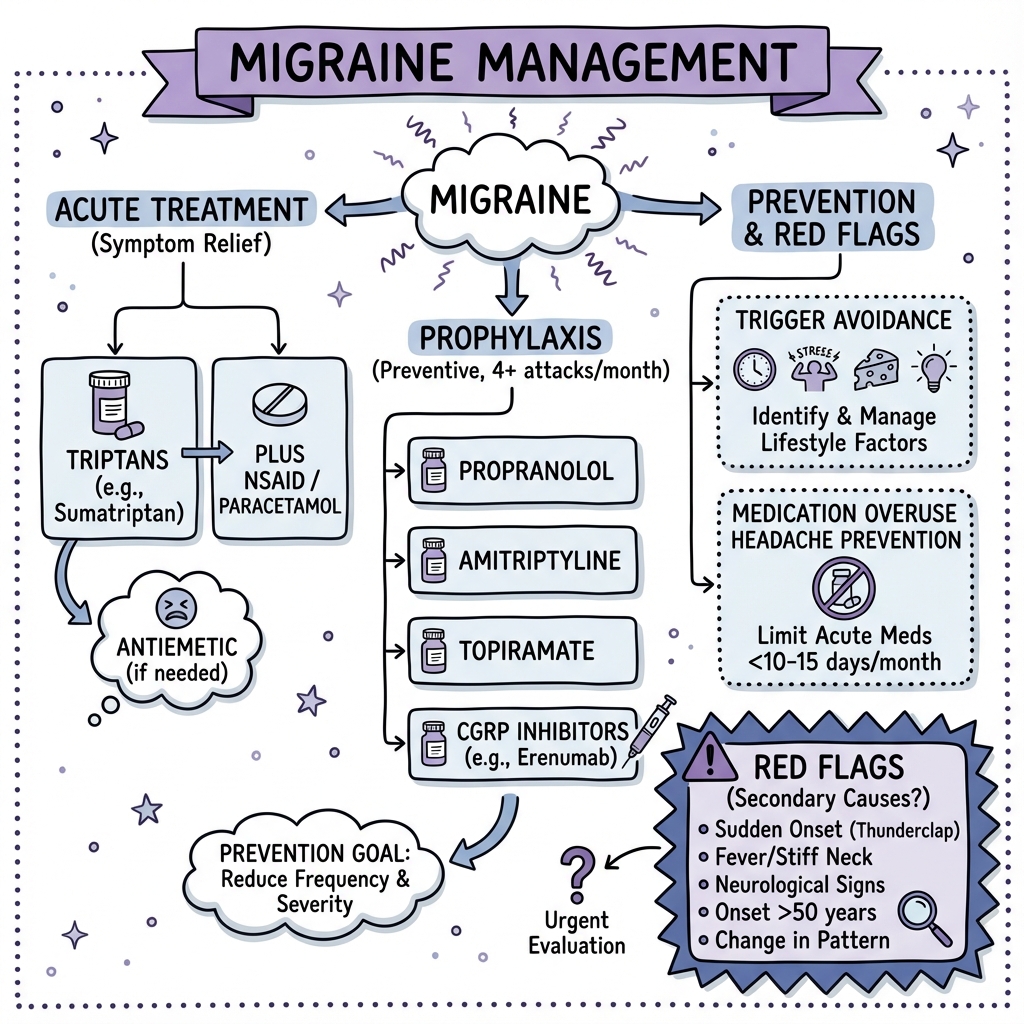
Clinical board
A visual summary of the highest-yield teaching signals on this page.
Urgent signals
Safety-critical features pulled from the topic metadata.
- Systemic symptoms (fever, weight loss, malaise)
- Neurological deficits persisting beyond aura
- Meningismus or altered consciousness
- Onset: sudden, abrupt, or split-second (Thunderclap headache)
Exam focus
Current exam surfaces linked to this topic.
- MRCP
Linked comparisons
Differentials and adjacent topics worth opening next.
- Tension-Type Headache
- Cluster Headache
Content status and exam context
This page is AI-generated educational content. It may contain errors or omissions and is not a substitute for current guidelines, local protocols, senior clinical judgement, or professional medical advice.
MedVellum does not claim an individual clinician reviewer, board certification, or professional credential for this page unless a future version names a real, verifiable reviewer.
Clinical explanation and evidence
SECTION 1: Clinical Overview
1.1 Summary
Migraine is a chronic, episodic neurovascular disorder characterized by recurrent attacks of moderate-to-severe headache, typically unilateral and pulsating in quality, often accompanied by autonomic symptoms including nausea, vomiting, and profound sensory hypersensitivity to light and sound. [1,2] The International Classification of Headache Disorders, 3rd edition (ICHD-3) provides the definitive diagnostic framework, defining migraine as a primary headache disorder with distinct clinical phenotypes. [3]
Epidemiologically, migraine represents a major global health burden, affecting over 1 billion people worldwide and ranking as the second leading cause of years lived with disability (YLD) globally. [4,5] The condition demonstrates striking sex-based differences, with a female-to-male ratio of approximately 3:1 after puberty, attributable to the modulatory effects of sex hormones on the trigeminovascular system. [6] Peak prevalence occurs during the most economically productive years of life (ages 25-55), amplifying its socioeconomic impact through both direct healthcare costs and indirect productivity losses. [7]
The pathophysiological understanding of migraine has evolved substantially over the past three decades. The disorder is no longer conceptualized as a primarily vascular phenomenon but rather as a complex brain network disorder involving dysfunction in sensory processing, pain modulation, and cortical excitability. [8] Central to this understanding is the trigeminovascular system and the role of Calcitonin Gene-Related Peptide (CGRP) as a key mediator of migraine pain, which has revolutionized therapeutic approaches with the development of CGRP-targeted therapies. [9]
Classification distinguishes several migraine subtypes, most importantly migraine without aura (MO, formerly "common migraine"), comprising approximately 70-75% of cases, and migraine with aura (MA, formerly "classic migraine"), comprising 25-30%. [3] Chronic migraine, defined as headache occurring on 15 or more days per month for more than three months with migraine features on at least 8 days, represents a particularly disabling phenotype affecting 1-2% of the general population. [10]
Management requires a dual therapeutic approach: acute (abortive) therapy to terminate individual attacks and preventive (prophylactic) therapy to reduce attack frequency, severity, and duration in those with frequent or disabling episodes. [11] The therapeutic landscape has been transformed by the introduction of CGRP-targeted treatments, including gepants (small-molecule CGRP receptor antagonists) for acute treatment and monoclonal antibodies targeting CGRP or its receptor for prevention. [12,13]
The prognosis of migraine is generally favorable regarding mortality, though the condition carries significant morbidity and substantially impairs quality of life if inadequately managed. Importantly, migraine with aura confers an increased risk of ischemic stroke, particularly in women, necessitating careful attention to vascular risk factor modification. [14]
1.2 Key Facts Table
| Parameter | Details | Clinical Significance |
|---|---|---|
| Definition | Primary headache disorder with recurrent attacks of 4-72 hours, specific features per ICHD-3 | Diagnosis is clinical; investigations only for red flags |
| Incidence | 1.5-2.5/100 person-years (women); 0.5-1.0/100 (men) [6] | New diagnoses peak in early adulthood |
| 1-Year Prevalence | 14.7% globally (18.8% women, 10.7% men) [4] | Massive public health burden |
| Lifetime Prevalence | 43% women, 18% men [6] | Most people experience migraine at some point |
| Chronic Migraine | 1-2% of population; 2.5% annual transformation rate [10] | Important subset requiring aggressive prevention |
| Mortality | No direct mortality; increased stroke risk with aura [14] | MA with OCP = highest stroke risk category |
| Disability Ranking | Second leading cause of YLD globally [5] | Highest burden in women 15-49 years |
| Peak Age | 35-45 years (highest prevalence) [7] | Affects economically productive years |
| Sex Ratio | F:M = 3:1 post-puberty; 1:1 pre-puberty [6] | Strong hormonal influence |
| Heritability | 40-60% genetic contribution [15] | Polygenic with environmental modifiers |
| Pathognomonic Feature | None; but POUND criteria highly suggestive (LR+ 24) | Clinical pattern recognition essential |
| Gold Standard Diagnosis | Clinical history meeting ICHD-3 criteria [3] | No biomarker; imaging to exclude secondary |
| First-Line Acute | NSAIDs (ibuprofen, naproxen) or Triptans [11] | Stratified care based on severity |
| First-Line Prevention | Propranolol, Topiramate, Amitriptyline [16] | Start low, titrate based on response |
| Novel Therapies | CGRP mAbs (Erenumab, Fremanezumab, Galcanezumab) [12] | FDA-approved for episodic and chronic migraine |
| Key Complication | Medication Overuse Headache (MOH) [17] | Prevent by limiting acute med use |
1.3 Clinical Pearls
Diagnostic Pearl: "The POUND Mnemonic" A validated clinical prediction rule for migraine diagnosis:
- Pulsating quality
- One-day duration (4-72 hours)
- Unilateral location
- Nausea/vomiting
- Disabling intensity Presence of 4/5 criteria: LR+ = 24 for migraine diagnosis. [18] Presence of ≤2 criteria: LR- = 0.41 (effectively rules out migraine).
Examination Pearl: "Photophobia Testing" During an acute attack, true migraineurs will exhibit marked discomfort with even low-intensity light. A patient who tolerates bright ophthalmoscope examination during claimed attack warrants skepticism. Note: Photophobia is an ictal phenomenon and may be absent between attacks.
Treatment Pearl: "The Triptan Window" Triptans achieve maximum efficacy when administered while pain is still mild-to-moderate. Taking triptans at peak pain reduces 2-hour pain-free rates by approximately 30%. Mechanism: Early treatment prevents central sensitization in the trigeminal nucleus caudalis. [19] Exception: Triptan administration during aura phase is not effective and should await headache onset.
Treatment Pearl: "The 10-20 Rule for MOH Prevention"
- Limit triptans/opioids/combination analgesics to less than 10 days/month
- Limit simple analgesics (NSAIDs, paracetamol) to less than 15 days/month This prevents the development of medication overuse headache. [17]
Pitfall Warning: "Aura Without Headache in Older Adults" New-onset visual aura without headache (late-life migrainous accompaniments) in patients > 50 years can mimic TIA. CRITICAL: Do not assume migraine without excluding:
- Amaurosis fugax (embolic)
- Giant cell arteritis
- Occipital lobe pathology
- Retinal detachment
Mnemonic: "SNOOP10 for Secondary Headache Red Flags" Systemic symptoms (fever, weight loss) or Systemic disease (HIV, malignancy) Neurological symptoms or signs Onset sudden (thunderclap) Older age > 50 at onset Pattern change or Progressive headache Precipitated by Valsalva, cough, or exertion Postural component Papilledema Pregnancy or postpartum Painful eye with autonomic features One or more SNOOP features = neuroimaging indicated. [20]
Emergency Pearl: "Thunderclap Headache Protocol" Any headache reaching maximal intensity within 60 seconds = medical emergency. Initial workup: CT head (SAH sensitivity ~98% within 6 hours, drops to 86% by day 3). If CT negative and clinical suspicion: Lumbar puncture (xanthochromia, RBC). Do NOT reassure until SAH definitively excluded. [21]
Exam Pearl: "The CGRP Story" CGRP (Calcitonin Gene-Related Peptide) is the most important mediator of migraine pathophysiology to understand.
- Released from trigeminal nerve terminals during attacks
- Potent vasodilator and pain signal amplifier
- Measurable in jugular venous blood during attacks
- Blockade = therapeutic target (gepants, mAbs) [9] This is a HIGH-YIELD topic for MRCP/USMLE neurological examination.
Prescribing Pearl: "Triptan Contraindications" Absolute contraindications to triptan use:
- Ischemic heart disease or coronary artery vasospasm
- Previous stroke or TIA
- Peripheral vascular disease
- Uncontrolled hypertension
- Hemiplegic or basilar-type migraine
- Severe hepatic impairment (varies by triptan)
- Within 24 hours of ergotamine derivatives
1.4 Why This Matters Clinically
Healthcare Burden: Migraine generates substantial healthcare utilization, accounting for 3% of all emergency department visits in the United States and being one of the top five reasons for outpatient neurological consultation. [7] The annual direct healthcare cost per patient exceeds $8,500 in severe cases. However, indirect costs from lost productivity (absenteeism and presenteeism) exceed direct costs by 4:1, estimated at $36 billion annually in the US alone. [7]
Quality of Life Impact: The World Health Organization ranks severe migraine attacks as equally disabling to quadriplegia, psychosis, or dementia during the ictal period. Chronic migraine patients lose an average of 4.7 quality-adjusted life years over their lifetime. [5]
Medicolegal Considerations: The most common litigation scenario involves failure to diagnose a secondary cause of headache by assuming the patient "just has a migraine." Particular risks include:
- Missing subarachnoid hemorrhage in thunderclap headache
- Failing to image new headache with focal neurological signs
- Missing giant cell arteritis in patients > 50 years
- Overlooking cerebral venous thrombosis in pregnancy/postpartum
Documentation Requirements: Always document:
- Presence or absence of each SNOOP10 red flag
- Results of fundoscopy (papilledema status)
- Neurological examination findings
- Rationale for imaging decision (performed or deferred)
SECTION 2: Epidemiology
2.1 Global Burden and Prevalence
Migraine represents one of the most prevalent neurological disorders worldwide. The Global Burden of Disease Study 2019 estimates that migraine affects approximately 1.1 billion people globally, representing 14.4% of the world's population. [4,5] It ranks as the second leading cause of years lived with disability (YLD) overall and the leading cause in the 15-49 year age group, particularly affecting women during their reproductive years. [5]
Prevalence Estimates by Region:
| Region | Prevalence (%) | Highest Burden Group |
|---|---|---|
| North America | 15.2% | Women 35-45 years |
| Western Europe | 14.8% | Women 30-40 years |
| South America | 13.9% | Women 25-45 years |
| Eastern Europe | 14.1% | Women 35-45 years |
| East Asia | 9.1% | Women 30-40 years |
| South Asia | 11.4% | Women 25-40 years |
| Sub-Saharan Africa | 10.8% | Data limited |
| Middle East/North Africa | 12.6% | Women 25-45 years |
Note: Lower reported prevalence in Asia and Africa may reflect diagnostic access rather than true differences. [4]
Temporal Trends:
- Overall prevalence has remained stable over 30 years (12-15%)
- Diagnosis rates have improved substantially
- Chronic migraine prevalence may be increasing (possibly due to better recognition)
- Pandemic-era data suggest increased migraine burden related to stress and lifestyle disruption
2.2 Incidence
The incidence of migraine varies substantially by age and sex: [6]
Incidence by Demographic:
| Demographic | Incidence (per 1,000 person-years) | Peak Age |
|---|---|---|
| Women (overall) | 18.9 | 20-24 years |
| Men (overall) | 6.5 | 15-19 years |
| Women (with aura) | 5.0 | 20-24 years |
| Men (with aura) | 1.9 | 15-19 years |
| Children (less than 12) | 4-5 | Equal sex ratio |
| Elderly (> 65) | 2-3 | Female predominance |
Lifetime Cumulative Risk:
- Women: 43% (nearly half will experience migraine)
- Men: 18% (approximately one in five)
2.3 Demographics Table
| Factor | Details | Clinical Significance | Evidence Level |
|---|---|---|---|
| Age | Peak prevalence: 35-45 years; Onset typically 15-30 years | Affects most economically productive years; new onset > 50 = investigate | Level Ia [6] |
| Sex | Pre-puberty M:F = 1:1; Post-puberty M:F = 1:3 | Estrogen withdrawal is a key trigger; improves in pregnancy | Level Ia [6] |
| Ethnicity | Slightly higher in Caucasian populations; lower in Asian/African | May reflect genetic polymorphisms or diagnostic access | Level IIb [4] |
| Geography | Higher in urbanized regions of high-income countries | Association with lifestyle stress, environmental triggers, diagnostic access | Level III [4] |
| Socioeconomic | Inverse relationship with income in cross-sectional studies | Lower-income groups have higher disability, less access to care | Level IIa [7] |
| Occupation | High-stress occupations, shift workers, healthcare workers | Disrupted circadian rhythm and stress are potent triggers | Level III |
| Body Mass | Obesity (BMI > 30) associated with increased frequency | Weight loss reduces attack frequency by 20-30% | Level Ib [22] |
2.4 Risk Factors
Non-Modifiable Risk Factors
| Factor | Relative Risk (95% CI) | Mechanism | Clinical Relevance |
|---|---|---|---|
| Female Sex | RR 3.2 (2.8-3.6) | Estrogen fluctuation triggers trigeminovascular activation | Counsel regarding menstrual migraine patterns |
| Family History (1st degree) | RR 2.5 (1.9-3.1) | Polygenic inheritance affecting ion channels, neurotransmission | Screen family members; genetic counseling if hemiplegic |
| Family History (both parents) | RR 4.0 (3.2-5.0) | Additive genetic risk | 70% risk of child developing migraine |
| CACNA1A mutation | Rare but causative | P/Q-type calcium channel dysfunction (FHM1) | Familial hemiplegic migraine type 1 |
| ATP1A2 mutation | Rare but causative | Na+/K+ ATPase dysfunction (FHM2) | Familial hemiplegic migraine type 2 |
| SCN1A mutation | Rare but causative | Sodium channel dysfunction (FHM3) | Familial hemiplegic migraine type 3 |
| NOTCH3 mutation | Rare | CADASIL syndrome | Migraine with aura + subcortical infarcts |
| Mitochondrial disorders | Moderate | MELAS, other mitochondrial cytopathies | Migraine as presenting feature |
| Patent Foramen Ovale | RR 2.0 (1.5-2.7) | Right-to-left shunting (mechanism debated) | Closure trials show mixed results |
Modifiable Risk Factors
| Risk Factor | Relative Risk (95% CI) | Evidence Level | Intervention & Impact |
|---|---|---|---|
| Obesity (BMI > 30) | RR 1.4 (1.2-1.6) | Level Ib | Weight loss reduces frequency by 20-30% [22] |
| Depression/Anxiety | RR 2.0 (1.7-2.4) | Level Ia | Treat comorbid psychiatric disease |
| Caffeine Overuse (> 300mg/day) | RR 1.3 (1.1-1.5) | Level IIa | Gradual tapering prevents rebound |
| Sleep Disorders | RR 1.8 (1.4-2.2) | Level IIa | OSA treatment (CPAP) may improve morning headache |
| Inadequate Sleep (less than 6h or > 9h) | RR 1.5 (1.2-1.8) | Level IIb | Regular 7-8 hour sleep schedule |
| Physical Inactivity | RR 1.4 (1.1-1.7) | Level IIa | Aerobic exercise 3x/week reduces frequency |
| High Stress | RR 1.9 (1.5-2.3) | Level Ia | CBT, mindfulness reduce chronification risk |
| Medication Overuse | RR 2.8 (2.1-3.5) | Level Ib | Limit acute medications per 10-20 rule [17] |
| Smoking | RR 1.2 (1.0-1.4) | Level IIb | Smoking cessation for overall health |
| Neck Pain/Cervical Dysfunction | RR 1.5 (1.2-1.9) | Level IIb | Physiotherapy, posture correction |
Migraine Triggers
High-Yield Trigger Categories (Patient Education):
| Category | Common Triggers | Frequency (%) | Management |
|---|---|---|---|
| Hormonal | Menstruation (estrogen withdrawal), OCP, HRT | 60% women | Continuous OCP, frovatriptan perimenstrual |
| Stress | Acute stress, "let-down" (weekend migraine) | 70% | Stress management, CBT |
| Sleep | Inadequate, excessive, or irregular sleep | 50% | Sleep hygiene, regular schedule |
| Dietary | Alcohol (especially red wine), aged cheese, MSG | 20-30% | Avoidance if confirmed trigger |
| Environmental | Bright lights, loud noise, strong odors | 40% | Trigger avoidance |
| Weather | Barometric pressure changes | 40% | Limited modifiability |
| Fasting | Skipped meals, hypoglycemia | 40% | Regular meals, complex carbohydrates |
| Dehydration | Inadequate fluid intake | 30% | Maintain 2-3L/day |
| Medications | Vasodilators (nitrates, sildenafil), OCP | Variable | Substitute if possible |
Important: Many "triggers" may actually be prodromal symptoms (e.g., food cravings during prodrome mistakenly attributed to foods eaten). [23]
2.5 Protective Factors
| Factor | Relative Risk | Mechanism | Evidence Level |
|---|---|---|---|
| Regular Aerobic Exercise | RR 0.6-0.8 | Endorphin release, neuronal stability | Level Ib |
| Adequate Magnesium Intake | RR 0.7-0.9 | NMDA receptor stabilization, reduces CSD | Level Ib |
| Pregnancy (2nd/3rd trimester) | 70-80% improve | Stable high estrogen levels | Level IIa |
| Menopause (post) | 60-70% improve | Cessation of hormonal fluctuation | Level IIa |
| Riboflavin Supplementation | RR 0.6-0.8 | Mitochondrial energy metabolism | Level Ib |
| CoQ10 Supplementation | RR 0.7-0.9 | Mitochondrial function | Level Ib |
SECTION 3: Pathophysiology
3.1 Overview: From Vascular Hypothesis to Brain Disorder
The understanding of migraine pathophysiology has undergone paradigm shifts over the past century. [8] The now-obsolete "vascular hypothesis" proposed that migraine aura resulted from cerebral vasoconstriction and headache from reactive vasodilation. Current evidence establishes migraine as a brain disorder of sensory processing and pain modulation, with vascular changes representing an epiphenomenon rather than the primary pathology.
Key Pathophysiological Concepts:
- Cortical Spreading Depression (CSD) - The substrate of aura
- Trigeminovascular System Activation - The pain generator
- Central Sensitization - Explains cutaneous allodynia
- Brainstem/Hypothalamic Dysfunction - Explains prodrome and autonomic features
- CGRP as Central Mediator - Therapeutic target
3.2 The 5-Step Pathophysiological Cascade
Step 1: Premonitory Phase and Hypothalamic Activation
Timeline: 24-48 hours before headache
Primary Process: The hypothalamus serves as the "migraine generator," showing increased activation on functional MRI studies during the premonitory phase. [8] This activation precedes any pain and explains prodromal symptoms including:
- Food cravings (hypothalamic appetite centers)
- Yawning (hypothalamic dopamine pathways)
- Fatigue, mood changes (hypothalamic-limbic connections)
- Polyuria (posterior hypothalamic ADH regulation)
- Neck stiffness (early trigeminocervical activation)
Molecular Mechanisms:
- Dopaminergic activation in hypothalamus
- Altered serotonin neurotransmission
- Abnormal circadian rhythm regulation
- Neuroendocrine changes (cortisol, melatonin)
Clinical Significance: Recognition of prodromal symptoms allows patients to implement early treatment strategies. Dopamine involvement explains efficacy of antiemetics like metoclopramide.
Step 2: Cortical Spreading Depression (CSD) and Aura
Timeline: 5-60 minutes before or concurrent with headache onset
Primary Process: Cortical Spreading Depression (CSD) is a self-propagating wave of neuronal and glial depolarization that moves across the cerebral cortex at 2-5 mm/minute. [8] CSD is the electrophysiological substrate of migraine aura. The wave originates typically in the occipital cortex (explaining visual aura) and spreads anteriorly.
Cellular Events:
- Initiation: Local surge in extracellular K+ and glutamate
- Depolarization: Massive neuronal firing with:
- K+ efflux (extracellular K+ rises from 3 to 60 mM)
- Na+ and Ca2+ influx
- Glutamate release
- Depression: Prolonged neuronal suppression (oligemia)
- Recovery: Gradual restoration of ionic homeostasis
Aura Correlates:
| Visual Phenomenon | CSD Location | Timing |
|---|---|---|
| Scintillating scotoma (fortification spectra) | V1/V2 occipital cortex | 5-20 min |
| Homonymous hemianopia | Calcarine cortex | 5-60 min |
| Spreading visual disturbance | CSD wave propagation | Progressive |
| Sensory symptoms (tingling) | Sensory cortex involvement | Following visual |
| Speech disturbance (dysphasia) | Language cortex (rare) | Following sensory |
Threshold Concept: Individuals with migraine have a lower "CSD threshold" due to:
- Ion channel mutations (FHM genes: CACNA1A, ATP1A2, SCN1A) [15]
- Mitochondrial dysfunction
- Magnesium deficiency
- Cortical hyperexcitability
Step 3: Trigeminovascular System Activation
Timeline: Onset of headache phase
Primary Process: CSD (or direct activation in migraine without aura) triggers the afferent fibers of the trigeminal nerve (CN V), specifically the ophthalmic division (V1) that innervates the pain-sensitive intracranial structures: [9]
- Dura mater
- Major cerebral blood vessels
- Venous sinuses
Neurogenic Inflammation: Upon activation, trigeminal afferents release pro-inflammatory neuropeptides from their peripheral terminals:
| Neuropeptide | Source | Action | Measurable? |
|---|---|---|---|
| CGRP | Trigeminal ganglia | Vasodilation, mast cell degranulation, pain amplification | Yes (jugular blood) |
| Substance P | C-fibers | Plasma protein extravasation, neurogenic inflammation | Yes |
| Neurokinin A | C-fibers | Vasodilation | Limited |
| PACAP | Trigeminal ganglia | Vasodilation, trigeminovascular activation | Yes (ictal rise) |
CGRP: The Central Mediator [9]:
- Most abundant neuropeptide in trigeminal ganglia
- 37 amino acid peptide
- Binds to receptor complex: CRLR + RAMP1
- Actions:
- Potent meningeal vasodilation
- Mast cell degranulation (histamine release)
- Sensitization of second-order neurons in TNC
- Peripheral and central pain amplification
- Jugular venous CGRP elevated 2-3 fold during attacks
- Returns to normal when attack resolves
- CGRP infusion triggers migraine in susceptible individuals
Step 4: Central Sensitization and Pain Amplification
Timeline: 30-60 minutes into headache phase
Primary Process: Sustained peripheral input from the meninges leads to sensitization at multiple levels of the neuraxis: [19]
Peripheral Sensitization:
- Lowered activation threshold of meningeal nociceptors
- Spontaneous firing of trigeminal afferents
- Explains: Throbbing pain (pulsation becomes painful)
Second-Order Sensitization (Trigeminal Nucleus Caudalis):
- Convergence of trigeminal afferents at TNC
- TNC extends to upper cervical cord (C1-C3) - explains neck pain
- Wind-up phenomenon: progressive amplification
- Explains: Pain radiation to neck, face, periorbital region
Third-Order Sensitization (Thalamus):
- Thalamus becomes hyperexcitable
- Abnormal sensory processing
- Explains: Cutaneous Allodynia (40-80% of migraineurs)
- Brush allodynia (pain from combing hair)
- Pressure allodynia (pain from wearing glasses)
- Thermal allodynia
Clinical Significance of Allodynia:
- Marker of central sensitization
- Predictor of triptan non-response
- Predictor of chronification
- Threshold for early treatment intervention
Step 5: Resolution and Postdrome
Resolution Mechanisms:
- Endogenous pain modulation activation:
- Periaqueductal gray (PAG) engagement
- Rostral ventromedial medulla
- Descending serotonergic inhibition
- CGRP clearance from circulation
- Restoration of cortical ionic homeostasis
- Sleep often terminates attacks (enhanced inhibitory activity)
Postdrome Phase (24-48 hours):
- "Migraine hangover" affecting 80% of patients
- Symptoms: Fatigue, cognitive difficulty, mood changes, food intolerance
- PET studies show persistent hypothalamic/brainstem activation
- Clinical significance: Patients not fully functional even when headache resolves
3.3 Chronic Migraine: Pathological Transformation
Chronic migraine (≥15 headache days/month for > 3 months, with migraine features ≥8 days) represents a distinct pathophysiological state: [10]
Structural Changes (Neuroimaging):
- Gray matter reduction in pain-processing regions (anterior cingulate, insula)
- Iron deposition in PAG
- White matter hyperintensities (particularly in migraine with aura)
Functional Changes:
- Impaired descending pain modulation
- Tonic activation of trigeminovascular system
- Reduced habituation to sensory stimuli
- Persistent central sensitization
Key Risk Factors for Chronification:
- High attack frequency (> 4/month)
- Medication overuse
- Obesity
- Depression/anxiety
- Sleep disorders
- Caffeine overuse
- Allodynia during attacks
- Ineffective acute treatment
3.4 ICHD-3 Classification
The International Classification of Headache Disorders, 3rd edition (ICHD-3) provides the definitive diagnostic taxonomy: [3]
3.4.1 Migraine Without Aura (ICHD-3 Code: 1.1)
Diagnostic Criteria: A. At least 5 attacks fulfilling criteria B-D B. Headache attacks lasting 4-72 hours (untreated or unsuccessfully treated) C. Headache has at least 2 of the following 4 characteristics:
- Unilateral location
- Pulsating quality
- Moderate or severe pain intensity
- Aggravation by or causing avoidance of routine physical activity D. During headache, at least 1 of the following:
- Nausea and/or vomiting
- Photophobia AND phonophobia E. Not better accounted for by another ICHD-3 diagnosis
3.4.2 Migraine With Aura (ICHD-3 Code: 1.2)
Diagnostic Criteria: A. At least 2 attacks fulfilling criteria B and C B. One or more of the following fully reversible aura symptoms:
- Visual (most common, > 90%)
- Sensory
- Speech and/or language
- Motor (hemiplegic migraine only)
- Brainstem
- Retinal C. At least 3 of the following 6 characteristics:
- At least 1 aura symptom spreads gradually over ≥5 minutes
- Two or more aura symptoms occur in succession
- Each individual aura symptom lasts 5-60 minutes
- At least 1 aura symptom is unilateral
- At least 1 aura symptom is positive (scintillations, pins/needles)
- Aura is accompanied, or followed within 60 minutes, by headache D. Not better accounted for by another ICHD-3 diagnosis
3.4.3 Chronic Migraine (ICHD-3 Code: 1.3)
Diagnostic Criteria: A. Headache (migraine-like or tension-type-like) on ≥15 days/month for > 3 months B. Occurring in a patient who has had at least 5 attacks fulfilling criteria for migraine without aura or migraine with aura C. On ≥8 days/month for > 3 months, fulfilling any of the following:
- Criteria C and D for migraine without aura
- Criteria B and C for migraine with aura
- Believed by patient to be migraine at onset and relieved by triptan or ergot D. Not better accounted for by another ICHD-3 diagnosis
3.4.4 Other Important Subtypes
| Subtype | ICHD-3 | Key Features | Clinical Significance |
|---|---|---|---|
| Hemiplegic Migraine | 1.2.3 | Motor weakness as aura symptom | Avoid triptans; genetic testing |
| Migraine with Brainstem Aura | 1.2.2 | Dysarthria, vertigo, tinnitus, diplopia, ataxia | Must exclude posterior circulation stroke |
| Vestibular Migraine | A1.6.5 | Episodic vertigo with migraine features | Common, often underdiagnosed |
| Retinal Migraine | 1.2.4 | Monocular visual symptoms | Must exclude retinal/optic nerve pathology |
| Status Migrainosus | 1.4.1 | Attack > 72 hours | Requires admission, IV treatment |
| Menstrual Migraine | A1.1.1-2 | Perimenstrual attacks (day -2 to +3) | Consider continuous hormones, perimenstrual prophylaxis |
SECTION 4: Clinical Presentation
4.1 The Four Phases of a Migraine Attack
Migraine attacks typically progress through four distinct phases, though not all phases occur in every patient or every attack: [1,2]
Phase 1: Prodrome (Premonitory Phase)
- Timing: 24-48 hours before headache
- Frequency: Present in 70-80% of patients
- Duration: Hours to days
| Symptom | Frequency | Mechanism |
|---|---|---|
| Fatigue/Lethargy | 70% | Hypothalamic activation |
| Neck stiffness | 50% | Early trigeminocervical activation |
| Yawning | 40% | Dopaminergic activation |
| Food cravings | 35% | Hypothalamic appetite centers |
| Mood changes (irritability/euphoria) | 30% | Limbic activation |
| Difficulty concentrating | 30% | Cortical dysfunction |
| Polyuria | 20% | Posterior hypothalamic ADH |
| Phonophobia/Photophobia | 20% | Early sensory sensitivity |
Clinical Tip: Prodromal symptoms are often mistaken for triggers (e.g., chocolate craving → eating chocolate → migraine blamed on chocolate)
Phase 2: Aura
- Timing: Immediately precedes or accompanies headache
- Frequency: Present in 25-30% of migraineurs
- Duration: 5-60 minutes (typically 20-30 minutes)
| Aura Type | Frequency | Description | Duration |
|---|---|---|---|
| Visual | 90% of MA | Scintillating scotoma (fortification spectra), photopsia, hemianopia | 20-30 min |
| Sensory | 30% | Paresthesias (face, hand), spreading over minutes | 20-30 min |
| Language | 10% | Dysphasia, word-finding difficulty | 5-60 min |
| Motor | Rare (less than 5%) | Hemiparesis (hemiplegic migraine only) | 30-60 min |
| Brainstem | 5% | Dysarthria, vertigo, diplopia, tinnitus, ataxia | 5-60 min |
Characteristics That Distinguish Migraine Aura from Stroke/TIA:
- Gradual onset (spreads over ≥5 minutes vs. sudden in stroke)
- Sequential symptoms (visual → sensory → language)
- Positive followed by negative symptoms
- Typical duration 20-60 minutes
- History of similar previous episodes
- Complete resolution
Phase 3: Headache Phase
- Timing: During or after aura (may occur without aura)
- Duration: 4-72 hours (untreated)
Headache Characteristics:
| Feature | Typical Migraine | Frequency | Notes |
|---|---|---|---|
| Location | Unilateral (frontotemporal) | 60% | May be bilateral in 40% |
| Quality | Pulsating/Throbbing | 70% | May be pressure-like |
| Intensity | Moderate to Severe (5-10/10) | 90% | Interferes with activities |
| Aggravation | Physical activity, head movement | 90% | Patients prefer to lie still |
| Duration | 4-72 hours | - | less than 4h in children |
Associated Symptoms:
| Symptom | Frequency | Clinical Significance |
|---|---|---|
| Nausea | 80% | Affects oral medication absorption |
| Vomiting | 50% | May require non-oral treatment route |
| Photophobia | 80% | Patients seek dark environments |
| Phonophobia | 75% | Patients seek quiet environments |
| Osmophobia | 40% | Strong odor sensitivity |
| Allodynia | 65% | Marker of central sensitization |
| Cognitive dysfunction | 50% | "Migraine fog" |
| Neck pain | 75% | Convergence at TNC |
| Autonomic symptoms | 40% | Lacrimation, rhinorrhea, ptosis |
Phase 4: Postdrome
- Timing: Following headache resolution
- Duration: 24-48 hours
- Frequency: 80% of patients
| Symptom | Frequency | Description |
|---|---|---|
| Fatigue/Exhaustion | 75% | "Washed out" feeling |
| Cognitive impairment | 50% | Difficulty concentrating |
| Mood changes | 40% | Depression or euphoria |
| Food intolerance | 30% | Residual nausea |
| Scalp tenderness | 25% | Persistent allodynia |
4.2 Signs
The neurological examination in migraine is typically normal between attacks and usually normal during attacks (except for signs related to the attack itself).
Ictal Findings
| Sign | How to Elicit | Significance | Sensitivity/Specificity |
|---|---|---|---|
| Allodynia | Light brush stroke on forehead/scalp | Central sensitization marker | 65% / 80% |
| Photophobia | Bright light exposure | True migraineurs intolerant | 80% / 70% |
| Autonomic features | Inspect for lacrimation, rhinorrhea | May suggest TAC overlap | 40% / 60% |
| Pericranial tenderness | Palpate temporalis, occipitalis | Common in migraine | 70% / 40% |
| Cervical tenderness | Palpate C1-C3 region | TNC convergence | 75% / 40% |
Red Flag Signs Requiring Immediate Investigation
| Sign | Concern | Immediate Action |
|---|---|---|
| Papilledema | Raised ICP (tumor, IIH, CVT) | Urgent CT/MRI + LP |
| Focal neurological deficit persisting beyond aura | Stroke, tumor | Urgent CT/MRI |
| Altered consciousness | Meningitis, encephalitis, SAH | CT + LP |
| Fever + meningismus | Meningitis | Blood cultures + LP |
| Horner syndrome (persistent) | Carotid dissection | CTA neck |
| Tender temporal artery + reduced pulse | Giant cell arteritis | ESR + temporal artery biopsy |
4.3 Atypical and Special Presentations
Migraine in Special Populations
| Population | Key Differences | Clinical Considerations |
|---|---|---|
| Children | Shorter attacks (1-72h), bilateral, abdominal migraine | Different drug approvals, consider secondary causes |
| Elderly | Aura without headache common, more red flags | Always exclude GCA, stroke |
| Pregnancy | Often improves (especially 2nd/3rd trimester) | Limited medication options, exclude preeclampsia |
| Postpartum | May worsen, risk of CVT | Consider CVT in new postpartum headache |
| Menstrual | Perimenstrual timing, often more severe | Hormonal strategies, perimenstrual prophylaxis |
Important Migraine Variants
Vestibular Migraine:
- Episodic vertigo with migraine features
- Often underdiagnosed
- May not have concurrent headache
- Diagnosis: ≥5 episodes of vestibular symptoms (5 min-72 h) + migraine history + 50% of episodes with migraine features
Hemiplegic Migraine:
- Motor weakness as part of aura
- Familial (FHM1-3) or sporadic forms
- AVOID triptans (theoretical vasoconstriction risk)
- Genetic testing indicated in familial cases
Menstrual Migraine:
- Pure menstrual migraine: attacks only days -2 to +3 of menstruation
- Menstrually-related migraine: attacks at other times too, but predominantly perimenstrual
- Often more severe and longer lasting
- Treatment strategies include perimenstrual prophylaxis with frovatriptan or NSAIDs
SECTION 5: Clinical Examination
5.1 Systematic Approach to Headache Examination
Initial Assessment (ABCDE if acute presentation)
- Airway: Rarely compromised unless altered consciousness
- Breathing: Assess for hyperventilation, respiratory pattern
- Circulation: Blood pressure (hypertensive crisis?), pulse (tachycardia with pain)
- Disability: GCS, focal neurological signs, pupil assessment
- Exposure: Rash (meningococcemia), temporal artery inspection
Focused Headache Examination
General Inspection:
- Patient posture (lying still = migraine; pacing = cluster)
- Eye shielding from light
- Pallor, diaphoresis
- Visible distress level
Vital Signs:
- Blood pressure: May be elevated with severe pain; sustained hypertension is a red flag
- Temperature: Fever = red flag (infection)
- Heart rate: Tachycardia expected with pain
Head and Neck:
| Examination | Technique | Finding | Significance |
|---|---|---|---|
| Temporal arteries | Palpate for tenderness, pulse | Tender/non-pulsatile | GCA in > 50y |
| Sinuses | Percuss frontal/maxillary | Tenderness | Sinusitis (but migraine commonly misdiagnosed as sinus) |
| TMJ | Palpate, assess jaw opening | Tenderness, clicking | TMJ dysfunction contributing |
| Cervical spine | Range of motion, palpation | Stiffness, tenderness | Cervicogenic component |
| Pericranial muscles | Palpate temporalis, occipitalis, trapezius | Tenderness | Common in migraine |
Neurological Examination:
| Domain | Key Tests | Red Flag Findings |
|---|---|---|
| Mental Status | GCS, orientation, cognition | Confusion, altered consciousness |
| Cranial Nerves | ||
| CN II | Visual acuity, fields, fundoscopy | Papilledema, visual field defect |
| CN III, IV, VI | Pupil reaction, eye movements | Anisocoria, ophthalmoplegia |
| CN V | Facial sensation, corneal reflex | Trigeminal sensory loss |
| CN VII | Facial symmetry | New facial weakness |
| Motor | Tone, power, reflexes | Hemiparesis, hyperreflexia |
| Sensory | Light touch, pinprick | Hemisensory loss |
| Coordination | Finger-nose, heel-shin | Ataxia |
| Gait | Walking, tandem gait | Ataxia, hemiparetic gait |
Fundoscopy (MANDATORY):
- Must be performed in all new headaches
- Look for: Papilledema (blurred disc margins, absent venous pulsation)
- Sharp disc margins = reassuring
- Document: "Fundi examined, no papilledema"
5.2 Special Tests
| Test | Technique | Positive Finding | Sensitivity | Specificity | Clinical Use |
|---|---|---|---|---|---|
| Fundoscopy | Dark room, +20D lens, follow vessels to disc | Blurred margins, elevated disc | 90% (for raised ICP) | 95% | MANDATORY for all headaches |
| Kernig's Sign | Flex hip 90°, extend knee | Pain/resistance | 5% | 95% | Meningitis screen |
| Brudzinski's Sign | Flex neck passively | Hip/knee flexion | 5% | 95% | Meningitis screen |
| Jolt Accentuation | Rotate head horizontally 2-3 times/sec | Worsening headache | 97% | 60% | Sensitive for meningitis |
| Dix-Hallpike | Rapid supine positioning, head 45° turn | Nystagmus, vertigo | 70% | 80% | BPPV vs vestibular migraine |
| Temporal Artery Palpation | Palpate temporal artery | Tenderness, absent pulse | 70% (GCA) | 90% | Age > 50 with new headache |
| Allodynia Testing | Brush forehead with cotton, apply gentle pressure | Pain from non-painful stimuli | 65% | 75% | Chronicity marker |
| Valsalva Maneuver | Bear down for 10 seconds | Worsening headache | 80% | 70% | Raised ICP, posterior fossa lesion |
5.3 Documentation Requirements
Minimum Documentation for Headache Consultation:
- Red flag assessment (SNOOP10 screening)
- Blood pressure and temperature
- Fundoscopy result (papilledema status)
- Neurological examination findings (particularly cranial nerves and motor)
- Cervical spine assessment
- Rationale for imaging decision
SECTION 6: Investigations
6.1 Investigation Philosophy in Migraine
Key Principle: Migraine is a clinical diagnosis. Investigations are performed to exclude secondary causes, not to confirm migraine.
Indications for Investigation:
- Any SNOOP10 red flag present [20]
- Atypical features not fitting ICHD-3 criteria
- Significant change in established headache pattern
- First severe headache ever
- Age > 50 at onset
- Neurological signs on examination
- Progressive headache
- Patient anxiety despite reassurance
6.2 Bedside Investigations
| Test | Expected Finding in Migraine | Purpose | Urgency |
|---|---|---|---|
| Blood Pressure | Normal or mildly elevated (pain) | Exclude hypertensive crisis | Immediate |
| Blood Glucose | Normal | Exclude hypoglycemia (aura mimic) | Immediate |
| Temperature | Afebrile | Exclude infection | Immediate |
| Fundoscopy | Sharp disc margins, venous pulsation present | Exclude raised ICP | Immediate |
| Urine hCG | Negative (unless pregnant) | Pregnancy status for treatment safety | Immediate |
6.3 Laboratory Investigations
| Test | Expected in Migraine | Abnormal Results Indicate | Turnaround |
|---|---|---|---|
| FBC | Normal | Infection (elevated WCC), anemia, polycythemia | 1 hour |
| ESR | Normal | GCA if > 50mm/h in elderly (refer urgently) | 2 hours |
| CRP | Normal | Infection, GCA | 1 hour |
| U&Es | Normal (unless vomiting) | Dehydration status, renal function for drug dosing | 1 hour |
| LFTs | Normal | Hepatic impairment (affects triptan/valproate use) | 2 hours |
| TFTs | Normal | Hyper/hypothyroidism (headache cause) | 4 hours |
| Coagulation | Normal | Bleeding risk if LP needed | 1 hour |
| Toxicology | Negative | Substance-induced headache | 4 hours |
| hCG | Negative (if applicable) | Pregnancy (treatment implications, CVT risk) | 30 min |
For Giant Cell Arteritis Suspicion (age > 50, temporal tenderness):
- ESR: Usually > 50 mm/h (often > 100)
- CRP: Elevated
- Platelets: Often thrombocytosis
- Start prednisolone 60mg immediately while awaiting temporal artery biopsy
6.4 Neuroimaging
When to Image
Urgent CT Head (Same-day):
- Thunderclap headache (SAH exclusion)
- Fever + altered consciousness (exclude abscess)
- Focal neurological deficit (stroke exclusion)
- Signs of raised ICP
- Post-traumatic headache with altered consciousness
MRI Brain (Within 2 weeks):
- New headache with any red flags
- Atypical features
- Aura features not typical (prolonged, motor, brainstem)
- Progressive headache
- First migraine > 50 years
- Treatment-refractory migraine
Not Routinely Required:
- Typical migraine without red flags meeting ICHD-3 criteria
- Stable, long-standing migraine pattern
- Normal neurological examination
Imaging Findings
| Modality | Findings in Primary Migraine | Secondary Causes to Exclude |
|---|---|---|
| CT Head | Usually normal | SAH, hemorrhage, large tumor, hydrocephalus |
| MRI Brain | Normal or white matter hyperintensities (non-specific) | Tumor, AVM, demyelination, CADASIL, venous thrombosis |
| MRA | Normal | Aneurysm, dissection, vasculitis |
| MRV/CTV | Normal | Cerebral venous thrombosis |
| CT Angiography | Normal | Aneurysm, dissection |
White Matter Hyperintensities (WMH):
- Found in 20-40% of migraineurs (vs. 10-20% controls)
- More common in migraine with aura
- Clinical significance uncertain
- May reflect repeated oligemia during CSD
- Do NOT indicate increased stroke risk per se
6.5 Lumbar Puncture
Indications:
- Thunderclap headache with negative CT (SAH exclusion)
- Suspected meningitis/encephalitis
- Suspected idiopathic intracranial hypertension (IIH)
- Suspected carcinomatous meningitis
Expected Findings in Migraine:
| Parameter | Normal Value | Comments |
|---|---|---|
| Opening pressure | less than 25 cm H2O | Elevated in IIH, meningitis |
| Appearance | Clear, colorless | Xanthochromia in SAH |
| WCC | less than 5/mm³ | Elevated in infection |
| Protein | less than 0.45 g/L | Elevated in infection, inflammation |
| Glucose | > 60% serum glucose | Low in bacterial meningitis |
6.6 Diagnostic Algorithm for Headache Investigation
┌─────────────────────────────────────────────────────────────────────┐
│                    HEADACHE INVESTIGATION ALGORITHM                  │
└─────────────────────────────────────────────────────────────────────┘
                                    │
                                    ▼
                    ┌───────────────────────────────┐
                    │  SCREEN FOR RED FLAGS (SNOOP10)│
                    └───────────────────────────────┘
                                    │
                    ┌───────────────┴───────────────┐
                    │                               │
                    ▼                               ▼
            ┌─────────────┐                 ┌─────────────┐
            │ RED FLAGS   │                 │ NO RED FLAGS│
            │ PRESENT     │                 │             │
            └─────────────┘                 └─────────────┘
                    │                               │
                    ▼                               ▼
        ┌───────────────────┐           ┌───────────────────────┐
        │ INVESTIGATE       │           │ MEETS ICHD-3 CRITERIA?│
        └───────────────────┘           └───────────────────────┘
                    │                               │
        ┌───────────┴───────────┐       ┌───────────┴───────────┐
        │                       │       │                       │
        ▼                       ▼       ▼                       ▼
┌───────────────┐       ┌───────────────┐       ┌───────────────┐
│ THUNDERCLAP   │       │ OTHER RED     │       │ YES - CLINICAL│
│               │       │ FLAGS         │       │ DIAGNOSIS     │
└───────────────┘       └───────────────┘       └───────────────┘
        │                       │                       │
        ▼                       ▼                       ▼
┌───────────────┐       ┌───────────────┐       ┌───────────────┐
│ CT Head       │       │ MRI Brain     │       │ No imaging    │
│ (immediate)   │       │ ± MRA/MRV     │       │ required      │
│               │       │ (within 2 wks)│       │               │
│ If negative:  │       │               │       │ Document:     │
│ LP for SAH    │       │ ± ESR/CRP     │       │ Red flags     │
│               │       │ if age > 50    │       │ assessed and  │
│               │       │               │       │ absent        │
└───────────────┘       └───────────────┘       └───────────────┘
SECTION 7: Management
7.1 Management Algorithm
┌─────────────────────────────────────────────────────────────────────────────┐
│ COMPREHENSIVE MIGRAINE MANAGEMENT ALGORITHM │
└─────────────────────────────────────────────────────────────────────────────┘
│
▼
┌───────────────────────────────┐
│ INITIAL PRESENTATION │
│ • Confirm diagnosis (ICHD-3) │
│ • Exclude red flags (SNOOP10)│
│ • Assess disability (MIDAS) │
│ • Establish attack frequency │
└───────────────────────────────┘
│
┌───────────────────┼───────────────────┐
│ │ │
▼ ▼ ▼
┌─────────────┐ ┌─────────────────┐ ┌─────────────────┐
│ EPISODIC │ │ MODERATE │ │ FREQUENT/ │
│ MIGRAINE │ │ FREQUENCY │ │ CHRONIC │
│(less than 4 days/mo) │ │ (4-8 days/mo) │ │ (> 8 days/mo) │
└─────────────┘ └─────────────────┘ └─────────────────┘
│ │ │
▼ ▼ ▼
┌─────────────┐ ┌─────────────────┐ ┌─────────────────┐
│ACUTE Rx ONLY│ │ ACUTE + CONSIDER│ │ ACUTE + MANDATORY│
│ │ │ PREVENTIVE │ │ PREVENTIVE │
└─────────────┘ └─────────────────┘ └─────────────────┘
│ │ │
│ │ │
┌───────────────┴───────────────────┴───────────────────┘
│
▼
┌───────────────────────────────────────────────────────────────────────────┐
│ ACUTE TREATMENT PATHWAY │
└───────────────────────────────────────────────────────────────────────────┘
│
┌───────────────────┴───────────────────┐
│ │
▼ ▼
┌─────────────────┐ ┌─────────────────┐
│ MILD-MODERATE │ │ MODERATE- │
│ ATTACK │ │ SEVERE ATTACK │
└─────────────────┘ └─────────────────┘
│ │
▼ ▼
┌─────────────────┐ ┌─────────────────┐
│ • NSAID (first) │ │ • TRIPTAN │
│ Ibuprofen │ │ (first-line) │
│ 400-800mg OR │ │ + NSAID if │
│ Naproxen │ │ needed │
│ 500-750mg │ │ + Antiemetic │
│ ± Antiemetic │ │ │
└─────────────────┘ └─────────────────┘
│ │
▼ ▼
┌─────────────────┐ ┌─────────────────┐
│ RESPONSE? │ │ RESPONSE? │
└─────────────────┘ └─────────────────┘
│ │
┌───────┴───────┐ ┌───────┴───────┐
Yes No Yes No
│ │ │ │
▼ ▼ ▼ ▼
┌───────────┐ ┌───────────────┐ ┌───────────┐ ┌───────────────┐
│ Continue │ │ ESCALATE to │ │ Continue │ │ALTERNATIVE Rx:│
│ strategy │ │ Triptan │ │ strategy │ │• Different │
│ │ │ │ │ │ │ triptan │
│ │ │ │ │ │ │• Gepant │
│ │ │ │ │ │ │• Ditan │
└───────────┘ └───────────────┘ └───────────┘ └───────────────┘
│
▼
┌───────────────┐
│ STILL FAILING │
│ → Emergency │
│ pathway or │
│ Specialist │
└───────────────┘
┌───────────────────────────────────────────────────────────────────────────┐
│ PREVENTIVE TREATMENT PATHWAY │
└───────────────────────────────────────────────────────────────────────────┘
│
▼
┌───────────────────────────────┐
│ SELECT BASED ON: │
│ • Comorbidities │
│ • Contraindications │
│ • Side effect profile │
│ • Patient preference │
│ • Migraine subtype │
└───────────────────────────────┘
│
┌─────────────────┬─────────────────┼─────────────────┬─────────────────┐
│ │ │ │ │
▼ ▼ ▼ ▼ ▼
┌─────────┐ ┌─────────┐ ┌─────────────┐ ┌─────────┐ ┌─────────┐
│PROPRAN- │ │TOPIRA- │ │AMITRIPTYLINE│ │CANDES- │ │CGRP │
│OLOL │ │MATE │ │ │ │ARTAN │ │mAbs │
│40-240mg │ │50-100mg │ │10-50mg nocte│ │8-16mg │ │ │
│ │ │ │ │ │ │ │ │ │
│Good for:│ │Good for:│ │Good for: │ │Good for:│ │Good for:│
│•Anxiety │ │•Obesity │ │•Insomnia │ │•β-blocker│ │•Failed │
│•HTN │ │•Epilepsy│ │•Depression │ │ contra- │ │ ≥2 oral │
│•Tremor │ │ │ │•TTH overlap │ │indication│ │ proph. │
│ │ │ │ │ │ │•HTN │ │ │
│Avoid: │ │Avoid: │ │Avoid: │ │ │ │Include: │
│•Asthma │ │•Preg. │ │•Cardiac │ │Avoid: │ │Erenumab │
│•Bradycar│ │•Stones │ │ block │ │•Pregnancy│ │Fremane- │
│•Depress.│ │•Glaucoma│ │•Glaucoma │ │•Renal │ │zumab │
│ │ │ │ │ │ │ failure │ │Galcane- │
└─────────┘ └─────────┘ └─────────────┘ └─────────┘ │zumab │
└─────────┘
│
▼
┌───────────────────────────────┐
│ TRIAL 8-12 WEEKS AT FULL DOSE│
│ Aim: ≥50% reduction in │
│ headache days │
└───────────────────────────────┘
│
┌───────────┴───────────┐
│ │
▼ ▼
┌─────────────┐ ┌─────────────────┐
│ RESPONDER │ │ NON-RESPONDER │
│ (≥50% │ │ (less than 50% reduction│
│ reduction) │ │ or intolerable)│
└─────────────┘ └─────────────────┘
│ │
▼ ▼
┌─────────────┐ ┌─────────────────┐
│ Continue │ │ • Switch class │
│ 6-12 months │ │ • Add second │
│ then attempt│ │ agent │
│ tapering │ │ • Refer headache│
│ │ │ specialist │
└─────────────┘ └─────────────────┘
│
▼
┌───────────────────────────────────────┐
│ SPECIALIST OPTIONS │
│ • CGRP mAbs │
│ • OnabotulinumtoxinA (chronic only) │
│ • Combination oral prophylaxis │
│ • Neuromodulation devices │
│ • Medication overuse detoxification │
│ • Behavioral therapies │
└───────────────────────────────────────┘
7.2 Emergency/Acute Presentation Management
Status Migrainosus (> 72 hours) or Severe Refractory Attack
Immediate Actions (ED Setting):
-
Exclude Secondary Cause:
- Neurological examination + fundoscopy
- CT head if any red flags
- Consider MRI/MRV if CVT possible
-
IV Access and Rehydration:
- 1-2L normal saline (many patients dehydrated from vomiting)
-
Pharmacotherapy Protocol:
| Drug | Dose | Route | Onset | Comments |
|---|---|---|---|---|
| Metoclopramide | 10mg | IV | 15 min | First-line; antiemetic + analgesic effect; improves gastric emptying |
| Prochlorperazine | 10mg | IV/IM | 15-30 min | Alternative if metoclopramide unavailable |
| Ketorolac | 30mg | IV/IM | 30 min | Strong non-opioid; avoid if renal impairment |
| Sumatriptan | 6mg | SC | 10-15 min | Fastest triptan onset; contraindications apply |
| Dexamethasone | 10mg | IV | Hours | Reduces 48-72h recurrence by 25%; single dose |
| Dihydroergotamine | 1mg | IV/IM/SC | 30-60 min | Effective for refractory; avoid with triptans |
| Magnesium sulfate | 1-2g | IV | Variable | Especially if aura present |
| Valproate sodium | 400-1000mg | IV | Variable | Status migrainosus; monitor levels |
Avoid in ED Setting:
- Opioids (except exceptional circumstances) - increase risk of MOH, poor efficacy
- Butalbital combinations - high abuse potential
Admission Criteria
- Status migrainosus failing ED treatment
- Intractable vomiting with dehydration
- Suspected secondary cause requiring inpatient workup
- Severe hemiplegic migraine
- Inability to tolerate oral intake/medications
- Patient safety concerns
Discharge Criteria
- Pain reduced to tolerable level (≤3/10)
- Able to tolerate oral fluids and medications
- Stable neurological examination
- Adequate social support
- Follow-up plan established
- Rescue medication supply
7.3 Acute Treatment
First-Line Agents
NSAIDs
| Drug | Dose | Formulation | Evidence | Comments |
|---|---|---|---|---|
| Ibuprofen | 400-800mg | Tablets, liquigels | Level Ia [11] | First-line for mild-moderate; liquigels faster |
| Naproxen | 500-750mg | Tablets | Level Ia | Longer half-life; reduces recurrence |
| Aspirin | 900-1000mg | Soluble/effervescent | Level Ia | Soluble formulation faster |
| Diclofenac potassium | 50-100mg | Tablets, powder | Level Ia | Powder formulation (Cambia) faster |
NSAID Prescribing Pearls:
- Take at pain onset (not during aura)
- Use soluble/liquid formulations for faster absorption
- Combine with antiemetic (metoclopramide) if nausea present
- Limit to less than 15 days/month to prevent MOH
- GI protection if risk factors present
Triptans (5-HT1B/1D Agonists)
| Drug | Oral Dose | Other Routes | Speed | Unique Features |
|---|---|---|---|---|
| Sumatriptan | 50-100mg | 6mg SC, 20mg nasal | Medium | Gold standard; SC fastest |
| Rizatriptan | 10mg | ODT | Fast | Fast onset oral; reduce dose with propranolol |
| Eletriptan | 40-80mg | - | Medium | Highest efficacy data |
| Zolmitriptan | 2.5-5mg | Nasal 5mg, ODT | Fast | Good nasal formulation |
| Almotriptan | 12.5mg | - | Medium | Fewest side effects |
| Naratriptan | 2.5mg | - | Slow | Longest half-life; good for prolonged attacks |
| Frovatriptan | 2.5mg | - | Very slow | Longest half-life; perimenstrual prophylaxis |
Triptan Prescribing Pearls [11,19]:
- Take when pain begins (not during aura)
- Earlier treatment = higher success rates
- May repeat in 2 hours if partial response (max 2 doses/24h)
- Try different triptans if one fails (30% respond to switch)
- Combine with NSAID for enhanced efficacy
- Limit to less than 10 days/month to prevent MOH
Triptan Contraindications:
| Absolute | Relative |
|---|---|
| Ischemic heart disease | Age > 65 (assess CV risk) |
| Coronary vasospasm (Prinzmetal) | Multiple cardiovascular risk factors |
| Previous stroke or TIA | Controlled hypertension |
| Peripheral vascular disease | Hepatic impairment |
| Uncontrolled hypertension | |
| Hemiplegic migraine | |
| Basilar-type migraine | |
| Within 24h of ergots | |
| MAO-A inhibitor use |
CGRP Receptor Antagonists (Gepants)
| Drug | Dose | Frequency | Evidence | Unique Features |
|---|---|---|---|---|
| Ubrogepant | 50-100mg | Max 200mg/24h | Level Ib [12] | No CV contraindications |
| Rimegepant | 75mg | Max 75mg/24h | Level Ib | Can be used for prevention too |
| Zavegepant | 10mg | Nasal spray | Level Ib | Fast nasal onset |
Gepant Advantages:
- No vasoconstrictor properties (safe in CV disease)
- Can use with triptan contraindications
- May have lower MOH risk (emerging data)
- Dual acute/preventive potential (rimegepant)
Ditans (5-HT1F Agonists)
| Drug | Dose | Evidence | Key Features |
|---|---|---|---|
| Lasmiditan | 50-200mg | Level Ib | No vasoconstrictive effect; significant CNS effects |
Lasmiditan Considerations:
- Alternative when triptans contraindicated
- Significant dizziness, somnolence
- NO DRIVING for 8 hours after administration
- Schedule V controlled substance (abuse potential)
Adjunctive Therapies
Antiemetics
| Drug | Dose | Route | Additional Benefit |
|---|---|---|---|
| Metoclopramide | 10mg | PO/IV | Prokinetic; enhances oral med absorption; direct antimigraine effect |
| Domperidone | 10-20mg | PO | Prokinetic; less CNS penetration |
| Prochlorperazine | 10mg | PO/IM/IV | Antimigraine effect independent of antiemesis |
| Ondansetron | 4-8mg | PO/IV | Less antimigraine effect; good for nausea |
Stratified Care Approach
Stratified care (treatment matched to attack severity) is superior to stepped care (start low, escalate):
| Attack Severity | First-Line Treatment |
|---|---|
| Mild (can continue activities) | Simple analgesic (aspirin/ibuprofen) ± antiemetic |
| Moderate (activities impaired) | NSAID + antiemetic OR triptan |
| Severe (disabled, in bed) | Triptan + NSAID + antiemetic |
| Triptan contraindicated | Gepant or Ditan |
7.4 Preventive Treatment
Indications for Preventive Therapy
- ≥4 migraine days per month
- ≥2 attacks per month with significant disability
- Failure or contraindication to acute treatments
- Overuse of acute medications (> 10 triptan days or > 15 NSAID days/month)
- Patient preference
- Specific migraine subtypes (hemiplegic, prolonged aura, migraine infarction)
First-Line Preventive Agents
Beta-Blockers
| Drug | Starting Dose | Target Dose | Evidence | Best For |
|---|---|---|---|---|
| Propranolol | 40mg BD | 80-160mg/day | Level Ia [16] | Anxiety, hypertension, tremor |
| Metoprolol | 50mg BD | 100-200mg/day | Level Ia | Cardioselective preferred |
| Atenolol | 25mg OD | 50-100mg/day | Level Ib | Once daily dosing |
| Timolol | 10mg BD | 20-30mg/day | Level Ib | Well-studied |
Contraindications: Asthma, bradycardia, heart block, decompensated HF, depression Side effects: Fatigue, exercise intolerance, cold extremities, vivid dreams, depression
Antiepileptics
| Drug | Starting Dose | Target Dose | Evidence | Best For |
|---|---|---|---|---|
| Topiramate | 25mg nocte | 50-100mg/day | Level Ia [16] | Obesity (weight loss), epilepsy comorbidity |
| Valproate | 300mg BD | 600-1500mg/day | Level Ia | Epilepsy comorbidity; AVOID in women of childbearing age |
Topiramate Considerations:
- Teratogenic (Category D) - effective contraception mandatory
- Cognitive side effects ("dopamax") - word-finding difficulty
- Renal stones risk - hydration important
- Glaucoma risk - monitor
- Weight loss (often desirable)
- Paresthesias common
Valproate Considerations:
- AVOID in pregnancy (major teratogenicity, neurodevelopmental harm)
- AVOID in women of childbearing potential unless no alternative and pregnancy prevention program in place
- Weight gain, hair loss, tremor
- Hepatotoxicity monitoring
Tricyclic Antidepressants
| Drug | Starting Dose | Target Dose | Evidence | Best For |
|---|---|---|---|---|
| Amitriptyline | 10mg nocte | 30-75mg nocte | Level Ia [16] | Insomnia, tension-type headache overlap, depression |
| Nortriptyline | 10mg nocte | 25-75mg nocte | Level IIa | Fewer anticholinergic effects |
Side effects: Drowsiness (take at night), dry mouth, constipation, weight gain, urinary retention Contraindications: Cardiac conduction defects, glaucoma, prostatism
Other Oral Agents
| Drug | Starting Dose | Target Dose | Evidence | Notes |
|---|---|---|---|---|
| Candesartan | 8mg OD | 16mg OD | Level Ib | Good if beta-blocker contraindicated |
| Lisinopril | 10mg OD | 20mg OD | Level IIa | Alternative ACE inhibitor |
| Venlafaxine | 37.5mg OD | 150mg/day | Level IIa | Dual antidepressant/prophylactic |
| Flunarizine | 5mg nocte | 10mg nocte | Level Ia | Not available in US; weight gain |
CGRP-Targeted Preventive Therapies
CGRP Monoclonal Antibodies [12,13]
| Drug | Target | Dose | Route | Frequency | FDA Approved |
|---|---|---|---|---|---|
| Erenumab (Aimovig) | CGRP receptor | 70-140mg | SC | Monthly | EM + CM |
| Fremanezumab (Ajovy) | CGRP ligand | 225mg or 675mg | SC | Monthly or Quarterly | EM + CM |
| Galcanezumab (Emgality) | CGRP ligand | 240mg load, then 120mg | SC | Monthly | EM + CM |
| Eptinezumab (Vyepti) | CGRP ligand | 100-300mg | IV | Quarterly | EM + CM |
Key Trial Evidence:
STRIVE Trial (Erenumab) [PMID: 29171818]:
- N = 955, episodic migraine
- Erenumab 70 mg: -3.2 days/month vs -1.8 placebo
- Erenumab 140 mg: -3.7 days/month vs -1.8 placebo
- 50% responder rate: 43-50% vs 27% placebo
Prescribing Considerations:
- Generally well-tolerated
- Constipation most common side effect (erenumab)
- Injection site reactions
- Hypertension monitoring (erenumab)
- Expensive; often require prior authorization
- Consider in patients who have failed ≥2 oral preventives
OnabotulinumtoxinA (Botox)
PREEMPT 1 & 2 Trials [PMID: 20487030]:
- Approved ONLY for chronic migraine (≥15 days/month)
- 155 units across 31 injection sites (specific protocol)
- Repeat every 12 weeks
- Efficacy: -8.4 headache days/month at 24 weeks
- Takes 2-3 cycles to see full effect
Injection Protocol:
| Region | Sites | Units per Site | Total |
|---|---|---|---|
| Frontalis | 4 | 5 units | 20 |
| Corrugator | 2 | 5 units | 10 |
| Procerus | 1 | 5 units | 5 |
| Occipitalis | 6 | 5 units | 30 |
| Temporalis | 8 | 5 units | 40 |
| Trapezius | 6 | 5 units | 30 |
| Cervical paraspinal | 4 | 5 units | 20 |
| Total | 31 | 155 |
Neuromodulation Devices
| Device | Mechanism | FDA Status | Evidence |
|---|---|---|---|
| Cefaly (eTNS) | Supraorbital nerve stimulation | Cleared | Level Ib for prevention and acute |
| SpringTMS | Single-pulse TMS | Cleared | Level Ib for acute treatment |
| gammaCore (nVNS) | Non-invasive vagus nerve stimulation | Cleared | Level Ib for acute and prevention |
| REN | Remote electrical neuromodulation | Cleared | Level Ib for acute |
Preventive Treatment Strategy
Trial Duration: 8-12 weeks at target dose before declaring failure
Response Definition: ≥50% reduction in headache days OR ≥50% reduction in migraine severity
Duration of Treatment:
- If responsive: Continue 6-12 months
- Then: Gradual taper over 2-3 months
- Relapse: Reinstate preventive
- Some patients require long-term maintenance
Combination Therapy:
- May combine different mechanism agents
- Example: Beta-blocker + antidepressant
- Reserve for refractory cases or specialist management
7.5 Special Populations
Menstrual Migraine
Perimenstrual Prophylaxis Options:
| Strategy | Regimen | Duration |
|---|---|---|
| Frovatriptan | 2.5mg BD | Day -2 to +3 of menstruation |
| Naproxen | 500mg BD | Day -2 to +3 of menstruation |
| Magnesium | 360mg/day | Day 15 to menstruation |
| Continuous OCP | Skip placebo week | Ongoing |
| Estrogen supplementation | Patch/gel day -2 to +5 | Perimenstrual |
Pregnancy
| Trimester | Acute Treatment | Prevention |
|---|---|---|
| 1st | Paracetamol; avoid NSAIDs; avoid triptans if possible | Magnesium; riboflavin; CBT |
| 2nd | Paracetamol; sumatriptan if necessary (registry data reassuring) | As above |
| 3rd | Paracetamol only; avoid NSAIDs (premature ductus closure) | As above |
Important: New headache in pregnancy/postpartum requires investigation for preeclampsia/CVT
Elderly (> 65 years)
- Higher risk of secondary causes - lower threshold for imaging
- Avoid triptans or use with caution (CV risk)
- Consider gepants as alternative
- Reduce doses of preventives
- Consider polypharmacy and interactions
- Migraine often improves with age
7.6 Non-Pharmacological Management
Lifestyle Modification (Grade A Evidence)
| Intervention | Evidence Level | Recommendations |
|---|---|---|
| Regular sleep | Level IIa | 7-8 hours, consistent schedule |
| Regular meals | Level IIa | Avoid fasting; regular timing |
| Hydration | Level IIb | 2-3L water daily |
| Exercise | Level Ib | 40 min aerobic, 3x/week |
| Stress management | Level Ia | CBT, mindfulness, relaxation |
| Trigger identification | Level IIa | Headache diary; avoid confirmed triggers |
Behavioral Therapies (Grade A Evidence)
| Therapy | Efficacy | Best For |
|---|---|---|
| CBT | 30-50% reduction | High stress, anxiety comorbidity |
| Biofeedback | 30-50% reduction | Motivated patients |
| Relaxation training | 30-50% reduction | All patients |
| Mindfulness-based stress reduction | 25-40% reduction | Chronic migraine, MOH |
Supplements with Evidence
| Supplement | Dose | Evidence | Notes |
|---|---|---|---|
| Magnesium | 400-600mg/day | Level Ib | Especially if aura; may cause diarrhea |
| Riboflavin (B2) | 400mg/day | Level Ib | Takes 3 months for effect; urine discoloration |
| CoQ10 | 300mg/day | Level IIa | Mitochondrial support |
| Feverfew | 50-300mg/day | Level IIb | Inconsistent evidence |
| Butterbur | NOT recommended | - | Hepatotoxicity concerns |
SECTION 8: Complications
8.1 Immediate Complications (During Attack)
| Complication | Incidence | Presentation | Management |
|---|---|---|---|
| Status Migrainosus | 1-2% | Migraine > 72 hours, debilitating | Hospitalization, IV rehydration, IV DHE or steroids |
| Dehydration | 5-10% | Vomiting, inability to take fluids | IV fluids, antiemetics |
| Syncope/Near-syncope | Rare | Vasovagal during severe attack | Lie flat, IV fluids |
| Serotonin Syndrome | less than 0.1% | Agitation, tremor, hyperthermia | Stop serotonergic agents, supportive care |
| Triptan Sensation | 5-15% | Chest/throat tightness, pressure | Reassurance; usually benign (not cardiac) |
| Allergic reaction | Rare | Urticaria, angioedema | Antihistamines, steroids; stop causative agent |
8.2 Short-Term Complications
| Complication | Risk Factors | Prevention | Treatment |
|---|---|---|---|
| Medication Overuse Headache | > 10 triptan or > 15 analgesic days/month | Patient education, 10-20 rule | Withdraw overused medication; bridging therapy |
| Transformation to chronic migraine | High frequency, MOH, obesity, depression | Aggressive preventive Rx; address risk factors | Multimodal approach |
| Migrainous infarction | Migraine with aura, OCP use, smoking | Stop OCP, stop smoking | Stroke protocol |
8.3 Long-Term Complications
| Complication | Risk | Clinical Significance |
|---|---|---|
| Chronic migraine | 2.5%/year transform | Major disability; harder to treat |
| Depression/Anxiety | RR 2-4 | Bidirectional relationship; treat both |
| Cardiovascular disease | RR 1.5-2.0 (migraine with aura) | Aggressive CV risk factor modification |
| Ischemic stroke | RR 2.0 (migraine with aura, women) [14] | OCP contraindicated in MA with multiple risk factors |
| White matter lesions | 40% of chronic migraineurs | Uncertain clinical significance |
| Reduced quality of life | Major | Comprehensive management essential |
Migraine and Stroke Risk [14]
Key Points:
- Migraine with aura increases ischemic stroke risk 2-fold
- Risk highest in women less than 45 years
- Synergistic risk with OCP use (6-fold increased)
- Synergistic risk with smoking
- Risk attenuates with age
Clinical Recommendations:
- Combined oral contraceptives relatively contraindicated in MA
- Absolutely contraindicated in MA + other risk factors (smoking, HTN, obesity, family hx)
- Progestogen-only methods generally acceptable
- Aggressive modification of other CV risk factors
SECTION 9: Prognosis & Outcomes
9.1 Natural History
Without Treatment:
- Migraine is typically a lifelong disorder with fluctuating course
- Peak severity in 3rd-4th decade
- Gradual improvement after age 50-55 in most patients
- Menopause often brings improvement in women (60-70%)
- Some patients experience complete remission
Risk of Chronification:
- 2.5% of episodic migraineurs progress to chronic migraine annually [10]
- Risk factors: High attack frequency, MOH, obesity, depression, sleep disorders
9.2 Treatment Outcomes
| Outcome Measure | With Appropriate Treatment | Notes |
|---|---|---|
| 2-hour pain free | 20-40% (triptans) | Higher with early treatment |
| 2-hour pain relief | 50-70% (triptans) | Reduction to mild/no pain |
| 24-hour sustained relief | 25-35% (triptans) | No recurrence |
| 50% reduction in days | 45-55% (oral preventives) | Standard efficacy benchmark |
| 50% reduction (CGRP mAbs) | 50-60% | Similar or better than oral |
| Chronic → Episodic | 25-35% over 2 years | With multimodal management |
| MOH recovery | 50-70% | After 2-month withdrawal |
| Spontaneous remission | 25-30% | Over 10-year follow-up |
9.3 Prognostic Factors
| Factor | Better Prognosis | Worse Prognosis |
|---|---|---|
| Attack frequency | Low (less than 4/month) | High (> 8/month) |
| Duration of illness | Short history | Long history |
| Age | Younger at treatment initiation | Older with established chronicity |
| Allodynia | Absent | Present (central sensitization) |
| Medication overuse | Absent | Present |
| Psychiatric comorbidity | Absent | Depression, anxiety present |
| Obesity | Normal BMI | Obese |
| Treatment response | Good acute response | Refractory to multiple agents |
| Sleep | Normal | Disordered |
SECTION 10: Evidence & Guidelines
10.1 Major Guidelines
1. American Headache Society Consensus Statement (2021/2024) [11]:
- Recommends stratified care approach for acute treatment
- Triptans remain first-line for moderate-severe attacks
- CGRP-targeted therapies appropriate when triptans contraindicated or failed
- Gepants can be used for both acute and preventive
2. NICE Clinical Guideline [CG150] (2021 Update) [16]:
- Topiramate or propranolol first-line for prevention
- Amitriptyline second-line
- OnabotulinumtoxinA for chronic migraine
- 10 days/month limit for triptans
3. European Headache Federation Guidelines (2022):
- Similar tiered approach
- CGRP antibodies after failure of 2-3 preventives
- Emphasis on patient-centered care
4. ICHD-3 (2018) [3]:
- Definitive diagnostic criteria
- Classification of all headache disorders
- Essential reference for research and clinical practice
10.2 Landmark Trials
STRIVE Trial (Erenumab) - PMID: 29171818 [12]
| Parameter | Details |
|---|---|
| Design | Phase 3, randomized, double-blind, placebo-controlled |
| Population | N = 955, episodic migraine (4-14 days/month) |
| Intervention | Erenumab 70mg or 140mg SC monthly |
| Control | Placebo monthly |
| Primary Outcome | Change in monthly migraine days (MMD) |
| Key Finding | -3.2 days (70mg) and -3.7 days (140mg) vs -1.8 days (placebo) |
| 50% Responder Rate | 43% (70mg), 50% (140mg) vs 27% (placebo) |
| Safety | Injection site reactions; otherwise similar to placebo |
| Clinical Impact | Established efficacy of CGRP pathway targeting |
PREEMPT 1 & 2 Trials (OnabotulinumtoxinA) - PMID: 20487030 [24]
| Parameter | Details |
|---|---|
| Design | Two Phase 3, randomized, double-blind, placebo-controlled trials |
| Population | N = 1384, chronic migraine (≥15 days/month) |
| Intervention | OnabotulinumtoxinA 155 units, 31 sites, every 12 weeks |
| Control | Placebo injections |
| Primary Outcome | Change in headache days at 24 weeks |
| Key Finding | -8.4 days (Botox) vs -6.6 days (placebo), pless than 0.001 |
| Safety | Neck pain, injection site reactions; generally well-tolerated |
| Clinical Impact | FDA approval for chronic migraine; standardized injection protocol |
Sumatriptan Landmark Trial (1991) - PMID: 1655630
| Parameter | Details |
|---|---|
| Design | Randomized, double-blind, placebo-controlled |
| Intervention | Subcutaneous sumatriptan 6mg |
| Key Finding | 70% headache relief at 1 hour vs 22% placebo |
| Clinical Impact | Established triptans as migraine-specific acute therapy |
SPARTAN Trial (Ubrogepant) - PMID: 31711778
| Parameter | Details |
|---|---|
| Design | Phase 3, randomized, double-blind, placebo-controlled |
| Population | Episodic migraine |
| Key Finding | 2-hour pain freedom: 21% (50mg), 22% (100mg) vs 11% (placebo) |
| Clinical Impact | First gepant approved for acute migraine |
10.3 Level of Evidence Summary
| Intervention | Level of Evidence | Recommendation |
|---|---|---|
| Triptans (acute) | Level Ia | Strong recommendation |
| NSAIDs (acute) | Level Ia | Strong recommendation |
| Gepants (acute) | Level Ib | Strong recommendation |
| Propranolol (prevention) | Level Ia | Strong recommendation |
| Topiramate (prevention) | Level Ia | Strong recommendation |
| Amitriptyline (prevention) | Level Ia | Strong recommendation |
| CGRP mAbs (prevention) | Level Ib | Strong recommendation |
| OnabotulinumtoxinA (chronic) | Level Ib | Strong recommendation |
| Behavioral therapy | Level Ia | Strong recommendation |
| Magnesium | Level Ib | Moderate recommendation |
| Riboflavin | Level Ib | Moderate recommendation |
SECTION 11: Patient/Layperson Explanation
11.1 What is Migraine?
Migraine is much more than just a "bad headache." It is a neurological condition where your brain becomes overly sensitive to certain triggers and stimuli. Think of your brain's alarm system being set too sensitively - things that shouldn't set off the alarm (stress, weather changes, certain foods, lack of sleep) can trigger a full "alarm response" that causes the migraine attack.
During an attack, pain signals from the blood vessels and membranes around your brain become amplified, and your brain becomes hypersensitive to light, sound, and movement. This explains why you want to lie in a dark, quiet room during an attack.
11.2 What Happens During a Migraine?
A full migraine attack often has four phases:
-
Warning Phase (Prodrome): 1-2 days before, you might feel tired, crave certain foods, yawn a lot, or feel "off." This is your brain starting to become unstable.
-
Aura (not everyone gets this): Some people see zig-zag lines, flashing lights, or have tingling sensations for 20-60 minutes before the headache. This is a wave of electrical activity spreading across your brain.
-
Headache Phase: The actual headache, usually on one side, throbbing, made worse by movement. You may feel sick, be sensitive to light and sound. This can last 4-72 hours.
-
Recovery Phase (Postdrome): Even after the headache stops, you might feel "washed out" and tired for another day or two.
11.3 Why Does It Matter?
Migraine is the second leading cause of disability worldwide. It can significantly affect your work, relationships, and quality of life. However, with proper treatment, most people can get their migraines well-controlled.
If not treated properly, attacks can become more frequent. Using painkillers too often (more than 10-15 days per month) can actually make headaches worse (medication overuse headache).
11.4 How Is It Treated?
For individual attacks:
- Pain relievers like ibuprofen or naproxen work for mild attacks
- "Triptans" are specific migraine medications for moderate-severe attacks
- Newer options (gepants) are available if you can't take triptans
- Take medication early when pain is mild - don't wait for it to get severe
For prevention (if you have 4+ attacks per month):
- Daily tablets (propranolol, topiramate, amitriptyline)
- Monthly injections (CGRP inhibitors) for people who don't respond to tablets
- Botox injections every 3 months for chronic migraine
Lifestyle changes:
- Regular sleep (same time every day)
- Regular meals (don't skip meals)
- Stay hydrated
- Regular exercise
- Stress management
- Identify and avoid your personal triggers
11.5 When to Seek Urgent Help
Go to the emergency department immediately if you have:
- "The worst headache of your life" that came on suddenly like a thunderclap
- A headache with fever and stiff neck
- Weakness on one side of your body or difficulty speaking
- Confusion or altered consciousness
- Vision problems that don't resolve
- A headache that is completely different from your usual migraines
These could indicate something more serious than migraine.
SECTION 12: Examination Focus
12.1 High-Yield Examination Topics
MRCP/USMLE Favorites
-
ICHD-3 Diagnostic Criteria
- Know the criteria for migraine with and without aura
- Know the definition of chronic migraine
-
CGRP Pathway
- Role in migraine pathophysiology
- Mechanism of CGRP inhibitors
- Names of the major mAbs
-
Triptan Pharmacology
- Mechanism (5-HT1B/1D agonism)
- Contraindications (especially cardiovascular)
-
Medication Overuse Headache
- Definition (> 10-15 days/month)
- Management (withdrawal of overused medication)
-
Red Flags
- SNOOP10 mnemonic
- When to image
-
Migraine and Stroke
- Increased risk with aura
- Contraindication to combined OCP
Common Exam Questions
Q1: A 28-year-old woman has 12 headache days per month. She uses sumatriptan 15 days per month. What is the diagnosis and management?
A: Medication Overuse Headache complicating episodic migraine. Management: Withdraw sumatriptan (can be abrupt or tapered); bridging therapy with naproxen or steroids; start preventive therapy (propranolol or topiramate); headache diary; follow-up in 8-12 weeks.
Q2: What is the mechanism of action of triptans?
A: Triptans are selective 5-HT1B/1D receptor agonists. They work by:
- Vasoconstriction of dilated cranial blood vessels (5-HT1B)
- Inhibition of CGRP and substance P release from trigeminal nerve terminals
- Inhibition of pain transmission in the trigeminal nucleus caudalis (5-HT1D)
Q3: Name the contraindications to triptan use.
A: Absolute contraindications:
- Ischemic heart disease or coronary artery vasospasm
- Previous stroke or TIA
- Peripheral vascular disease
- Uncontrolled hypertension
- Hemiplegic migraine
- Basilar-type migraine
- Within 24 hours of ergotamine
- MAO-A inhibitor use
12.2 Viva Opening Statement
"Migraine is a chronic, episodic neurovascular disorder characterized by recurrent attacks of moderate-to-severe headache, typically unilateral and pulsating in quality, lasting 4-72 hours, and associated with nausea, photophobia, and phonophobia.
It is the second leading cause of years lived with disability globally, affecting approximately 15% of the population with a 3:1 female predominance after puberty.
The pathophysiology centers on the trigeminovascular system and the neuropeptide CGRP, which is now a major therapeutic target.
Diagnosis is clinical using the ICHD-3 criteria. Management involves a dual approach: acute abortive therapy with NSAIDs or triptans, and preventive therapy with agents such as propranolol, topiramate, or amitriptyline for patients with frequent or disabling attacks. CGRP monoclonal antibodies represent the most significant therapeutic advance in the past decade."
12.3 Common Viva Questions and Model Answers
Q: What are the red flags that would make you investigate a headache?
A: "I would use the SNOOP10 mnemonic:
- Systemic symptoms (fever, weight loss) or systemic disease
- Neurological symptoms or signs
- Onset sudden or thunderclap
- Older age at onset (> 50)
- Pattern change or progressive worsening
- Precipitated by Valsalva, cough, or exertion
- Positional component
- Papilledema
- Pregnancy or postpartum
- Painful eye with autonomic features
Any of these would prompt urgent neuroimaging and further investigation."
Q: How do you differentiate migraine aura from a TIA?
A: "Key distinguishing features:
- Onset: Aura symptoms spread gradually over 5+ minutes; TIA is sudden
- Progression: Aura symptoms often march sequentially (visual → sensory → language); TIA presents simultaneously
- Character: Aura typically has positive then negative symptoms (scintillations, then scotoma); TIA is usually negative only
- Duration: Aura typically 20-60 minutes; TIA usually shorter or longer
- History: Previous similar episodes typical in migraine
- Age: New aura symptoms in older patients warrant TIA workup
However, in any uncertain case, particularly in older patients or those with vascular risk factors, I would investigate as for TIA."
Q: When would you start preventive therapy for migraine?
A: "Indications for preventive therapy include:
- Four or more migraine days per month
- Attacks that are significantly disabling
- Failure of or contraindication to acute treatments
- Overuse or risk of overuse of acute medications
- Patient preference
- Specific subtypes like hemiplegic migraine or prolonged aura
First-line options include propranolol if anxiety or hypertension are present, topiramate if the patient wants to lose weight or avoid beta-blocker effects, or amitriptyline if there's comorbid insomnia or depression."
SECTION 13: References
-
Charles A. Migraine. N Engl J Med. 2017;377(6):553-561. doi:10.1056/NEJMcp1605502 PMID: 28792865
-
Goadsby PJ, Holland PR, Martins-Oliveira M, et al. Pathophysiology of Migraine: A Disorder of Sensory Processing. Physiol Rev. 2017;97(2):553-622. doi:10.1152/physrev.00034.2015 PMID: 28179394
-
Headache Classification Committee of the International Headache Society (IHS). The International Classification of Headache Disorders, 3rd edition. Cephalalgia. 2018;38(1):1-211. doi:10.1177/0333102417738202 PMID: 29368949
-
Steiner TJ, Stovner LJ, Jensen R, et al. Migraine remains second among the world's causes of disability, and first among young women: findings from GBD2019. J Headache Pain. 2020;21(1):137. doi:10.1186/s10194-020-01208-0 PMID: 33267788
-
GBD 2019 Diseases and Injuries Collaborators. Global burden of 369 diseases and injuries in 204 countries and territories, 1990-2019. Lancet. 2020;396(10258):1204-1222. doi:10.1016/S0140-6736(20)30925-9 PMID: 33069326
-
Burch RC, Buse DC, Lipton RB. Migraine: Epidemiology, Burden, and Comorbidity. Neurol Clin. 2019;37(4):631-649. doi:10.1016/j.ncl.2019.06.001 PMID: 31563224
-
Lipton RB, Bigal ME, Diamond M, et al. Migraine prevalence, disease burden, and the need for preventive therapy. Neurology. 2007;68(5):343-349. doi:10.1212/01.wnl.0000252808.97649.21 PMID: 17261680
-
Dodick DW. A Phase-by-Phase Review of Migraine Pathophysiology. Headache. 2018;58 Suppl 1:4-16. doi:10.1111/head.13300 PMID: 29697152
-
Edvinsson L, Haanes KA, Warfvinge K, Krause DN. CGRP as the target of new migraine therapies - successful translation from bench to clinic. Nat Rev Neurol. 2018;14(6):338-350. doi:10.1038/s41582-018-0003-1 PMID: 29691490
-
May A, Schulte LH. Chronic migraine: risk factors, mechanisms and treatment. Nat Rev Neurol. 2016;12(8):455-464. doi:10.1038/nrneurol.2016.93 PMID: 27389092
-
Marmura MJ, Silberstein SD, Schwedt TJ. The acute treatment of migraine in adults: the American Headache Society evidence assessment of migraine pharmacotherapies. Headache. 2015;55(1):3-20. doi:10.1111/head.12499 PMID: 25600718
-
Goadsby PJ, Reuter U, Hallström Y, et al. A Controlled Trial of Erenumab for Episodic Migraine. N Engl J Med. 2017;377(22):2123-2132. doi:10.1056/NEJMoa1705848 PMID: 29171818
-
Ashina M, Goadsby PJ, Reuter U, et al. Long-term efficacy and safety of erenumab in migraine prevention: Results from a 5-year, open-label treatment phase of a randomized clinical trial. Eur J Neurol. 2021;28(5):1716-1725. doi:10.1111/ene.14715 PMID: 33417735
-
Kurth T, Chabriat H, Bousser MG. Migraine and stroke: a complex association with clinical implications. Lancet Neurol. 2012;11(1):92-100. doi:10.1016/S1474-4422(11)70266-6 PMID: 22172624
-
Sutherland HG, Albury CL, Griffiths LR. Advances in genetics of migraine. J Headache Pain. 2019;20(1):72. doi:10.1186/s10194-019-1017-9 PMID: 31226929
-
NICE. Headaches in over 12 s: diagnosis and management. Clinical guideline [CG150]. 2021 update. https://www.nice.org.uk/guidance/cg150
-
Diener HC, Holle D, Solbach K, Gaul C. Medication-overuse headache: risk factors, pathophysiology and management. Nat Rev Neurol. 2016;12(10):575-583. doi:10.1038/nrneurol.2016.124 PMID: 27615420
-
Detsky ME, McDonald DR, Baerlocher MO, et al. Does this patient with headache have a migraine or need neuroimaging? JAMA. 2006;296(10):1274-1283. doi:10.1001/jama.296.10.1274 PMID: 16968852
-
Burstein R, Collins B, Jakubowski M. Defeating migraine pain with triptans: a race against the development of cutaneous allodynia. Ann Neurol. 2004;55(1):19-26. doi:10.1002/ana.10786 PMID: 14705108
-
Do TP, Remmers A, Schytz HW, et al. Red and orange flags for secondary headaches in clinical practice: SNNOOP10 list. Neurology. 2019;92(3):134-144. doi:10.1212/WNL.0000000000006697 PMID: 30587518
-
Perry JJ, Stiell IG, Sivilotti ML, et al. Sensitivity of computed tomography performed within six hours of onset of headache for diagnosis of subarachnoid haemorrhage. BMJ. 2011;343:d4277. doi:10.1136/bmj.d4277 PMID: 21768192
-
Pavlovic JM, Vieira JR, Lipton RB, Bond DS. Association Between Obesity and Migraine in Women. Curr Pain Headache Rep. 2017;21(10):41. doi:10.1007/s11916-017-0634-8 PMID: 28842821
-
Martami F, Razeghi Jahromi S, Togha M, et al. The serum level of inflammatory markers in chronic and episodic migraine. Neurol Sci. 2018;39(10):1741-1749. doi:10.1007/s10072-018-3493-0 PMID: 30030672
-
Aurora SK, Dodick DW, Turkel CC, et al. OnabotulinumtoxinA for treatment of chronic migraine: results from the double-blind, randomized, placebo-controlled phase of the PREEMPT 1 trial. Cephalalgia. 2010;30(7):793-803. doi:10.1177/0333102410364676 PMID: 20647170
-
Silberstein SD, Holland S, Freitag F, et al. Evidence-based guideline update: pharmacologic treatment for episodic migraine prevention in adults. Neurology. 2012;78(17):1337-1345. doi:10.1212/WNL.0b013e3182535d20 PMID: 22529202
Last Updated: 2026-01-09
Medical Disclaimer: MedVellum content is for educational purposes and clinical reference. Clinical decisions should account for individual patient circumstances. Always consult appropriate specialists and current guidelines. This content does not replace clinical judgment or establish a doctor-patient relationship.
Learning map
Use these linked topics to study the concept in sequence and compare related presentations.
Prerequisites
Start here if you need the foundation before this topic.
- Cranial Nerve Anatomy
- Pain Pathways
Differentials
Competing diagnoses and look-alikes to compare.
- Tension-Type Headache
- Cluster Headache
- Secondary Headache Disorders
Consequences
Complications and downstream problems to keep in mind.
- Medication Overuse Headache
- Chronic Daily Headache