Post-Traumatic Stress Disorder
Post-Traumatic Stress Disorder (PTSD) is a debilitating psychiatric disorder that develops in susceptible individuals fo... MRCP, PLAB exam preparation.
What matters first
Post-Traumatic Stress Disorder (PTSD) is a debilitating psychiatric disorder that develops in susceptible individuals fo... MRCP, PLAB exam preparation.
Active suicidal ideation or intent
9 Jan 2026
Generated educational material; verify before clinical use.
Visible references section
See the concept before reading it
Study the key anatomy, imaging, and decision pathways as full teaching plates.
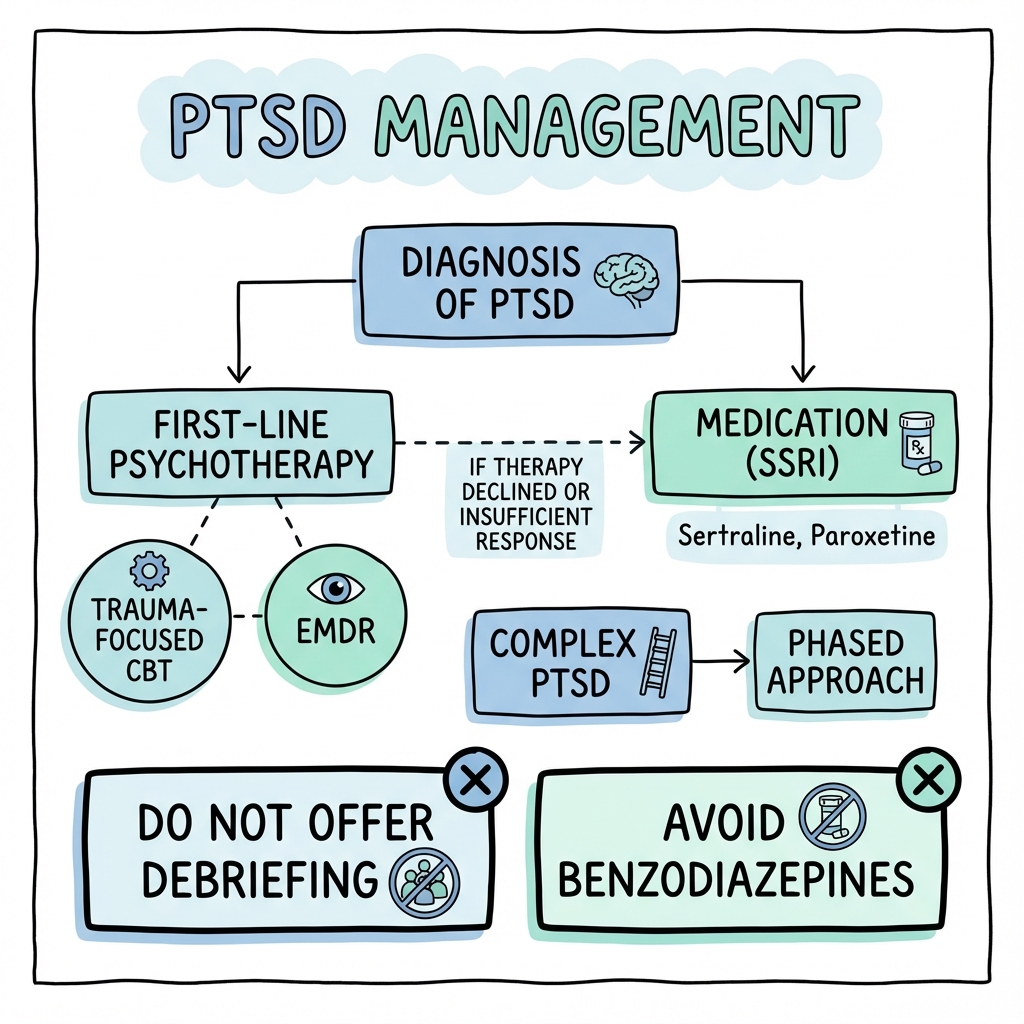
Clinical board
A visual summary of the highest-yield teaching signals on this page.
Urgent signals
Safety-critical features pulled from the topic metadata.
- Active suicidal ideation or intent
- Severe dissociative episodes with loss of reality testing
- High-risk substance misuse with medical complications
- Severe depression with psychomotor retardation
Exam focus
Current exam surfaces linked to this topic.
- MRCP
- PLAB
- USMLE
Linked comparisons
Differentials and adjacent topics worth opening next.
- Adjustment Disorder
- Panic Disorder
Content status and exam context
This page is AI-generated educational content. It may contain errors or omissions and is not a substitute for current guidelines, local protocols, senior clinical judgement, or professional medical advice.
MedVellum does not claim an individual clinician reviewer, board certification, or professional credential for this page unless a future version names a real, verifiable reviewer.
Clinical explanation and evidence
Post-Traumatic Stress Disorder
1. Topic Overview
Summary
Post-Traumatic Stress Disorder (PTSD) is a debilitating psychiatric disorder that develops in susceptible individuals following exposure to traumatic events involving actual or threatened death, serious injury, or sexual violence. [1] The disorder is characterised by four core symptom clusters defined in DSM-5: intrusive re-experiencing phenomena (flashbacks, nightmares), persistent avoidance of trauma-related stimuli, negative alterations in cognitions and mood, and marked alterations in arousal and reactivity (hyperarousal). [2] Symptoms must persist for more than one month and cause clinically significant distress or functional impairment.
PTSD affects approximately 3.9% of the general population over a lifetime, with substantially higher rates in high-risk groups including combat veterans (10-30%), sexual assault survivors (up to 50%), and emergency service workers. [3,4] The pathophysiology involves dysregulation of fear conditioning circuits, HPA axis abnormalities, and alterations in brain structures including the amygdala, prefrontal cortex, and hippocampus. [5]
Evidence-based treatment centres on trauma-focused psychological therapies—specifically trauma-focused cognitive behavioural therapy (TF-CBT) and eye movement desensitisation and reprocessing (EMDR)—as first-line interventions. [6,7] Pharmacotherapy with selective serotonin reuptake inhibitors (SSRIs) such as sertraline and paroxetine serves as second-line treatment or adjunctive therapy. [8] Early recognition and appropriate treatment can significantly improve outcomes and prevent chronic disability.
Key Facts
- Lifetime Prevalence: 3.9% in general population; up to 50% in high-risk trauma-exposed groups [3,4]
- Conditional Risk: Only 10-20% of trauma-exposed individuals develop PTSD [3]
- Onset Pattern: Typically within 3 months of trauma; delayed onset (> 6 months) occurs in ~25% [2]
- Duration Criteria: Symptoms must persist > 1 month (acute stress disorder if less than 1 month) [2]
- Gender Ratio: Female:Male approximately 2:1, partially explained by trauma type [3]
- First-Line Treatment: Trauma-focused CBT or EMDR (8-12 sessions) [6,7]
- Pharmacotherapy: SSRIs (sertraline, paroxetine) as second-line; NOT benzodiazepines [8]
- Comorbidity Burden: 50-80% have comorbid psychiatric disorders, most commonly depression [9]
- Natural History: ~50% spontaneous remission within 3 months; 30% remain symptomatic at 1 year [10]
- Suicide Risk: 6-fold increased risk of suicide attempts compared to general population [11]
Clinical Pearls
High-Yield Points:
- Not all trauma leads to PTSD: The majority (80-90%) of trauma-exposed individuals do NOT develop PTSD—resilience is the norm [3]
- Trauma-focused therapy is essential: Non-trauma-focused supportive counselling is ineffective and NOT recommended [6]
- EMDR equals CBT-TF: Both have equivalent efficacy; patient preference should guide choice [7]
- SSRIs are second-line: Medication should not replace psychological therapy unless therapy is declined or unavailable [8]
- Benzodiazepines worsen outcomes: Do NOT prescribe benzodiazepines—they interfere with fear extinction and increase chronicity risk [12]
- Complex PTSD is distinct: ICD-11 recognises complex PTSD (repeated/prolonged trauma) requiring phase-based treatment [13]
- Screen for comorbidity: Depression (50%), substance use (30-50%), and suicidality are extremely common [9,11]
- Timing matters: Offer watchful waiting for first month (acute stress disorder); initiate treatment if symptoms persist > 1 month [6]
- Avoid debriefing: Single-session psychological debriefing immediately post-trauma is NOT effective and may be harmful [14]
- Combat veterans underutilise treatment: Only 40-50% of veterans with PTSD seek help due to stigma [15]
Why This Matters Clinically
PTSD is under-recognised in primary care, emergency departments, and general medical settings, yet it profoundly impacts quality of life, physical health, occupational functioning, and relationships. [16] The disorder increases risk of cardiovascular disease, chronic pain, autoimmune conditions, and premature mortality independent of psychiatric comorbidity. [17] Suicide risk is elevated 6-fold, with 20-30% of individuals with PTSD attempting suicide. [11]
Crucially, PTSD is highly treatable: trauma-focused psychological therapies produce remission in 40-60% of cases, with effect sizes among the largest in psychiatry. [6,7] However, treatment gaps are substantial—fewer than 50% of individuals with PTSD receive evidence-based care, and fewer than 30% receive adequate doses of trauma-focused therapy. [15]
Understanding the diagnostic criteria, differential diagnosis (particularly acute stress disorder and adjustment disorder), and the critical role of trauma-focused interventions enables clinicians to identify, appropriately refer, and support individuals towards recovery. The difference between evidence-based trauma-focused therapy and generic supportive counselling cannot be overstated—the former is effective, the latter is not. [6]
2. Epidemiology
Prevalence and Incidence
| Metric | Value | Evidence |
|---|---|---|
| Lifetime Prevalence (General Population) | 3.9% (95% CI: 3.4-4.4%) | Meta-analysis, 26 countries [3] |
| 12-Month Prevalence | 1.5-2.4% | WHO World Mental Health Surveys [3] |
| Trauma Exposure (Lifetime) | 70% adults experience ≥1 traumatic event | Epidemiological studies [3] |
| Conditional Risk (Trauma → PTSD) | 10-20% of trauma-exposed develop PTSD | Varies by trauma type [3] |
| Female:Male Ratio | 2:1 (prevalence) | Consistent across cultures [3] |
| Median Age of Onset | 23 years | WHO surveys [3] |
Geographic Variation
Lifetime prevalence varies substantially by region:
- High-income countries: 3.5-5.6%
- Low-middle-income countries: 2.5-3.7%
- Conflict zones: 15-30% (ongoing exposure) [3]
High-Risk Groups
| Population | PTSD Prevalence | Trauma Types |
|---|---|---|
| Combat veterans | 10-30% | Combat exposure, witnessing death [15] |
| Sexual assault survivors | 30-50% | Rape, sexual abuse [4] |
| Childhood abuse survivors | 20-40% | Physical, sexual, emotional abuse [4] |
| Emergency service workers | 10-20% | Repeated trauma exposure, critical incidents [18] |
| Refugees/torture survivors | 30-50% | War, persecution, torture [19] |
| Serious motor vehicle accidents | 10-15% | Life-threatening injury [4] |
| Natural disaster survivors | 5-15% | Varies by disaster severity [4] |
| Intensive care survivors | 10-25% | Medical trauma, delirium [20] |
Trauma Type and Conditional Risk
Not all traumas carry equal PTSD risk:
| Trauma Type | Conditional PTSD Risk |
|---|---|
| Rape/sexual assault | 45-50% |
| Combat exposure | 20-30% |
| Childhood physical abuse | 20-35% |
| Serious accident/injury | 10-15% |
| Natural disaster | 5-10% |
| Sudden unexpected death of loved one | 5-15% |
Interpersonal violence (assault, rape, abuse) carries significantly higher PTSD risk than accidents or natural disasters, reflecting the role of intentionality and betrayal. [4]
Risk Factors for PTSD Development
Pre-Trauma Vulnerabilities
Demographic:
- Female sex (2-fold increased risk) [3]
- Younger age at trauma exposure [3]
- Lower socioeconomic status [21]
- Lower educational attainment [21]
- Ethnic minority status (in some contexts) [21]
Psychiatric:
- Prior psychiatric diagnosis (depression, anxiety) [21]
- Prior trauma exposure (sensitisation effect) [21]
- Family history of psychiatric disorder [21]
- Childhood adversity [4]
Biological:
- Genetic vulnerability (twin studies: heritability 30-40%) [5]
- Smaller hippocampal volume (pre-existing) [5]
Peri-Trauma Factors
- Trauma severity: Dose-response relationship [21]
- Perceived life threat: Subjective appraisal critical [21]
- Trauma duration: Prolonged exposure increases risk [21]
- Interpersonal violence: Higher risk than accidents [4]
- Peri-traumatic dissociation: Out-of-body experiences, emotional numbing during trauma [21]
- Physical injury: Especially traumatic brain injury [22]
Post-Trauma Factors
- Lack of social support: Most robust modifiable risk factor [21]
- Additional life stressors: Financial, relationship, legal problems [21]
- Avoidance coping: Suppression, rumination, substance use [21]
- Ongoing threat: Continued danger, no safety [21]
- Negative social responses: Victim blaming, disbelief [21]
3. Pathophysiology
Neurobiological Framework
PTSD involves dysregulation across multiple interconnected brain systems responsible for fear learning, memory consolidation, emotion regulation, and threat detection. [5]
Fear Conditioning and Extinction
Normal Fear Learning:
- Threat encountered → amygdala activation → fear response
- Threat passes → safety signals → prefrontal cortex inhibits amygdala → fear extinction
- Contextual cues (hippocampus) signal "safe" vs "dangerous"
PTSD Dysfunction:
- Excessive fear conditioning: Amygdala becomes hyperresponsive; neutral stimuli become conditioned fear cues [5]
- Impaired fear extinction: Ventromedial prefrontal cortex (vmPFC) fails to inhibit amygdala; fear responses persist despite safety [5]
- Context dysregulation: Hippocampal dysfunction impairs ability to discriminate safe vs dangerous contexts; trauma memories intrude into present [5]
Brain Structural and Functional Changes
| Region | Finding | Functional Consequence |
|---|---|---|
| Amygdala | Hyperreactivity; increased activation to threat cues | Exaggerated fear responses, hyperarousal, physiological reactivity [5] |
| Medial prefrontal cortex (mPFC) | Reduced activation and volume (ACC, vmPFC) | Impaired emotion regulation, inability to extinguish fear [5] |
| Hippocampus | Reduced volume (5-10% smaller); altered function | Impaired contextual memory, intrusive trauma memories, difficulty updating memories [5] |
| Anterior cingulate cortex (ACC) | Reduced volume and activation | Poor conflict resolution, difficulty inhibiting prepotent responses [5] |
| Insula | Hyperactivation | Heightened interoception, bodily sensations of fear [5] |
Controversy: Smaller hippocampal volume may be pre-existing vulnerability (genetic) rather than trauma-induced, based on twin studies. [5]
HPA Axis Dysregulation
Paradoxical Pattern:
- Low cortisol levels (basal and in response to stress) [5]
- Enhanced negative feedback: Increased glucocorticoid receptor sensitivity [5]
- Elevated CRH: Heightened corticotropin-releasing hormone [5]
Functional Consequences:
- Impaired stress response termination
- Heightened sympathetic arousal (noradrenaline/epinephrine)
- Contributes to hypervigilance, startle, and re-experiencing [5]
Contrast with depression: Depression typically shows HPA axis hyperactivity (high cortisol); PTSD shows hypoactivity.
Neurotransmitter Alterations
| System | Change | Clinical Manifestation |
|---|---|---|
| Noradrenaline | Elevated; increased locus coeruleus activity | Hyperarousal, exaggerated startle, hypervigilance [5] |
| Serotonin | Reduced function | Mood dysregulation, impulsivity, intrusive thoughts [5] |
| GABA | Reduced inhibitory function | Anxiety, sleep disturbance [5] |
| Glutamate | Altered NMDA receptor function | Memory consolidation abnormalities [5] |
| Endogenous opioids | Dysregulated; altered pain perception | Emotional numbing, analgesia during re-experiencing [5] |
Memory Processing Model
Normal Memory Processing:
- Event occurs → sensory details encoded → hippocampus integrates context → prefrontal cortex organises narrative → memory stored as "past event"
- Recall is voluntary, experienced as remembered (not relived)
Trauma Memory in PTSD:
- Overwhelming event → incomplete processing → fragmented encoding
- Sensory/emotional details stored WITHOUT contextual integration
- Memory stored as "present threat" not "past event"
- Involuntary intrusions: Flashbacks experienced as happening NOW (not remembered as past) [5]
Therapeutic Implication: Trauma-focused therapies (CBT-TF, EMDR) facilitate memory processing—integrating sensory fragments into coherent narrative, updating memory as "past," enabling fear extinction. [6,7]
Genetic and Epigenetic Factors
- Heritability: Twin studies estimate 30-40% of PTSD variance is genetic [5]
- Candidate genes: FKBP5 (HPA axis regulation), COMT (catecholamine metabolism), SLC6A4 (serotonin transporter) [5]
- Gene-environment interaction: Genetic vulnerability interacts with trauma severity
- Epigenetic modifications: DNA methylation changes (e.g., glucocorticoid receptor genes) may mediate stress effects [5]
Inflammation and Immune Dysregulation
Emerging evidence suggests:
- Elevated pro-inflammatory cytokines (IL-1β, IL-6, TNF-α) [17]
- C-reactive protein (CRP) elevation [17]
- Accelerated cellular ageing (shortened telomeres) [17]
- Links to physical health comorbidities (cardiovascular disease, autoimmune conditions) [17]
4. Clinical Presentation
DSM-5 Diagnostic Criteria (Simplified)
Criterion A: Trauma Exposure
Exposure to actual or threatened death, serious injury, or sexual violence in one or more of the following ways:
- Directly experiencing the traumatic event
- Witnessing the event as it occurred to others
- Learning that the event occurred to a close family member or friend (violent or accidental)
- Experiencing repeated or extreme exposure to aversive details of traumatic events (e.g., first responders) [2]
Criterion B: Intrusion Symptoms (≥1 required)
- Recurrent, involuntary, intrusive distressing memories
- Recurrent distressing dreams related to trauma
- Dissociative reactions (flashbacks): Acting or feeling as if the traumatic event were recurring
- Intense psychological distress at exposure to trauma cues
- Marked physiological reactions to trauma reminders (tachycardia, sweating, tremor) [2]
Criterion C: Avoidance (≥1 required)
- Avoidance of distressing memories, thoughts, or feelings about the trauma
- Avoidance of external reminders (people, places, conversations, activities, objects, situations) [2]
Criterion D: Negative Alterations in Cognitions and Mood (≥2 required)
- Inability to remember important aspect of the trauma (dissociative amnesia)
- Persistent exaggerated negative beliefs about oneself, others, or the world ("I am bad," "No one can be trusted," "The world is completely dangerous")
- Persistent distorted cognitions about the cause or consequences of trauma leading to blame of self or others
- Persistent negative emotional state (fear, horror, anger, guilt, shame)
- Markedly diminished interest or participation in significant activities
- Feelings of detachment or estrangement from others
- Persistent inability to experience positive emotions (happiness, satisfaction, love) [2]
Criterion E: Alterations in Arousal and Reactivity (≥2 required)
- Irritable behaviour and angry outbursts (with little or no provocation)
- Reckless or self-destructive behaviour
- Hypervigilance
- Exaggerated startle response
- Problems with concentration
- Sleep disturbance (difficulty falling or staying asleep, restless sleep) [2]
Criteria F-H: Duration, Functional Impairment, Exclusion
- F: Duration of symptoms > 1 month
- G: Significant distress or impairment in social, occupational, or other important functioning
- H: Not attributable to physiological effects of substance or medical condition [2]
DSM-5 Specifiers
| Specifier | Definition |
|---|---|
| With dissociative symptoms | Depersonalisation or derealisation in addition to PTSD criteria [2] |
| With delayed expression | Full criteria not met until ≥6 months after trauma (though some symptoms may appear earlier) [2] |
ICD-11 Criteria (Differences from DSM-5)
ICD-11 PTSD is narrower:
- Requires only 1 symptom from re-experiencing, avoidance, and hyperarousal (no negative cognitions cluster)
- Focuses on "core" PTSD symptoms
- Introduces Complex PTSD as separate diagnosis [13]
Complex PTSD (ICD-11)
PTSD symptoms (re-experiencing, avoidance, hyperarousal) PLUS "disturbances in self-organisation":
- Affect dysregulation: Difficulty controlling emotions, heightened reactivity, emotional numbing
- Negative self-concept: Persistent beliefs of diminished worth, shame, guilt, failure
- Disturbances in relationships: Difficulty feeling close to others, avoiding relationships [13]
Associated with: Prolonged, repeated trauma, especially during developmental periods—childhood abuse, domestic violence, captivity, torture, prolonged combat, trafficking. [13]
Treatment implications: Requires phase-based approach (stabilisation → trauma processing → integration) and longer duration therapy. [13]
Clinical Subtypes and Presentations
| Presentation | Features |
|---|---|
| Dissociative subtype | Prominent depersonalisation/derealisation; more severe course [2] |
| Delayed onset | Symptoms emerge > 6 months post-trauma (~25% of cases); often triggered by reminder or new stressor [2] |
| Preschool PTSD | Modified criteria for children less than 6 years (lower symptom thresholds) [2] |
| Subsyndromal PTSD | Clinically significant symptoms not meeting full criteria; still warrants treatment [10] |
Differential Diagnosis
| Condition | Key Distinguishing Features |
|---|---|
| Acute Stress Disorder (ASD) | Symptoms 3 days to 1 month post-trauma; if > 1 month, becomes PTSD [2] |
| Adjustment Disorder | Stressor does NOT meet Criterion A (not life-threatening/violent); symptoms within 3 months of stressor [2] |
| Major Depressive Disorder | No re-experiencing or hyperarousal; pervasive anhedonia; not trauma-linked [9] |
| Generalised Anxiety Disorder | Worry about multiple domains (not trauma-specific); no flashbacks [2] |
| Panic Disorder | Panic attacks not triggered by trauma reminders; fear of panic itself [2] |
| Specific Phobia | Fear of specific object/situation; no intrusive re-experiencing [2] |
| Obsessive-Compulsive Disorder | Obsessions are ego-dystonic thoughts, not trauma memories [2] |
| Dissociative Disorders | Primary dissociation (amnesia, identity disturbance) without full PTSD cluster [2] |
| Traumatic Brain Injury (TBI) | Cognitive deficits, memory problems, personality change; may coexist with PTSD [22] |
| Substance-Induced Disorders | Symptoms related to intoxication/withdrawal; temporal relationship to substance use [2] |
| Psychotic Disorders | Hallucinations/delusions not trauma-related; disorganised thought [2] |
Key Point: Comorbidity is the norm—50-80% of individuals with PTSD have ≥1 comorbid disorder. Screen systematically. [9]
Red Flags Requiring Urgent Intervention
- Active suicidal ideation with intent or plan [11]
- Severe dissociation with loss of reality testing or safety concerns
- Psychotic symptoms (command hallucinations, paranoid delusions)
- Severe depression with psychomotor retardation or catatonia
- High-risk substance misuse with medical complications (withdrawal risk, overdose)
- Flashbacks associated with violent behaviour or risk to others
- Acute deterioration in functioning (unable to self-care)
- Self-harm with high lethality (hanging, firearms, jumping)
5. Clinical Assessment
History Taking
Trauma Inquiry (Sensitive Approach):
- "Sometimes when people go through difficult or frightening events, they can experience ongoing effects. Have you experienced or witnessed anything particularly traumatic or distressing?"
- "Have you ever been in a situation where you feared for your life or safety?"
- DO NOT demand graphic details initially—establish symptom presence first
Screening Questions (Trauma Screening Questionnaire - TSQ):
Ask about past month. ≥6 "yes" indicates likely PTSD:
- Upsetting thoughts or memories about the event that have come into your mind against your will
- Upsetting dreams about the event
- Acting or feeling as though the event were happening again
- Feeling upset by reminders of the event
- Bodily reactions (e.g., fast heartbeat, sweating, dizziness) when reminded of the event
- Difficulty falling or staying asleep
- Irritability or outbursts of anger
- Difficulty concentrating
- Heightened awareness of potential dangers to yourself and others
- Being jumpy or being startled at something unexpected [6]
Detailed Symptom Assessment:
For each DSM-5 cluster, assess:
- Re-experiencing: Flashbacks (frequency, triggers, duration), nightmares, intrusive memories
- Avoidance: What places/people/activities avoided? Impact on life?
- Negative cognitions/mood: Specific beliefs ("I'm damaged," "It was my fault"), emotional numbing, anhedonia, detachment
- Hyperarousal: Sleep (onset/maintenance), concentration, startle, irritability, reckless behaviour
Functional Impact:
- Occupational: Work performance, absenteeism, job loss
- Social: Relationships, social withdrawal, isolation
- Activities of daily living: Self-care, household responsibilities
Comorbidity Screening:
- Depression: PHQ-9 (low mood, anhedonia, suicidal ideation) [9]
- Anxiety: GAD-7 (generalised worry), panic symptoms [9]
- Substance use: AUDIT (alcohol), DUDIT (drugs), tobacco [9]
- Other trauma history: Childhood adversity, prior traumas
Risk Assessment:
- Suicide: Ideation, intent, plan, access to means, protective factors [11]
- Self-harm: Non-suicidal self-injury (cutting, burning)
- Violence risk: Anger, irritability, access to weapons, history of violence
- Safeguarding: Ongoing abuse, domestic violence, child protection concerns
Mental State Examination
| Domain | Typical Findings in PTSD |
|---|---|
| Appearance | May appear anxious, guarded, hypervigilant; poor self-care if severe |
| Behaviour | Restless, startles easily, avoids eye contact, sits near exit |
| Speech | Normal rate/tone; may be reluctant to discuss trauma |
| Mood | "Anxious," "numb," "on edge," "empty" |
| Affect | Restricted, blunted, or labile; may show sudden fear/anger |
| Thought | Preoccupied with trauma; negative beliefs about self/world; NO formal thought disorder |
| Perception | Flashbacks (dissociative, not true hallucinations); NO psychotic hallucinations |
| Cognition | Concentration impaired; memory may be affected; orientated |
| Insight | Variable; many recognise symptoms are trauma-related |
Dissociation During Assessment:
- Glazed expression, unresponsive to questions, staring
- If occurs: Grounding techniques ("Look around the room, tell me 5 things you can see")
Validated Screening and Assessment Tools
| Tool | Type | Items | Cutoff | Use |
|---|---|---|---|---|
| PCL-5 (PTSD Checklist) | Self-report | 20 | ≥33 | Gold standard screening/severity [6] |
| IES-R (Impact of Events Scale-Revised) | Self-report | 22 | ≥33 | Intrusion, avoidance, hyperarousal [6] |
| TSQ (Trauma Screening Questionnaire) | Self-report | 10 | ≥6 | Brief screening [6] |
| CAPS-5 (Clinician-Administered PTSD Scale) | Clinician | Structured interview | Diagnosis | Gold standard diagnostic interview [6] |
| PHQ-9 | Self-report | 9 | ≥10 | Depression comorbidity [9] |
| GAD-7 | Self-report | 7 | ≥10 | Anxiety comorbidity [9] |
| AUDIT | Self-report | 10 | ≥8 | Alcohol use [9] |
Physical Examination
Not routinely diagnostic but consider:
- Cardiovascular: Tachycardia, hypertension (chronic hyperarousal)
- Neurological: Exaggerated startle reflex
- Injury assessment: Scars, evidence of self-harm, domestic violence
- General health: Chronic pain, sleep disturbance effects
6. Investigations
Purpose
PTSD is a clinical diagnosis—no laboratory test or imaging confirms it. Investigations serve to:
- Exclude organic causes mimicking PTSD
- Assess comorbid physical health conditions
- Screen for substance use
- Establish baseline before medication
Investigations to Exclude Organic Causes
| Investigation | Purpose | When to Order |
|---|---|---|
| Thyroid function (TSH, free T4) | Exclude hyperthyroidism (mimics hyperarousal) | All cases with prominent anxiety/hyperarousal [2] |
| Full blood count (FBC) | Anaemia (fatigue), infection | Baseline health assessment |
| Urea, electrolytes, creatinine | Renal function (before medication) | Pre-treatment baseline |
| Liver function tests (LFTs) | Hepatic function, alcohol use marker | Pre-treatment, if substance use concern |
| Glucose (fasting or HbA1c) | Diabetes (associated with PTSD) | Cardiovascular risk assessment [17] |
| Lipid profile | Cardiovascular risk (PTSD increases risk) | Age > 40 or cardiovascular risk factors [17] |
| Urine drug screen | Detect illicit substance use | If substance use suspected [9] |
| Alcohol biomarkers (GGT, MCV) | Chronic alcohol use | If alcohol concern [9] |
| Electrocardiogram (ECG) | Baseline before SSRI/SNRI; arrhythmia | Age > 40, cardiovascular history, before medication |
| Neuroimaging (CT/MRI head) | Traumatic brain injury, structural lesion | Trauma with head injury, focal neurology [22] |
| Electroencephalogram (EEG) | Exclude seizure disorder (if dissociative episodes) | Episodic altered consciousness |
Psychological Screening Instruments (Above)
Neurobiological Research (Not Routine Clinical Practice)
- Functional MRI (fMRI): Amygdala hyperreactivity, mPFC hypoactivity [5]
- Structural MRI: Reduced hippocampal/ACC volume [5]
- Salivary cortisol: Low basal cortisol, enhanced suppression on dexamethasone test [5]
- Genetic testing: Research only; no clinical utility currently [5]
These are research tools, NOT used in routine diagnosis or treatment planning.
7. Management
General Principles
- Trauma-focused psychological therapy is first-line: NICE, VA/DoD, and ISTSS guidelines unanimously recommend TF-CBT or EMDR [6,7]
- Medication is second-line: SSRIs are adjunctive or for those declining/unable to access therapy [8]
- Benzodiazepines are contraindicated: Worsen outcomes, interfere with fear extinction [12]
- Watchful waiting appropriate for first month: If trauma less than 1 month ago (acute stress disorder), provide psychoeducation and monitor—many will recover spontaneously [6]
- Address comorbidity: Treat depression, substance use, chronic pain concurrently [9]
- Avoid single-session debriefing: Psychological debriefing immediately post-trauma is ineffective and potentially harmful [14]
First-Line: Trauma-Focused Psychological Therapy
Trauma-Focused Cognitive Behavioural Therapy (TF-CBT)
Structure: 8-12 individual sessions (60-90 minutes), weekly or twice-weekly [6]
Core Components:
- Psychoeducation: Normalise symptoms, explain trauma memory processing, treatment rationale
- Relaxation/breathing: Manage hyperarousal
- Cognitive restructuring: Challenge negative trauma-related beliefs ("It was my fault," "I'm damaged")
- Imaginal exposure: Repeatedly recount trauma narrative (verbalise or write) until distress habituates
- In vivo exposure: Gradual confrontation of avoided situations/places
- Relapse prevention: Identify triggers, develop coping strategies
Variants:
- Prolonged Exposure (PE): Emphasises imaginal and in vivo exposure
- Cognitive Processing Therapy (CPT): Emphasises cognitive restructuring of trauma-related beliefs
Evidence: Multiple RCTs; effect sizes 1.0-1.5; remission rates 40-60% [6]
Mechanism: Facilitates emotional processing of trauma memory, updates meaning, enables fear extinction [6]
Eye Movement Desensitisation and Reprocessing (EMDR)
Structure: 8-12 sessions (60-90 minutes) [7]
Phases:
- History taking and treatment planning
- Preparation (psychoeducation, establish "safe place")
- Assessment (identify target memory, negative cognition, distress level)
- Desensitisation: Recall trauma while tracking therapist's finger movements (bilateral stimulation)
- Installation (strengthen positive cognition)
- Body scan (release residual tension)
- Closure
- Re-evaluation (subsequent sessions)
Bilateral Stimulation: Eye movements, tapping, or auditory tones (mechanism unclear—may facilitate memory reconsolidation)
Evidence: Equivalent efficacy to TF-CBT; remission rates 40-60% [7]
Advantages: Less verbal disclosure required (may suit those reluctant to talk); some patients prefer it
Controversy: Mechanism poorly understood; unclear if eye movements essential or placebo
Choosing Between TF-CBT and EMDR
- Both equally effective [7]
- Patient preference should guide choice
- Availability: Offer whichever is accessible soonest
- TF-CBT may have stronger evidence base, but EMDR is NICE-approved
Second-Line: Pharmacotherapy
Indications for Medication
- Patient declines psychological therapy [8]
- Psychological therapy unavailable or inaccessible (waiting lists, geographic) [8]
- Inadequate response to adequate trial of TF-CBT or EMDR [8]
- Severe comorbid depression requiring pharmacological treatment [9]
- Patient preference [8]
IMPORTANT: Medication should NOT replace trauma-focused therapy if therapy is feasible and acceptable. Combination therapy (medication + therapy) is common but therapy alone is first-line. [6,8]
First-Line Medications: SSRIs and SNRIs
| Drug | Dose Range | Titration | Evidence | Notes |
|---|---|---|---|---|
| Sertraline (SSRI) | 50-200 mg daily | Start 25-50 mg; increase by 50 mg every 1-2 weeks | RCTs show efficacy; FDA approved [8] | First choice; fewer drug interactions |
| Paroxetine (SSRI) | 20-50 mg daily | Start 10-20 mg; increase by 10 mg every 1-2 weeks | FDA approved for PTSD [8] | Anticholinergic effects; withdrawal on cessation |
| Fluoxetine (SSRI) | 20-60 mg daily | Start 10-20 mg; increase by 10-20 mg every 2-4 weeks | RCTs show efficacy [8] | Long half-life (less withdrawal) |
| Venlafaxine (SNRI) | 75-225 mg daily | Start 37.5-75 mg; increase by 75 mg every 1-2 weeks | RCTs show efficacy; alternative to SSRIs [8] | Monitor blood pressure |
Duration: If effective, continue for ≥12 months after remission before considering gradual withdrawal [8]
Effect size: Moderate (Cohen's d ~0.5); lower than trauma-focused therapy [8]
Response rate: 40-60% achieve ≥30% symptom reduction [8]
Onset: 4-6 weeks; reassess at 8-12 weeks
Side effects: Nausea, headache, sexual dysfunction, insomnia/sedation, weight gain (varies by drug)
Second-Line Medications (If SSRIs Ineffective)
| Drug | Dose | Evidence | Notes |
|---|---|---|---|
| Mirtazapine | 15-45 mg | Small RCTs; helpful for sleep | Sedation, weight gain [8] |
| Amitriptyline | 50-150 mg | Limited evidence | Anticholinergic; caution in overdose [8] |
| Prazosin (α1-blocker) | 1-20 mg at night | Mixed evidence; may reduce nightmares | Hypotension, dizziness [8] |
Medications NOT Recommended
| Drug Class | Rationale |
|---|---|
| Benzodiazepines | NO evidence of efficacy; interfere with fear extinction; dependence risk; worsen PTSD outcomes [12] |
| Antipsychotics | Insufficient evidence as monotherapy; reserve for adjunctive use in refractory cases or comorbid psychosis (specialist only) [8] |
| Mood stabilisers | No robust evidence in PTSD [8] |
Critical Point: Benzodiazepines are contraindicated—multiple studies show no benefit and potential harm (impaired fear extinction learning). [12]
Symptom-Specific Adjunctive Treatments
| Symptom | Intervention | Evidence |
|---|---|---|
| Nightmares | Prazosin 1-20 mg (titrate); Imagery Rehearsal Therapy | Mixed evidence; some benefit [8] |
| Insomnia | Sleep hygiene; short-term zopiclone/zolpidem (avoid long-term); CBT-Insomnia | Behavioural approaches preferred [6] |
| Hyperarousal | Propranolol (adjunct); relaxation techniques | Limited evidence [8] |
| Dissociation | Grounding techniques; phase-based trauma therapy | Stabilisation before trauma processing [13] |
Complex PTSD Management
Phase-Based Approach [13]:
-
Phase 1: Stabilisation (weeks to months)
- Safety planning, crisis management
- Affect regulation skills (distress tolerance, emotion regulation)
- Establish therapeutic relationship
- Address comorbid substance use, self-harm
-
Phase 2: Trauma Processing (months)
- TF-CBT or EMDR (as above)
- May require longer duration and gradual pacing
-
Phase 3: Integration and Rehabilitation (months)
- Rebuild identity, relationships, occupational functioning
- Address interpersonal difficulties
- Relapse prevention
Duration: Typically 16-30+ sessions (vs 8-12 for PTSD) [13]
Specialist referral: Complex PTSD often requires specialist trauma services
Watchful Waiting and Early Interventions
First Month Post-Trauma (Acute Stress Disorder) [6]:
- Psychoeducation: Normalise reactions, explain recovery trajectory
- Practical support: Ensure safety, meet basic needs
- Watchful waiting: Monitor symptoms; ~50% recover spontaneously
- Avoid: Single-session psychological debriefing (ineffective) [14]
When to Start Treatment:
- If symptoms persist > 1 month (PTSD criteria met) [6]
- If severe distress or impairment earlier (consider treatment before 1 month in severe cases) [6]
Referral Criteria
Primary Care → Specialist Mental Health Services:
- Moderate-severe PTSD (PCL-5 > 33)
- Comorbid severe depression or psychosis
- High suicide risk
- Complex PTSD
- Lack of response to primary care interventions
- Substance dependence requiring specialist input
Specialist Services → Tertiary Trauma Services:
- Treatment-resistant PTSD (failed 2+ evidence-based therapies)
- Severe complex PTSD with major dysfunction
- Comorbid personality disorder
- Risk of violence to others
Monitoring and Follow-Up
- Symptom severity: PCL-5 or IES-R every 4-8 weeks
- Functional impairment: Work, relationships, self-care
- Comorbidity: Depression, substance use, suicidality
- Side effects: If on medication
- Therapy adherence: Dropout rates high—support engagement
8. Complications and Comorbidity
Psychiatric Comorbidity
| Comorbidity | Prevalence in PTSD | Clinical Implications |
|---|---|---|
| Major Depressive Disorder | 50% | Increases suicide risk; treat concurrently; may worsen avoidance [9] |
| Generalised Anxiety Disorder | 30% | Overlapping worry and hyperarousal; TF-CBT addresses both [9] |
| Panic Disorder | 15% | Trauma-related panic vs spontaneous panic; TF-CBT effective [9] |
| Substance Use Disorder | 30-50% | Self-medication; worsens PTSD; requires integrated treatment [9] |
| Alcohol Use Disorder | 40-50% (especially veterans) | Avoidance coping; interferes with therapy; may need detox first [9] |
| Specific Phobias | 20-30% | Trauma-related avoidance generalises [9] |
| Obsessive-Compulsive Disorder | 10-15% | Overlapping intrusive thoughts [9] |
| Eating Disorders | 10-20% (especially in sexual trauma) | Control, body image, dissociation [9] |
| Personality Disorders | 20-40% | Especially borderline, avoidant; complicates treatment [9] |
Treatment Implications:
- Screen for ALL common comorbidities at baseline
- Trauma-focused therapy often improves comorbid depression/anxiety ("transdiagnostic" effect) [9]
- Substance use may require stabilisation/detox before trauma processing
- Comorbid depression may warrant SSRI even if TF-CBT is first-line for PTSD
Suicidality and Self-Harm
- Suicide attempts: 20-30% of individuals with PTSD attempt suicide (vs 5% general population) [11]
- Relative risk: 6-fold increased risk of suicide attempts [11]
- Risk factors: Comorbid depression, substance use, social isolation, access to firearms, combat-related PTSD
- Non-suicidal self-injury: Cutting, burning (affect regulation, dissociation relief)
Management: Regular risk assessment, safety planning, restrict access to means, treat comorbid depression, ensure crisis contacts
Physical Health Complications
| Condition | Association | Mechanism |
|---|---|---|
| Cardiovascular disease | 50-60% increased risk | Chronic stress, HPA axis dysregulation, inflammation, health behaviours [17] |
| Chronic pain | 30-80% | Altered pain processing, central sensitisation, somatisation [17] |
| Autoimmune disorders | Elevated risk (OR 1.5-2.0) | Inflammation, immune dysregulation [17] |
| Metabolic syndrome | Increased prevalence | Cortisol dysregulation, lifestyle factors [17] |
| Type 2 diabetes | 50% increased risk | Metabolic, stress, health behaviours [17] |
| Chronic respiratory disease | Increased prevalence | Smoking, anxiety-related hyperventilation [17] |
| Gastrointestinal disorders | IBS, peptic ulcer | Stress, autonomic dysfunction [17] |
| Sleep disorders | 70-90% | Insomnia, nightmares, sleep apnoea [17] |
| Premature mortality | Reduced life expectancy | Cardiovascular disease, suicide, accidents [17] |
Clinical Implication: PTSD is NOT "just psychological"—comprehensive medical care is essential.
Functional Impairment
- Occupational: Absenteeism, reduced productivity, job loss (30-40% unemployed in chronic PTSD)
- Relationships: Marital discord, divorce (2-3x higher rate), parenting difficulties, domestic violence (victim or perpetrator)
- Social: Isolation, withdrawal, inability to engage in previously enjoyed activities
- Financial: Loss of income, healthcare costs, legal expenses
- Quality of life: Profound reduction across all domains
Neurological Complications
- Traumatic brain injury (TBI): 30-50% of combat-related PTSD has comorbid TBI; overlapping symptoms complicate diagnosis and treatment [22]
- Cognitive impairment: Executive dysfunction, memory deficits (may persist despite PTSD treatment) [22]
9. Prognosis
Natural History (Without Treatment)
| Timeframe | Outcome |
|---|---|
| 3 months post-trauma | ~50% spontaneous remission (acute stress reactions resolve) [10] |
| 6 months | 30-40% still symptomatic [10] |
| 1 year | 30% meet PTSD criteria [10] |
| Chronic (> 3 years) | 10-20% have persistent, unremitting symptoms [10] |
Key Point: Early intervention (within 3 months) reduces chronicity risk. [10]
Prognosis With Evidence-Based Treatment
| Outcome | Rate |
|---|---|
| Remission with TF-CBT/EMDR | 40-60% [6,7] |
| Clinically significant improvement | 60-80% [6,7] |
| Dropout from therapy | 20-30% (challenge: maintaining engagement) [6] |
| Relapse after successful treatment | 10-20% (often triggered by new stressor) [10] |
Effect sizes: TF-CBT and EMDR have among the largest effect sizes in psychiatry (Cohen's d = 1.0-1.5). [6,7]
Prognostic Factors
Favourable Prognosis
- Single-incident trauma (vs repeated) [10]
- Acute onset (vs delayed) [10]
- Early treatment access (less than 6 months) [10]
- Strong social support [21]
- No prior psychiatric history [21]
- Good premorbid functioning [10]
- Higher education and socioeconomic status [21]
- Non-interpersonal trauma (accident vs assault) [4]
- Engagement in evidence-based treatment [6]
Poor Prognosis
- Childhood trauma (developmental impact) [4]
- Complex/repeated trauma (captivity, prolonged abuse) [13]
- Delayed treatment (> 1 year) [10]
- Comorbid depression and substance use [9]
- Ongoing threat or instability (domestic violence, war zone) [21]
- Lack of social support [21]
- Severe avoidance (interferes with therapy) [6]
- Dissociative subtype (more severe) [2]
- Comorbid traumatic brain injury [22]
- Treatment refusal or dropout [6]
Long-Term Outcomes
- Full recovery: 30-50% achieve complete remission with treatment [6,7]
- Partial response: 30-40% have residual symptoms but improved functioning [10]
- Chronic course: 10-30% remain severely impaired despite treatment [10]
- Delayed relapses: Stress, anniversaries, new traumas can trigger recurrence [10]
Special Populations
| Population | Prognosis Notes |
|---|---|
| Combat veterans | Lower treatment uptake (stigma); higher chronicity; comorbid TBI common [15,22] |
| Childhood sexual abuse survivors | Higher rates of complex PTSD; longer treatment needed [13] |
| Refugees | Ongoing stressors (immigration, discrimination) worsen prognosis [19] |
| First responders | Occupational barriers to treatment; repeated exposures [18] |
10. Prevention
Primary Prevention (Prevent Trauma Exposure)
- Violence prevention (domestic violence, assault)
- Road safety (reduce traffic accidents)
- Occupational safety (reduce workplace injuries)
- Conflict resolution and peace-building (reduce war exposure)
Limitation: Many traumas (natural disasters, serious illness) are not preventable.
Secondary Prevention (Prevent PTSD After Trauma)
Psychological First Aid (First 72 Hours)
Recommended [14]:
- Ensure safety and meet basic needs (shelter, food, medical care)
- Provide practical support (reunite with family, access resources)
- Normalise reactions ("These feelings are common after what you've been through")
- Encourage social support
- Provide information about where to seek help if symptoms persist
NOT Recommended [14]:
- Single-session psychological debriefing (critical incident stress debriefing)
- Forced disclosure of trauma details
- Benzodiazepines (interfere with memory consolidation and fear extinction) [12]
Watchful Waiting (First Month)
- Monitor symptoms [6]
- Psychoeducation about normal stress responses and recovery trajectory
- Encourage resumption of normal activities (opposite of avoidance)
- Screen at 1 month: If symptoms persist → initiate treatment
Early Intervention (If Symptoms Persist Beyond 1 Month)
- TF-CBT or EMDR: Early treatment (within 3 months) reduces chronicity [6,7]
- Do NOT delay: "Waiting to see if it goes away" beyond 1 month is not evidence-based
Tertiary Prevention (Prevent Complications of Established PTSD)
- Screen for comorbidity (depression, substance use) [9]
- Suicide risk assessment [11]
- Physical health monitoring (cardiovascular risk) [17]
- Functional rehabilitation (occupational therapy, vocational support)
- Relapse prevention strategies
Resilience Factors
Modifiable protective factors [21]:
- Strong social support networks
- Active coping strategies (problem-solving vs avoidance)
- Psychological flexibility
- Sense of meaning/purpose
- Physical health and fitness
Programs: Resilience training in military/emergency services (mixed evidence; may reduce risk)
11. Special Considerations
PTSD in Special Populations
Military Veterans and Combat-Related PTSD
- Prevalence: 10-30% of combat veterans develop PTSD (varies by conflict, deployment duration, combat intensity) [15]
- Barriers to care: Stigma ("weakness"), military culture, concerns about career impact [15]
- Treatment uptake: Only 40-50% of veterans with PTSD seek help [15]
- Comorbidities: TBI (30-50%), substance use (40-60%), chronic pain (50-80%) [15,22]
- Moral injury: Guilt/shame over actions in war; requires specific interventions (not identical to PTSD) [15]
- Evidence-based approaches: TF-CBT, CPT (Cognitive Processing Therapy), PE (Prolonged Exposure) effective; group therapy common in VA settings [15]
Refugees and Asylum Seekers
- Prevalence: 30-50% (torture survivors even higher) [19]
- Challenges: Ongoing stressors (immigration uncertainty, discrimination, poverty), language barriers, cultural factors (somatisation, stigma), lack of culturally competent services [19]
- Treatment adaptations: Interpreters, culturally adapted therapies, address basic needs first (housing, safety) [19]
Emergency Service Workers and Healthcare Professionals
- Prevalence: 10-20% (firefighters, paramedics, emergency department staff) [18]
- Risk factors: Cumulative exposure, lack of control, witnessing child trauma/death [18]
- Barriers: Occupational stigma, "just part of the job" culture, fear of fitness-to-practice concerns [18]
- Interventions: Peer support, organisational mental health support, early access to TF-CBT [18]
Survivors of Sexual Violence
- Prevalence: 30-50% develop PTSD [4]
- Specific issues: Shame, self-blame, social stigma, fear of not being believed [4]
- Comorbidities: Depression, eating disorders, sexual dysfunction [9]
- Treatment: TF-CBT effective; CPT specifically developed for rape survivors; gender-sensitive trauma services important [6]
Children and Adolescents
- Presentation: Age-dependent; preschool children may show regressive behaviours, play re-enactment; adolescents may show risk-taking [2]
- Diagnostic criteria: DSM-5 includes preschool subtype (less than 6 years) with modified criteria [2]
- Treatment: Trauma-focused CBT for children (TF-CBT-C) involves parents; EMDR also effective [6]
- Developmental impact: Chronic trauma affects brain development, attachment, emotional regulation [13]
PTSD and Physical Health
PTSD is increasingly recognised as a systemic disorder affecting physical health:
- Inflammation: Elevated inflammatory markers (IL-6, CRP, TNF-α) link PTSD to cardiovascular disease, diabetes, autoimmune conditions [17]
- Accelerated ageing: Shortened telomeres, epigenetic changes [17]
- Healthcare utilisation: Individuals with PTSD use 50-100% more general medical services [17]
- Medical comorbidity management: Screen for cardiovascular risk, diabetes, chronic pain; manage holistically
Pharmacotherapy Considerations
Treatment-Resistant PTSD
Definition: Inadequate response to ≥2 adequate trials of evidence-based treatments (TF-CBT/EMDR + SSRI)
Options (specialist only):
- Augmentation strategies: Atypical antipsychotics (quetiapine, risperidone) as adjuncts (limited evidence) [8]
- Alternative antidepressants: Venlafaxine, mirtazapine [8]
- Intensive trauma therapy: Prolonged residential programs
Emerging: MDMA-assisted psychotherapy (Phase 3 trials show promise; not yet approved) [23]
Pregnancy and Breastfeeding
- Untreated PTSD risks: Preterm birth, low birth weight, postpartum depression [24]
- Treatment: TF-CBT/EMDR preferred (no fetal risk) [24]
- Medication: If essential, sertraline lowest risk SSRI in pregnancy; balance maternal benefit vs fetal risk [24]
- Postpartum: PTSD can develop from traumatic birth experiences; screen postpartum
12. Evidence and Guidelines
Key Clinical Practice Guidelines
| Guideline | Organisation | Year | Key Recommendations |
|---|---|---|---|
| PTSD (NG116) | NICE (UK) | 2018 | TF-CBT or EMDR first-line (8-12 sessions); SSRIs second-line; avoid benzodiazepines [6] |
| VA/DoD Clinical Practice Guideline | US Dept Veterans Affairs / Dept Defense | 2023 | Strongly recommend TF-CBT, CPT, EMDR, PE; conditional recommendation for SSRIs/SNRIs [15] |
| ISTSS Prevention and Treatment Guidelines | International Society for Traumatic Stress Studies | 2019 | TF-CBT and EMDR "strongly recommended"; SSRIs "recommended"; psychological debriefing "not recommended" [7] |
| APA Clinical Practice Guideline | American Psychological Association | 2017 | Strongly recommend CBT, CPT, EMDR, PE [6] |
Consensus: All major guidelines agree on trauma-focused psychological therapy as first-line; medication as second-line.
Key Evidence
Trauma-Focused Psychological Therapy
Cochrane Review (2013) [6]:
- TF-CBT vs waitlist: Large effect size (SMD -1.41, 95% CI -1.91 to -0.91)
- TF-CBT vs non-trauma-focused therapy: Moderate superiority (SMD -0.45, 95% CI -0.69 to -0.21)
- Number Needed to Treat (NNT): ~4 for clinically significant improvement
EMDR Meta-Analysis (2023) [7]:
- EMDR vs waitlist: Large effect size (SMD -1.17)
- EMDR vs TF-CBT: No significant difference (equivalent efficacy)
- Effective across trauma types (combat, sexual assault, accidents)
Pharmacotherapy
SSRI/SNRI Meta-Analysis (2024) [8]:
- Sertraline, paroxetine, venlafaxine show efficacy vs placebo
- Effect size: Moderate (SMD ~0.50)
- Response rate: 60% (vs 40% placebo)
- NNT: ~5-6 (less impressive than psychological therapy)
- Lower efficacy than TF-CBT: Psychological therapy superior
Benzodiazepines [12]:
- Multiple RCTs: NO evidence of efficacy for PTSD symptoms
- Observational studies: Associated with WORSE outcomes (impaired fear extinction, increased chronicity, dependence)
- Clinical consensus: AVOID
Psychological Debriefing (Not Recommended)
Cochrane Review (2002) [14]:
- Single-session debriefing: NO reduction in PTSD
- Some evidence of harm: May interfere with natural recovery
- Recommendation: Do NOT use
Prazosin for Nightmares
RCT Evidence (2018 VA Trial) [8]:
- Negative primary outcome: No significant benefit vs placebo for nightmares or overall PTSD
- Previous smaller trials showed benefit (conflicting evidence)
- May be worth trial in refractory nightmares but not first-line
13. Patient/Layperson Explanation
What is PTSD?
Post-Traumatic Stress Disorder (PTSD) is a mental health condition that can develop after you experience or witness a traumatic event—something that threatened your life or safety, or the life of someone else. Examples include serious accidents, assault, combat, natural disasters, or the sudden death of a loved one.
Your brain and body get "stuck" in threat mode. Even though the danger has passed, your mind continues to react as if the trauma is still happening. This causes distressing symptoms that interfere with your daily life.
What are the symptoms?
PTSD symptoms fall into four groups:
-
Re-experiencing (reliving the trauma):
- Flashbacks—suddenly feeling like the trauma is happening again
- Nightmares about the event
- Intrusive memories that pop into your mind unwanted
- Intense distress when reminded of the trauma
-
Avoidance:
- Staying away from places, people, or activities that remind you of the trauma
- Trying not to think or talk about what happened
- Feeling emotionally numb
-
Negative thoughts and feelings:
- Believing "It was my fault" or "I'm damaged"
- Feeling guilty, ashamed, or fearful
- Losing interest in things you used to enjoy
- Feeling detached from family and friends
- Difficulty experiencing happiness or love
-
Being on edge (hyperarousal):
- Constantly feeling on guard or unsafe
- Being easily startled or jumpy
- Trouble sleeping
- Difficulty concentrating
- Irritability or angry outbursts
To be diagnosed with PTSD, symptoms must last more than one month and significantly interfere with your work, relationships, or daily activities.
How common is PTSD?
About 70% of people experience a traumatic event at some point in their lives, but only 10-20% develop PTSD. Most people recover naturally within the first few months. PTSD is more common in certain groups:
- Survivors of sexual assault: 30-50%
- Combat veterans: 10-30%
- Emergency service workers: 10-20%
Women are twice as likely as men to develop PTSD, partly due to higher rates of sexual violence.
What causes PTSD?
The exact cause isn't fully understood, but PTSD involves changes in how your brain processes fear and memories:
- The amygdala (fear centre) becomes overactive
- The prefrontal cortex (rational brain) struggles to calm the amygdala down
- Trauma memories are stored in a fragmented way, causing them to intrude into the present as flashbacks
Not everyone who experiences trauma develops PTSD—it depends on factors like:
- The severity and type of trauma (interpersonal violence carries higher risk)
- Your support system
- Prior mental health history
- How much support you receive after the trauma
How is PTSD treated?
Good news: PTSD is highly treatable. The most effective treatments are:
1. Trauma-Focused Talking Therapy (First Choice)
-
Trauma-Focused Cognitive Behavioural Therapy (TF-CBT):
- 8-12 weekly sessions with a therapist
- You'll talk about the trauma in a safe, controlled way
- Your therapist helps you process the memory and change unhelpful thoughts like "It was my fault"
- You'll gradually face situations you've been avoiding
- "Result: Your brain learns the trauma is in the past and you're safe now"
-
Eye Movement Desensitisation and Reprocessing (EMDR):
- 8-12 sessions
- You recall the trauma while following the therapist's finger movements with your eyes (or other bilateral stimulation like tapping)
- This helps your brain process the traumatic memory
- "Result: The memory becomes less distressing"
Both therapies are equally effective—40-60% of people recover completely. Your therapist or doctor can help you choose which might suit you better.
2. Medication (If Therapy Isn't Available or You Prefer It)
- Antidepressants (SSRIs): Sertraline or paroxetine
- Help reduce PTSD symptoms (especially re-experiencing and hyperarousal)
- Take 4-6 weeks to start working
- Usually continued for at least 12 months if helpful
- Less effective than therapy but still helpful for many people
Important: Medication should NOT replace therapy if therapy is available—therapy is more effective. However, combining both can be helpful.
What NOT to use
- Benzodiazepines (e.g., diazepam, lorazepam): These sedatives do NOT help PTSD and can make it worse long-term by interfering with your brain's natural recovery. Avoid them.
How long does treatment take?
Most people need 8-12 weekly therapy sessions. Some people improve sooner; others (especially those with repeated or childhood trauma) may need longer treatment.
Many people see significant improvement, but recovery takes time and courage. Facing traumatic memories is difficult, but it's the path to healing.
What if symptoms are recent (less than a month)?
If it's been less than a month since the trauma, you may have Acute Stress Disorder rather than PTSD. Many people recover naturally in the first month, so your doctor may suggest:
- Psychoeducation (understanding normal reactions to trauma)
- Practical support
- Monitoring symptoms
If symptoms persist beyond one month, treatment should begin.
When to seek help
See your GP if:
- Symptoms have lasted more than a month
- Symptoms are getting worse or not improving
- You're avoiding important activities (work, socialising)
- You're struggling to cope with daily life
Seek urgent help if:
- You're having thoughts of suicide or self-harm
- You're using alcohol or drugs to cope
- You're experiencing severe flashbacks or dissociation
Remember: PTSD is NOT a sign of weakness. It's a medical condition that affects the brain, and it's treatable. Seeking help is a sign of strength.
Resources
- UK: NHS Talking Therapies, PTSD UK, Combat Stress (veterans)
- US: VA PTSD services (veterans), SAMHSA National Helpline
- Australia: Phoenix Australia, Beyond Blue
- Crisis: Samaritans (UK: 116 123), National Suicide Prevention Lifeline (US: 988)
14. References
-
American Psychiatric Association. Diagnostic and Statistical Manual of Mental Disorders, Fifth Edition (DSM-5). Arlington, VA: American Psychiatric Publishing; 2013. https://doi.org/10.1176/appi.books.9780890425596
-
Pai A, Suris AM, North CS. Posttraumatic Stress Disorder in the DSM-5: Controversy, Change, and Conceptual Considerations. Behav Sci (Basel). 2017;7(1):7. PMID: 28106818. doi: 10.3390/bs7010007
-
Koenen KC, Ratanatharathorn A, Ng L, et al. Posttraumatic stress disorder in the World Mental Health Surveys. Psychol Med. 2017;47(13):2260-2274. PMID: 28385165. doi: 10.1017/S0033291717000708
-
Kessler RC, Sonnega A, Bromet E, Hughes M, Nelson CB. Posttraumatic stress disorder in the National Comorbidity Survey. Arch Gen Psychiatry. 1995;52(12):1048-1060. PMID: 7492257. doi: 10.1001/archpsyc.1995.03950240066012
-
Bremner JD. Neuroimaging in posttraumatic stress disorder and other stress-related disorders. Neuroimaging Clin N Am. 2007;17(4):523-538. PMID: 17983968. doi: 10.1016/j.nic.2007.07.003
-
Bisson JI, Roberts NP, Andrew M, Cooper R, Lewis C. Psychological therapies for chronic post-traumatic stress disorder (PTSD) in adults. Cochrane Database Syst Rev. 2013;12:CD003388. PMID: 24338345. doi: 10.1002/14651858.CD003388.pub4
-
Chen L, Zhang G, Hu M, Liang X. Eye movement desensitization and reprocessing versus cognitive-behavioral therapy for adult posttraumatic stress disorder: systematic review and meta-analysis. J Nerv Ment Dis. 2015;203(6):443-451. PMID: 26009036. doi: 10.1097/NMD.0000000000000306
-
Hoskins M, Pearce J, Bethell A, et al. Pharmacotherapy for post-traumatic stress disorder: systematic review and meta-analysis. Br J Psychiatry. 2015;206(2):93-100. PMID: 25644881. doi: 10.1192/bjp.bp.114.148551
-
Brady KT, Killeen TK, Brewerton T, Lucerini S. Comorbidity of psychiatric disorders and posttraumatic stress disorder. J Clin Psychiatry. 2000;61 Suppl 7:22-32. PMID: 10795606.
-
Kessler RC, Sonnega A, Bromet E, Hughes M, Nelson CB. Posttraumatic stress disorder in the National Comorbidity Survey. Arch Gen Psychiatry. 1995;52(12):1048-1060. PMID: 7492257. doi: 10.1001/archpsyc.1995.03950240066012
-
Wilcox HC, Storr CL, Breslau N. Posttraumatic stress disorder and suicide attempts in a community sample of urban American young adults. Arch Gen Psychiatry. 2009;66(3):305-311. PMID: 19255380. doi: 10.1001/archgenpsychiatry.2008.557
-
Guina J, Rossetter SR, DeRHODES BJ, Nahhas RW, Welton RS. Benzodiazepines for PTSD: A Systematic Review and Meta-Analysis. J Psychiatr Pract. 2015;21(4):281-303. PMID: 26164054. doi: 10.1097/PRA.0000000000000091
-
Karatzias T, Cloitre M. Treating adults with complex posttraumatic stress disorder using a modular approach to treatment: Rationale, evidence, and directions for future research. J Trauma Stress. 2019;32(6):870-876. PMID: 31626347. doi: 10.1002/jts.22457
-
Rose S, Bisson J, Churchill R, Wessely S. Psychological debriefing for preventing post traumatic stress disorder (PTSD). Cochrane Database Syst Rev. 2002;(2):CD000560. PMID: 12076399. doi: 10.1002/14651858.CD000560
-
VA/DoD. VA/DoD Clinical Practice Guideline for the Management of Posttraumatic Stress Disorder and Acute Stress Disorder. Washington, DC: Department of Veterans Affairs and Department of Defense; 2023. https://www.healthquality.va.gov/guidelines/MH/ptsd/
-
Magruder KM, Frueh BC, Knapp RG, et al. PTSD symptoms, demographic characteristics, and functional status among veterans treated in VA primary care clinics. J Trauma Stress. 2004;17(4):293-301. PMID: 15462536. doi: 10.1023/B:JOTS.0000038477.47249.c8
-
Sumner JA, Nishimi KM, Koenen KC, Roberts AL, Kubzansky LD. Posttraumatic Stress Disorder and Inflammation: Untangling Issues of Bidirectionality. Biol Psychiatry. 2020;87(10):885-897. PMID: 31735454. doi: 10.1016/j.biopsych.2019.08.019
-
Berger W, Coutinho ES, Figueira I, et al. Rescuers at risk: a systematic review and meta-regression analysis of the worldwide current prevalence and correlates of PTSD in rescue workers. Soc Psychiatry Psychiatr Epidemiol. 2012;47(6):1001-1011. PMID: 21681455. doi: 10.1007/s00127-011-0408-2
-
Fazel M, Wheeler J, Danesh J. Prevalence of serious mental disorder in 7000 refugees resettled in western countries: a systematic review. Lancet. 2005;365(9467):1309-1314. PMID: 15823380. doi: 10.1016/S0140-6736(05)61027-6
-
Wade DM, Howell DC, Weinman JA, et al. Investigating risk factors for psychological morbidity three months after intensive care: a prospective cohort study. Crit Care. 2012;16(5):R192. PMID: 23068129. doi: 10.1186/cc11677
-
Brewin CR, Andrews B, Valentine JD. Meta-analysis of risk factors for posttraumatic stress disorder in trauma-exposed adults. J Consult Clin Psychol. 2000;68(5):748-766. PMID: 11068961. doi: 10.1037//0022-006x.68.5.748
-
Hoge CW, McGurk D, Thomas JL, Cox AL, Engel CC, Castro CA. Mild traumatic brain injury in U.S. Soldiers returning from Iraq. N Engl J Med. 2008;358(5):453-463. PMID: 18234750. doi: 10.1056/NEJMoa072972
-
Mitchell JM, Bogenschutz M, Lilienstein A, et al. MDMA-assisted therapy for severe PTSD: a randomized, double-blind, placebo-controlled phase 3 study. Nat Med. 2021;27(6):1025-1033. PMID: 34002089. doi: 10.1038/s41591-021-01336-3
-
Lapp LK, Agbokou C, Peretti CS, Ferreri F. Management of post traumatic stress disorder after childbirth: a review. J Psychosom Obstet Gynaecol. 2010;31(3):113-122. PMID: 20653342. doi: 10.3109/0167482X.2010.503330
Medical Disclaimer: MedVellum content is for educational purposes and clinical reference. It does not replace professional medical judgement. Always seek advice from a qualified healthcare professional for diagnosis and treatment.
Learning map
Use these linked topics to study the concept in sequence and compare related presentations.
Prerequisites
Start here if you need the foundation before this topic.
- Acute Stress Disorder
- Normal Stress Response
Differentials
Competing diagnoses and look-alikes to compare.
- Adjustment Disorder
- Panic Disorder
- Generalised Anxiety Disorder
- Dissociative Disorders
Consequences
Complications and downstream problems to keep in mind.
- Major Depressive Disorder
- Substance Use Disorders
- Chronic Pain Syndromes