Rheumatology · Rheumatology
Fibromyalgia
Also known as Fibromyalgia · Fibromyalgia syndrome · Central sensitisation syndrome · Nociplastic pain syndrome · Widespread pain syndrome
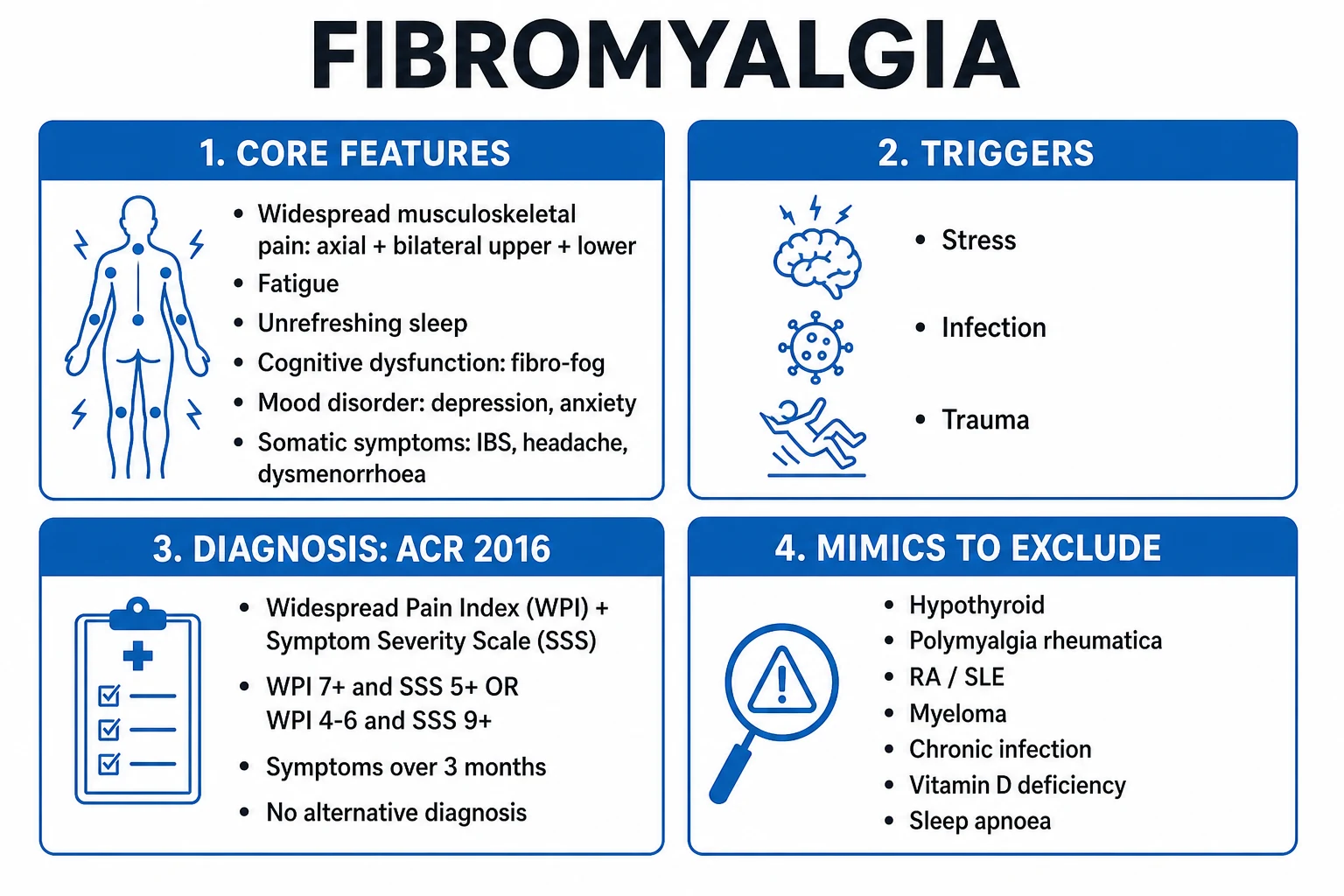
Fibromyalgia is a chronic disorder of central pain processing (nociplastic pain) causing widespread musculoskeletal pain, fatigue, unrefreshing sleep, cognitive dysfunction ('fibro-fog') and multiple somatic symptoms (irritable bowel, headache, dysmenorrhoea), with no tissue inflammation or damage. Predominantly women, onset 30 to 60 years; often triggered by physical or emotional stress, infection, trauma. Strongly associated with depression, anxiety and other functional syndromes. Examination is normal apart from tenderness; investigations are normal (rule out mimics). Diagnosis is clinical — Widespread Pain Index (WPI) plus Symptom Severity Scale (SSS), lasting over 3 months, with no alternative explanation. Management is non-pharmacological first (education, graded aerobic exercise, CBT, sleep hygiene) and pharmacological adjunct (duloxetine, pregabalin, amitriptyline). Avoid opioids. Treat comorbid depression and anxiety.
On this page & tools
Your progress
Saved locally on this device.
Exam tags
Red flags
Overview & Definition
Fibromyalgia is a disorder of pain amplification: the central nervous system processes ordinary sensory input as painful (allodynia) and exaggerates the response to genuinely noxious stimuli (hyperalgesia), in the complete absence of tissue injury, inflammation or nerve damage. It is the prototype of the nociplastic pain syndromes — a category formally defined by the International Association for the Study of Pain (IASP, 2017) and embedded in the ICD-11 chronic pain classification. Nociplastic pain sits alongside nociceptive pain (tissue injury, e.g. osteoarthritis, fracture) and neuropathic pain (lesion of the somatosensory nervous system, e.g. diabetic neuropathy). All three can coexist, which is why a patient with rheumatoid arthritis can also have fibromyalgia and each component must be treated on its own merits.[1]
The clinical skill in fibromyalgia rests on four pillars. First, make a positive diagnosis — not one of exclusion after endless negative tests. The ACR 2016 criteria allow a confident, criteria-based diagnosis. Second, validate the patient: the pain is real, generated by a sensitised nervous system, and "all in the nervous system" is emphatically not "all in the head". Third, prioritise non-drug therapy — graded aerobic exercise and cognitive behavioural therapy outperform any single medication and form the foundation of long-term management. Fourth, avoid harm: the two greatest iatrogenic dangers in fibromyalgia are over-investigation (chasing elusive organic disease indefinitely) and opioid escalation (which worsens central sensitisation).[1][2]
Fibromyalgia frequently overlaps with inflammatory rheumatic disease — up to a third of patients with rheumatoid arthritis, systemic lupus erythematosus or spondyloarthritis have concomitant fibromyalgia. In these patients the nociplastic pain inflates composite disease-activity scores (DAS28, SLEDAI, BASDAI) and can mislead the clinician into escalating immunosuppression that brings no benefit and only adds toxicity. Recognising and treating the central component separately is therefore essential.[1]

Classification & Definition
The modern definition of fibromyalgia has moved decisively away from the tender-point count of the 1990 ACR criteria towards a symptom-based, criteria-driven diagnosis centred on the Widespread Pain Index (WPI) and Symptom Severity Scale (SSS). The change reflects two advances: the recognition that fibromyalgia is fundamentally a disorder of central pain processing (not a muscle or soft-tissue disease), and the finding that tender-point examination is subjective, poorly reproducible and biased toward rheumatology expertise.[1]
The 2016 revision of the ACR criteria is the current international standard. It diagnoses fibromyalgia when WPI is 7 or more AND SSS is 5 or more, OR when WPI is 4 to 6 AND SSS is 9 or more, provided that the symptoms have been present at a similar level for at least 3 months, and crucially that a fibromyalgia diagnosis is permitted alongside other clinical diagnoses (it is no longer a diagnosis of exclusion — a patient with rheumatoid arthritis can also have fibromyalgia).[1]
Nociplastic (central) pain
- Prototype: FIBROMYALGIA
- Altered nociceptive processing despite no tissue or nerve damage
- Central sensitisation — allodynia and hyperalgesia
- Widespread, migrating, non-dermatomal
- Drugs: SNRIs, alpha-2-delta ligands, low-dose TCAs
- Exercise and CBT are the most effective interventions
Nociceptive pain
- Tissue injury — osteoarthritis, fracture, surgical pain, mechanical back pain
- Localised and proportional to the stimulus
- Resolves as the tissue heals
- Drugs: paracetamol, NSAIDs, weak opioids short-term
- Treat the underlying tissue problem
Neuropathic pain
- Lesion or disease of the somatosensory nervous system — diabetic neuropathy, post-herpetic neuralgia, radiculopathy
- Burning, electric, shooting, in a dermatomal distribution
- May coexist with sensory loss or dysaesthesia
- Drugs: gabapentinoids, SNRIs, TCAs, topical lidocaine/capsaicin
- Treat the underlying nerve lesion where possible
Epidemiology & Risk Factors
Fibromyalgia is one of the most common chronic pain conditions encountered in rheumatology and primary care, with a population prevalence of approximately 2 to 8 percent. It is far more common in women (female-to-male ratio roughly 7 to 9 : 1) and typically begins between the ages of 30 and 60 years, although juvenile-onset and elderly-onset forms exist. The diagnosis is often delayed by years, particularly in men and in patients whose primary presentation is fatigue or mood disturbance rather than pain.[1]
The biopsychosocial model best explains susceptibility. Recognised predisposing and triggering factors include female sex, a family history (polygenic — serotonin-transporter, catechol-O-methyltransferase [COMT] and dopamine-receptor polymorphisms all contribute), physical trauma or surgery, serious infection (hepatitis, Lyme disease, Q fever, and increasingly recognised post-SARS-CoV-2 syndromes), psychological stress, adverse childhood experiences, and chronic sleep disturbance. These factors lower the threshold at which the central nervous system becomes persistently sensitised.[1]
A defining epidemiological feature is the tendency of fibromyalgia to cluster with other central sensitisation syndromes: irritable bowel syndrome, chronic fatigue syndrome, tension and migraine headache, temporomandibular joint disorder, interstitial cystitis and chronic pelvic pain. This shared tendency reflects a common underlying disturbance in central sensory processing, and explains why a fibromyalgia patient so often accumulates multiple apparently independent diagnoses over many years.[1]
Mood disorder is strikingly prevalent: depression and anxiety occur in roughly 30 to 60 percent of fibromyalgia patients, and the relationship is bidirectional — each worsens the other. Recognising and treating mood disorder is not optional decoration; it is a core part of management that independently improves pain and function. [1]
Fibromyalgia — key numbers
Pathophysiology
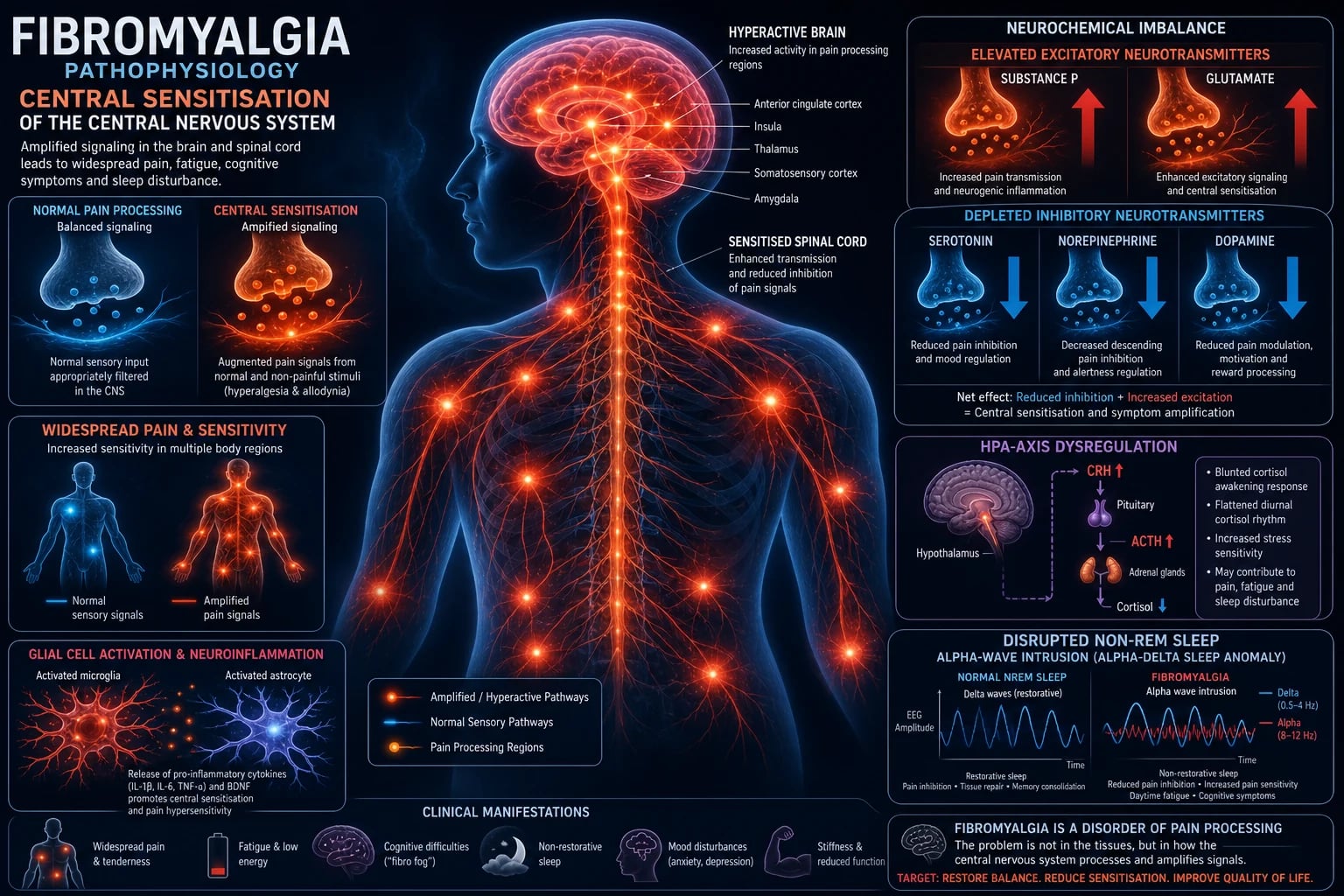
The pathology of fibromyalgia is functional, not structural — there is no tissue inflammation, no joint damage, no muscle abnormality on histology, and no nerve lesion. The disturbance lies in how the central nervous system processes sensory signals. The cardinal phenomenon is central sensitisation: a state of heightened excitability of nociceptive neurons in the dorsal horn of the spinal cord and in supraspinal relay centres, so that normal incoming sensory traffic is amplified and mislabelled as pain.[1]
Two complementary mechanisms drive central sensitisation. The first is temporal summation (the "wind-up" phenomenon): repeated low-intensity C-fibre input causes progressive depolarisation of dorsal-horn wide-dynamic-range neurons via NMDA-receptor activation, so a stimulus that initially feels like touch increasingly registers as pain. The receptive field also expands, explaining the migrating, widespread quality of fibromyalgia pain. The second is impaired descending inhibition: the brain normally suppresses incoming nociceptive signals via descending serotonergic and noradrenergic pathways (the descending inhibitory / NOP system). In fibromyalgia this brake fails, so signals pass through unchecked.[1]
At the neurochemical level there is a consistent imbalance between excitatory and inhibitory transmission. Excitatory neurotransmitters are elevated: substance P is markedly raised in the cerebrospinal fluid of fibromyalgia patients (a replicated finding since the early 1990s), and glutamate is increased in several pain-processing brain regions on magnetic-resonance spectroscopy. Inhibitory neurotransmitters are depleted: serotonin, noradrenaline and dopamine are reduced, which both weakens descending inhibition and impairs mood, sleep and the reward-based modulation of pain. This neurochemistry directly rationalises the drug classes that work in fibromyalgia — agents that boost serotonin and noradrenaline (SNRIs and tricyclics) or dampen glutamatergic excitability (alpha-2-delta ligands such as pregabalin).[1]
Beyond neurotransmitters, functional neuroimaging shows augmented activation of pain-matrix regions (insula, anterior cingulate, somatosensory cortex) in response to pressures that healthy controls do not even register as painful — providing objective evidence that the patient's experience of pain is real and brain-generated. There is also dysregulation of the hypothalamic-pituitary-adrenal (HPA) axis (a blunted cortisol response to stress), sympathetic hyperactivity with parasympathetic withdrawal and reduced heart-rate variability, and a characteristic disturbance of sleep architecture. [1]
The sleep disturbance deserves special emphasis. Fibromyalgia patients classically show the alpha-delta sleep anomaly — alpha-wave activity intrudes into non-REM (slow-wave, delta) sleep, fragmenting deep restorative sleep. This correlates tightly with waking unrefreshed and with next-day pain amplification, creating a vicious cycle in which poor sleep worsens pain, which in turn disrupts sleep. Although polysomnography is not required for diagnosis, the link between sleep and pain is why sleep hygiene and sedating adjuncts (amitriptyline, pregabalin) are therapeutically valuable.[1]
Finally, a polygenic predisposition (serotonin transporter, COMT and dopamine receptor gene variants) interacts with environmental triggers — adverse childhood experiences, sustained psychological stress, infection and physical trauma — to lower the threshold for persistent sensitisation. This biopsychosocial architecture is why a purely biomedical (drug-only) approach consistently underperforms a combined biomedical-psychological-social one. [1]
Clinical Presentation
Fibromyalgia presents as a symptom cluster rather than a single complaint. Recognising the constellation — and noting the conspicuous absence of objective abnormality — is the diagnostic key. [1]
Pain is the defining feature: widespread (involving the axial skeleton and both sides of the body, above and below the waist), migrating, and described as deep, aching, burning or throbbing. It has been present for at least 3 months and cannot be explained by a single structural lesion. Patients often say "it feels like I have the flu all the time" or "my whole body hurts". The pain is typically amplified by poor sleep, stress, cold weather and inactivity, and partly relieved by gentle movement and warmth. [1]
Fatigue is often profound and is frequently the most disabling symptom for daily function, even more than pain. It is not relieved by rest, reflecting the disordered, non-restorative sleep. [1]
Unrefreshing sleep is near-universal. Patients describe waking repeatedly through the night, never reaching deep sleep, and feeling more tired in the morning than on going to bed. This is the clinical correlate of the alpha-delta sleep anomaly. [1]
Cognitive dysfunction ("fibro-fog") causes impaired attention, reduced working memory, word-finding difficulty and slowed processing — a source of great distress in working patients and an important functional limitation distinct from pain itself. [1]
Somatic co-symptoms abound and reflect the central sensitisation that also drives the overlapping functional syndromes: irritable bowel syndrome (alternating constipation and diarrhoea, bloating), tension or migraine headache, dysmenorrhoea and pelvic pain, temporomandibular jaw pain, interstitial cystitis with bladder urgency, and non-dermatomal paraesthesiae (tingling without objective sensory loss). The presence of several of these in one patient is itself a clue to a central sensitisation syndrome.[1]
Mood disturbance — depression, anxiety, and a sense of being disbelieved after years of normal tests and dismissive consultations — is common and must be actively sought and treated. [1]
Crucially, the physical examination is essentially normal apart from tenderness to firm (but non-damaging) pressure at multiple soft-tissue sites. There is no joint swelling, warmth or synovitis, no muscle wasting or true weakness, no neurological deficit, no sensory level, no organomegaly and no rash. Documenting the absence of these findings explicitly is part of the assessment — it reassures the patient and the clinician and anchors the positive diagnosis. [1]
Differential Diagnosis
The differential diagnosis of fibromyalgia is the differential of chronic widespread pain with fatigue. The strategy is not to "test for fibromyalgia" but to perform a focused set of baseline investigations that exclude the common and treatable mimics, and then to make a positive clinical diagnosis.[1]
Inflammatory rheumatic disease — rheumatoid arthritis, systemic lupus erythematosus, spondyloarthritis, Sjogren's syndrome — should be suspected when there is synovitis, prolonged morning stiffness (over 1 hour), a photosensitive rash, Raynaud phenomenon, sicca symptoms, or raised inflammatory markers, and confirmed by the appropriate autoantibodies. Remember that fibromyalgia can overlap with these diseases: a high tender-joint count with a normal CRP and little synovitis is the classic signature of overlap. [1]
Polymyalgia rheumatica presents in patients over 50 with severe proximal (shoulder and hip-girdle) aching and marked morning stiffness, a very high ESR and CRP, and a rapid dramatic response to low-dose corticosteroids — features absent in fibromyalgia. [1]
Hypothyroidism is a key, easily missed mimic: it shares fatigue, myalgia, constipation, cold intolerance and low mood with fibromyalgia. A serum TSH is mandatory in every patient being evaluated for fibromyalgia. Correcting hypothyroidism resolves the symptoms entirely.[1]
Polymyositis and dermatomyositis cause proximal muscle weakness (difficulty combing hair, rising from a chair) with a raised creatine kinase — neither weakness nor a raised CK is present in fibromyalgia. [1]
Chronic fatigue syndrome / myalgic encephalomyelitis overlaps considerably; the distinction is that in CFS the fatigue and post-exertional malaise dominate while pain is secondary, whereas in fibromyalgia pain is primary. [1]
Myofascial pain syndrome produces localised regional pain with discrete trigger points that refer pain on compression — in contrast to the widespread pain of fibromyalgia. The two can coexist. [1]
Opioid-induced hyperalgesia should be suspected when a patient on escalating opioids reports worsening, spreading pain — the treatment is opioid reduction, not escalation. [1]
A focused baseline panel suffices for most patients: full blood count, ESR and CRP, renal and liver function, creatine kinase, TSH, vitamin D and calcium. Autoantibodies (ANA, rheumatoid factor, anti-CCP) are reserved for patients with clinical features suggesting an inflammatory disease; a low-titre ANA is common in the healthy population and is non-specific — it does not by itself indicate disease and should not trigger a cascade of further testing in an otherwise typical fibromyalgia patient. Imaging is obtained only to evaluate a specific local symptom or a red flag, never to "screen" a fibromyalgia patient. [1]
Clinical & Bedside Assessment
A structured assessment achieves three things: it confirms the symptom cluster, it excludes organic disease and red flags, and it establishes the biopsychosocial context that will shape management. [1]
History. Characterise the pain (site, character, duration over 3 months, aggravators and relievers), fatigue, sleep quality (refreshed on waking?) and cognitive symptoms. Then ask systematically for the somatic co-symptoms (bowel, headache, bladder, jaw, pelvic pain), and screen mood with PHQ-9 and GAD-7 and sleep with a brief sleep questionnaire. Take a careful psychosocial history: adverse life events, ongoing stressors, work, relationships, functional impact and prior healthcare experiences — patients commonly feel disbelieved, and acknowledging this is itself therapeutic. [1]
Red-flag screen. Actively seek features that demand further investigation regardless of an existing fibromyalgia label: weight loss, fever, night pain or night sweats, neurological deficit, joint swelling or synovitis, markedly raised inflammatory markers, and new organ-specific symptoms. Any red flag mandates targeted investigation; none is explained by fibromyalgia itself. [1]
Examination. Perform and document a full general, joint and neurological examination. The expected findings in primary fibromyalgia are normal apart from tenderness to firm pressure at multiple soft-tissue sites. Explicitly record the absence of synovitis, weakness, a sensory level, organomegaly and rash. This serves both to reassure and to provide a baseline against which any future change can be judged. [1]
Diagnostic scoring. Apply the ACR 2016 criteria. Calculate the Widespread Pain Index (WPI, 0 to 19) — the count of 19 defined body areas reported as painful in the last week: left and right shoulder girdle, upper arm, lower arm, hip/buttock, upper leg and lower leg, plus the jaw (left and right), chest, abdomen, upper back, lower back and neck. Then calculate the Symptom Severity Scale (SSS, 0 to 12): score fatigue, waking unrefreshed, and cognitive symptoms each from 0 (none) to 3 (severe, continuous, disturbing), and add one point each (maximum 3) for headache, lower-abdominal pain or cramps, and depression/nausea during the previous 6 months. The Fibromyalgia Impact Questionnaire (FIQ or revised FIQ) quantifies overall functional impact and is useful for follow-up.[1]
A useful clinical heuristic for separating inflammatory (nociceptive) pain from nociplastic pain, especially in patients with overlapping rheumatic disease, is the "pain-to-synovitis mismatch": widespread tenderness and a high tender-joint count with little objective synovitis and a normal CRP argues strongly for a dominant nociplastic component. [1]
Investigations
No laboratory test diagnoses fibromyalgia. Investigations are performed to exclude organic disease and are expected to be normal in primary fibromyalgia. Over-investigation is itself a harm — it perpetuates the patient's anxiety, searches for disease that is not there, and delays the positive diagnosis and the non-pharmacological interventions that actually help.[1]
Routine baseline panel (sufficient for the great majority of patients): [1]
- Full blood count — exclude anaemia of chronic disease, infection.
- ESR and CRP — normal in primary fibromyalgia; elevation demands a search for inflammation, infection or malignancy.
- Renal and liver function — baseline; exclude systemic disease.
- Creatine kinase — exclude myopathy; normal in fibromyalgia.
- TSH — exclude hypothyroidism, the classic mimic.
- Vitamin D and calcium — deficiency causes myalgia and is common and correctable. [1]
Autoantibodies (ANA, rheumatoid factor, anti-CCP, extractable nuclear antigens, dsDNA) are requested only when clinical features suggest an inflammatory connective-tissue disease (synovitis, rash, Raynaud, sicca, photosensitivity). A low-titre ANA is found in a substantial fraction of healthy people; it is non-specific and must not, by itself, trigger a cascade of further immunological testing or a label of autoimmune disease in a patient whose presentation is otherwise typical fibromyalgia. [1]
Imaging (X-ray, ultrasound, MRI) is not required to diagnose fibromyalgia and is obtained only to evaluate a specific local symptom or a red flag. Whole-body imaging in the absence of focal features is discouraged. [1]
Polysomnography is reserved for suspected obstructive sleep apnoea or restless legs syndrome — both common comorbidities that independently worsen pain and fatigue and warrant specific treatment. It is not needed to confirm the alpha-delta anomaly, which is a research curiosity, not a diagnostic test. [1]
The art is to perform a focused, once-only, confident baseline assessment, make the positive diagnosis, and then redirect the patient's energy from the search for disease toward evidence-based self-management. [1]
Management — Non-Pharmacological (First Line)
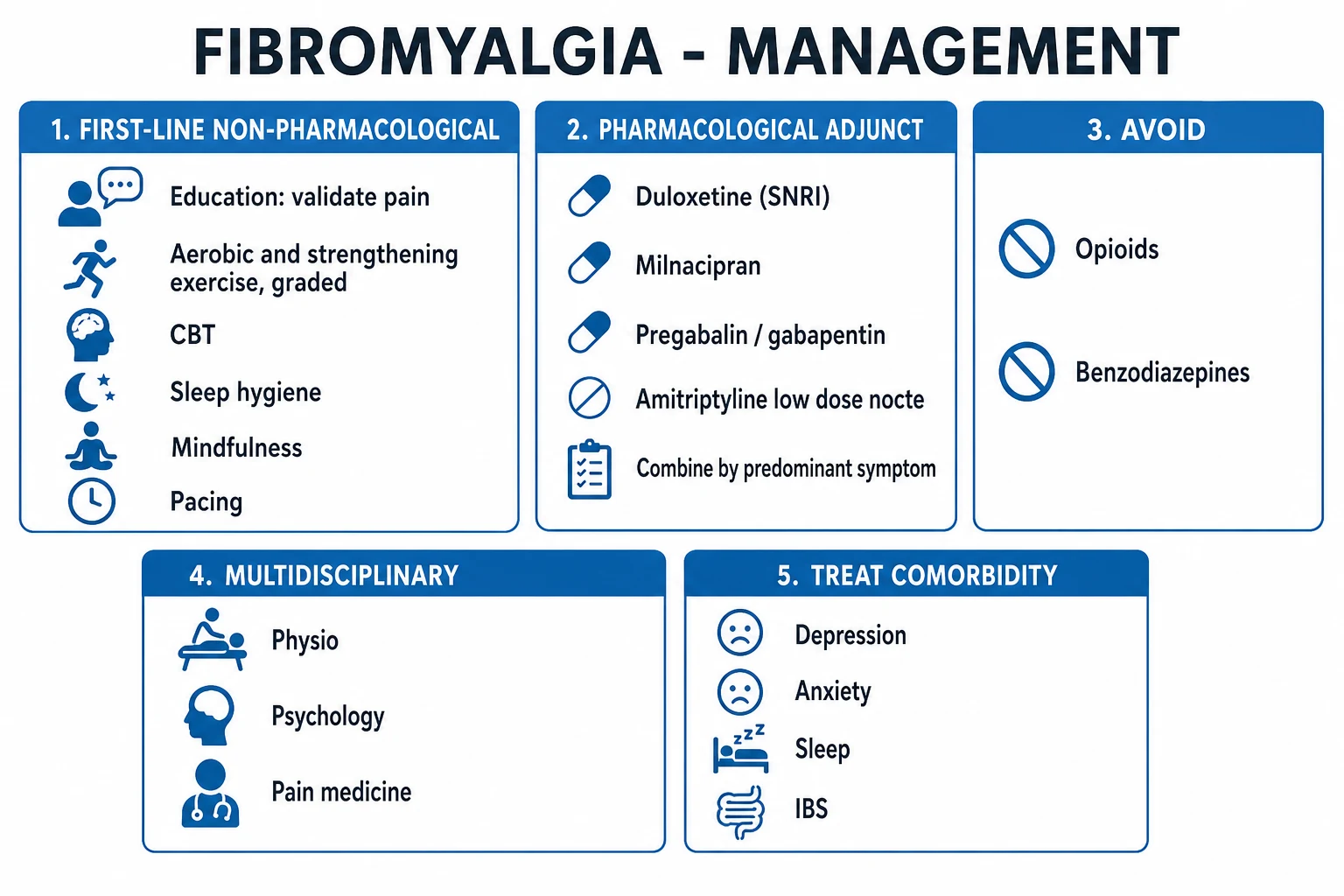
Non-pharmacological therapy is first-line and the most effective component of management, a position endorsed uniformly by the EULAR 2017 recommendations, ACR guidance and NICE.[2] The reason is mechanistic: central sensitisation is sustained and amplified by inactivity, deconditioning, sleep disruption, catastrophising and stress — and these are precisely the targets of education, exercise, CBT and sleep hygiene. No single drug addresses all of them.
Patient education and validation. The first therapeutic act is to explain, clearly and empathetically, that the pain is real but reflects a sensitised nervous system rather than tissue damage; that fibromyalgia is not progressive, destructive or life-shortening; and that improvement is achievable through active self-management rather than passive dependence on medication. Making a positive diagnosis and naming the condition is itself therapeutic — it ends the exhausting diagnostic odyssey. Setting realistic expectations (improved function rather than complete pain elimination) prevents disappointment and drop-out.[2]
Graded aerobic exercise is the single best-evidenced intervention in fibromyalgia. Low-impact activities — walking, swimming, cycling, water aerobics — are started at a comfortable baseline and progressed slowly ("start low, go slow"), explicitly avoiding the boom-and-bust cycle in which the patient overexerts on a good day and crashes for several days after. The goal is a sustainable daily or near-daily habit. Strengthening exercise adds benefit. Exercise works because it improves conditioning, sleep, mood and endogenous descending inhibition; adherence is the main challenge, and CBT and pacing support help sustain it.[2]
Cognitive behavioural therapy (CBT) improves coping, reduces pain catastrophising and fear-avoidance, addresses unhelpful beliefs about pain and harm, improves activity levels and sleep, and treats comorbid depression and anxiety. It is among the most effective interventions for long-term function. [1]
Sleep hygiene and stress management. Establish a regular sleep-wake schedule, a cool dark bedroom, avoidance of caffeine and screens late at night, and relaxation or mindfulness-based stress reduction (MBSR) techniques. Pacing — spreading activity evenly across the day — prevents the boom-bust pattern. Addressing ongoing psychosocial stressors is important because stress is a potent amplifier of central sensitisation. [1]
Multidisciplinary care. The best outcomes come from a coordinated team: rheumatologist (to confirm the diagnosis and exclude rheumatic disease), physiotherapist (to supervise graded exercise), psychologist (for CBT), pain specialist (for refractory cases), sleep medicine (for apnoea) and primary care (for coordination and continuity). A single coordinating clinician — usually the primary-care physician — prevents duplicated investigation, polypharmacy and contradictory advice. [1]
Adjunctive therapies with moderate evidence include hydrotherapy/spa therapy, tai chi, yoga and acupuncture. These are adjuncts, not substitutes, for exercise and CBT. [1]
Management — Pharmacological (Adjunct)
Drug therapy is an adjunct, not a replacement, for the non-pharmacological foundation. It is chosen according to the predominant symptom, used at the lowest effective dose, titrated slowly, and reviewed periodically for ongoing benefit and side-effects. Combining agents with different mechanisms is reasonable when a single drug gives an inadequate response.[2]
The three first-line drug classes all share the property of boosting descending serotonergic/noradrenergic inhibition or dampening excitatory transmission — directly targeting the neurochemical deficit of central sensitisation: [1]
- Serotonin-noradrenaline reuptake inhibitors (SNRIs) — duloxetine (30 to 60 mg daily, titrate to 60 to 120 mg) and milnacipran (titrate to 50 to 100 mg twice daily). They help pain, fatigue and mood, and duloxetine is particularly useful when comorbid depression or neuropathic features coexist. Nausea, dry mouth and sweating are common; monitor for blood-pressure rise with milnacipran.
- Alpha-2-delta calcium-channel ligands — pregabalin (start 75 mg nocte, titrate to 150 to 300 mg daily in divided doses) and gabapentin (titrate from 300 mg nocte). They reduce excitatory neurotransmitter release and are useful where sleep disturbance and anxiety predominate. Dizziness, somnolence, weight gain and peripheral oedema are the main side-effects.
- Low-dose tricyclic antidepressants — amitriptyline 10 to 25 mg at night. It improves sleep, pain and mood through combined serotonergic and noradrenergic action plus mild sedation, and is commonly used first line where sleep is the dominant problem. Warn of anticholinergic effects (dry mouth, constipation, urinary hesitancy, morning grogginess) and fall risk in the elderly.[2]
Fibromyalgia drug ADJUNCTS — the DAPA trio
DAPA
pain + depression; 30 to 60 mg daily, titrate up
pain + poor sleep; 10 to 25 mg at night
pain + sleep + anxiety; titrate alpha-2-delta ligand
strong opioids are ineffective and cause hyperalgesia and dependence
Drugs to avoid or minimise: [1]
- Strong opioids are ineffective for nociplastic pain and cause opioid-induced hyperalgesia (paradoxical worsening and spreading of pain), tolerance, dependence and overdose risk. They are among the most important iatrogenic harms in fibromyalgia; patients already taking them need a structured taper with addiction-medicine support.
- Corticosteroids and immunosuppressants (including biologics) have no role in primary fibromyalgia — there is no inflammation to suppress. Escalating immunosuppression in an overlap patient whose high disease-activity score reflects fibromyalgia rather than active inflammation is a classic error.
- Benzodiazepines disrupt sleep architecture, cause dependence and cognitive impairment, and should be minimised.
- NSAIDs and paracetamol are ineffective for the core nociplastic pain, though they may help a coexisting nociceptive component (e.g. osteoarthritis).
- Medical cannabis / cannabinoids have weak, inconsistent evidence and are not recommended by the ACR. [1]
Combination and titration strategy. Start one agent, titrate slowly over 2 to 4 weeks to a target dose, and assess response at 4 to 8 weeks. If single-drug response is inadequate, add a second agent from a different class (e.g. duloxetine plus pregabalin, or amitriptyline plus an SNRI — mindful of serotonin-syndrome risk when combining serotonergic agents). Treat comorbid depression and anxiety actively and screen for and treat obstructive sleep apnoea.[2]
Specific Subtypes & Scenarios
Fibromyalgia overlapping with inflammatory rheumatic disease. This is the most clinically important scenario and a favourite viva topic. Roughly 20 to 30 percent of patients with rheumatoid arthritis, SLE or spondyloarthritis have concomitant fibromyalgia. The nociplastic pain inflates composite disease-activity scores — DAS28 in RA, SLEDAI in SLE, BASDAI in ankylosing spondylitis — through the tender-joint and patient-global components, so the score overstates true inflammatory activity. The signature is a pain-to-synovitis mismatch: a high tender-joint count and high patient-global score alongside minimal objective synovitis and a normal CRP. The correct response is to recognise the fibromyalgia component, treat it with exercise/CBT/adjunct drugs, and resist the temptation to escalate immunosuppression for pain that is central rather than inflammatory. Treat each component separately.[1]
Post-infective fibromyalgia. Onset after a viral illness (hepatitis, Lyme disease, Q fever, parvovirus, and post-SARS-CoV-2 syndromes) is well described. The prognosis and management are essentially the same as for primary fibromyalgia. Distinguish from chronic infection itself (ongoing fever, raised inflammatory markers, microbiological evidence) before attributing all symptoms to fibromyalgia. [1]
Secondary fibromyalgia / central sensitisation in chronic disease. Chronic nociceptive pain conditions (osteoarthritis, endometriosis, complex regional pain, chronic post-surgical pain) can be complicated by superimposed central sensitisation, producing widespread pain out of proportion to the peripheral lesion. Treat both the peripheral driver and the central component. [1]
Juvenile fibromyalgia (juvenile primary fibromyalgia syndrome) affects adolescents, more often girls. Management emphasises graded exercise, CBT, sleep hygiene and maintaining school attendance and social function. The prognosis is generally better than adult-onset, and a multidisciplinary approach is favoured. [1]
Severe refractory fibromyalgia. Before declaring a case refractory, systematically review and address four reversible drivers: untreated mood disorder, ongoing strong-opioid use, an unrecognised sleep disorder (especially obstructive sleep apnoea), and unaddressed psychosocial stressors. Referral to a specialist pain-management programme is appropriate for genuinely refractory cases. [1]
Complications & Pitfalls
Fibromyalgia itself does not cause organ damage, joint destruction, deformity or reduced life expectancy. Its morbidity lies in functional impairment and the iatrogenic harms that accumulate when it is mismanaged.[1]
Functional and psychosocial morbidity. Severe pain, fatigue and fibro-fog can cause substantial work disability, social withdrawal and reduced quality of life. Depression and anxiety are both a cause and a consequence, and must be treated in their own right. [1]
The harm of opioids. Strong opioids are the single most important iatrogenic danger. They are ineffective for nociplastic pain and cause opioid-induced hyperalgesia (worsening and spreading of pain), tolerance, physical dependence, and overdose risk. A patient presenting on escalating opioids with worsening pain has opioid-induced hyperalgesia until proven otherwise; the treatment is a structured taper, not a higher dose. [1]
The harm of over-investigation. Repeated imaging and blood tests in search of elusive organic disease perpetuate the patient's anxiety, consume resources, delay effective treatment, and risk incidental findings that trigger further cascades. A focused once-only baseline assessment, followed by a confident positive diagnosis, is the antidote. [1]
Diagnostic pitfalls. Common errors include: (1) treating fibromyalgia as a diagnosis of exclusion and never making a positive diagnosis; (2) missing an organic mimic — hypothyroidism, polymyalgia rheumatica, early inflammatory arthritis, myeloma — by attributing all symptoms to fibromyalgia without baseline tests; (3) in a patient with overlapping inflammatory disease, attributing all pain to fibromyalgia and missing a genuine flare, or conversely attributing all pain to the inflammatory disease and missing the treatable central component; and (4) escalating immunosuppression in an overlap patient whose high score reflects nociplastic rather than inflammatory pain.[1]
The doctor-patient dynamic. Patients with fibromyalgia have often felt disbelieved or labelled as "somatising". A dismissive clinician reproduces this harm; validation and a clear, positive explanation of central sensitisation are themselves therapeutic and improve engagement with the self-management programme. [1]
Prognosis & Disposition
Fibromyalgia is a chronic, fluctuating condition. Complete cure is uncommon, but meaningful improvement in function, pain and quality of life is achievable in the majority of patients who engage with graded exercise, CBT, sleep management and treatment of comorbid mood disorder. The realistic goal is improved function and reduced impact, not zero pain.[1]
Predictors of better outcome: engagement with graded exercise and CBT; good social support; preserved baseline function; absence of ongoing opioid use; and effective treatment of comorbid depression and sleep disorders. [1]
Predictors of poorer outcome: severe baseline pain and disability; comorbid depression or anxiety that is untreated; ongoing litigation or work-related injury; low health literacy; passive coping strategies (catastrophising, avoidance); and persistent strong-opioid use. [1]
Disposition and referral. Refer to rheumatology to confirm the diagnosis and exclude rheumatic disease (a single focused consultation, not indefinite follow-up). Refer to a pain-management programme for refractory cases; to psychiatry or clinical psychology for comorbid mood disorder and for CBT; to physiotherapy for supervised graded exercise; and to sleep medicine for suspected obstructive sleep apnoea. The primary-care physician is usually the best single coordinating clinician, providing continuity, coordinating the team, and preventing polypharmacy and duplicated investigation. Fibromyalgia does not reduce life expectancy and is not a progressive, degenerative disease. [1]
Special Populations
Pregnancy. Fibromyalgia does not adversely affect pregnancy outcome. Plan analgesia around non-drug measures and paracetamol; avoid strong opioids; continue graded exercise within obstetric limits; and attend to sleep and mood. Pregnancy is often followed by a post-partum flare — anticipate and plan support. [1]
Children and adolescents (juvenile fibromyalgia). Emphasise graded aerobic exercise, CBT, sleep hygiene and maintaining school attendance and social function. The prognosis is generally better than adult-onset. A multidisciplinary, family-inclusive approach is preferred. [1]
The elderly. Differentiate from polymyalgia rheumatica, osteoarthritis and hypothyroidism, all of which become more common with age. Choose sedating drugs (amitriptyline) cautiously because of the risk of falls, confusion and anticholinergic burden; in older patients duloxetine is often preferred. [1]
Patients with inflammatory rheumatic disease. Distinguish inflammatory from nociplastic pain using the pain-to-synovitis mismatch; treat both components; do not escalate immunosuppression solely for pain; and warn against attributing every new symptom to the rheumatic disease. [1]
Patients on chronic opioids. Plan a structured opioid taper with addiction-medicine input, replacing opioids with evidence-based fibromyalgia therapy. Expect an initial increase in pain perception as hyperalgesia unmasks, followed by gradual improvement. [1]
Men. Fibromyalgia is under-diagnosed in men because of its female predominance and the stereotyped presentation; the criteria, mechanism and management are identical. [1]
Evidence, Guidelines & Regional Differences
The evidence base for fibromyalgia management is well codified in three major guidance sets.[2]
ACR 2010 / 2016 diagnostic criteria (Wolfe and colleagues). The 2010 preliminary criteria replaced the 1990 tender-point count with the WPI and SSS, and the 2016 revision confirmed that a fibromyalgia diagnosis may coexist with other conditions. These criteria are the current international standard and underpin the clinical diagnosis taught to MBBS candidates. [1]
EULAR 2017 revised recommendations for management (Macfarlane et al., Ann Rheum Dis 2017). These endorse a graded, stepped approach: begin with non-pharmacological measures — education, exercise and CBT (and, for some, mindfulness or relaxation) — and reserve pharmacotherapy as an adjunct chosen by predominant symptom (duloxetine and pregabalin for severe pain; amitriptyline for sleep; psychological therapy for mood). Strong opioids and corticosteroids are not recommended.[2]
Nociplastic pain concept (IASP 2017; Treede) and ICD-11 chronic pain classification. These formally established nociplastic pain as the third mechanistic pain descriptor, alongside nociceptive and neuropathic pain — embedding fibromyalgia's mechanism into the international taxonomy. [1]
Canadian 2012 guidelines (Fitzcharles et al.) and APS guidance similarly support exercise, CBT and selected pharmacotherapy, and caution against opioids. [1]
Regional differences. NICE (UK) places particular emphasis on education, exercise and psychological therapies and is cautious about primary pharmacotherapy. The Indian Rheumatology Association consensus, reflecting resource-limited access to multidisciplinary teams and CBT, emphasises affordable pharmacotherapy — amitriptyline and pregabalin as the practical backbone — alongside graded exercise and explicit validation of symptoms, with judicious use of psychological support where available. The biopsychosocial model is the unifying framework: biological (central sensitisation), psychological (mood, coping, catastrophising) and social (support, work, adversity) factors all shape the illness and must all be addressed. [1]
Red Flags
In any patient with known or suspected fibromyalgia, the following features demand targeted investigation for organic disease — none is explained by fibromyalgia itself:[1]
- Weight loss, fever, night pain or night sweats — infection or malignancy.
- Markedly raised inflammatory markers (ESR, CRP) — inflammatory rheumatic disease, infection, malignancy; primary fibromyalgia has normal markers.
- Joint swelling, synovitis, prolonged morning stiffness over 1 hour — inflammatory arthritis.
- Neurological deficit, a sensory level, true muscle weakness or a raised CK — neuropathy, myelopathy, myositis.
- New, focal or progressive symptoms — investigate the new problem; do not assume it is "just the fibromyalgia".
- Escalating opioid use with worsening pain — opioid-induced hyperalgesia; plan a taper.
- Severe, untreated depression or suicidal ideation — psychiatric emergency; treat actively. [1]
Exam Pearls
- Fibromyalgia = central sensitisation (nociplastic) pain: widespread pain + fatigue + unrefreshing sleep + fibro-fog; no tissue damage.
- Diagnosis is clinical: ACR 2016 — WPI 7+ with SSS 5+, or WPI 4 to 6 with SSS 9+; symptoms over 3 months; other diagnoses allowed.
- The old 1990 criterion of 11 of 18 tender points is abandoned — know it for the viva, but diagnose with the WPI and SSS.
- Neurochemistry: HIGH substance P and glutamate; LOW serotonin, noradrenaline, dopamine.
- Sleep hallmark: the alpha-delta anomaly (alpha-wave intrusion into non-REM sleep).
- First-line treatment is non-pharmacological: graded aerobic exercise + CBT + sleep hygiene — the most effective interventions.
- Drugs (adjunct only): duloxetine / milnacipran (SNRI), pregabalin / gabapentin (alpha-2-delta), low-dose amitriptyline nocte.
- AVOID strong opioids (ineffective, cause hyperalgesia); no role for steroids or immunosuppressants.
- Overlaps with RA / SLE / SpA in 20 to 30 percent — inflates disease-activity scores; treat each component separately.
- Key mimics to exclude: hypothyroidism (TSH), polymyalgia rheumatica (ESR/CRP + age), inflammatory arthritis (synovitis + autoantibodies), polymyositis (CK + weakness).
- Central sensitisation syndromes cluster: fibromyalgia + irritable bowel + chronic fatigue + migraine + temporomandibular disorder + interstitial cystitis.
- Prognosis: chronic but not life-shortening, not progressive, not destructive — the realistic goal is improved function. [1]
Exam application bank (NEET-PG / INICET)
One-line answer
Fibromyalgia is a chronic disorder of central pain processing (nociplastic pain) causing widespread musculoskeletal pain, fatigue, unrefreshing sleep, cognitive dysfunction ('fibro-fog') and multiple somatic symptoms (irritable bowel, headache, dysmenorrhoea), with no tissue inflammation or damage. Predominantly women, onset 30 to 60 years; often triggered by physical or emotional stress, infection, trauma. Strongly associated with depression, anxiety and other functional syndromes. Examination is normal apart from tenderness; investigations are normal (rule out mimics). Diagnosis is clinical — Widespread Pain Index (WPI) plus Symptom Severity Scale (SSS), lasting over 3 months, with no alternative explanation. Management is non-pharmacological first (education, graded aerobic exercise, CBT, sleep hygiene) and pharmacological adjunct (duloxetine, pregabalin, amitriptyline). Avoid opioids
Worked stems (answer without another resource)
Stem 1 — Classic presentation. Map symptoms to mechanism; name the first investigation and first treatment step with dose/route if drug therapy is standard. [1]
Stem 2 — Unstable / complicated. List red flags that force immediate resuscitation, theatre, ICU, antidote, or reperfusion — and what you do in the first 15 minutes. [1]
Stem 3 — Atypical group. Elderly, pregnancy, child, or immunocompromised: how presentation and thresholds change. [1]
Stem 4 — Differential trap. Name the three closest mimics and one discriminator for each. [1]
Stem 5 — Disposition. Who goes home with safety-netting, who is admitted, who needs HDU/ICU/theatre, and what follow-up is mandatory. [1]
Rapid viva checklist
- Definition + classification
- Pathophysiology chain
- Bedside signs / criteria
- Score with exact components (if any)
- Emergency bundle
- Definitive therapy with doses
- Complications of disease and of treatment
- Special populations
- Guideline/trial name if classic
- Three exam traps
Coverage self-check
If you cannot answer any stem above from this page alone, re-read the matching section — the page is intended to be self-sufficient for final-prof and NEET-PG/INICET questions on Fibromyalgia.
References
- [1]Murphy AE, Minhas D, Clauw DJ. Identifying and Managing Nociplastic Pain in Individuals With Rheumatic Diseases: A Narrative Review Arthritis Care Res (Hoboken), 2023.PMID 36785994
- [2]Macfarlane GJ, Kronisch C, Dean LE, et al. EULAR revised recommendations for the management of fibromyalgia Ann Rheum Dis, 2017.PMID 27377815