Paeds · pain-palliative-and-end-of-life-care
Symptom control in serious paediatric illness
Also known as Paediatric palliative symptom management · Management of distressing symptoms in life-limiting illness · Pain and symptom control at the end of life in children · Anticipatory prescribing in paediatric palliative care · Palliative sedation in children · Death rattle and terminal agitation management · Subcutaneous drug administration in the dying child
Fellowship-level approach to recognising and treating the four highest-burden distressing symptoms in a child with a serious, life-limiting or life-threatening illness — pain, breathlessness, nausea and vomiting, and agitation or delirium — together with the related end-of-life phenomena of noisy respiratory secretions (death rattle) and terminal restlessness. Covers the WHO two-step analgesic ladder with weight-based paediatric morphine dosing, safe opioid rotation, anticholinergic choice for secretions, antiemetic matching to the emetic pathway, low-dose haloperidol and midazolam for agitation, titration of palliative sedation for refractory symptoms, the subcutaneous route and syringe driver for the dying child at home, anticipatory (just-in-case) prescribing, and the family-centred goals-of-care conversation that frames every drug decision across ANZ, UK and North American paediatric palliative guidance.
On this page & tools
Your progress
Saved locally on this device.
Practise this topic
Target exams
Red flags
Life stages
Care settings
Clinical exam formats
Board mappings
Related topics
- Palliative care in cancer
- Palliative care in neurodisability and genetic disease
- Withholding and withdrawing life-sustaining treatment
- Procedural pain: topical anaesthesia, preparation, distraction and non-pharmacological support
- Shared decision-making and assent in children
- Family-centred and child-rights-based care
Overview & Definition
Picture the nine-year-old with relapsed neuroblastoma who is now breathless, in pain and frightened, or the toddler with spinal muscular atrophy type 1 who has begun to struggle with secretions. Neither child is curable, but both can be comfortable, and the work of making them comfortable is what this page is about. Symptom control here means the active, planned, evidence-based relief of the physical and emotional distress caused by a serious illness, whether that illness is being treated for cure, for prolongation of life, or for comfort alone. [1] [3]
The defining shift in paediatric palliative symptom control is a change of goal, not of effort. In curative care you investigate a symptom to find and treat the cause, and you tolerate the symptom meanwhile. In palliative symptom control you treat the symptom now, you look for reversible causes in parallel, and you weigh every test and treatment against the burden it adds. A chest X-ray that requires a painful transfer may still be justified if a pleural effusion can be drained and the breathlessness cured, but the same transfer may be the wrong choice in a child who is imminently dying and for whom an opioid, positioning and a parent's lap will do. The decision belongs to the family and the team together, anchored in what matters to this child. [1] [8]
Cicely Saunders named this total pain: the suffering a child experiences is never only nociceptive input. It is the pain itself, plus the fear of what the pain means, plus the anxiety of separation from home and family, plus the spiritual distress of a child old enough to feel that dying is unfair, plus the social pain of a family falling apart under the strain. Treat only the nociceptive component and you will fail; the child will still cry. The discipline of palliative symptom control is to address each layer — pharmacologically, psychologically, in play and music and presence, and in honest conversation with the family — while the pharmacology does its share of the work. [3] [12]
Classification
Classify the work of symptom control by which symptom, by its mechanism, and by the child's trajectory, because those three axes decide the drug, the route and the urgency. [1]
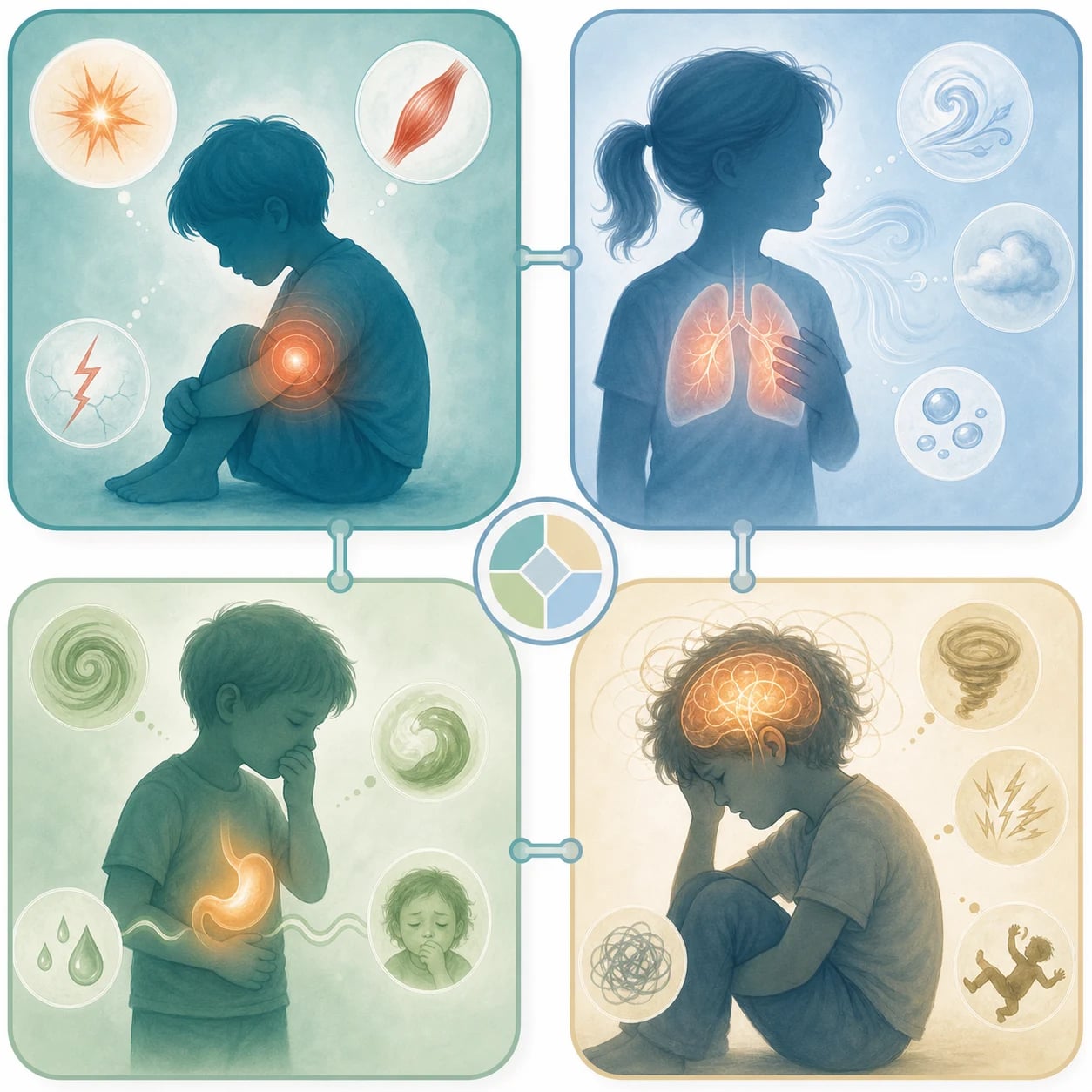
By symptom, the burden of serious paediatric illness is carried by a small set of distressing experiences. Pain is the most common and the most feared, present in the majority of children with advanced cancer and in many with neurodegenerative and metabolic disease. Breathlessness is the symptom families find most frightening to watch. Nausea and vomiting erode dignity, nutrition and the will to keep going. Agitation and delirium rob the child and the family of a calm final stretch. Noisy respiratory secretions (death rattle) arise in the last hours. Fatigue is nearly universal and is often the symptom the child hates most, but it is the hardest to treat. These four high-burden symptoms — pain, breathlessness, nausea, agitation — anchor this page, with death rattle handled as a terminal variant. [8] [1]
By mechanism, each symptom points to a different drug class. Pain may be nociceptive (somatic or visceral), neuropathic or mixed, and each is treated differently. Breathlessness may arise from airway obstruction, lung disease, an effusion, neuromuscular respiratory failure, anaemia or anxiety, and each cause bends the treatment. Nausea may be driven by the chemoreceptor trigger zone, by gastric stasis, by bowel obstruction, by raised intracranial pressure or by vestibular input, and each pathway has its own receptor and its own drug. Agitation may be a delirium, a pain equivalent, an opioid adverse effect or an anxiety state, and you cannot sedate your way out of a problem you have misclassified. The mechanism is the question; the drug is the answer. [8] [12]
By trajectory, the same child moves through phases that change what symptom control looks like. In the stable phase of a life-limiting illness you treat symptoms with regular oral drugs and a clear plan for breakthroughs. In the deteriorating phase you titrate more aggressively, you bring in palliative care, and you begin anticipatory planning. In the dying phase — usually the last days — you move to the subcutaneous route, you stop drugs that no longer serve the child, and you prescribe an anticipatory box so that no new symptom is untreated. A drug plan that was right in the stable phase is dangerous in the dying phase, and the trajectory tells you when to change. [1] [4]
Epidemiology & Risk Factors
Physical symptoms are not rare complications of serious paediatric illness; they are the lived experience of it. In cohorts of children referred to paediatric palliative care, most carry several symptoms at once, and the symptom load rises as the illness advances. Pain, fatigue, breathlessness, nausea and disturbed sleep are the most frequently reported, and they cluster — a child with one distressing symptom usually has others. [1] [3]
Undertreated pain remains common despite decades of guidance. The reasons are familiar: a fear of opioids, a fear of respiratory depression, a belief that a child's report of pain is exaggerated, and — in the non-verbal child — a failure to recognise pain at all. Sixty to ninety per cent of children with a life-limiting or life-threatening disease receive an opioid at the end of life, yet analgesia is often still reported as insufficient, driven more by gaps in knowledge and confidence than by lack of effective drugs. [2]
The children who carry the heaviest symptom burden are the children with the most complex illness. Oncology patients in relapse face tumour pain, mucositis, procedure pain and the side-effects of chemotherapy. Children with severe cerebral palsy and neurodegenerative conditions face muscle spasm, dystonia, seizures and secretions that they cannot communicate in words. Technology-dependent children — those with tracheostomies, ventilators and feeding tubes — face symptoms inseparable from the technology itself. In every case the risk of an unrecognised, untreated symptom rises sharply when the child cannot self-report, which is why structured behavioural assessment is a core skill, not an optional refinement. [1] [6]
Noisy respiratory secretions, the so-called death rattle, arise in a substantial minority of dying patients; the figure of 23 to 92 per cent quoted in the literature is drawn from adult cohorts and is often cited as a guide, though paediatric-specific data are sparser. The risk is highest in the last hours to days of life, in children with neuromuscular weakness and impaired swallow, and in those receiving hydration that the failing body cannot clear. [10] [11]
[1] [6]Pathophysiology
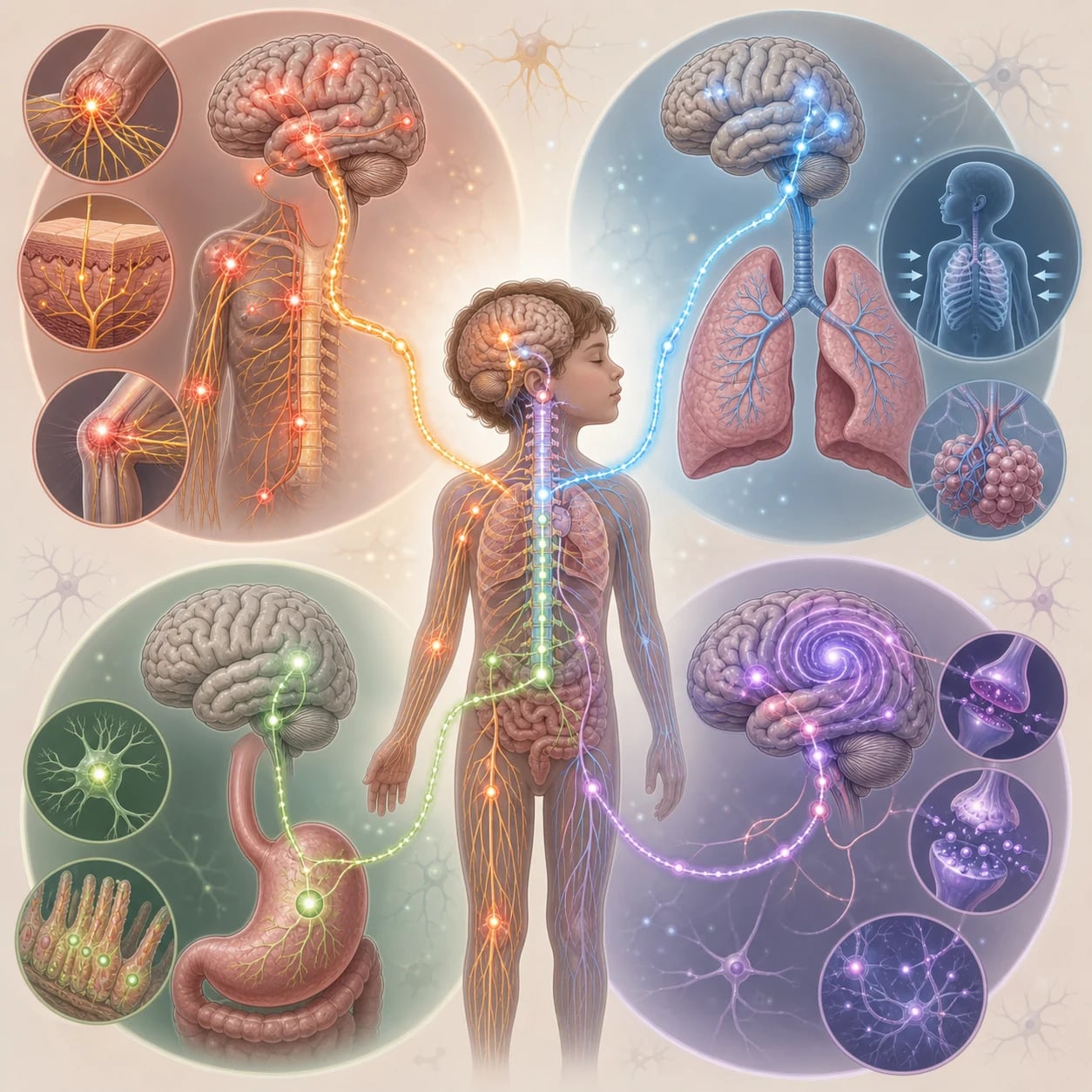
The reason different drugs work for different symptoms is that each symptom travels a different nerve pathway. Understand the pathway and the drug choice stops being a memorisation exercise and becomes obvious. [8]
Pain travels a four-step path: transduction (the injury converts a chemical or mechanical signal into an electrical one at the nociceptor), transmission (the signal moves along A-delta and C fibres to the spinal cord and up to the brain), modulation (the signal is turned up or down in the dorsal horn and by descending pathways) and perception (the brain constructs the conscious experience of suffering). Opioids act at multiple points — they bind mu receptors in the spinal cord and brain, dampen transmission and reshape perception. Neuropathic agents act differently: gabapentinoids quieten overactive calcium channels, and antidepressants reshape descending inhibition. That is why a neuropathic pain often needs a non-opioid adjuvant and may not respond to morphine alone. [2] [8]
Breathlessness is not simply low oxygen. It is the brain's construction of an uncomfortable urge to breathe, built from air-hunger sensed in the medulla, from stretch and chemical signals in the lungs, from chest-wall afferents signalling the work of breathing, and from chemoreceptor responses to hypoxia and carbon dioxide. Crucially, opioids relieve breathlessness by acting centrally on that uncomfortable urge, so a child can feel much better after a small dose of morphine even when the oxygen saturation on the monitor has not moved. Do not be falsely reassured by a normal saturation, and do not be alarmed that the drug "did not work" because the number did not change; the number was never the target. The ASCO adult dyspnoea guideline, adapted to children, confirms that systemic opioids — at lower doses than for severe pain — are the mainstay of refractory breathlessness, alongside oxygen for the hypoxic and airflow for the sensation of choking. [9] [8]
Nausea and vomiting arise from a coordinated emetic pathway centred on the brainstem. The chemoreceptor trigger zone sits in the area postrema, outside the blood-brain barrier, sampling the blood for toxins and drugs through dopamine (D2) and serotonin (5-HT3) receptors. The nucleus tractus solitarius integrates inputs from the trigger zone, from vagal afferents in the gut (responding to gastric distension, bowel obstruction and irritation), and from the vestibular nucleus. Each receptor is the target of a drug class: D2 antagonists (haloperidol, prochlorperazine, metoclopramide) for the chemoreceptor trigger zone, 5-HT3 antagonists (ondansetron) for chemo-and post-operative nausea, antihistamines and anticholinergics (cyclizine) for vestibular and motion causes, and prokinetics (metoclopramide) for gastric stasis. Match the drug to the receptor and the nausea falls; give the wrong drug and nothing happens. [8] [12]
Agitation and delirium at the end of life reflect a disturbed brain: a relative cholinergic deficit, dopaminergic excess, the effect of inflammatory cytokines and, eventually, failure of the GABA-ergic inhibitory system. Hyperactive delirium is the easy-to-spot restlessness, moaning and picking at sheets; hypoactive delirium is quiet withdrawal that is easily mistaken for peaceful sleep. Haloperidol works by dopamine blockade at the chemoreceptor trigger zone and the cortex; a benzodiazepine such as midazolam works by GABA enhancement and is added when the agitation is severe or the dying trajectory is established. The trap is that untreated pain, urinary retention, hypoxia, hypoglycaemia, sepsis and an opioid adverse effect can all look exactly like terminal agitation — and sedating those away without treating the cause is a harm, not a comfort. [5] [12]
Noisy respiratory secretions arise because the dying child loses the swallow and cough reflexes that would normally clear saliva and pooled upper-airway fluid, while the respiratory muscles weaken until they cannot shift the fluid. The result is the rattling, gurgling breathing that families find so distressing. The rational treatment is an anticholinergic, which dries the secretions at source by blocking muscarinic receptors — and the rational non-drug measures are repositioning, gentle mouth care and reassuring the family, because the child is usually unconscious and not themselves distressed. [10] [11]
Clinical Presentation
The way a symptom shows itself is shaped by the child's age and ability to communicate, and the same symptom looks different in a six-month-old, a non-verbal teenager with cerebral palsy and a verbal adolescent. Recognising each is a bedside skill. [1]
Pain in the verbal child is what the child says it is. In the pre-verbal infant and toddler it shows as crying that is hard to console, a stiff or guarded posture, facial grimacing, refusal to move or to feed, and sleep disturbance. In the school-age child it shows in the faces scale, in withdrawal and in fear of being touched. In the non-verbal neurodisabled child it shows in changed tone, in grimacing, in arching, in unexplained tachycardia and in a fall in the usual pattern of the day — and the Paediatric Pain Profile and revised-FLACC are the tools that turn that behaviour into a score you can track. The cardinal error is to assume a child who is not complaining is not in pain. [1]
Breathlessness shows in the work and the distress of breathing: accessory muscle use, nasal flaring, tachypnoea, a prolonged expiratory phase, pursed-lip breathing, paradoxical (see-saw) abdominal breathing, an inability to finish a sentence or to speak, and visible anxiety. The family reads the child's fear before they read the respiratory rate, and the fear is itself part of the symptom — a frightened child breathes faster and feels more breathless, in a spiral that airflow, position and an opioid can break. Ask the verbal child to count the words they can speak on one breath; the single-breath count is a simple, serial bedside measure of severity. [9] [8]
Nausea and vomiting present differently by cause, and the cause changes the history. Raised intracranial pressure gives early-morning vomiting that is often projectile and not preceded by nausea. Bowel obstruction gives colicky abdominal pain, distension and constipation with vomiting that may become faeculent. Opioid-induced nausea comes on after starting or escalating the drug, often settles within days, and is worsened by movement. Chemotherapy-induced nausea follows a predictable window after the agent. Vestibular causes give a positional component. The history of when the nausea comes, what is vomited and what relieves it is the clue to the receptor and therefore to the drug. [8]
Agitation and delirium present as a change from the child's usual behaviour that the family notices before the staff do: restlessness, moaning, picking at the sheets or at invisible objects, calling out, day-night reversal, a vacant or frightened stare, and sometimes frank hallucinations in the child old enough to describe them. Hyperactive delirium is loud and obvious; hypoactive delirium is quiet withdrawal that looks deceptively like peaceful rest. The single most important question to the family is whether this is the child's usual self — a changed mental state in a dying child is delirium until shown otherwise, but a reversible cause must be sought first. [5] [12]
Noisy respiratory secretions announce themselves audibly — a rattling, gurgling, bubbling sound with each breath, often appearing in the last hours to days of life. The child is usually unconscious and not distressed by the sound; the family is. The sound can frighten a family into believing the child is drowning or choking, which they are not, and the first therapeutic act is often an honest, calm explanation that the child is not aware of it. [10] [11]
[1] [9]Differential Diagnosis
The work of the differential here is not to list diseases; it is to separate the symptom that needs comfort-only drug treatment from the symptom with a treatable cause, and to separate one symptom from another that mimics it. [1]
For pain, the differential is between nociceptive, neuropathic and nociplastic mechanisms, and — critically — between pain and the things that look like pain in a child who cannot say what hurts. A child who is crying and arching may have pain, but may equally have urinary retention, faecal impaction, a pressure area, an itch, a wet nappy, anxiety or spiritual distress. Before escalating the opioid, run through the reversible non-pain causes; an opioid will not fix a full bladder, and a catheter will. [1]
For breathlessness, the discriminator is between reversible causes that bend to disease-directed treatment and the refractory breathlessness of advanced disease that bends to comfort opioids. A pleural effusion can be drained, a pneumothorax decompressed, severe anaemia transfused, heart failure diuresed, a large airway obstruction relieved by a bronchodilator, a steroid or, sometimes, radiotherapy for a tumour. Each of these may be the right answer in a child still on a disease-directed trajectory. When the breathlessness is the disease itself and no reversible cause exists, the treatment is the opioid, the airflow, the position and the calm. [9] [8]
For nausea and vomiting, the differential is the receptor. Raised intracranial pressure points to cyclizine or a steroid. Bowel obstruction points to haloperidol or an antispasmodic and away from a prokinetic that will churn an obstructed gut. Gastric stasis points to metoclopramide. Chemotherapy points to ondansetron, often with a second agent. Vestibular causes point to cyclizine. An unclassifiable, refractory nausea points to levomepromazine, the broad-spectrum antiemetic of last resort. Picking the wrong drug is the commonest reason a nausea fails to respond. [8] [12]
For agitation and delirium, the differential that matters is reversible or not. Before you reach for haloperidol, exclude hypoxia (check the saturations and the work of breathing), hypoglycaemia (check a glucose), sepsis (check the temperature and the peripheries), urinary retention (examine the abdomen and consider a bladder scan), constipation (examine and a plain film if appropriate) and an adverse drug effect — especially opioid-induced neurotoxicity, where the very drug meant to be helping is driving the delirium through its metabolites. Only when the reversible causes are addressed does terminal delirium justify haloperidol and, if refractory, a benzodiazepine. [5]
For noisy secretions, the discriminator is between retained upper-airway fluid that a single gentle suction can shift (and that recurs if the child is being over-hydrated) and true death rattle that needs an anticholinergic. Repeated blind suctioning is a harm; it distresses the child, traumatises the family and rarely helps. Position, mouth care and the right drug are kinder. [10] [11]
Clinical & Bedside Assessment
Symptom assessment in serious paediatric illness is structured, repeated and shared. You do it at every encounter, you write it down, and you compare it with the last time — because the trajectory of a score tells you as much as the number itself. [1]
Pain is assessed with a validated tool matched to the child. In the verbal school-age child and adolescent, a numeric rating scale or the Wong-Baker faces scale works. In the pre-verbal and developmentally typical infant and young child, FLACC (Face, Legs, Activity, Cry, Consolability) gives a structured five-domain score out of ten. In the child with cognitive impairment, the revised-FLACC adapts each domain to the child's baseline behaviours, and the Paediatric Pain Profile tracks behaviour over days. The trap is relying on a single score; the discipline is to repeat it, to watch the response to the analgesic, and to triangulate with the family and the nurse who know the child's baseline. [1]
Breathlessness is harder because it is internal and subjective. In the verbal child, a numeric rating or theModified Borg Scale tracks the felt intensity; the single-breath count (how many words or numbers the child can say on one breath) is a simple, serial bedside marker. In the non-verbal child, observe the work of breathing (accessory muscle use, nasal flare, recession), the rate, the ability to speak or feed, and the anxiety. An observer-rated dyspnoea score built from these signs lets you follow the trajectory. Remember that the oxygen saturation measures oxygenation, not the work or the suffering of breathing. [9]
Nausea and agitation in the non-verbal child are behavioural. For nausea, watch for refusal of food, gagging, swallowing repeatedly, dribbling, a fall in activity and the family's report. For agitation, watch for the behaviours above and ask the family what the child's baseline is. A behaviour chart that the family keeps between visits is often more informative than any single bedside snapshot, because agitation that waxes and wanes over hours is the signature of delirium. [5] [8]
The total-pain history is the history that matters most and takes the longest. Ask what the child is most troubled by (it is often not the symptom you assumed). Ask what the child and the family are hoping for, and what they are frightened of. Ask what a good day looks like and what the priorities are — comfort at home, being at school, a sibling's birthday, a holiday, being free of a particular machine. This conversation is not soft preamble; it is the framework inside which every drug decision sits. A morphine dose that is right for a family whose goal is alert time with a dying parent is the wrong dose for a family whose goal is complete relief of a refractory symptom. [3] [12]
[1] [6]Investigations
The decision to investigate a symptom in palliative care is itself a clinical act with a cost. The right question is not "what test could we do?" but "will the result change what we do, and is the burden of getting it justified by that change?" [1]
Bedside and blood tests that are quick, cheap and high-yield have a continuing role. A capillary glucose excludes hypoglycaemia in an agitated child. Electrolytes, calcium, renal function and a full blood count point to uraemia, hypercalcaemia, anaemia, infection and the metabolic disturbances that mimic terminal symptoms. A urinalysis and a bladder scan exclude retention. These tests are low-burden and often change the plan, so they stay in. [1]
Imaging is the test to weigh most carefully. A chest film or ultrasound that confirms a drainable pleural effusion is worth the transfer in a child whose breathlessness could be relieved by drainage. A chest film that confirms only what you already suspected, in a child who is imminently dying and for whom no intervention would follow, is a transfer done for the team's reassurance and not the child's comfort — and it is the wrong call. Frame each imaging decision against the question "what will we do differently if the scan shows X?" If the answer is "nothing", do not scan. [1] [9]
A medication review is one of the most powerful diagnostic tools in palliative symptom control, because iatrogenic causes are common. The child with new agitation may have opioid-induced neurotoxicity from accumulating morphine metabolites. The child with dry mouth and delirium may have a high anticholinergic load from the very drugs given for secretions. The child with nausea may be reacting to a new antiemetic or antibiotic. Walk the drug chart with a pharmacist, look for the symptom that began when the drug was started, and consider a trial of stopping. [2] [12]
A symptom diary or a validated longitudinal tool turns isolated encounters into a trajectory. The paediatric adaptation of the Edmonton Symptom Assessment System, the Memorial Symptom Assessment Scale for older children, and a simple family-kept chart of pain, breathlessness, nausea, agitation, sleep and mood over days all let you see whether the plan is working and where the next problem is coming. The documentation of the goals-of-care conversation that frames each drug decision is what makes the care defensible and transferable across the ward, the home and the hospice. [1] [8]
Management — Resuscitation
The resuscitation phase of symptom control is the response to a frightening acute symptom that has overwhelmed the current plan — a sudden pain crisis, a severe breathlessness episode, an acute seizure, a terminal haemorrhage. The principle that prevents panic is anticipatory prescribing: you have already placed the drugs and the plan for these events in the home or at the bedside before they happen, so the first episode is met with a calm, rehearsed response rather than a frantic call. [1] [4]
Acute severe breathlessness is met first with non-drug measures — sit the child upright, lean them forward, open a window or a fan for airflow on the face, and have the parent close and calm. Then give a low dose of an opioid: morphine 0.05 to 0.1 mg per kilogram subcutaneously or intravenously, or the equivalent fraction of the child's existing opioid, repeated after 15 to 30 minutes if needed. Oxygen helps the child who is hypoxaemic and relieves the sensation of choking, but it is not the treatment of breathlessness itself and is not needed if the child is not hypoxic. The goal is the child's comfort, not a saturation number. [9] [8]
An acute pain crisis is met with the right breakthrough opioid dose. The breakthrough dose is one-sixth to one-tenth of the total 24-hour opioid dose, given by a route that works fast — oral for a child who can swallow and whose crisis is building, subcutaneous or intravenous for a child who needs relief now. For a child not already on an opioid, use morphine 0.1 to 0.2 mg per kilogram subcutaneously or intravenously, or 0.2 to 0.3 mg per kilogram orally. Reassess at 15 to 30 minutes (parenteral) or 45 to 60 minutes (oral) and repeat if needed, then review the background regimen — a crisis that breaks through means the regular plan is undertreating. [2]
An acute seizure at the end of life is met with a benzodiazepine by a non-intravenous route that a family or a community nurse can give. Buccal midazolam 0.5 mg per kilogram (maximum 10 mg) or intranasal midazolam 0.5 mg per kilogram, repeated once after 10 minutes, is the first line; rectal diazepam 0.5 mg per kilogram is an alternative. For recurrent or refractory seizures, a continuous subcutaneous midazolam infusion is the standard paediatric palliative approach. The doses, the indication, the route and the family's role should all be written down before the seizure ever happens. [6]
An acute terminal haemorrhage is the symptom that cannot be treated at the moment it occurs; the blood loss is too fast. The care is the family: a dark-coloured towel to lessen the visual shock, a calm voice, the child held by a parent, and rapid anxiolysis and analgesia with a parenteral opioid and midazolam if there is time and the child is distressed. The prevention is the work done beforehand — identifying the child at risk (head and neck tumour eroding a vessel, a coagulopathy) and planning the response with the family. [1]
Anticipatory prescribing for a child expected to die at home is standard across Australian and New Zealand paediatric palliative services and is supported by the Royal Children's Hospital Melbourne guideline and Paediatric Palliative Care Australia and New Zealand. The just-in-case box typically carries a morphine or oxycodone injection for pain and breathlessness, a midazolam injection for agitation and seizures, an antiemetic (often levomepromazine or haloperidol) for nausea, and an anticholinergic (hyoscine or glycopyrronium) for secretions, each with a written dose by weight and an indication.
Management — Definitive & Stepwise
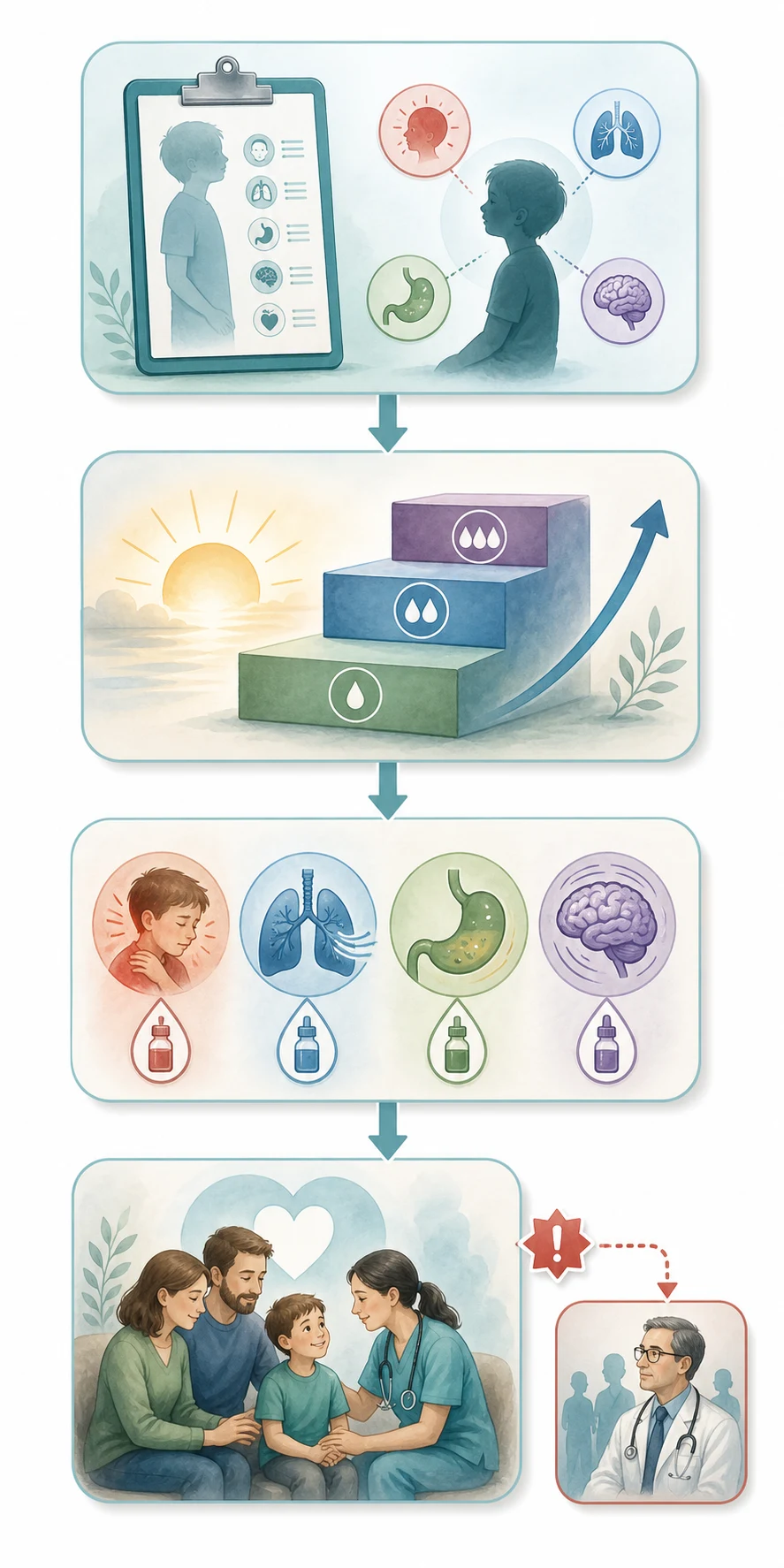
The definitive management of each symptom is a stepwise climb that matches the drug to the mechanism and the route to the child. What follows is the framework a registrar can hold at the bedside; the exact doses should be checked against the child's weight, the local formulary and a palliative care specialist, particularly for opioid rotation and palliative sedation. [1] [2]
Pain — the WHO two-step ladder
The WHO ladder for persisting pain in children was rewritten in 2012 as a two-step ladder, and the key change was dropping codeine. Step one is a non-opioid — paracetamol 15 mg per kilogram every four to six hours and, where not contraindicated, ibuprofen 5 to 10 mg per kilogram every six to eight hours. Step two, for moderate to severe pain, is a strong opioid, almost always morphine, titrated to effect rather than given at a fixed ceiling. The third step (a "weak" opioid like codeine) was removed because codeine's conversion to morphine depends on CYP2D6, which varies tenfold between children; ultrarapid metabolisers develop fatal respiratory depression and poor metabolisers get no relief. Codeine and tramadol are now contraindicated in children under 12 years, and in any child under 18 after adenotonsillectomy. [2] [2]
The starting dose of oral morphine for moderate to severe pain in a child over about six months is 0.2 to 0.3 mg per kilogram every four hours, with a breakthrough dose of the same amount allowed between regular doses. For the neonate and young infant the dose is lower and the interval longer because clearance is reduced; seek specialist advice. When the oral route is lost, morphine is given subcutaneously or intravenously as a bolus of 0.1 to 0.2 mg per kilogram every two to four hours, or as a continuous subcutaneous or intravenous infusion starting at 10 to 40 micrograms per kilogram per hour and titrated. Once the 24-hour requirement is clear, convert to a long-acting oral preparation or a transdermal option and keep the breakthrough dose as one-sixth to one-tenth of the total. [2] [12]
For neuropathic pain, add a non-opioid adjuvant because opioids alone are often inadequate. Gabapentin or pregabalin (started low and titrated) is first line; a tricyclic such as amitriptyline or nortriptyline is added or alternated. For muscle spasm and dystonia — common in the neurodisabled child — baclofen, trihexyphenidyl and, focally, botulinum toxin are the tools, and a pain that is really spasm will not yield to morphine. For bone pain, a non-steroidal anti-inflammatory and a single-fraction palliative radiotherapy are options to weigh alongside the opioid. The principle is always to match the adjuvant to the mechanism. [1] [6]
Opioid rotation is the answer when an opioid is failing through adverse effects (sedation, neurotoxicity, myoclonus, delirium, nausea) rather than through lack of analgesia, or when a different route or duration is needed. Calculate the equianalgesic dose of the new drug, then reduce it by 25 to 50 per cent to account for incomplete cross-tolerance, then re-titrate. The commonly used ratios are that oral morphine 30 mg is roughly equivalent to oral oxycodone 20 mg (a 3:2 ratio), and that oral morphine 60 to 134 mg per day is roughly equivalent to transdermal fentanyl 25 micrograms per hour. Methadone is the exception: its equianalgesic ratio to morphine rises steeply at higher morphine doses and its long, variable half-life risks accumulation, so methadone rotation should be supervised by a palliative care or pain specialist. A large paediatric methadone cohort confirms that conversion in children is not linear and demands caution. [7] [2]
[2] [12]The adverse effects of opioids are predictable and mostly manageable. Constipation is near-universal and opioid-induced; it does not resolve with tolerance, so prescribe a stimulant laxative (and an osmotic) from the first dose and do not wait. Nausea often settles within days and is treated as below. Sedation usually improves as tolerance develops; if it does not, the dose is too high or the child is accumulating metabolites. Respiratory depression is the feared but, in titrated use, rare effect; the child in pain tolerates opioids, and the risk rises with rapid parenteral escalation, combination sedatives and hepatic or renal impairment. Keep naloxone available, but understand that in the palliative setting the treatment of over-sedation is often a dose reduction rather than reversal. [2]
Breathlessness
The stepwise plan for breathlessness begins with non-drug measures and climbs to opioids. Position the child upright and forward, use a fan or open window for airflow on the face, and teach the family calm breathing and presence. Give oxygen only to the child who is hypoxaemic and who finds it relieves the choking sensation — it is not needed for a child who is breathless but well-oxygenated, and the tubing and mask may add to distress. The mainstay drug is a low-dose opioid: morphine 0.05 to 0.1 mg per kilogram subcutaneously or intravenously for an acute episode, or a small regular oral dose for chronic breathlessness, titrated to the felt sensation rather than to the saturation. For the breathlessness that is driven by anxiety, a small dose of a benzodiazepine (lorazepam or midazolam) added to the opioid breaks the fear-breathlessness spiral. A nebulised opioid or furosemide is sometimes used but the evidence is weaker; the systemic opioid is the reliable tool. [9] [8]
Nausea and vomiting
The rule is to match the antiemetic to the receptor and the cause. Haloperidol (0.01 to 0.05 mg per kilogram subcutaneously or orally, equivalent to an adult 1.5 to 5 mg per 24 hours) is the broad-spectrum first choice for the chemoreceptor trigger zone, especially opioid-induced and metabolic nausea. Metoclopramide (0.1 to 0.15 mg per kilogram up to three times daily) is the prokinetic for gastric stasis, but is avoided in complete bowel obstruction because it churns an obstructed gut and can cause colic. Cyclizine (0.5 to 1 mg per kilogram up to three times daily) is preferred for raised intracranial pressure and vestibular causes, though it can crystallise in a syringe driver and may need a separate line. Ondansetron (0.1 mg per kilogram intravenously, up to 4 mg, every 8 to 12 hours) is first line for chemotherapy-induced and post-operative nausea. Levomepromazine (0.1 to 0.25 mg per kilogram per 24 hours subcutaneously) is the broad-spectrum antiemetic of last resort for refractory nausea, with the bonus that it also sedates. [8] [12]
Always treat the cause where you can: stop or rotate the offending drug, drain an effusion, decompress an obstruction, give a steroid for raised intracranial pressure, correct hypercalcaemia. A bowel obstruction may also need an antispasmodic (hyoscine butylbromide) for colic and a reduction in the opioids and anticholinergics that slow the gut, balanced against the analgesic need. [8]
Agitation and delirium
Step one is to seek and treat reversible causes — hypoxia, hypoglycaemia, sepsis, urinary retention, constipation, pain, opioid-induced neurotoxicity — before reaching for a sedating drug. Step two, when the cause is irreversible terminal delirium, is haloperidol at a low dose (0.01 to 0.05 mg per kilogram subcutaneously, or 1.5 to 5 mg per 24 hours in the older child) as the first-line agent for both hyperactive and hypoactive delirium. Step three, for severe agitation or a dying child who is not settling, is to add or switch to a benzodiazepine — midazolam subcutaneously, titrated. Step four, for refractory terminal agitation, is levomepromazine (6.25 to 25 mg per 24 hours in the older child, weight-adjusted), which sedates and treats the delirium. The principle at every step is proportionality: the minimum sedation that relieves the symptom, with the goals and the family's wishes documented. [5] [12]
Noisy respiratory secretions
Treat the secretions with an anticholinergic that dries them at source. Hyoscine hydrobromide (10 to 20 micrograms per kilogram subcutaneously, or 0.6 to 1.2 mg per 24 hours in the older child) crosses the blood-brain barrier and is sedating, which is sometimes welcome at night. Glycopyrronium (4 to 10 micrograms per kilogram per 24 hours subcutaneously) does not cross the blood-brain barrier and is less sedating and less deliriogenic, which makes it the preferred choice when sedation is unwanted. Hyoscine butylbromide (0.4 to 0.6 mg per kilogram per 24 hours subcutaneously) is an alternative that also has a role in bowel colic. Give each as a subcutaneous bolus or a continuous infusion, reposition the child on their side, provide gentle mouth care, and — most importantly — explain to the family that the child is usually not distressed by the sound. Reduce or stop non-essential hydration, which can worsen the secretions. A Cochrane review found the evidence for anticholinergics in death rattle to be weak, but they remain the standard of care in the absence of anything better. [10] [11]
Palliative sedation for refractory symptoms
When a symptom is refractory — severe pain, breathlessness, agitation or convulsions that have not responded to escalating, specialist-guided treatment — palliative sedation is the proportionate use of sedative doses of drugs to reduce the consciousness just enough to relieve the symptom. The first-line drug is a subcutaneous midazolam infusion started at 0.05 to 0.1 mg per kilogram per hour (30 to 60 micrograms per kilogram per hour) and titrated upward until the symptom is relieved, with levomepromazine or phenobarbital added if midazolam alone is insufficient. The consent is the goals-of-care conversation, ideally held before the crisis: the family understands that the intent is relief of a refractory symptom, not the ending of life, and the dose is the minimum that achieves that relief. Palliative sedation is ethically distinct from euthanasia — it is justified by the doctrine of double effect, where the intended good (relief of refractory suffering) is pursued with a dose proportionate to distress, even if a foreseeable but unintended consequence is a shorter life. Paediatric retrospective data show that, properly titrated, palliative sedation relieves refractory symptoms without shortening life in most children. [5] [1]
The subcutaneous route and the syringe driver
The subcutaneous route is the route of choice for the dying child who cannot swallow, because it is reliable, comfortable, easy to site and maintain at home, and acceptable to families. Most palliative drugs — morphine, midazolam, haloperidol, hyoscine, glycopyrronium, levomepromazine, oxycodone — are well absorbed subcutaneously, and many can be combined in a single syringe driver (with compatibility checked against a recognised source such as the APPM formulary or a palliative care pharmacist). A syringe driver delivers a steady infusion over 24 hours and frees the child from repeated needles, which is the decisive advantage in the home setting. A prospective paediatric study confirmed that subcutaneous drug administration at home is safe, effective and acceptable to families, with morphine, midazolam and levomepromazine among the most commonly infused drugs. [4] [12]
Specific Subtypes & Scenarios
The framework above bends to the child in front of you. The scenarios below are the ones that most often appear at the bedside and in the exam. [1]
The infant and neonate with a life-limiting condition handle opioids differently. Clearance is reduced and the half-life prolonged, so doses are lower and intervals longer than in the older child; the neonate in particular may need a third to a half of the per-kilogram morphine dose given at longer intervals, with close observation and specialist input. Non-pharmacological comfort — swaddling, breastfeeding, sucrose for procedural distress, skin-to-skin contact, and a quiet, low-light environment — carries much of the load in the NICU, and family-led comfort, with the parents holding and caring for their baby, is the centre of the care. [1]
The child with severe cerebral palsy or a neurodegenerative condition faces a symptom mix that is distinctive and often under-recognised: muscle spasm and dystonia, neuropathic pain, seizures, feeding difficulty and secretions, and the discomfort of immobility and pressure. Pain and spasm are easily confused and need different drugs — morphine for pain, baclofen and trihexyphenidyl for spasm and dystonia, botulinum toxin for focal spasm. The Paediatric Pain Profile is the assessment tool of choice, the family's reading of the child's baseline is indispensable, and the goals conversation weighs the burden of each intervention (a baclofen pump, a feeding tube, surgery) against the comfort it buys. [6]
Paediatric oncology near the end of life brings tumour pain, mucositis, procedure pain, the side-effects of chemotherapy and the risk of neutropenia. Neutropenia changes the plan: avoid suppositories (rectal perforation and sepsis), avoid invasive procedures where possible, and have a low threshold for broad-spectrum antibiotics if a fever emerges. Mucositis pain is severe and often needs a continuous opioid infusion alongside mouth care. The paediatric oncology palliative care literature confirms that early specialist palliative care input improves symptom control and family outcomes, and that the deterioration is often rapid enough that anticipatory planning cannot wait. [3] [8]
The child dying at home is the child for whom anticipatory prescribing and the syringe driver were designed. The just-in-case box carries a drug for each likely symptom, with the dose written by weight and the indication clearly labelled; the syringe driver runs the regular analgesic, anxiolytic and antiemetic subcutaneously once the oral route is lost; and the family is supported by a community palliative care nurse with a clear escalation pathway. The handover from hospital to home is the high-risk moment — write the plan, the drugs, the doses, the contacts and the goals explicitly, and rehearse the response to a breathlessness or seizure episode with the family before it happens. [4]
The adolescent and young adult brings autonomy, confidentiality, capacity, body image, peer and partner presence, and the mature-minor principle into the symptom conversation. Give the adolescent private time, ask directly about their priorities (alert time, being at home, a relationship, avoiding a particular treatment), assess their capacity for each decision, and respect a competent young person's choices while continuing to support the family. The transition to adult palliative services, where relevant, should be planned and gradual rather than abrupt. [3]
Culturally and linguistically diverse families need a trained interpreter (never a family member for high-stakes conversations), and care that respects cultural and spiritual needs around dying, mourning and ritual. For Aboriginal and Torres Strait Islander, Māori and other First Nations families, cultural safety — the right to die on country, the role of extended family and Elders, and the protocols of sorry business — is part of symptom control, not an add-on. Ask, do not assume, and bring in the cultural liaison and palliative teams early. [1]
Complications & Pitfalls
The complications of symptom control are the adverse effects of the drugs and the errors of reasoning that make a child worse rather than better. [12]
Opioid-induced neurotoxicity is the pitfall that most often goes unrecognised. A child on a rising morphine dose develops myoclonus, twitching, allodynia, vivid dreams, confusion or a hyperactive delirium, and the team reads the agitation as uncontrolled pain or terminal restlessness and pushes the same opioid higher. The result is a worse delirium, more myoclonus and a more distressed child. The correct response is to recognise the syndrome, rotate to a structurally different opioid at a reduced dose, and re-titrate. [2] [12]
Codeine and tramadol in a child under 12 — or in any child under 18 after adenotonsillectomy — are the avoidable cause of fatal respiratory depression through CYP2D6 ultrarapid metabolism, and the reason the WHO ladder was rewritten. They should not appear on a paediatric palliative drug chart. [2] [2]
Treating a reversible cause as terminal is the error that harms a child who could have been helped. Urinary retention causing agitation will not respond to haloperidol; a catheter will. Hypoxia causing delirium will not respond to midazolam; oxygen or treatment of the cause will. Hypoglycaemia, hypercalcaemia, sepsis, constipation and an adverse drug effect are all reversible, and the discipline of palliative care is to look for them at every deterioration before settling on a comfort-only response. [1]
Repeated blind suctioning for death rattle is a pitfall born of the family's (and the staff's) distress at the sound. It traumatises the unconscious child, rarely clears the secretions for long, and upsets the family further. The anticholinergic, the position and the explanation are kinder and more effective. [10]
Inadequate anticipatory prescribing is the pitfall that turns a manageable symptom into a crisis. The child expected to die at home without a just-in-case box is the child whose first breathlessness, seizure or agitation episode finds the family with no drug, no plan and no one to call, and ends in a panicked ambulance trip. Prescribe early, write the plan, and rehearse the response. [4]
Disproportionate sedation — sedating a child because the staff or the family cannot bear the distress, rather than because the symptom is refractory — is an ethical as well as a clinical error. Palliative sedation is proportionate to a refractory symptom, not to the room's discomfort; the doctrine of double effect protects only a dose proportionate to the symptom being treated. The conversation that frames the sedation, and the documentation of it, is what keeps the care defensible. [5]
Failure to rotate opioids at full equianalgesic dose — the opposite of under-dosing — causes toxicity when a rotation forgets to reduce for incomplete cross-tolerance. Always reduce by 25 to 50 per cent, and seek specialist input for methadone. [7] [2]
Prognosis & Disposition
The trajectory of a symptom is itself prognostic, and reading it helps the family and the team plan. New noisy secretions (death rattle) in a child who was previously settled usually means the last hours to short days. New or worsening breathlessness may mean days to weeks. Rising pain or new agitation may mean a change in the disease that needs assessment and may carry weeks of trajectory. Naming the likely time frame honestly — without false precision — helps the family gather, plan and say what needs to be said. [1] [10]
The place of death is a decision made with the family around the symptom profile and the family's capacity to manage it. Home is right for the family who has support, a plan and the confidence to use the syringe driver; a hospice is right for the family who wants respite and skilled symptom care in a home-like setting; a hospital or PICU is right for the child whose symptoms are unstable or who needs interventions the home cannot provide. The most common regret of bereaved families is a place of death that did not match their preference, which is why the conversation should be held early and revisited. [1]
The paediatric palliative care team and the hospice service are the partners in refractory symptoms and in home care, and a refractory symptom — pain, breathlessness, agitation or secretions that has not responded to the standard climb — is an indication for specialist input without delay. The safety-net for the family is the written plan: what to watch for, when to call, who to call, and where the anticipatory drugs are kept, so that a new symptom is met with a rehearsed response. [4]
Bereavement outcomes are better when symptom control was good, when the family felt prepared, when communication was honest, and when the place of death matched the family's preference. Bereavement follow-up — a contact, a meeting, an acknowledgment of the anniversary — is part of the care of the family after the child has died, and is structured differently across services but should always be offered. [1] [3]
Special Populations
The non-verbal, intellectually disabled or autistic child is the child at highest risk of an unrecognised symptom, and the child for whom structured behavioural assessment is the safeguard. Sensory differences in autism change how pain and touch are experienced and expressed; behaviour is communication; and the family's knowledge of the child's baseline is the single most reliable signal of distress. The Paediatric Pain Profile and the revised-FLACC are the tools, and a behaviour chart kept over days is more informative than any single score. [6]
The technology-dependent child — tracheostomy, ventilator, feeding tube — faces symptoms inseparable from the technology: tracheostomy secretions that need humidification and suctioning, ventilator-related breathlessness and dyssynchrony, and the medication route problem of the child who cannot swallow (the enteral tube and the subcutaneous route are the answers). A planned, written approach to each technology-related symptom, with the family trained in the response, prevents the crises that otherwise punctuate these children's lives. [1]
The neonate and preterm infant need lower opioid doses at longer intervals, with close observation; non-pharmacological comfort and family-led care carry much of the load; and end-of-life care in the NICU — a quiet room, the parents holding their baby, siblings welcomed — is as much the treatment as the drug. [1]
The immunocompromised child — neutropenic from chemotherapy, post-transplant, immunodeficient — needs the neutropenic cautions (no suppositories, low threshold for antibiotics, avoid invasive procedures) applied to symptom care, and attention to the drug interactions of antifungals and antivirals with opioids, benzodiazepines and antiemetics metabolised by the cytochrome system. [8]
Aboriginal and Torres Strait Islander, Māori and other First Nations families need cultural safety as a core part of symptom control: the right to die on country where possible, the role of extended family and Elders in decision-making, and the protocols of sorry business. Cultural liaison and Indigenous health workers are part of the team, and the symptom plan is built around the family's cultural priorities, not imposed on them. [1]
Migrant, refugee and asylum-seeking families need a trained interpreter, trauma-informed care that recognises what displacement and loss may have already done to the family, and respect for cultural mourning practices that may differ sharply from the host country's. The marginalisation of asylum-seeking families — uncertain housing, limited access, fear of authority — is itself a barrier to symptom care that the team must actively overcome. [1]
Evidence, Guidelines & Regional Differences
The evidence base for paediatric palliative symptom control is growing but is still substantially extrapolated from adult oncology, supplemented by expert consensus and disease-specific paediatric cohorts. The clinician should know where the evidence is strong, where it is weak, and how the guidelines differ across regions. [1]
The WHO Guidelines on the Pharmacological Treatment of Persisting Pain in Children with Medical Illnesses (2012) is the foundational document that established the two-step ladder and the dropping of codeine; it remains the global reference for paediatric opioid use and is the source most often cited in paediatric palliative care guidelines worldwide. The APPM Master Formulary (UK, Association of Paediatric Palliative Medicine) is the practical paediatric dose reference used across the UK and widely consulted elsewhere, with weight-based doses for morphine, oxycodone, midazolam, haloperidol, levomepromazine, the anticholinergics and the antiemetics. The Royal Children's Hospital Melbourne Clinical Practice Guideline on Palliative Care is the most commonly used ANZ reference, and Together for Short Lives pathways are the UK family-and-service framework. [2] [12] [4]
For breathlessness, the ASCO Guideline on the Management of Dyspnea in Advanced Cancer (2021) is the strongest evidence synthesis; though adult, it is adapted to children and confirms systemic opioids (at lower doses than for severe pain) as the mainstay, alongside oxygen for the hypoxaemic and airflow for the choking sensation. For noisy secretions, the Cochrane review of interventions for noisy breathing in patients near to death (Wee and Hillier) found the evidence for anticholinergics to be weak — the trials are small and the effect is hard to distinguish from the natural history — but anticholinergics remain the standard of care in the absence of anything better, and the comparative data favour glycopyrronium over hyoscine for fewer central side effects. [9] [10] [11]
The international expert Delphi on the four essential drugs for the dying (Lindqvist et al, 2013) identified morphine, midazolam, haloperidol and an anticholinergic or antiemetic as the minimum set needed for good care of a dying patient — a consensus that maps directly onto the anticipatory box. The Dutch paediatric palliative care guideline (van Teunenbroek et al, 2024) is the most recent systematic review of symptom treatment in children and is a key paediatric-specific reference. [12] [1]
The regional differences are mostly in formulary presentation, syringe-driver practice and the structure of home services rather than in the underlying pharmacology. In ANZ, the RCH Melbourne guideline and Paediatric Palliative Care Australia and New Zealand set the practice; subcutaneous syringe drivers are standard, and state-based paediatric palliative services support home death. In the UK, the APPM formulary, NICE guidance and Together for Short Lives set the framework, with children's hospices (for example the run of hospices across England, Scotland and Wales) playing a large role. In North America, the AAP statements and the National Hospice and Palliative Care Organization frame practice, with the concurrent care provision (allowing hospice alongside disease-directed therapy for children on Medicaid) an important structural difference. The pharmacology is the same; the service wrap differs. [1] [12]
The ethical framework that governs palliative sedation and high-dose symptom relief is the doctrine of double effect: an intervention with a foreseeable bad consequence (sedation, possibly a shorter life) is permissible when the intended effect is good (relief of refractory suffering) and the dose is proportionate to that distress. The doctrine is widely cited in paediatric and adult palliative ethics, but it does not license disproportion; the proportionality of the dose to the symptom, and the documentation of the goals conversation, are what keep the care ethically and legally defensible. [5]
Exam Pearls
The high-yield facts a fellowship candidate should carry into the exam: [2]
BRAIN
- The WHO ladder for children has two steps, not three: non-opioid then strong opioid. Codeine was dropped in 2012. [2] [2]
- Breakthrough morphine is one-sixth to one-tenth of the 24-hour total, by a fast route, reassessed at 15 to 30 minutes. [2]
- Reduce by 25 to 50 per cent when rotating opioids for incomplete cross-tolerance; methadone needs specialist supervision. [7]
- Glycopyrronium (quaternary amine) does not cross the blood-brain barrier and is less sedating and deliriogenic than hyoscine hydrobromide (tertiary amine). [11]
- Opioids relieve breathlessness centrally and may not change the oxygen saturation — do not chase the number. [9]
- Death rattle prevalence is quoted at 23 to 92 per cent from adult data; the distressed party is usually the family, not the unconscious child. [10]
- Midazolam subcutaneous infusion (0.05 to 0.1 mg per kilogram per hour, titrated) is first-line palliative sedation. [5]
- The subcutaneous route and the syringe driver are the standard for the dying child who cannot swallow; most palliative drugs are compatible in a single driver (check the formulary). [4]
- Palliative sedation is distinct from euthanasia: proportionate to a refractory symptom, justified by the doctrine of double effect, documented against a goals conversation. [5]
- Anticipatory (just-in-case) prescribing for the child dying at home covers pain, breathlessness, nausea, agitation and secretions. [1] [4]
References
- [1]van Teunenbroek KC, Mulder RL, Ahout IML, et al A Dutch paediatric palliative care guideline: a systematic review and evidence-based recommendations for symptom treatment. BMC Palliat Care, 2024.PMID 38481215
- [2]Zernikow B, Michel E, Craig F, Anderson BJ Pediatric palliative care: use of opioids for the management of pain. Paediatr Drugs, 2009.PMID 19301934
- [3]Friedrichsdorf SJ, Bruera E Delivering Pediatric Palliative Care: From Denial, Palliphobia, Pallilalia to Palliactive. Children (Basel), 2018.PMID 30200370
- [4]García-López I, Chocarro-González L, Martín-Romero I, et al Pediatric Palliative Care at Home: A Prospective Study on Subcutaneous Drug Administration. J Pain Symptom Manage, 2023.PMID 37244525
- [5]Chen Y, Jiang J, Peng W, Zhang C Palliative sedation for children at end of life: a retrospective cohort study. BMC Palliat Care, 2022.PMID 35473555
- [6]Harris N, Baba M, Mellor C, et al Seizure management in children requiring palliative care: a review of current practice. BMJ Support Palliat Care, 2020.PMID 28687558
- [7]Fife A, Postier A, Flood A, Friedrichsdorf SJ Methadone conversion in infants and children: Retrospective cohort study of 199 pediatric inpatients. J Opioid Manag, 2016.PMID 27194197
- [8]Henson LA, Maddocks M, Evans C, et al Palliative Care and the Management of Common Distressing Symptoms in Advanced Cancer: Pain, Breathlessness, Nausea and Vomiting, and Fatigue. J Clin Oncol, 2020.PMID 32023162
- [9]Hui D, Bohlke K, Bao T, et al Management of Dyspnea in Advanced Cancer: ASCO Guideline. J Clin Oncol, 2021.PMID 33617290
- [10]Wee B, Hillier R Interventions for noisy breathing in patients near to death. Cochrane Database Syst Rev, 2008.PMID 18254072
- [11]Hugel H, Ellershaw J, Gambles M Respiratory tract secretions in the dying patient: a comparison between glycopyrronium and hyoscine hydrobromide. J Palliat Med, 2006.PMID 16629557
- [12]Lindqvist O, Lundquist G, Dickman A, et al Four essential drugs needed for quality care of the dying: a Delphi-study based international expert consensus opinion. J Palliat Med, 2013.PMID 23234300