MedVellum
MedVellum
Back to Library
Cardiology
Acute Medicine
General Practice
EMERGENCY

Heart Failure

High EvidenceUpdated: 2025-12-27

On This Page

Red Flags

  • Acute pulmonary oedema with respiratory distress
  • Cardiogenic shock (SBP <90mmHg with end-organ hypoperfusion)
  • New onset AF with rapid ventricular response
  • Acute coronary syndrome as precipitant
  • Severe hypoxia (SpO2 <90% on high-flow oxygen)
  • Altered mental status due to hypoperfusion
  • Oliguria/anuria (<0.5ml/kg/hr)
Overview

Heart Failure

1. Clinical Overview

Summary

Heart Failure (HF) is a complex clinical syndrome characterised by the heart's inability to pump blood at a rate sufficient to meet the metabolic demands of tissues, or to do so only at elevated filling pressures. It represents the final common pathway for most cardiac diseases and carries a prognosis worse than many cancers, with 5-year mortality rates of 50-75% for advanced disease. The syndrome is defined by a constellation of symptoms (dyspnoea, fatigue, ankle swelling) and signs (elevated JVP, pulmonary crackles, peripheral oedema) resulting from structural or functional cardiac abnormalities. Modern classification divides HF by ejection fraction: HFrEF (EF ≤40%), HFmrEF (EF 41-49%), and HFpEF (EF ≥50%), each with distinct pathophysiology and treatment implications. The introduction of disease-modifying therapies (ACEi/ARBs, Beta-blockers, MRAs, SGLT2i, ARNI) has revolutionised outcomes for HFrEF, reducing mortality by up to 50% when used in combination. [1,2,3]

Key Facts

  • Definition: Clinical syndrome with symptoms/signs of HF + objective evidence of cardiac dysfunction (structural/functional)
  • Prevalence: 1-2% of adult population in developed countries; rises to >10% in those >70 years [PMID: 33504513]
  • Incidence: 5-10 per 1000 person-years; lifetime risk ~20% at age 40
  • Mortality: 1-year mortality 20-30% for new diagnosis; 5-year mortality 50-75% [PMID: 28455343]
  • Morbidity: Leading cause of hospitalisation in >65s; high readmission rates (25% at 30 days)
  • Peak Demographics: Bimodal - younger males (DCM, IHD); older females (HFpEF)
  • Pathognomonic Feature: None - diagnosis is clinical + imaging (Echo EF, NTproBNP)
  • Gold Standard Investigation: Transthoracic Echocardiography (TTE)
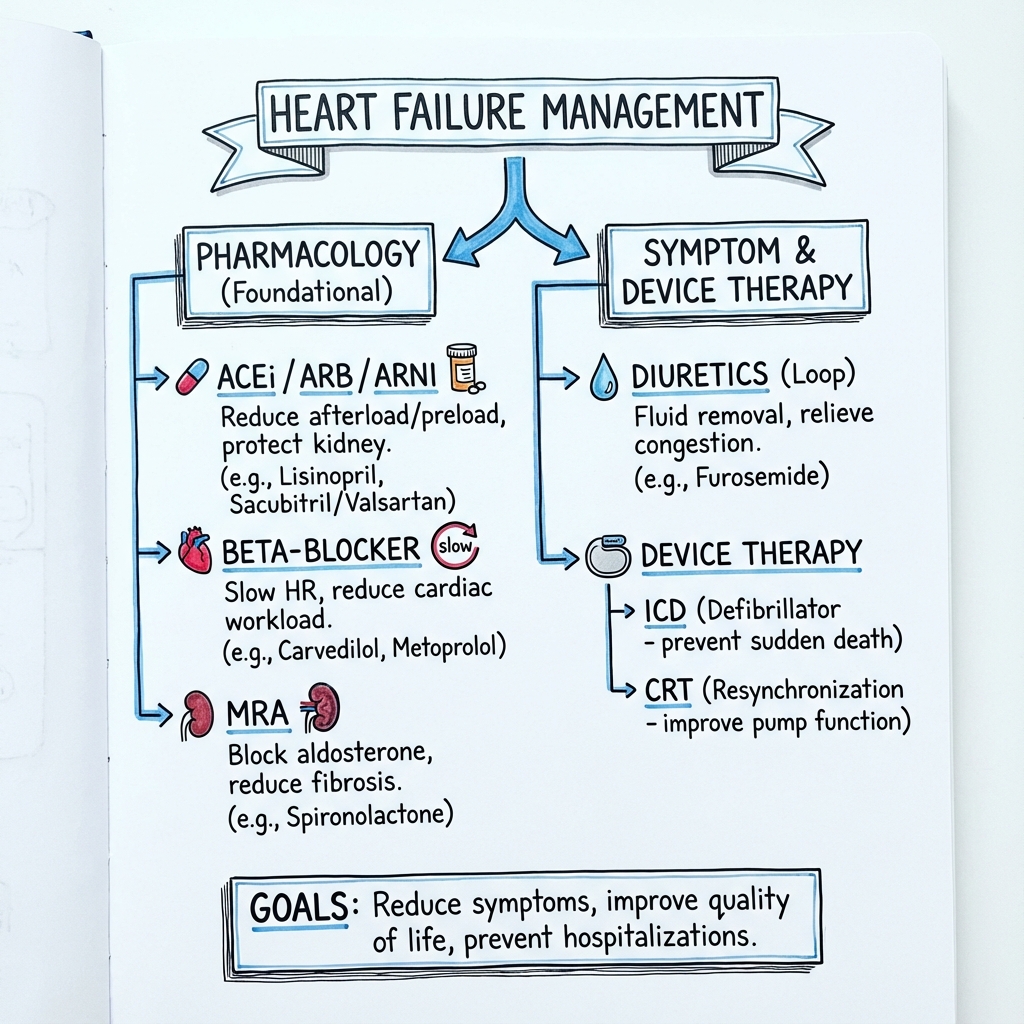
  • First-line Treatment: GDMT quadruple therapy (ACEi/ARNi + BB + MRA + SGLT2i)
  • Prognosis Summary: With optimal GDMT, 5-year survival >60% for HFrEF; without treatment <30%

Clinical Pearls

Diagnostic Pearl: BNP <100 pg/mL or NTproBNP <300 pg/mL effectively EXCLUDES acute heart failure (NPV >95%). A raised level does NOT confirm HF - needs clinical + echo correlation.

Examination Pearl: "Cold and Wet" is the worst prognosis profile - hypoperfusion (cold peripheries, confusion, low SBP) + congestion (oedema, crackles). These patients may need inotropes.

Treatment Pearl: "Start Low, Go Slow, But Get There" - titrate GDMT to maximum tolerated doses. Most mortality benefit is at target dose, not just initiation.

Pitfall Warning: Do NOT stop beta-blockers during acute decompensation unless cardiogenic shock. Reduce dose if needed, but discontinuation worsens outcomes.

Mnemonic: FACES for HF symptoms: Fatigue, Activities limited, Chest congestion/cough, Edema, Shortness of breath.

Why This Matters Clinically

Heart Failure is the cardiovascular epidemic of the 21st century. With an ageing population and improved survival from acute MI, the prevalence continues to rise exponentially. It is the most common reason for hospital admission in those over 65, with each admission costing healthcare systems thousands and increasing subsequent mortality risk by 30-40%. Medico-legally, failure to optimise GDMT or investigate the underlying cause is increasingly scrutinised. For examinations, HF is a favourite viva topic encompassing pathophysiology, pharmacology, and clinical acumen - expect detailed questioning on EF categories, GDMT rationale, and prognosis. [4,5]


2. Epidemiology

Incidence & Prevalence

  • Prevalence: 64 million worldwide; 1-2% in developed countries; 6.9 million in USA [Source: PMID: 33504513]
  • Incidence: 1-5 per 1000 person-years; increases steeply with age
  • Lifetime Risk: 20-25% at age 40; higher with hypertension/diabetes [PMID: 31475701]
  • Trend: Increasing prevalence due to ageing population and improved MI survival
  • Geographic Variation: Higher in developed nations; underdiagnosed in low-income regions
  • Temporal Trends: Hospitalisation rates declining due to better outpatient management; mortality improving

Demographics

FactorDetailsClinical Significance
AgePeak: 70-80 years; Range: any age (DCM, congenital)Aetiologies differ by age (IHD older, DCM younger)
SexMale:Female ~1.5:1 for HFrEF; HFpEF equal/female predominantHFpEF more common in females with HTN/DM
EthnicityHigher in African Americans; lower in AsiansGenetic variants in RAAS, response to therapy differs
GeographyHigher in developed nationsHealthcare access, diet, lifestyle factors
SocioeconomicStrong inverse associationMedication adherence, diet, healthcare access
OccupationManual labour associated with delayed presentationPhysical demands mask symptoms

Risk Factors

Non-Modifiable Risk Factors:

FactorRelative Risk (95% CI)Mechanism
Age >65 yearsRR 4.5 (3.8-5.2)Cumulative cardiac damage, diastolic dysfunction
Male sexRR 1.5 (1.3-1.7)IHD prevalence, less oestrogen protection
Family history of cardiomyopathyRR 2.5 (1.8-3.4)Genetic cardiomyopathies (DCM, HCM)
Genetic factors (TTN, LMNA mutations)RR 3-10Sarcomeric/nuclear envelope protein dysfunction
African American ethnicityRR 1.5 (1.3-1.8)Genetic variants, higher HTN/DM burden

Modifiable Risk Factors:

Risk FactorRelative Risk (95% CI)Evidence LevelIntervention Impact
HypertensionRR 2.0 (1.7-2.4)Level 1aBP control reduces HF incidence by 50%
Coronary Artery DiseaseRR 3.0 (2.5-3.6)Level 1aRevascularisation, secondary prevention
Diabetes MellitusRR 2.0 (1.8-2.3)Level 1aSGLT2i reduce HF hospitalisation by 30%
Obesity (BMI >30)RR 2.0 (1.7-2.4)Level 2aWeight loss improves symptoms (not proven for mortality)
SmokingRR 1.6 (1.4-1.8)Level 2aCessation reduces risk, no direct HF benefit data
Alcohol excessRR 1.5 (1.2-1.9)Level 2aAbstinence can reverse alcoholic cardiomyopathy
Cardiotoxic drugs (anthracyclines)RR 5.0+Level 2bMonitoring, cardioprotection (dexrazoxane)
Valvular heart diseaseRR 3.0 (2.4-3.7)Level 1bSurgical/percutaneous intervention
Atrial fibrillationRR 2.0 (1.8-2.3)Level 1bRate/rhythm control, anticoagulation

Protective Factors:

  • Regular exercise: RR 0.6 (0.5-0.7), improves functional capacity, reduces hospitalisations
  • Mediterranean diet: RR 0.7 (0.6-0.8), reduces cardiovascular events
  • Moderate alcohol (controversial): J-curve relationship, not recommended as prevention strategy

3. Pathophysiology

Mechanism

Step 1: Initiating Cardiac Insult

  • Primary triggers: Ischaemic injury (MI), pressure overload (HTN, AS), volume overload (MR, AR), direct myocardial damage (myocarditis, toxins)
  • Molecular basis: Cardiomyocyte loss (necrosis/apoptosis), sarcomeric dysfunction, calcium handling abnormalities
  • Cellular response: Remaining myocytes undergo hypertrophy to compensate for lost contractile elements
  • Time course: Acute insult (minutes to hours) vs chronic progressive damage (years)
  • Why susceptible: Cardiomyocytes are terminally differentiated with minimal regenerative capacity

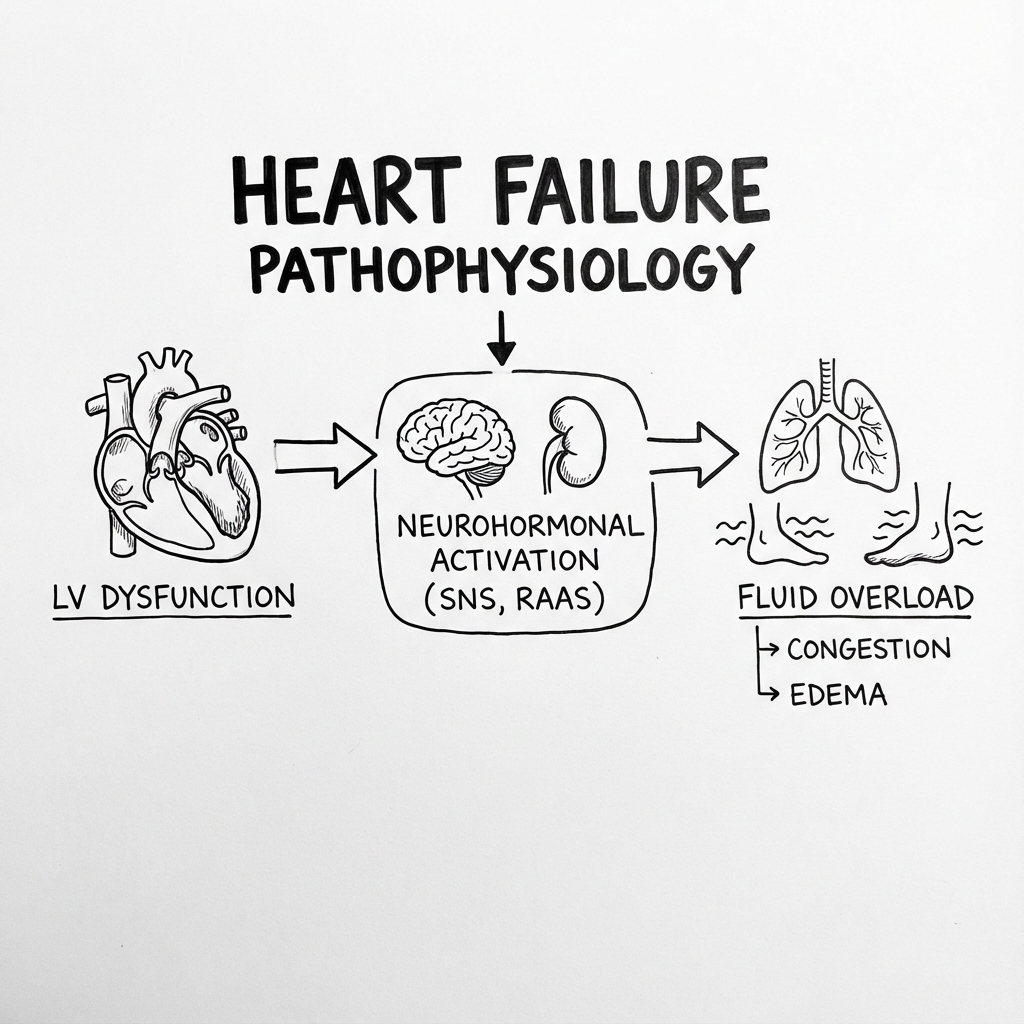
Step 2: Neurohormonal Activation (Days to Weeks)

  • Sympathetic Nervous System (SNS): Baroreceptor unloading → increased catecholamines → chronotropy, inotropy, vasoconstriction
  • Renin-Angiotensin-Aldosterone System (RAAS): Reduced renal perfusion → renin release → angiotensin II → vasoconstriction, aldosterone → sodium/water retention
  • Natriuretic Peptides: BNP/ANP released from stretched myocardium → vasodilation, natriuresis (overwhelmed in HF)
  • Compensatory mechanisms: Initially maintain cardiac output - "compensated heart failure"
  • Histological changes: Early interstitial oedema, inflammatory cell infiltration

Step 3: Maladaptive Remodelling (Weeks to Months)

  • Ventricular remodelling: LV dilatation (eccentric hypertrophy in volume overload), increased wall stress
  • Myocyte changes: Cellular hypertrophy, altered gene expression (fetal gene programme), impaired contractility
  • Interstitial changes: Fibroblast activation, collagen deposition, myocardial fibrosis
  • Functional consequences: Reduced EF (HFrEF) or impaired relaxation (HFpEF), elevated filling pressures
  • Clinical correlates: Symptoms of congestion (dyspnoea, oedema) and low output (fatigue)

Step 4: Progressive Decompensation

  • Natural history without treatment: Progressive ventricular dilatation and dysfunction
  • Factors accelerating progression: Non-adherence, infection, arrhythmia (especially AF), ACS, uncontrolled HTN
  • Systemic effects: Skeletal muscle wasting (cardiac cachexia), hepatic congestion, renal dysfunction (cardiorenal syndrome)
  • Arrhythmias: Atrial fibrillation (loss of atrial kick, tachycardiomyopathy), ventricular arrhythmias (SCD)
  • Multi-organ involvement: Type 2 cardiorenal syndrome, hepatic congestion, gut oedema (malabsorption)

Step 5: End-Stage Heart Failure or Recovery

  • Without intervention: Progressive symptoms, recurrent hospitalisations, death from pump failure or sudden cardiac death
  • With GDMT: Reverse remodelling possible (EF can improve 10-15%), symptom improvement, reduced mortality
  • Device therapy: CRT can improve EF by 5-15% in appropriate candidates; ICD prevents SCD
  • Advanced therapies: LVAD as bridge/destination, cardiac transplantation for eligible patients
  • Why some improve: Reversibility depends on aetiology (tachycardiomyopathy, peripartum), duration, scar burden

Classification Systems

By Ejection Fraction (ESC/AHA 2021):

TypeEFClinical FeaturesTreatment
HFrEF (Reduced)≤40%Dilated LV, systolic dysfunctionQuadruple GDMT proven
HFmrEF (Mildly Reduced)41-49%Overlap phenotypeEmerging evidence for GDMT
HFpEF (Preserved)≥50%Diastolic dysfunction, normal LV sizeSGLT2i only proven therapy
HFimpEF (Improved)>40% after HFrEFPrevious HFrEF with recoveryContinue GDMT - do not stop

NYHA Functional Classification:

ClassSymptomsActivity Limitation
INoneOrdinary activity causes no symptoms
IIMildSlight limitation - symptoms with ordinary activity
IIIModerateMarked limitation - symptoms with less than ordinary activity
IVSevereUnable to carry out any activity without symptoms; symptoms at rest

ACC/AHA Stages:

StageDescriptionManagement
AAt risk (HTN, DM, CAD) - no structural diseaseRisk factor modification
BStructural disease (LVH, prior MI) - no symptomsGDMT initiation
CStructural disease with current/prior symptomsOptimal GDMT + devices
DRefractory symptoms requiring advanced therapiesLVAD, transplant, palliative care

Anatomical Considerations

  • Left Ventricle: Primary chamber affected; LV mass and wall stress determine remodelling pattern
  • Left Atrium: Dilates with elevated filling pressures; predisposes to AF
  • Right Ventricle: Secondary involvement (pulmonary HTN) or primary (ARVC); RV failure is ominous sign
  • Coronary circulation: Subendocardial ischaemia with elevated LV end-diastolic pressure
  • Pulmonary vasculature: Congestion → pulmonary oedema → pulmonary hypertension → RV failure
  • Systemic venous system: Elevated CVP → hepatic congestion → peripheral oedema

Physiological Considerations

  • Starling's Law: In normal heart, increased preload → increased stroke volume; in failing heart, the curve is flattened and shifted right
  • Afterload sensitivity: Failing heart is exquisitely sensitive to afterload - vasodilators improve output
  • Heart Rate: Compensatory tachycardia maintains output but increases myocardial oxygen demand
  • Contractility: Impaired calcium handling, sarcomeric dysfunction reduce intrinsic contractility
  • Lusitropy: Relaxation impaired (especially HFpEF) → elevated filling pressures at lower volumes

4. Clinical Presentation

Symptoms

Typical Presentation:

Atypical Presentations:

Signs

Red Flags

[!CAUTION] Red Flags — Seek immediate help if:

  • Acute pulmonary oedema (pink frothy sputum, severe dyspnoea, hypoxia)
  • Cardiogenic shock (SBP <90mmHg, cold extremities, altered mental status)
  • New rapid AF (HR >150bpm) with haemodynamic compromise
  • Chest pain suggesting acute coronary syndrome
  • SpO2 <90% despite supplemental oxygen
  • Anuria or severe oliguria (<0.3ml/kg/hr)
  • New confusion or reduced GCS

Dyspnoea on exertion (95% of cases) - most sensitive symptom
Common presentation.
Orthopnoea (70%) - need to sleep on multiple pillows
Common presentation.
Paroxysmal nocturnal dyspnoea (50%) - waking with breathlessness/cough
Common presentation.
Fatigue and exercise intolerance (90%)
Common presentation.
Peripheral oedema - ankles, legs, sacrum (70%)
Common presentation.
Cough - often nocturnal, may be mistaken for asthma
Common presentation.
Nocturia - due to increased renal perfusion when supine
Common presentation.
Reduced appetite, early satiety - gut oedema, hepatic congestion
Common presentation.
5. Clinical Examination

Structured Approach

General:

  • Respiratory distress (tachypnoea, accessory muscle use, tripod position)
  • Pallor (anaemia as exacerbating factor)
  • Cyanosis (peripheral or central)
  • Cachexia (cardiac cachexia in chronic severe HF)
  • State of hydration (wet vs dry)
  • Perfusion status (warm vs cold)

Vital Signs:

  • Pulse: rate (tachycardia), rhythm (AF), character (pulsus alternans in severe LV failure)
  • Blood pressure: may be low (cardiogenic shock) or high (acute HTN crisis)
  • Respiratory rate: typically elevated (>20/min)
  • Oxygen saturation: may be reduced (target >94%, or 88-92% if COPD)

Cardiovascular Examination:

  • JVP assessment (cm above sternal angle) - elevated in congestion
  • Apex beat location and character
  • Heart sounds - S3 (HFrEF), S4 (HFpEF), murmurs (valvular disease)
  • Hepatojugular reflux - press on liver, watch JVP rise

Respiratory Examination:

  • Percussion: stony dull = effusion; dull = consolidation
  • Auscultation: bibasal crackles (pulmonary oedema), reduced breath sounds (effusion)

Abdominal Examination:

  • Hepatomegaly (tender in acute congestion)
  • Ascites (shifting dullness)

Peripheral Examination:

  • Pitting oedema (ankles, sacrum)
  • Peripheral perfusion (capillary refill, temperature)

Special Tests

TestTechniquePositive FindingSensitivity/Specificity
Hepatojugular refluxFirm pressure on liver for 30 sec, observe JVPJVP rises >3cm and sustained70%/85% for elevated RA pressure
Raised JVPMeasure height above sternal angle at 45°>4cm above sternal angle70%/90%
S3 gallopListen at apex with bell, left lateral decubitusLow-pitched early diastolic sound40%/95% for elevated LVEDP
Displaced apexPalpate apex in expirationLateral to mid-clavicular line60%/90% for cardiomegaly
Capillary refillBlanch nailbed, measure time to refill>2 seconds indicates hypoperfusion50%/70% for low cardiac output
Pitting oedemaPress skin over tibia/sacrum for 5 secIndentation remainsNon-specific (many causes)

6. Investigations

First-Line (Bedside)

  • 12-lead ECG — Essential; may show AF, evidence of MI, LV hypertrophy, LBBB (consider CRT candidacy)
  • Chest X-ray — Cardiomegaly (CTR >0.5), pulmonary congestion, pleural effusions, Kerley B lines
  • Oxygen saturation — Hypoxia indicates pulmonary oedema
  • Point-of-care BNP/NTproBNP — Rule-out test (high NPV)

Laboratory Tests

TestExpected FindingPurpose
NTproBNPElevated (>300pg/mL acute, >125pg/mL chronic)Diagnosis, prognosis, monitoring
BNPElevated (>100pg/mL)Alternative to NTproBNP
TroponinMay be elevated (type 2 MI, myocarditis)Exclude ACS; prognostic
Full Blood CountAnaemia exacerbates symptomsCorrect anaemia (IV iron if deficient)
U&Es (Creatinine, eGFR)May show AKI (cardiorenal syndrome)Baseline, drug dosing
Liver Function TestsElevated ALT/AST, bilirubin (congestive hepatopathy)Assess congestion severity
TSHHyper/hypothyroidism as causeReversible cause
HbA1c / Fasting glucoseDiabetes screeningRisk factor, SGLT2i eligibility
Iron studiesFerritin <100 or TSAT <20%Iron deficiency (treat with IV iron)

Imaging

ModalityFindingsIndication
Echocardiography (TTE)LV EF, LV dimensions, wall motion abnormalities, valves, RA/RV, diastolic functionESSENTIAL - all patients
Chest X-rayCardiomegaly, pulmonary oedema, pleural effusionsInitial assessment - outpatient/ED
Cardiac MRIScar pattern (ischaemic vs non-ischaemic), infiltrative disease, myocarditisAetiology unclear, viability assessment
Coronary AngiographyCoronary anatomyIf ischaemic aetiology suspected
CTCACoronary artery disease assessmentAlternative to invasive angiography
Nuclear imaging (MUGA)Accurate EF measurementCRT/ICD candidacy, cardiotoxicity monitoring

Diagnostic Criteria (ESC 2021)

For diagnosis of HF, ALL required:

  1. Symptoms typical of HF (dyspnoea, fatigue, ankle swelling)
  2. Signs typical of HF (elevated JVP, crackles, oedema)
  3. Objective evidence of cardiac structural/functional abnormality (reduced EF, elevated filling pressures, natriuretic peptides)

Natriuretic Peptide Thresholds:

  • Exclude HF: BNP <35pg/mL or NTproBNP <125pg/mL (outpatient)
  • Exclude acute HF: BNP <100pg/mL or NTproBNP <300pg/mL

7. Management

Management Algorithm

                    HEART FAILURE PRESENTATION
                              ↓
┌─────────────────────────────────────────────────────────────┐
│              INITIAL ASSESSMENT (ABC)                        │
│   - Oxygen if SpO2 &lt;94% (target 94-98%)                      │
│   - IV access, cardiac monitoring                            │
│   - ECG, CXR, BNP/NTproBNP, Troponin, U&Es                   │
│   - Echocardiography (within 48hrs, urgently if shock)       │
└─────────────────────────────────────────────────────────────┘
                              ↓
┌─────────────────────────────────────────────────────────────┐
│              HAEMODYNAMIC PROFILE ASSESSMENT                 │
├─────────────────────────────────────────────────────────────┤
│                       CONGESTION                             │
│           │           YES          │          NO            │
│  ─────────┼─────────────────────────┼────────────────────── │
│   COLD    │  "Cold and Wet"         │  "Cold and Dry"       │
│   (low    │  → Inotropes + Diuretics│  → Fluids ± Inotropes │
│  output)  │  → ICU/CCU              │  → Volume assessment  │
│  ─────────┼─────────────────────────┼────────────────────── │
│   WARM    │  "Warm and Wet"         │  "Warm and Dry"       │
│   (good   │  → IV Diuretics         │  → Compensated        │
│  output)  │  → Vasodilators         │  → Optimise GDMT      │
└─────────────────────────────────────────────────────────────┘
                              ↓
┌─────────────────────────────────────────────────────────────┐
│              ACUTE DECOMPENSATION TREATMENT                  │
│                                                              │
│   IV DIURETICS:                                              │
│   - Furosemide 40-80mg IV (or 1-2.5x oral dose)              │
│   - Aim urine output >100ml/hr, weight loss 0.5-1kg/day      │
│   - If resistant: add Metolazone 2.5-5mg PO                  │
│                                                              │
│   VASODILATORS (if SBP >110):                                │
│   - GTN infusion 10-200mcg/min                               │
│   - Reduces preload and afterload                            │
│                                                              │
│   NIV/CPAP (if pulmonary oedema + respiratory distress):     │
│   - Reduces work of breathing                                │
│   - Improves oxygenation                                     │
└─────────────────────────────────────────────────────────────┘
                              ↓
┌─────────────────────────────────────────────────────────────┐
│    INITIATE/OPTIMISE QUADRUPLE GDMT (HFrEF - EF ≤40%)       │
├─────────────────────────────────────────────────────────────┤
│  1. ACEi/ARB → ARNI (Sacubitril/Valsartan)                  │
│     Target: Sacubitril/Valsartan 97/103mg BD                │
│                                                              │
│  2. BETA-BLOCKER (Bisoprolol, Carvedilol, Metoprolol XL)    │
│     Target: Bisoprolol 10mg OD / Carvedilol 25mg BD         │
│                                                              │
│  3. MRA (Spironolactone or Eplerenone)                      │
│     Target: Spironolactone 25-50mg OD                       │
│                                                              │
│  4. SGLT2 INHIBITOR (Dapagliflozin or Empagliflozin)        │
│     Dose: Dapagliflozin 10mg OD / Empagliflozin 10mg OD     │
└─────────────────────────────────────────────────────────────┘
                              ↓
┌─────────────────────────────────────────────────────────────┐
│              DEVICE THERAPY CONSIDERATION                    │
├─────────────────────────────────────────────────────────────┤
│  ICD (Primary Prevention):                                   │
│  - EF ≤35% despite 3 months optimal GDMT                    │
│  - Expected survival >1 year                                │
│                                                              │
│  CRT (Cardiac Resynchronisation):                           │
│  - EF ≤35%, LBBB ≥150ms, NYHA II-IV on GDMT                │
│  - Greatest benefit: LBBB morphology, QRS >150ms            │
└─────────────────────────────────────────────────────────────┘

Acute/Emergency Management

Immediate Actions:

  1. High-flow oxygen if SpO2 <94% (or NIV/CPAP if respiratory distress)
  2. IV access + cardiac monitoring
  3. Sit patient upright to reduce preload
  4. IV diuretic: Furosemide 40-80mg IV bolus (double usual oral dose if already on)
  5. GTN sublingual/spray if SBP >110mmHg
  6. Morphine 2-4mg IV if severe distress (use with caution - respiratory depression)

Cardiogenic Shock Management:

  • Escalate to CCU/ICU
  • Consider:
    • Inotropes (Dobutamine 2.5-20mcg/kg/min)
    • Vasopressors if SBP <90 (Noradrenaline)
    • Intra-aortic balloon pump (IABP)
    • Mechanical circulatory support (Impella, ECMO)

Conservative Management

  • Fluid restriction: 1.5-2L/day (especially in hyponatraemia)
  • Sodium restriction: <2g/day (less evidence, may improve symptoms)
  • Daily weights: Patient self-monitoring; contact if weight gain >2kg in 3 days
  • Exercise: Cardiac rehabilitation improves functional capacity (Level 1a evidence)
  • Smoking cessation: Essential
  • Alcohol: Avoid or limit (<14 units/week); abstinence if alcoholic cardiomyopathy
  • Vaccinations: Influenza annually, Pneumococcal, COVID-19

Medical Management (GDMT for HFrEF)

Drug ClassDrugStarting DoseTarget DoseKey Points
ACEiRamipril1.25mg OD10mg ODMonitor K+ and creatinine; cough in 10-15%
ACEiLisinopril2.5mg OD35mg ODAlternative ACEi
ARBCandesartan4mg OD32mg ODIf ACEi intolerant (cough)
ARNISacubitril/Valsartan24/26mg BD97/103mg BDSuperior to ACEi; switch if stable on ACEi
Beta-blockerBisoprolol1.25mg OD10mg ODTitrate slowly (every 2-4 weeks)
Beta-blockerCarvedilol3.125mg BD25mg BDAlpha and beta blocker
MRASpironolactone12.5-25mg OD50mg ODMonitor K+; gynaecomastia in males
MRAEplerenone25mg OD50mg ODAlternative if gynaecomastia
SGLT2iDapagliflozin10mg OD10mg ODBenefit regardless of diabetes status
SGLT2iEmpagliflozin10mg OD10mg ODAlternative SGLT2i
Loop diureticFurosemide20-40mg ODAs neededFor congestion; no mortality benefit
Hydralazine + NitrateH-ISDN37.5/20mg TDS75/40mg TDSIf ACEi/ARB/ARNI contraindicated; especially African Americans
IvabradineIvabradine2.5mg BD7.5mg BDIf HR >70 in sinus rhythm on max BB
VericiguatVericiguat2.5mg OD10mg ODFor worsening HF despite GDMT

Surgical Management / Device Therapy

Indications for ICD:

  • Primary prevention: EF ≤35% despite ≥3 months optimal GDMT, expected survival >1 year
  • Secondary prevention: Survived VT/VF arrest

Indications for CRT (Cardiac Resynchronisation Therapy):

  • EF ≤35%, symptomatic (NYHA II-IV) despite GDMT
  • QRS ≥130ms (greatest benefit if LBBB ≥150ms)
  • Sinus rhythm

Advanced Heart Failure Options:

  • LVAD (Left Ventricular Assist Device) - bridge to transplant or destination therapy
  • Cardiac transplantation - for refractory HF without contraindications
  • Palliative care - for patients not candidates for advanced therapies

Disposition

  • Admit if: New diagnosis requiring investigation, acute decompensation requiring IV diuretics, hypotension, hypoxia, AKI, arrhythmia
  • Discharge if: Stable on oral medications, euvolaemic, adequate home support, follow-up arranged
  • Follow-up: HF nurse review within 2 weeks, Cardiology within 6 weeks, titrate GDMT at each visit

8. Complications

Immediate (Minutes-Hours)

ComplicationIncidencePresentationManagement
Cardiogenic shock5-10% of acute HFHypotension (SBP <90mmHg), cold extremities, oliguria, confusionICU, inotropes (dobutamine), vasopressors if needed, MCS
Respiratory failure10-15%SpO2 <90%, tachypnoea >30/min, accessory muscle useNIV/CPAP first line, intubation if failing
Flash pulmonary oedema5%Sudden severe dyspnoea, pink frothy sputum, hypoxiaIV furosemide, GTN infusion, NIV, treat underlying cause
Cardiac arrest2-5%VT/VF (shockable), PEA/asystole (non-shockable)ACLS protocol, identify reversible causes
Acute myocardial infarction10-15%Chest pain, new ECG changes, troponin riseCoronary angiography, revascularisation
Acute kidney injury20-30%Rising creatinine, reduced urine outputOften resolves with decongestion; avoid nephrotoxins

Early (Days)

Acute Kidney Injury (Cardiorenal Syndrome Type 1):

  • Incidence: 30% of hospitalisations for acute decompensated HF
  • Mechanism: Low cardiac output → renal hypoperfusion; venous congestion → elevated renal venous pressure
  • Often resolves with effective decongestion
  • Do NOT withhold GDMT for modest creatinine rise (up to 30% acceptable)
  • Avoid nephrotoxins (NSAIDs, contrast if possible)
  • Consider UF (ultrafiltration) if diuretic-resistant

Electrolyte Disturbances:

  • Hypokalaemia: Loop diuretics → K+ wasting; add K+ supplements or MRA
  • Hyperkalaemia: ACEi + MRA combination; monitor K+ closely; potassium binders if persistent
  • Hyponatraemia: Dilutional (fluid overload) - poor prognostic marker; fluid restrict
  • Hypomagnesaemia: Diuretic-induced; increases arrhythmia risk; supplement

Digoxin Toxicity:

  • If used for rate control or symptoms
  • Symptoms: Nausea, vomiting, visual disturbances (yellow-green halos), confusion
  • ECG: Reverse-tick ST depression, atrial tachycardia with block, bradyarrhythmias
  • Management: Stop digoxin, correct electrolytes (especially K+, Mg2+), Digibind if severe

Hospital-Acquired Complications:

  • Pneumonia: Aspiration risk, fluid overload, immobility; prophylactic measures
  • Venous thromboembolism: DVT (5-10%), PE; prophylactic LMWH unless contraindicated
  • Pressure ulcers: Immobility, poor perfusion; pressure-relieving mattress, early mobilisation
  • Falls: Hypotension from GDMT, confusion; falls risk assessment
  • Delirium: Hypoperfusion, polypharmacy, unfamiliar environment; non-pharmacological measures first

Late (Weeks-Months)

Recurrent Hospitalisations:

  • 25% readmission at 30 days; 45% at 6 months; 67% at 1 year
  • Each hospitalisation increases mortality risk ~30-40%
  • Predictors: Previous hospitalisations, renal impairment, non-adherence, poor social support
  • Prevention: Optimise GDMT, HF nurse follow-up, patient education, remote monitoring

Progressive Renal Impairment (Cardiorenal Syndrome Type 2):

  • Chronic low cardiac output → progressive CKD
  • CKD prevalence in HF: 40-50%
  • Impacts drug dosing, prognosis, device eligibility
  • SGLT2i benefit even in CKD (down to eGFR 20)

Atrial Fibrillation:

  • Present in 30-40% of HF patients
  • Bidirectional relationship: HF → AF; AF → HF (tachycardia-mediated)
  • Worsens prognosis independent of HF severity
  • Management: Rate control (beta-blocker preferred), anticoagulation (DOAC), consider ablation

Ventricular Arrhythmias and Sudden Cardiac Death:

  • SCD accounts for 30-50% of HF deaths
  • Mechanisms: VT/VF, electrolyte abnormalities, ischaemia
  • Prevention: ICD for eligible patients; optimise GDMT (reduces SCD risk by 30-40%)
  • High-risk features: NSVT on Holter, prior cardiac arrest, EF <30%, family history of SCD

Cardiac Cachexia:

  • Definition: Unintentional weight loss >5% over 12 months (or BMI <20 with weight loss)
  • Prevalence: 10-15% of advanced HF
  • Mechanism: Neurohormonal activation, cytokines (TNF-α), gut oedema, anorexia
  • Prognosis: Very poor (>50% 18-month mortality)
  • Management: Optimise HF therapy, nutritional support, exercise where possible

Depression and Anxiety:

  • Prevalence: 20-40% in HF patients
  • Impacts: Medication adherence, quality of life, hospitalisations, mortality
  • Screening: PHQ-9 at each visit
  • Management: CBT, SSRIs (avoid TCAs - arrythmogenic), HF-cardiac rehabilitation

Iron Deficiency:

  • Prevalence: 50% of HF patients (with or without anaemia)
  • Defined as: Ferritin <100 ng/mL OR ferritin 100-300 with TSAT <20%
  • Symptoms: Fatigue, exercise intolerance (beyond HF)
  • Treatment: IV iron (ferric carboxymaltose) - FAIR-HF, AFFIRM-AHF
  • Benefits: Improves symptoms, exercise capacity, QoL; reduces hospitalisations

Sleep-Disordered Breathing:

  • Prevalence: 50-75% of HF patients
  • Types: OSA (obstructive), CSA (central - Cheyne-Stokes respiration)
  • CSA associated with worse prognosis
  • Management: Optimise HF therapy; CPAP for OSA; ASV avoided in HFrEF (SERVE-HF harm signal)

Complications by Therapy

ACEi/ARB/ARNI Complications:

  • Hypotension: Start low, titrate slowly
  • Renal impairment: Monitor; tolerate up to 30% rise in creatinine
  • Hyperkalaemia: Monitor K+; dietary advice; potassium binders if persistent
  • Cough (ACEi): 10-15%; switch to ARB
  • Angioedema (ACEi): Rare but serious; contraindicated if previous angioedema

Beta-Blocker Complications:

  • Fatigue: Often transient; may need dose reduction
  • Bradycardia: May need dose reduction or pacemaker
  • Worsening HF: Start low, titrate slowly; may worsen initially before improving
  • Bronchospasm: Use cardioselective (bisoprolol); caution in severe asthma

MRA Complications:

  • Hyperkalaemia: Main concern; monitor K+ closely
  • Gynaecomastia (spironolactone): 10%; switch to eplerenone
  • Renal impairment: Monitor; reduce dose if eGFR <30

SGLT2i Complications:

  • Genital mycotic infections: 5-10%; patient education, good hygiene
  • DKA (rare): Can occur at normal glucose levels; sick day rules
  • Volume depletion: Especially with concurrent diuretics; adjust doses
  • Fournier's gangrene: Very rare but serious

Diuretic Complications:

  • Electrolyte disturbances: K+, Mg2+, Na+
  • Dehydration/hypovolaemia: Especially in hot weather
  • Gout: Hyperuricaemia from loop diuretics
  • Ototoxicity: High-dose IV furosemide; give slowly

9. Prognosis & Outcomes

Natural History

Without treatment, heart failure is a relentlessly progressive condition. Historical data from the Framingham Heart Study showed median survival of only 1.7 years for men and 3.2 years for women after diagnosis. Mortality is highest in the first year after diagnosis (20-30%) and subsequently follows an annual mortality rate of 10% for mild HF (NYHA I-II) to 50% for severe HF (NYHA IV). Half of deaths are sudden (arrhythmic), and half are from progressive pump failure.

The trajectory of HF differs from malignancy - rather than a steady decline, patients often experience repeated acute decompensations with incomplete recovery, creating a "sawtooth" pattern of decline.

Mortality Comparison

Heart failure has a prognosis comparable to or worse than many cancers:

Condition5-Year Survival
HFrEF (no GDMT)20-25%
HFrEF (with GDMT)50-60%
Breast cancer90%
Prostate cancer98%
Colorectal cancer65%
Lung cancer20%
Pancreatic cancer10%

Outcomes with Treatment

VariableOutcome
1-year mortality10-20% (optimised GDMT) vs 30-40% (untreated)
5-year mortality40-50% (with GDMT) vs 70-80% (untreated)
Hospitalisation rate20-25% per year (1-2 admissions/patient/year)
CRT response60-70% are responders; 15-20% super-responders (EF normalises)
LVAD bridge-to-transplant80% successful bridge
Cardiac transplant 1-year survival85-90%
Cardiac transplant 10-year survival50-60%

Prognostic Scores

MAGGIC Risk Score (Meta-Analysis Global Group in Chronic HF):

  • Validated in >39,000 patients
  • Variables: EF, age, creatinine, NYHA class, SBP, BMI, medications, diabetes, smoking
  • Predicts 1-year and 3-year mortality
  • Available online: calculator for clinical use

Seattle Heart Failure Model:

  • Estimates 1, 2, and 3-year survival
  • Includes pharmacological and device therapy
  • Useful for advanced HF decision-making (transplant/LVAD evaluation)
  • Variables: Age, sex, NYHA, EF, ischaemic aetiology, medications, devices, labs

INTERMACS Profiles (Advanced HF):

ProfileDescription1-Year Survival without MCS
1Critical cardiogenic shock<50%
2Progressive decline on inotropes50-60%
3Stable but inotrope-dependent60-70%
4Resting symptoms, frequent hospitalisations70-80%
5-7Variable limitation, ambulatory>80%

Prognostic Factors

Good Prognosis:

  • Younger age (<65 years)
  • Higher EF (HFpEF > HFmrEF > HFrEF for mortality)
  • Preserved renal function (eGFR >60 mL/min)
  • Sinus rhythm
  • Toleration of maximum GDMT doses
  • NYHA Class I-II
  • Response to CRT (especially super-responders)
  • Normal blood pressure (not requiring dose reduction of GDMT)
  • No significant comorbidities (DM, CKD, COPD)
  • Good functional capacity (6MWT >350m, peak VO2 >14 mL/kg/min)
  • Low BNP/NTproBNP levels on therapy
  • Recovery of EF on treatment (HFimpEF)

Poor Prognosis:

  • Very low EF (<20%)
  • Persistent NYHA Class III-IV symptoms despite GDMT
  • Atrial fibrillation (especially new-onset)
  • Persistently elevated natriuretic peptides despite treatment
  • Cardiorenal syndrome (worsening creatinine, eGFR <30)
  • Hyponatraemia (<135 mmol/L) - marker of neurohormonal activation
  • Cardiac cachexia
  • Recurrent hospitalisations (≥2 in past year)
  • Ventricular arrhythmias
  • Right ventricular dysfunction
  • Inability to tolerate GDMT (hypotension, AKI, bradycardia)
  • High MAGGIC or Seattle score
  • Low 6MWT (<300m) or peak VO2 (<12 mL/kg/min)
  • Elevated troponin (ongoing myocyte injury)
  • High sST2 or galectin-3 levels (fibrosis biomarkers)

Mode of Death

Understanding mode of death helps guide preventive strategies:

ModeProportionRisk FactorsPrevention
Sudden cardiac death40-50% (early/mild HF)NSVT, low EF, prior arrestICD, GDMT
Progressive pump failure20-30% (advanced HF)Low EF, NYHA IV, refractoryLVAD, transplant, palliative
Other CV (MI, stroke)10-15%AtherosclerosisSecondary prevention
Non-CV15-20% (older, comorbid)Malignancy, infection, renalAddress comorbidities

10. Evidence & Guidelines

Key Guidelines

  1. ESC Guidelines for Heart Failure (2021) — Comprehensive diagnostic and treatment recommendations. Introduced quadruple therapy as first-line. European Heart Journal [PMID: 34447992]

  2. AHA/ACC/HFSA Guideline for HF Management (2022) — US perspective with staging system. Endorses SGLT2i for all EF categories. [PMID: 35363499]

  3. NICE NG106: Chronic Heart Failure (2018, updated 2023) — UK guidance; emphasises integrated care, specialist HF nurses. NICE

  4. BSH Guidelines on Device Therapy (2022) — ICD and CRT indications. [PMID: 35485232]

Landmark Trials

PARADIGM-HF (2014) — Sacubitril/Valsartan vs Enalapril in HFrEF

  • 8442 patients, EF ≤40%, NYHA II-IV
  • 20% reduction in CV death or HF hospitalisation (HR 0.80)
  • Clinical Impact: ARNI became standard of care for HFrEF
  • [PMID: 25176015]

DAPA-HF (2019) — Dapagliflozin in HFrEF (with or without diabetes)

  • 4744 patients, EF ≤40%
  • 26% reduction in worsening HF or CV death (HR 0.74)
  • Clinical Impact: SGLT2i added to GDMT regardless of diabetes
  • [PMID: 31535829]

EMPEROR-Preserved (2021) — Empagliflozin in HFpEF

  • 5988 patients, EF >40%
  • 21% reduction in CV death or HF hospitalisation
  • Clinical Impact: First therapy proven effective in HFpEF
  • [PMID: 34449189]

COPERNICUS (2001) — Carvedilol in severe HFrEF

  • 2289 patients, EF <25%, NYHA IV
  • 35% reduction in mortality
  • Clinical Impact: Beta-blockers safe and effective even in severe HF
  • [PMID: 11386263]

RALES (1999) — Spironolactone in severe HFrEF

  • 1663 patients, EF ≤35%, NYHA III-IV
  • 30% reduction in mortality
  • Clinical Impact: MRA became standard of care
  • [PMID: 10471456]

EMPHASIS-HF (2011) — Eplerenone in mild HFrEF

  • 2737 patients, EF ≤35%, NYHA II
  • 37% reduction in CV death or HF hospitalisation
  • Clinical Impact: Extended MRA indication to milder symptoms
  • [PMID: 21073363]

CONSENSUS (1987) — Enalapril in severe HFrEF

  • 253 patients, NYHA IV
  • 40% reduction in mortality at 6 months
  • Clinical Impact: First proof that ACEi reduce mortality in HF
  • [PMID: 2883575]

SOLVD-Treatment (1991) — Enalapril in HFrEF

  • 2569 patients, EF ≤35%
  • 16% reduction in mortality
  • Clinical Impact: Established ACEi as cornerstone therapy
  • [PMID: 2057034]

CIBIS-II (1999) — Bisoprolol in HFrEF

  • 2647 patients, EF ≤35%, NYHA III-IV
  • 34% reduction in all-cause mortality
  • Clinical Impact: Confirmed beta-blocker mortality benefit
  • [PMID: 9925425]

MERIT-HF (1999) — Metoprolol CR/XL in HFrEF

  • 3991 patients, EF ≤40%, NYHA II-IV
  • 34% reduction in mortality
  • Clinical Impact: Extended beta-blocker evidence base
  • [PMID: 10376614]

DELIVER (2022) — Dapagliflozin in HFpEF

  • 6263 patients, EF >40%
  • 18% reduction in worsening HF or CV death
  • Clinical Impact: Confirmed SGLT2i benefit across EF spectrum
  • [PMID: 36027570]

Evidence Strength

InterventionLevelKey Evidence
ACEi in HFrEF1aCONSENSUS, SOLVD
Beta-blocker in HFrEF1aCOPERNICUS, MERIT-HF, CIBIS-II
MRA in HFrEF1aRALES, EMPHASIS-HF
ARNI in HFrEF1bPARADIGM-HF
SGLT2i in HFrEF1aDAPA-HF, EMPEROR-Reduced
SGLT2i in HFpEF1aEMPEROR-Preserved, DELIVER
ICD primary prevention1aSCD-HeFT, MADIT-II
CRT1aCARE-HF, COMPANION, MADIT-CRT
IV iron for deficiency1aFAIR-HF, AFFIRM-AHF
Hydralazine-Isosorbide1bV-HeFT, A-HeFT
Exercise training1aHF-ACTION
Remote monitoring1bTIM-HF2

11. Patient/Layperson Explanation

What is Heart Failure?

Heart failure means your heart muscle has become weaker and can't pump blood around your body as well as it should. Think of your heart as a pump - in heart failure, the pump isn't working efficiently. This doesn't mean your heart has stopped or is about to stop - it's still working, just not as strongly as normal.

When the heart pumps less effectively, fluid can build up in your lungs (making you breathless) and in your legs (causing swelling). You might also feel very tired because your muscles aren't getting enough blood.

Why does it matter?

If left untreated, heart failure can get progressively worse. Each time you end up in hospital, it can weaken your heart further. The good news is that modern medications can help your heart pump better, reduce fluid build-up, and significantly improve how long you live and how well you feel.

How is it treated?

  1. Tablets: You'll likely be on 4 main types of tablets - these work together to protect your heart, reduce strain, and prevent fluid build-up. It's very important to take these every day.
  2. Lifestyle changes: Limiting salt and fluids, weighing yourself daily, staying active, and avoiding alcohol.
  3. Devices: Some people benefit from special pacemakers that help the heart beat more efficiently, or defibrillators that can treat dangerous heart rhythms.

What to expect

  • It may take several weeks/months to find the right doses of medications
  • You should gradually feel less breathless and have more energy
  • You'll need regular blood tests to monitor kidney function and electrolytes
  • A specialist heart failure nurse will support you

When to seek help

  • Sudden worsening of breathlessness
  • Weight gain of more than 2kg (4lbs) in 3 days
  • Swelling in legs getting much worse
  • Feeling very dizzy or fainting
  • Chest pain

12. References

Primary Guidelines

  1. McDonagh TA, Metra M, Adamo M, et al. 2021 ESC Guidelines for the diagnosis and treatment of acute and chronic heart failure. Eur Heart J. 2021;42(36):3599-3726. PMID: 34447992

  2. Heidenreich PA, Bozkurt B, Aguilar D, et al. 2022 AHA/ACC/HFSA Guideline for the Management of Heart Failure. Circulation. 2022;145(18):e895-e1032. PMID: 35363499

  3. National Institute for Health and Care Excellence. Chronic heart failure in adults: diagnosis and management (NG106). 2018 (updated 2023). NICE

  4. Seferović PM, Ponikowski P, Anker SD, et al. Clinical practice update on heart failure 2019: pharmacotherapy, procedures, devices and patient management. Eur J Heart Fail. 2019;21(10):1169-1186. PMID: 31129923

Landmark Trials

  1. McMurray JJ, Packer M, Desai AS, et al. Angiotensin-neprilysin inhibition versus enalapril in heart failure (PARADIGM-HF). N Engl J Med. 2014;371(11):993-1004. PMID: 25176015

  2. McMurray JJV, Solomon SD, Inzucchi SE, et al. Dapagliflozin in Patients with Heart Failure and Reduced Ejection Fraction (DAPA-HF). N Engl J Med. 2019;381(21):1995-2008. PMID: 31535829

  3. Anker SD, Butler J, Filippatos G, et al. Empagliflozin in Heart Failure with a Preserved Ejection Fraction (EMPEROR-Preserved). N Engl J Med. 2021;385(16):1451-1461. PMID: 34449189

  4. Packer M, Coats AJ, Fowler MB, et al. Effect of carvedilol on survival in severe chronic heart failure (COPERNICUS). N Engl J Med. 2001;344(22):1651-1658. PMID: 11386263

  5. Pitt B, Zannad F, Remme WJ, et al. The effect of spironolactone on morbidity and mortality in patients with severe heart failure (RALES). N Engl J Med. 1999;341(10):709-717. PMID: 10471456

  6. Zannad F, McMurray JJ, Krum H, et al. Eplerenone in patients with systolic heart failure and mild symptoms (EMPHASIS-HF). N Engl J Med. 2011;364(1):11-21. PMID: 21073363

Systematic Reviews & Meta-Analyses

  1. Burnett H, Earley A, Voors AA, et al. Thirty Years of Evidence on the Efficacy of Drug Treatments for Chronic Heart Failure With Reduced Ejection Fraction. Circ Heart Fail. 2017;10(1):e003529. PMID: 28087687

  2. Vaduganathan M, Claggett BL, Jhund PS, et al. Estimating lifetime benefits of comprehensive disease-modifying pharmacological therapies in heart failure with reduced ejection fraction. Eur Heart J. 2020;41(24):2349-2358. PMID: 32215567

Additional References

  1. Cleland JG, Abraham WT, Linde C, et al. An individual patient meta-analysis of five randomized trials assessing the effects of cardiac resynchronization therapy on morbidity and mortality in patients with symptomatic heart failure (CARE-HF). Eur Heart J. 2013;34(46):3547-3556. PMID: 24155745

  2. Moss AJ, Hall WJ, Cannom DS, et al. Cardiac-resynchronization therapy for the prevention of heart-failure events (MADIT-CRT). N Engl J Med. 2009;361(14):1329-1338. PMID: 19723701

  3. Bardy GH, Lee KL, Mark DB, et al. Amiodarone or an implantable cardioverter-defibrillator for congestive heart failure (SCD-HeFT). N Engl J Med. 2005;352(3):225-237. PMID: 15659722

  4. Ponikowski P, Kirwan BA, Anker SD, et al. Ferric carboxymaltose for iron deficiency at discharge after acute heart failure (AFFIRM-AHF). Lancet. 2020;396(10266):1895-1904. PMID: 33197395

  5. Anker SD, Comin Colet J, Filippatos G, et al. Ferric carboxymaltose in patients with heart failure and iron deficiency (FAIR-HF). N Engl J Med. 2009;361(25):2436-2448. PMID: 19920054

  6. Velazquez EJ, Morrow DA, DeVore AD, et al. Angiotensin-Neprilysin Inhibition in Acute Decompensated Heart Failure (PIONEER-HF). N Engl J Med. 2019;380(6):539-548. PMID: 30415601

Further Resources

  • British Heart Foundation: www.bhf.org.uk
  • Heart Failure Society of America: www.hfsa.org
  • HeartFailureMatters (ESC patient resources): www.heartfailurematters.org

13. Examination Focus

Common Exam Questions

Questions that frequently appear in examinations:

  1. MRCP: "A 72-year-old man with a history of MI presents with worsening breathlessness and ankle swelling. His echocardiogram shows EF 30%. What is the optimal medical therapy?"

  2. MRCP: "Which patients with heart failure are candidates for CRT? Describe the ECG criteria."

  3. PACES: "Examine this patient's cardiovascular system" (Signs of heart failure - JVP, S3, oedema, murmurs)

  4. MCQ: "Which of the following medications reduces mortality in HFrEF?" (Answer: All of quadruple therapy)

  5. Viva: "Discuss the pathophysiology of heart failure and the rationale for GDMT"

Viva Points

Opening Statement:

"Heart failure is a clinical syndrome characterised by symptoms and signs of fluid overload and/or inadequate tissue perfusion, resulting from structural or functional cardiac abnormality. It is classified by ejection fraction into HFrEF (≤40%), HFmrEF (41-49%), and HFpEF (≥50%). The cornerstone of treatment for HFrEF is quadruple guideline-directed medical therapy: ACEi/ARNI, beta-blockers, MRAs, and SGLT2 inhibitors."

Key Facts to Mention:

  • Prevalence 1-2%, rising to >10% in over 70s
  • Neurohormonal activation (SNS, RAAS) drives progression
  • Echocardiography is mandatory for diagnosis and classification
  • BNP/NTproBNP excellent for exclusion (high NPV)
  • GDMT reduces mortality by up to 50% in HFrEF

Classification to Quote:

  • "The ESC 2021 classification divides HF into HFrEF, HFmrEF, and HFpEF based on ejection fraction"
  • "NYHA classes I-IV describe functional limitation"
  • "ACC/AHA stages A-D describe disease progression"

Evidence to Cite:

  • "PARADIGM-HF showed ARNI superior to ACEi with 20% reduction in CV death/HF hospitalisation"
  • "DAPA-HF demonstrated SGLT2i benefit in HFrEF regardless of diabetes status - 26% reduction in primary endpoint"
  • "RALES established MRAs with 30% mortality reduction in severe HFrEF"

Structured Answer Framework:

  1. Definition and Classification (30 seconds)
  2. Epidemiology and Aetiology (30 seconds)
  3. Clinical Features (45 seconds)
  4. Investigations (30 seconds)
  5. Management - GDMT and Devices (60 seconds)
  6. Prognosis (30 seconds)

Common Mistakes

What fails candidates:

  • ❌ Calling it "congestive cardiac failure" without knowing the EF classification
  • ❌ Not knowing the quadruple therapy components and their mechanism
  • ❌ Forgetting that SGLT2 inhibitors work regardless of diabetes status
  • ❌ Not mentioning device therapy (CRT/ICD) indications
  • ❌ Confusing ARNI with ACEi - they cannot be given together

Dangerous Errors to Avoid:

  • ⚠️ Stopping beta-blockers during acute decompensation (reduce dose, don't stop)
  • ⚠️ Missing hyperkalaemia with ACEi + MRA combination
  • ⚠️ Not recognising cardiogenic shock (needs ICU, inotropes)

Outdated Practices (Do NOT mention):

  • Digoxin as first-line therapy — Now only for rate control in AF + HF
  • High-dose diuretics alone — No mortality benefit; GDMT essential
  • Routine bed rest — Exercise training is beneficial

Examiner Follow-Up Questions

Expect these follow-up questions:

  1. "What would you do if the patient's potassium rises to 5.8mmol/L on ACEi and MRA?"

    • Answer: Review dietary intake, check for AKI, consider reducing MRA dose, use potassium binders (patiromer/sodium zirconium cyclosilicate) if need to continue both agents
  2. "What is the evidence for SGLT2 inhibitors in HFpEF?"

    • Answer: EMPEROR-Preserved and DELIVER trials showed 20-25% reduction in CV death/HF hospitalisation. First therapies proven effective in HFpEF.
  3. "How would you manage acute pulmonary oedema?"

    • Answer: Sit upright, oxygen, IV furosemide 40-80mg, GTN if SBP >110, consider NIV/CPAP. If not responding: escalate to ICU for inotropes/vasopressors.
  4. "What are the contraindications to beta-blockers in HF?"

    • Answer: Cardiogenic shock, severe hypotension, heart block (without pacemaker), severe bradycardia. NOT acute decompensation - can continue at reduced dose.
  5. "Describe the mechanism of action of Sacubitril/Valsartan (ARNI)"

    • Answer: Dual mechanism - Sacubitril inhibits neprilysin (enhances natriuretic peptides → vasodilation, natriuresis), Valsartan blocks AT1 receptor (reduces vasoconstriction, aldosterone). Combined effect: reduced preload/afterload, reverse remodelling.
  6. "What is the role of digoxin in heart failure management?"

    • Answer: No mortality benefit. Reduces hospitalisations. Used for rate control in AF + HF, or symptomatic HFrEF in sinus rhythm despite maximal GDMT. Target level 0.5-1.0 ng/mL.
  7. "How would you investigate a new diagnosis of heart failure?"

    • Answer: Echo (essential), ECG, CXR, BNP/NTproBNP, FBC, U&Es, LFTs, TFTs, iron studies, HbA1c. Consider coronary angiography if ischaemic aetiology suspected. Cardiac MRI if aetiology unclear.
  8. "What are the indications for cardiac transplantation?"

    • Answer: Refractory NYHA III-IV symptoms despite optimal GDMT and devices, peak VO2 <12-14ml/kg/min, recurrent hospitalisations, inotrope-dependent. Age typically <70, no irreversible organ damage, good psychosocial support.

Additional Viva Scenarios

Scenario 1: Acute Decompensated Heart Failure

"A 68-year-old man with known HFrEF (EF 25%) presents with worsening dyspnoea over 3 days. He stopped taking his medications 2 weeks ago. BP 105/70, HR 110 irregular, SpO2 88% on air. JVP elevated 8cm, bilateral crackles, and pitting oedema to knees."

Approach:

  • This is acute decompensated HF with AF, congestion, and precipitant (non-adherence)
  • ABC approach: oxygen to target SpO2 94%, IV access, monitoring
  • Immediate: IV furosemide 80-120mg (1.5-2x home dose), consider GTN if SBP >110
  • Investigations: ECG (AF vs sinus), BNP, troponin, U&Es, CXR
  • Identify/treat precipitants: AF rate control (beta-blocker if not shocked)
  • Do NOT stop beta-blocker - reduce dose if necessary
  • Anticoagulation for AF: DOAC once stable
  • Restart/optimise GDMT before discharge

Scenario 2: New Diagnosis of Heart Failure

"A 55-year-old woman presents with progressive exertional dyspnoea over 6 months. No significant PMH. Echo shows dilated LV with EF 30%. How would you investigate?"

Approach:

  • New onset HFrEF without obvious cause - need aetiological workup
  • Basic: FBC (anaemia), U&Es, LFTs, TFTs, iron studies, HbA1c, lipid profile
  • Coronary assessment: CTCA or invasive angiography (IHD most common cause)
  • Cardiac MRI: Assessment for infiltrative disease, myocarditis, viability
  • Genetics: Consider if family history of HF/SCD (DCM screening)
  • Specific tests: Amyloid typing if suspected, HIV, autoimmune screen
  • Consider endomyocardial biopsy if diagnosis unclear

Scenario 3: Refractory Heart Failure

"A 62-year-old man with HFrEF (EF 20%) remains NYHA III despite maximum tolerated GDMT. CRT-D in situ. Recurrent admissions. What are the options?"

Approach:

  • Refractory HF - Stage D
  • Confirm optimal GDMT: tolerating target doses?
  • Review CRT: pacing percentage >98%? Consider upgrade to CRT-D if only ICD
  • Advanced therapies:
    • LVAD (bridge to transplant or destination therapy)
    • Cardiac transplantation (if eligible)
  • Palliative care: If not candidate for advanced therapies - symptom control, advance care planning

HFpEF - Detailed Management

Heart failure with preserved ejection fraction (HFpEF) represents 50% of HF cases but historically lacked effective therapies. Key points for examinations:

Diagnosis:

  • Symptoms + Signs of HF
  • EF ≥50% on echo
  • Evidence of diastolic dysfunction (E/e' >15, elevated LA volume index, raised BNP)
  • Rule out other causes of dyspnoea (lung disease, anaemia)

H2FPEF Score (diagnostic probability):

  • Heavy (BMI >30): +2
  • Hypertensive (≥2 agents): +1
  • AF: +3
  • Pulmonary hypertension (PASP >35): +1
  • Elder (>60): +1
  • Filling pressures (E/e' >9): +1
  • Score ≥6 = high probability HFpEF

Management of HFpEF:

  • SGLT2 inhibitors: EMPEROR-Preserved and DELIVER showed benefit - NOW FIRST-LINE
  • Diuretics: For congestion (no mortality benefit)
  • Treat comorbidities: HTN, AF, DM, obesity
  • Exercise training: Improves functional capacity
  • Other GDMT (ACEi, BB, MRA): No mortality benefit in HFpEF, but may use for comorbidities

Emerging Evidence:

  • GLP-1 agonists: STEP-HFpEF (semaglutide) showed improvement in symptoms/function in obese HFpEF
  • Weight loss: Significant benefit in obese HFpEF

Specific Aetiologies and Their Management

1. Ischaemic Cardiomyopathy (Most Common - 50-60%):

  • Revascularisation if viable myocardium (PCI or CABG)
  • Viability assessment with MRI or nuclear imaging
  • Secondary prevention: Aspirin, statin, optimal BP/glucose control

2. Dilated Cardiomyopathy (DCM):

  • Familial (20-35%): Genetic testing, family screening
  • Alcohol-related: Abstinence can lead to full recovery
  • Tachycardia-induced: Rate control → potential complete recovery
  • Peripartum: 50% recover within 6 months; LVAD/transplant if not
  • Inflammatory/myocarditis: Consider immunosuppression if biopsy-proven

3. Hypertensive Heart Disease:

  • Aggressive BP control
  • May present as HFpEF (diastolic dysfunction)
  • Regression of LVH with treatment

4. Valvular Heart Disease:

  • Surgical or transcatheter intervention when indicated
  • Timing crucial: before irreversible LV dysfunction

5. Cardiotoxic Drugs (Anthracyclines):

  • Prevention: Dexrazoxane
  • Monitoring: Serial echo/MUGA during treatment
  • Early GDMT if EF drops

Special Populations

Heart Failure in the Elderly:

  • Polypharmacy concerns
  • Start GDMT at lower doses, titrate slowly
  • Higher risk of adverse effects (AKI, hypotension)
  • Goals may be symptom control rather than mortality reduction
  • Consider frailty assessment

Heart Failure in Pregnancy:

  • Peripartum cardiomyopathy: Presents late pregnancy to 6 months postpartum
  • ACEi/ARB/ARNI contraindicated - use hydralazine/nitrates
  • Beta-blockers: Metoprolol, labetalol safe
  • Anticoagulation: LMWH (warfarin teratogenic first trimester, avoid DOACs)
  • Delivery: Vaginal preferred unless obstetric indication for c-section
  • Bromocriptine: May aid recovery (reduces prolactin-induced angiogenesis)

Heart Failure in Renal Impairment:

  • Cardiorenal syndrome: Type 1 (acute HF → AKI), Type 2 (chronic HF → CKD)
  • Dose adjust: ACEi, digoxin, spironolactone
  • SGLT2i: Safe (and beneficial) down to eGFR 20
  • Tolerate modest rise in creatinine (up to 30% from baseline) when initiating ACEi
  • Avoid NSAIDs

Heart Failure with Atrial Fibrillation:

  • Present in 30-40% of HF patients
  • Worsens prognosis
  • Rate control: Beta-blockers preferred (also GDMT)
  • Rhythm control: Consider if symptomatic despite rate control
  • Anticoagulation: DOACs preferred (CHA2DS2-VASc score typically ≥2)
  • Ablation: May improve symptoms and EF (especially tachycardia-mediated)

Device Therapy - Extended Details

ICD (Implantable Cardioverter Defibrillator):

Primary Prevention Criteria:

  • EF ≤35% despite ≥3 months optimal GDMT
  • Expected survival >1 year with good functional status
  • NYHA II-III
  • Ischaemic: ≥40 days post-MI, ≥3 months post-revascularisation
  • Non-ischaemic: ≥3 months on optimal GDMT

Secondary Prevention:

  • Survived VT/VF arrest
  • Sustained VT with haemodynamic compromise
  • Sustained VT with EF ≤35%

Contraindications:

  • Expected survival <1 year
  • Incessant VT/VF
  • Severe psychiatric disease
  • NYHA IV not candidate for advanced therapies

CRT (Cardiac Resynchronisation Therapy):

Strongest Indication (LBBB + QRS >150ms):

  • EF ≤35%
  • LBBB morphology
  • QRS ≥150ms
  • NYHA II-IV despite optimal GDMT
  • Response rate: ~70%; super-response (EF normalises): ~20%

Moderate Indication:

  • LBBB with QRS 130-149ms
  • Non-LBBB with QRS ≥150ms

Not Recommended:

  • QRS <130ms
  • RV pacing requirement >40% (consider upgrade from pacemaker to CRT)

Technical Aspects:

  • LV lead placed via coronary sinus into lateral/posterolateral vein
  • Complications: LV lead dislodgement (5%), phrenic nerve stimulation, coronary sinus dissection
  • Programming: Aim for biventricular pacing >98%

LVAD (Left Ventricular Assist Device)

Indications:

  • Bridge to transplant (BTT): Awaiting transplant
  • Bridge to decision (BTD): Assess transplant candidacy
  • Destination therapy (DT): Not transplant candidate

Patient Selection:

  • Refractory HF (INTERMACS profile 1-4)
  • Adequate RV function (RV failure = poor outcome)
  • No severe comorbidities that would limit survival/quality of life
  • Adequate home support and ability to manage device

Complications:

  • Pump thrombosis: 8% per patient-year
  • Stroke: 10% per patient-year
  • Driveline infection: 20% per patient-year
  • GI bleeding: Common (acquired von Willebrand syndrome)
  • RV failure: May require temporary RVAD support

Outcomes:

  • 2-year survival: 70-80% (comparable to transplant short-term)
  • Significant improvement in functional status

Monitoring and Follow-Up

Parameters to Monitor:

  • Weight: Daily (patient); report if >2kg gain in 3 days
  • Heart rate and BP: Each visit
  • Renal function (U&Es): After dose changes, then 6-monthly
  • Potassium: After ACEi/MRA dose changes
  • NTproBNP: Prognostic; target 30% reduction from baseline
  • Iron studies: Annually (treat if ferritin <100 or TSAT <20%)
  • Echo: If clinical change; not routinely repeated if stable

Titration Schedule:

  • Review every 2-4 weeks until target doses achieved
  • Check U&Es 1-2 weeks after dose changes
  • Don't increase dose if: symptomatic hypotension, AKI, hyperkalaemia

Heart Failure Nurse Specialist:

  • Telephone monitoring
  • Home visits for vulnerable patients
  • Rapid access clinic
  • Patient education
  • Reduces hospitalisations by 25%

Quality Improvement in Heart Failure

Key Performance Indicators:

  • % patients on ACEi/ARB/ARNI
  • % patients on beta-blocker
  • % patients on MRA
  • % patients on SGLT2i
  • % at target doses
  • 30-day readmission rate
  • Length of stay

Discharge Checklist:

  • GDMT initiated/optimised
  • Oral diuretic dose established
  • Weight and BP checked
  • U&Es checked post-diuretic adjustment
  • Patient education (daily weights, fluid restriction, when to call)
  • Follow-up arranged (HF nurse within 2 weeks, cardiology within 6 weeks)
  • ICD/CRT referral if indicated
  • Cardiac rehabilitation referral
  • Smoking cessation advice
  • Vaccinations up to date

Summary Comparison Tables

HFrEF vs HFpEF Comparison:

FeatureHFrEF (EF ≤40%)HFpEF (EF ≥50%)
Prevalence50% of HF50% of HF
DemographicsYounger, male predominantOlder, female predominant
AetiologyIHD, DCMHTN, obesity, AF, DM
Echo findingsDilated LV, reduced EFNormal LV size, diastolic dysfunction
BNP levelsHighElevated but may be lower than HFrEF
PrognosisWorse mortalityBetter mortality but high morbidity
GDMT provenACEi/ARNI, BB, MRA, SGLT2iSGLT2i only (EMPEROR-Preserved, DELIVER)
DiureticsFor congestionFor congestion
DevicesCRT/ICD if criteria metNo role

Neurohormonal Antagonism - Mechanism Summary:

Drug ClassTargetsMechanismMortality Evidence
ACEiRAASBlocks ACE → ↓Ang II, ↓aldosteroneCONSENSUS, SOLVD
ARBRAASBlocks AT1 receptor → ↓vasoconstrictionCHARM, Val-HeFT
ARNINeprilysin + AT1↑Natriuretic peptides + ↓Ang IIPARADIGM-HF
Beta-blockerSNSBlocks β1 receptors → ↓HR, ↓remodellingCOPERNICUS, MERIT-HF
MRARAASBlocks mineralocorticoid receptor → ↓fibrosisRALES, EMPHASIS-HF
SGLT2iMultiple↓preload, ↓afterload, metabolic effectsDAPA-HF, EMPEROR-Reduced

Last Reviewed: 2025-12-27 | MedVellum Editorial Team


Medical Disclaimer: MedVellum content is for educational purposes and clinical reference. Clinical decisions should account for individual patient circumstances. Always consult appropriate specialists and current guidelines.

Last updated: 2025-12-27

At a Glance

EvidenceHigh
Last Updated2025-12-27
Emergency Protocol

Red Flags

  • Acute pulmonary oedema with respiratory distress
  • Cardiogenic shock (SBP &lt;90mmHg with end-organ hypoperfusion)
  • New onset AF with rapid ventricular response
  • Acute coronary syndrome as precipitant
  • Severe hypoxia (SpO2 &lt;90% on high-flow oxygen)
  • Altered mental status due to hypoperfusion

Clinical Pearls

  • 70 years [PMID: 33504513]
  • 65s; high readmission rates (25% at 30 days)
  • 60% for HFrEF; without treatment &lt;30%
  • **Diagnostic Pearl**: BNP &lt;100 pg/mL or NTproBNP &lt;300 pg/mL effectively EXCLUDES acute heart failure (NPV
  • 95%). A raised level does NOT confirm HF - needs clinical + echo correlation.

Guidelines

  • NICE Guidelines
  • BTS Guidelines
  • RCUK Guidelines