Rosacea (Adult)
Rosacea is a chronic inflammatory facial skin condition characterised by episodic or persistent central facial erythema, telangiectasia, inflammatory papules and pustules, and in advanced cases, phymatous tissue...
What matters first
Rosacea is a chronic inflammatory facial skin condition characterised by episodic or persistent central facial erythema, telangiectasia, inflammatory papules and pustules, and in advanced cases, phymatous tissue...
Ocular rosacea with keratitis (vision-threatening)
6 Jan 2026
Generated educational material; verify before clinical use.
Visible references section
See the concept before reading it
Study the key anatomy, imaging, and decision pathways as full teaching plates.
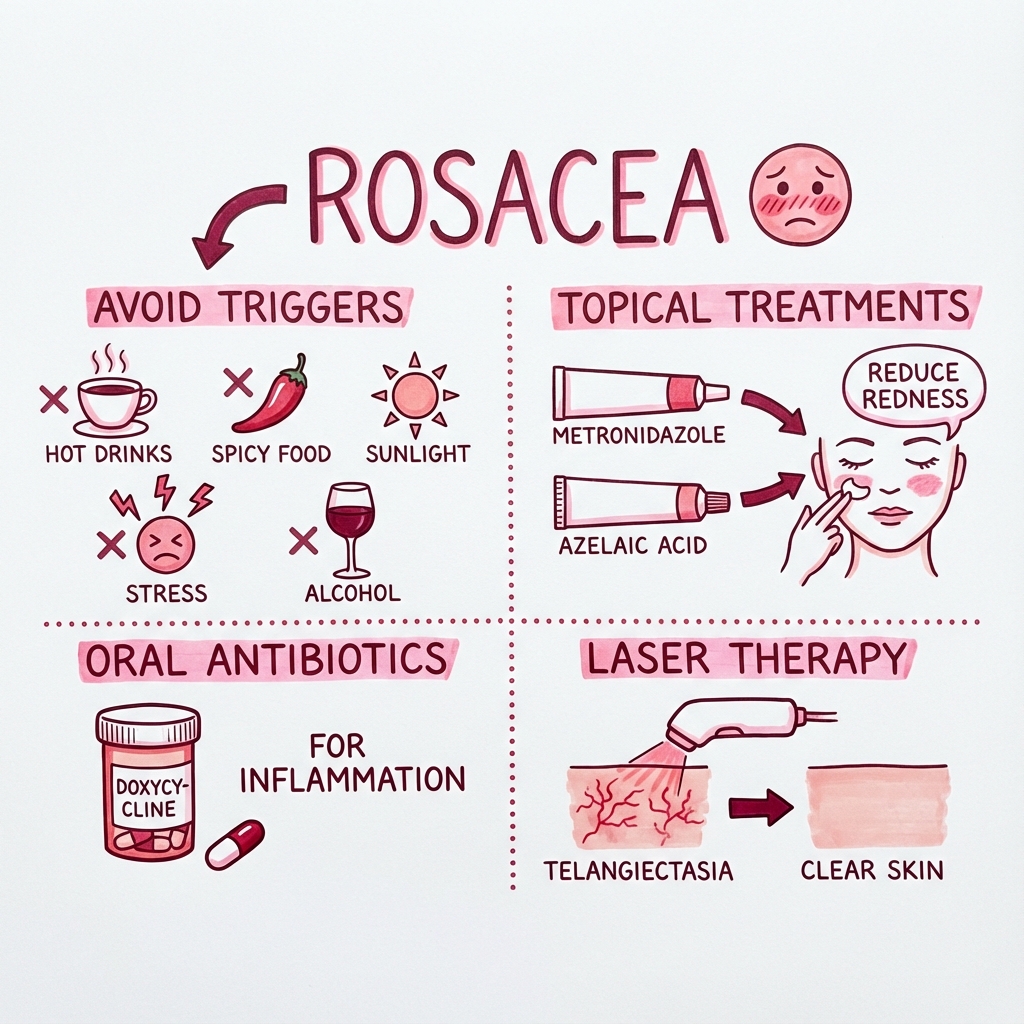
Clinical board
A visual summary of the highest-yield teaching signals on this page.
Urgent signals
Safety-critical features pulled from the topic metadata.
- Ocular rosacea with keratitis (vision-threatening)
- Severe phymatous changes (rhinophyma)
- Persistent corneal involvement
- Rapid progression of symptoms
Linked comparisons
Differentials and adjacent topics worth opening next.
- Acne Vulgaris
- Systemic Lupus Erythematosus
Content status and exam context
This page is AI-generated educational content. It may contain errors or omissions and is not a substitute for current guidelines, local protocols, senior clinical judgement, or professional medical advice.
MedVellum does not claim an individual clinician reviewer, board certification, or professional credential for this page unless a future version names a real, verifiable reviewer.
Clinical explanation and evidence
Rosacea (Adult)
1. Clinical Overview
Summary
Rosacea is a chronic inflammatory facial skin condition characterised by episodic or persistent central facial erythema, telangiectasia, inflammatory papules and pustules, and in advanced cases, phymatous tissue remodelling. It predominantly affects fair-skinned adults over 30 years of age and follows a relapsing-remitting course with identifiable triggers. [1] The condition has significant psychosocial impact, with quality of life impairment comparable to moderate-to-severe acne and psoriasis. [2]
Unlike acne vulgaris, rosacea is characterised by the absence of comedones (blackheads/whiteheads) and a distinct pathophysiology involving neurovascular dysregulation, innate immune activation, and microbial dysbiosis. [3]
Key Facts
| Aspect | Detail |
|---|---|
| Peak Age | 30-60 years (mean onset 40-50 years) |
| Gender | Females more commonly affected (3:1), but males have more severe disease |
| Skin Type | Fair-skinned individuals (Fitzpatrick I-III); highest in Celtic/Northern European ancestry |
| Distribution | Central face: cheeks, nose, chin, forehead (convex facial areas) |
| Prevalence | 5-10% in fair-skinned populations; up to 22% in some Swedish cohorts |
| Key Feature | Flushing + persistent centrofacial erythema ± telangiectasia |
| Ocular Involvement | 50-58% have ocular symptoms; may precede cutaneous disease in 20% |
Clinical Pearls
Clinical Pearl: "It's NOT Acne": The complete absence of comedones (blackheads/whiteheads) is the single most important feature distinguishing rosacea from acne vulgaris. If you see comedones, it's not pure rosacea.
Clinical Pearl: Eye Examination is Mandatory: Up to 58% of patients have ocular involvement, and in 20% of cases, ocular symptoms precede cutaneous manifestations. [4] Always ask: "Do your eyes feel dry, gritty, or irritated?"
Clinical Pearl: Rhinophyma ≠ Alcoholism: While alcohol is a trigger, rhinophyma (phymatous nose) is NOT caused by alcohol abuse. This is a harmful misconception. Rhinophyma occurs almost exclusively in men due to androgen-mediated sebaceous gland hypertrophy. [5]
Clinical Pearl: Steroid Rosacea: Prolonged use of topical corticosteroids on the face can cause steroid-induced (iatrogenic) rosacea or exacerbate existing disease. Always take a detailed topical medication history.
Clinical Pearl: Trigger Diary: Encourage patients to keep a "flush diary" to identify personal triggers. Common triggers include UV exposure, hot drinks, spicy food, alcohol (especially red wine), temperature extremes, and emotional stress. [6]
2. Epidemiology
Prevalence & Demographics
| Population | Prevalence | Notes |
|---|---|---|
| Global prevalence | 1-10% | Highly variable by ethnicity |
| Fair-skinned populations | 5-10% | Northern European, Celtic ancestry |
| Swedish cohort | Up to 22% | Highest reported prevalence [7] |
| UK general population | ~1.65 million affected | Estimated from 2-3% prevalence |
| USA | ~16 million affected | Estimated 5% prevalence |
| Asian populations | 0.5-2% | Lower prevalence, under-recognised |
| Darker skin types | Under-diagnosed | Erythema less visible; relies on papulopustular features |
Age and Gender Distribution
| Factor | Details |
|---|---|
| Age of onset | Mean 40-50 years; rare before age 30 |
| Peak prevalence | 5th-6th decade of life |
| Gender ratio | Female:Male = 3:1 (cutaneous rosacea) |
| Severity by gender | Males have more severe disease, higher rates of phymatous changes (especially rhinophyma) |
| Ocular rosacea | Equal gender distribution |
Risk Factors
Exam Detail: Genetic Factors [8]
- Strong familial clustering: 30-40% have affected first-degree relatives
- HLA-DRB1*03 association in some populations
- GWAS identified loci near genes involved in immune regulation (HLA region, BTNL2)
- Twin studies suggest 46% heritability
Phenotypic Risk Factors
| Risk Factor | Relative Risk / Details |
|---|---|
| Fair skin (Fitzpatrick I-II) | Highest risk; thin dermis, visible vasculature |
| Celtic/Northern European ancestry | 3-4× higher prevalence vs Mediterranean populations |
| Family history | 30-40% have affected family member |
| Female sex | 3:1 female predominance (but males more severe) |
| Age 30-60 years | Peak incidence |
| History of acne vulgaris | No clear association; separate pathophysiology |
Environmental and Lifestyle Triggers
| Trigger Category | Specific Triggers |
|---|---|
| UV radiation | Single most consistent trigger; causes vasodilation, inflammation |
| Temperature extremes | Hot weather, cold wind, saunas, hot baths |
| Dietary | Hot drinks, spicy foods, alcohol (esp. red wine), histamine-rich foods |
| Emotional | Stress, embarrassment, anxiety |
| Cosmetic | Occlusive cosmetics, fragranced products, physical exfoliants |
| Medications | Topical steroids, vasodilators (nifedipine, nitrates), niacin |
| Exercise | Vigorous exercise causing facial flushing |
Occupational and Social Factors
- Outdoor workers: Increased UV exposure (farmers, construction workers, mariners)
- High-temperature occupations: Chefs, bakers, industrial workers
- Psychosocial burden: 76% report reduced self-confidence; 69% report embarrassment [2]
- Correlation with migraine: Increased prevalence in rosacea patients (OR 1.92) [9]
3. Aetiology and Pathophysiology
Rosacea is a multifactorial disorder involving innate immune dysregulation, neurovascular hyperreactivity, microbial dysbiosis, and environmental triggers. [1,3]
Pathophysiological Model
┌─────────────────────────────────────────────────────────────┐
│         GENETIC PREDISPOSITION + ENVIRONMENTAL TRIGGERS      │
│         (Fair skin, HLA-DRB1*03, UV, heat, alcohol)         │
└────────────────────┬────────────────────────────────────────┘
                     ↓
┌─────────────────────────────────────────────────────────────┐
│              INNATE IMMUNE DYSREGULATION                     │
│   • Abnormal cathelicidin processing → LL-37 peptide        │
│   • Upregulation of TLR-2 (Toll-like receptor 2)            │
│   • Increased kallikrein 5 (KLK5) serine protease           │
└────────────────────┬────────────────────────────────────────┘
                     ↓
┌─────────────────────────────────────────────────────────────┐
│           NEUROVASCULAR HYPERREACTIVITY                      │
│   • TRPV (transient receptor potential vanilloid) channels  │
│   • Enhanced vasodilation response                          │
│   • Vascular endothelial growth factor (VEGF) upregulation  │
│   • Lymphangiogenesis and angiogenesis                      │
└────────────────────┬────────────────────────────────────────┘
                     ↓
┌─────────────────────────────────────────────────────────────┐
│                 MICROBIAL DYSBIOSIS                          │
│   • Demodex folliculorum overgrowth (10-20× normal)         │
│   • Bacillus oleronius (Demodex-associated bacteria)        │
│   • Staphylococcus epidermidis biofilms                     │
└────────────────────┬────────────────────────────────────────┘
                     ↓
┌─────────────────────────────────────────────────────────────┐
│              CLINICAL PHENOTYPES OF ROSACEA                  │
│   • Erythematotelangiectatic (flushing, erythema)           │
│   • Papulopustular (inflammatory lesions)                   │
│   • Phymatous (tissue remodelling, rhinophyma)              │
│   • Ocular (blepharitis, keratitis)                         │
└─────────────────────────────────────────────────────────────┘
Molecular and Cellular Mechanisms
Exam Detail: #### 1. Innate Immune Dysregulation
Cathelicidin and LL-37 Antimicrobial Peptide [10]
Rosacea patients have:
- Elevated levels of cathelicidin (antimicrobial peptide) in facial skin
- Abnormal processing by kallikrein 5 (KLK5) protease → pathogenic LL-37 peptide fragments
- LL-37 triggers:
- Neutrophil chemotaxis → inflammatory papules/pustules
- Angiogenesis → telangiectasia
- Vasodilation → erythema and flushing
Toll-Like Receptor 2 (TLR-2) Upregulation
- TLR-2 recognises Demodex-associated antigens and bacterial lipoproteins
- Activation → pro-inflammatory cytokines (IL-1β, IL-6, TNF-α)
- Increased matrix metalloproteinases (MMPs) → dermal matrix degradation
2. Neurovascular Dysregulation
TRPV Channels (Transient Receptor Potential Vanilloid) [11]
- TRPV1 and TRPV4 channels are temperature- and chemical-sensitive ion channels
- Activated by: heat, capsaicin (spicy food), alcohol, UV radiation
- Overexpression in rosacea → exaggerated vasodilation response
- Release of neuropeptides:
- Substance P → vasodilation, mast cell degranulation
- Calcitonin gene-related peptide (CGRP) → neurogenic inflammation
Vascular Endothelial Growth Factor (VEGF)
- Upregulated in rosacea skin [12]
- Promotes angiogenesis (new blood vessel formation) → telangiectasia
- Lymphangiogenesis → persistent oedema
3. Microbial Dysbiosis
Demodex folliculorum [13]
- Mite density 10-20× higher in rosacea patients vs controls
- Concentrated in pilosebaceous units of central face
- Proposed mechanisms:
- "Mechanical: Follicular obstruction, physical irritation"
- "Immunological: Chitin exoskeleton triggers innate immune responses (TLR-2)"
- "Microbial: Harbours bacteria (Bacillus oleronius) that provoke immune reactions"
Bacillus oleronius
- Gram-negative bacterium living symbiotically within Demodex mites
- Antigens trigger B-cell and T-cell responses in rosacea patients
- May explain efficacy of antibiotics (immunomodulatory > antimicrobial effects)
Skin Microbiome Alterations
- Reduced microbial diversity compared to healthy controls
- Increased Staphylococcus epidermidis biofilms
- Dysbiosis → pro-inflammatory skin environment
4. Sebaceous Gland Dysfunction (Phymatous Subtype)
Sebaceous Gland Hyperplasia and Fibrosis
- Chronic inflammation → sebaceous gland hypertrophy
- Androgen sensitivity (explains male predominance of rhinophyma)
- Fibroblast proliferation, collagen deposition → tissue remodelling
- Advanced phymatous changes: disfiguring nasal enlargement (rhinophyma)
Summary of Key Pathophysiological Features
| Mechanism | Consequence | Clinical Feature |
|---|---|---|
| Cathelicidin/LL-37 dysregulation | Neutrophil recruitment | Papules, pustules |
| TRPV channel activation | Vasodilation, neurogenic inflammation | Flushing, erythema |
| VEGF upregulation | Angiogenesis | Telangiectasia |
| Demodex overgrowth | Innate immune activation | Papulopustular lesions |
| TLR-2 activation | Cytokine release | Inflammation |
| Sebaceous hyperplasia | Tissue remodelling | Rhinophyma, phymatous changes |
4. Classification and Subtypes
The 2017 Global Rosacea Consensus (ROSCO) updated classification from "subtypes" to phenotypic presentations, recognising that features often overlap. [14]
Traditional Four Subtypes (Historical Classification)
| Subtype | Key Features | Predominant Symptoms |
|---|---|---|
| Erythematotelangiectatic (ETR) | Flushing, persistent erythema, telangiectasia | Burning, stinging, sensitive skin |
| Papulopustular (PPR) | Papules and pustules on erythematous base | Inflammatory lesions; no comedones |
| Phymatous | Skin thickening, irregular surface, rhinophyma | Disfiguring nasal enlargement |
| Ocular | Dry eyes, blepharitis, conjunctivitis, keratitis | Gritty eyes, photophobia, vision changes |
Modern Phenotypic Classification (ROSCO 2017)
Recognises diagnostic features and major features:
Diagnostic Features (Either one is sufficient for diagnosis):
- Persistent centrofacial erythema (≥3 months)
- Phymatous changes
Major Features (Support diagnosis but not individually diagnostic):
- Papules and pustules (inflammatory)
- Flushing (transient erythema)
- Telangiectasia
- Ocular manifestations
Patients can have multiple phenotypic features simultaneously.
Detailed Subtype Descriptions
Exam Detail: #### Erythematotelangiectatic Rosacea (ETR)
Clinical Features:
- Flushing: Episodic, triggered by heat, emotion, alcohol, spicy food
- Persistent erythema: Non-transient centrofacial redness (cheeks, nose, chin, central forehead)
- Telangiectasia: Visible, dilated superficial blood vessels
- Burning and stinging: Heightened skin sensitivity
- Dry, rough skin: Impaired barrier function
Distribution: Central convex facial areas (spares nasolabial folds)
Examination Findings:
- Diffuse erythema (blanchable with diascopy)
- Fine telangiectatic vessels (especially nasal bridge, medial cheeks)
- No papules, pustules, or comedones
Papulopustular Rosacea (PPR)
Clinical Features:
- Papules: Erythematous, dome-shaped, 1-5 mm
- Pustules: Sterile, pus-filled (culture negative for bacteria)
- Background erythema: Persistent centrofacial erythema
- No comedones: Critical distinguishing feature from acne
- Episodic flares: Relapsing-remitting course
Distribution: Cheeks, nose, chin, glabella; spares perioral and periocular areas
Examination Findings:
- Inflammatory papules and pustules on erythematous base
- May have associated telangiectasia
- Absence of open/closed comedones
Phymatous Rosacea
Clinical Features:
- Skin thickening: Fibrotic tissue expansion
- Irregular contour: Nodular surface
- Prominent pores: Sebaceous gland hypertrophy
- Rhinophyma: Phymatous change of nose (90% of phymatous cases)
- Other sites: chin (gnathophyma), forehead (metophyma), ears (otophyma), eyelids (blepharophyma)
Rhinophyma (Phymatous Nose):
- Almost exclusively in males (androgen-mediated)
- Bulbous, enlarged nose with irregular surface
- Telangiectasia prominent
- Not caused by alcohol (common misconception)
- Progression: Gradual over years; can be disfiguring
- Risk: Basal cell carcinoma can develop within rhinophyma tissue
Examination Findings:
- Thickened, fibrotic skin with loss of normal contours
- Dilated follicular openings
- Surface irregularities, nodularity
Ocular Rosacea
Prevalence: 50-58% of rosacea patients; precedes cutaneous disease in 20%
Clinical Features:
| Symptom | Frequency | Description |
|---|---|---|
| Dry eyes | 70-80% | Foreign body sensation |
| Gritty, burning sensation | 60-70% | Ocular irritation |
| Photophobia | 40-50% | Light sensitivity |
| Blurred vision | 30-40% | Transient; due to tear film instability |
| Recurrent styes/chalazia | 20-30% | Meibomian gland dysfunction |
Ocular Examination Findings:
| Sign | Location | Description |
|---|---|---|
| Lid margin telangiectasia | Eyelid margins | Dilated vessels |
| Meibomian gland dysfunction | Eyelid glands | Inspissated secretions, gland dropout |
| Blepharitis | Eyelid margins | Crusting, inflammation |
| Conjunctival injection | Conjunctiva | Redness, hyperaemia |
| Punctate keratopathy | Cornea | Epithelial erosions (fluorescein staining) |
| Corneal neovascularisation | Peripheral cornea | Vision-threatening complication |
| Keratitis | Cornea | Red flag: Urgent ophthalmology referral |
Red Flag: Ocular rosacea with keratitis can cause corneal scarring and vision loss if untreated.
Overlap and Spectrum Concept
- 60% of patients have features of more than one subtype [14]
- Spectrum concept: Rosacea is a continuum rather than discrete subtypes
- Evolution over time: ETR may progress to PPR; PPR may develop phymatous changes
5. Clinical Presentation
History Taking: Key Questions
Clinical Pearl: Focused Rosacea History:
- Symptoms: "Do you experience facial flushing, redness, or burning?"
- Distribution: "Where on your face does this occur?"
- Duration: "How long have you had these symptoms?"
- Pattern: "Is the redness constant or does it come and go?"
- Triggers: "What makes it worse?" (heat, alcohol, spicy food, stress, sun)
- Ocular symptoms: "Do your eyes feel dry, gritty, or irritated?"
- Previous treatments: "What have you tried? Any steroid creams?"
- Cosmetics: "What products do you use on your face?"
- Impact: "How does this affect your daily life and confidence?"
- Family history: "Does anyone in your family have rosacea?"
Symptoms by Subtype
| Symptom | ETR | PPR | Phymatous | Ocular |
|---|---|---|---|---|
| Flushing | +++ | ++ | + | - |
| Persistent erythema | +++ | ++ | + | - |
| Burning/stinging | +++ | ++ | + | + |
| Papules/pustules | - | +++ | - | - |
| Skin thickening | - | - | +++ | - |
| Dry, gritty eyes | - | - | - | +++ |
| Telangiectasia | +++ | + | ++ | - |
| Photophobia | - | - | - | ++ |
Clinical Examination Approach
Inspection (Good Lighting Essential):
-
General facial inspection:
- Distribution of erythema (central face vs diffuse)
- Presence of telangiectasia
- Papules, pustules (look for absence of comedones)
- Skin texture, thickening, irregularities
-
Specific site examination:
- Nose: Rhinophyma? Surface irregularities?
- Cheeks: Erythema, telangiectasia, papulopustules?
- Forehead: Central forehead involvement?
- Chin: Erythema, phymatous changes?
- Nasolabial folds: Should be spared (if involved, consider seborrheic dermatitis or lupus)
-
Ocular examination:
- Eyelid margin: Telangiectasia, crusting (blepharitis)?
- Conjunctiva: Injection, hyperaemia?
- Cornea: Clarity (if keratitis suspected → urgent ophthalmology referral)
- Meibomian gland expression (lid margin)
-
Palpation:
- Texture: Smooth vs thickened, fibrotic
- Temperature: Warmth (active inflammation)
Examination Findings by Subtype
Exam Detail: #### Erythematotelangiectatic Rosacea (ETR)
| Finding | Description |
|---|---|
| Persistent centrofacial erythema | Blanchable with diascopy; spares nasolabial folds |
| Telangiectasia | Fine, linear vessels on cheeks, nose, chin |
| Rough skin texture | Dry, flaky; impaired barrier |
| No papules or pustules | Purely vascular/erythematous |
| Flushing (may not be visible at exam) | Patient reports episodic redness |
Papulopustular Rosacea (PPR)
| Finding | Description |
|---|---|
| Papules | Erythematous, dome-shaped, 1-5 mm |
| Pustules | Sterile; no bacterial culture growth |
| Background erythema | Persistent centrofacial erythema |
| Absence of comedones | Critical finding (vs acne vulgaris) |
| Telangiectasia | Often present |
Phymatous Rosacea
| Finding | Description |
|---|---|
| Skin thickening | Fibrotic, nodular, irregular |
| Rhinophyma | Bulbous, enlarged nose; 90% of phymatous cases |
| Prominent follicles | Dilated pores with inspissated sebum |
| Surface irregularity | Nodular, cobblestone appearance |
| Telangiectasia | Prominent dilated vessels |
Ocular Rosacea
| Finding | Description |
|---|---|
| Lid margin telangiectasia | Dilated vessels along eyelid margins |
| Blepharitis | Lid margin inflammation, crusting |
| Meibomian gland dysfunction | Thickened, inspissated secretions |
| Conjunctival injection | Hyperaemia, redness |
| Punctate keratopathy | Corneal epithelial erosions (fluorescein +ve) |
| Keratitis (red flag) | Corneal inflammation → vision threat |
Common Triggers (Patient-Reported)
Exam Detail: Evidence-Based Triggers [6]
| Trigger Category | Specific Triggers | Frequency (%) |
|---|---|---|
| Sun exposure | UV radiation | 81% |
| Emotional stress | Anxiety, embarrassment | 79% |
| Hot weather | Ambient heat | 75% |
| Alcohol | Red wine > white wine > beer > spirits | 52% |
| Spicy foods | Capsaicin-containing foods | 45% |
| Hot beverages | Coffee, tea | 36% |
| Vigorous exercise | Cardiovascular exercise causing facial flushing | 56% |
| Cold weather | Wind, cold air | 46% |
| Hot baths/showers | Water temperature > 40°C | 33% |
| Skincare products | Fragranced, alcohol-based cosmetics | 27% |
| Certain medications | Vasodilators (nifedipine, nitrates), niacin, topical steroids | Variable |
Dietary Triggers (Evidence Mixed):
- Histamine-rich foods (aged cheese, fermented foods)
- Cinnamaldehyde-containing foods (tomatoes, citrus, cinnamon)
- Caffeine (may exacerbate flushing via vasodilation)
Note: Triggers are highly individualised; trigger diaries are recommended.
6. Differential Diagnosis
Centrofacial erythema and papulopustular lesions have a broad differential. [15]
Key Differentiating Features
| Condition | Distinguishing Features | Age Group |
|---|---|---|
| Acne vulgaris | Comedones present (blackheads/whiteheads); younger age (teens-20s); T-zone distribution | 12-25 years |
| Seborrheic dermatitis | Greasy scale, involves nasolabial folds, eyebrows, scalp; yellowish crust | Any age |
| Systemic lupus erythematosus (SLE) | Malar rash spares nasolabial folds; photosensitivity; systemic features; positive ANA | 20-40 years |
| Perioral dermatitis | Perioral and perinasal distribution; spares vermilion border; often history of topical steroid use | 20-45 years (women) |
| Contact dermatitis | Pruritus; clear temporal relationship with allergen/irritant; may have vesicles | Any age |
| Carcinoid syndrome | Episodic flushing with diarrhoea, bronchospasm; urinary 5-HIAA elevated | 40-60 years |
| Systemic mastocytosis | Flushing, urticaria pigmentosa, pruritus; elevated serum tryptase | Any age |
| Dermatomyositis | Heliotrope rash (eyelids), Gottron's papules, muscle weakness; elevated CK, ANA | 40-60 years |
| Drug-induced flushing | Niacin, calcium channel blockers, nitrates; temporal relationship | Any age |
Detailed Comparison: Rosacea vs Acne Vulgaris
| Feature | Rosacea | Acne Vulgaris |
|---|---|---|
| Age of onset | 30-60 years (typically > 30) | 12-25 years (puberty-young adult) |
| Comedones | Absent (critical feature) | Present (blackheads, whiteheads) |
| Distribution | Central face (cheeks, nose, chin, central forehead) | T-zone (forehead, nose, chin), back, chest |
| Erythema | Persistent centrofacial erythema | Localised to lesions |
| Telangiectasia | Often present | Absent |
| Flushing | Prominent feature | Not a feature |
| Triggers | Heat, alcohol, spicy food, sun | Hormonal, mechanical (friction), diet (disputed) |
| Pustules | Sterile (culture-negative) | May be bacterial (Cutibacterium acnes) |
| Sebaceous gland | Hyperplasia (phymatous) | Hypersecretion (seborrhoea) |
Detailed Comparison: Rosacea vs Lupus (Malar Rash)
| Feature | Rosacea | Systemic Lupus Erythematosus |
|---|---|---|
| Distribution | Central face; includes nasolabial folds | Malar rash; spares nasolabial folds ("butterfly rash") |
| Triggers | Heat, alcohol, spicy food | Photosensitivity (UV exposure) |
| Telangiectasia | Prominent | Absent (unless discoid lupus) |
| Papulopustules | Often present | Absent |
| Systemic features | None | Arthralgia, serositis, renal, haematological |
| ANA | Negative | Positive (> 95% in SLE) |
| Anti-dsDNA | Negative | Positive (60-70% in SLE) |
| Complement (C3, C4) | Normal | Low (active disease) |
When to Investigate Further
| Clinical Scenario | Investigations to Consider |
|---|---|
| Uncertain diagnosis | Skin biopsy (histology shows dermal perivascular/perifollicular lymphocytic infiltrate) |
| Suspected lupus | ANA, anti-dsDNA, complement (C3, C4), FBC, U&E, urinalysis |
| Suspected carcinoid syndrome | 24-hour urinary 5-HIAA, serum chromogranin A, CT abdomen |
| Systemic mastocytosis | Serum tryptase, bone marrow biopsy (if elevated) |
| Drug-induced | Medication review, temporal correlation |
| Rhinophyma with suspicious lesion | Skin biopsy (exclude basal cell carcinoma) |
7. Investigations
Diagnosis
Rosacea is a clinical diagnosis based on history and examination. No specific laboratory tests or imaging are required for typical presentations. [1,14]
Diagnostic Criteria (ROSCO 2017)
At least ONE of the following diagnostic features:
- Persistent centrofacial erythema (≥3 months, with or without periodic intensification)
- Phymatous changes (thickening skin, irregular contour)
Supported by major features:
- Papules and pustules (inflammatory)
- Flushing
- Telangiectasia
- Ocular manifestations
When to Perform Investigations
Exam Detail: #### Skin Biopsy (Rarely Required)
Indications:
- Atypical presentation
- Diagnostic uncertainty (e.g., possible lupus, dermatomyositis)
- Suspected malignancy (basal cell carcinoma in rhinophyma)
Histological Findings in Rosacea:
- Dermal perivascular and perifollicular lymphocytic infiltrate
- Vascular dilatation (telangiectasia)
- Solar elastosis (UV-induced dermal damage)
- Follicular Demodex mites (may be visible, but non-specific)
- Sebaceous gland hyperplasia (phymatous subtype)
- Granulomatous inflammation (granulomatous rosacea variant, rare)
Autoimmune Screen (If Lupus Suspected)
| Test | Rosacea | Systemic Lupus Erythematosus |
|---|---|---|
| ANA | Negative | Positive (> 95%) |
| Anti-dsDNA | Negative | Positive (60-70%) |
| Complement C3, C4 | Normal | Low (active disease) |
| FBC | Normal | Cytopenias (leukopenia, thrombocytopenia) |
| ESR/CRP | Normal | Elevated (active disease) |
Ophthalmology Referral
Indications:
- Urgent: Suspected keratitis (corneal involvement)
- Routine: Ocular rosacea with inadequate response to treatment
- Screening: Severe cutaneous rosacea (50-58% have ocular involvement)
Ophthalmology Investigations:
- Slit-lamp examination (lid margin, meibomian glands, cornea)
- Tear break-up time (TBUT) – reduced in dry eye disease
- Fluorescein staining (punctate keratopathy)
- Schirmer test (tear production)
Microbiology (Culture)
Not routinely required – pustules in rosacea are sterile (culture-negative).
Consider if:
- Suspected secondary bacterial infection (e.g., impetigo, folliculitis)
- Atypical presentation with systemic features (fever, malaise)
Demodex Mite Examination
Standardised skin surface biopsy (SSSB) or skin scraping can quantify Demodex density.
- Normal: less than 5 mites/cm²
- Rosacea: 10-20× higher (50-100 mites/cm²)
Clinical relevance:
- Not routinely required for diagnosis
- May guide ivermectin therapy (anti-Demodex agent)
8. Management
Management of rosacea is individualised based on predominant subtype, severity, and patient preferences. A stepwise approach is recommended. [14,16]
General Principles (All Subtypes)
Clinical Pearl: Foundation of Rosacea Management:
- Trigger avoidance: Identify and avoid personal triggers (trigger diary)
- Sun protection: Broad-spectrum SPF 30-50+, physical blockers (zinc oxide, titanium dioxide)
- Gentle skincare: Fragrance-free, hypoallergenic cleansers and moisturisers
- Avoid irritants: Alcohol-based products, physical exfoliants, harsh scrubs
- Temperature regulation: Avoid extremes (hot baths, saunas, icy wind)
- Cosmetic camouflage: Green-tinted makeup to neutralise redness (supportive)
General Measures (All Patients)
| Measure | Recommendations |
|---|---|
| Sun protection | SPF 30-50+ daily; physical blockers preferred (zinc oxide, titanium dioxide); broad-spectrum UVA/UVB |
| Trigger diary | Identify and avoid personal triggers (heat, alcohol, spicy food, stress) |
| Gentle cleansing | Fragrance-free, soap-free cleansers; avoid scrubbing |
| Moisturiser | Non-comedogenic, fragrance-free emollients (ceramide-containing preferred) |
| Avoid topical steroids | Exacerbate rosacea (steroid-induced rosacea); taper if currently using |
| Temperature control | Avoid hot drinks, hot baths, saunas; use cool compresses if flushing |
| Cosmetic camouflage | Green-tinted primers to neutralise redness |
Treatment by Subtype
Exam Detail: #### 1. Erythematotelangiectatic Rosacea (ETR)
Goal: Reduce flushing, persistent erythema, and telangiectasia.
Topical Therapies
| Treatment | Mechanism | Dosing | Evidence |
|---|---|---|---|
| Brimonidine 0.33% gel | Alpha-2 adrenergic agonist; vasoconstriction | Apply once daily (morning) | RCT: Significant erythema reduction vs placebo; effect lasts 12 hours [17] |
| Oxymetazoline 1% cream | Alpha-1A adrenergic agonist; vasoconstriction | Apply once daily | FDA-approved; non-inferior to brimonidine; lower rebound erythema [17] |
Note: Vasoconstrictors provide temporary symptom relief but do not modify disease course.
Laser and Light-Based Therapies (For Persistent Telangiectasia)
| Modality | Mechanism | Indications | Evidence |
|---|---|---|---|
| Pulsed Dye Laser (PDL) | Selective photothermolysis of haemoglobin; destroys dilated vessels | Telangiectasia, erythema | RCT: 50-75% improvement in telangiectasia; 3-5 sessions required [18] |
| Intense Pulsed Light (IPL) | Broad-spectrum light; targets haemoglobin and melanin | Erythema, telangiectasia, pigmentation | RCT: 70% improvement in erythema; well-tolerated [18] |
| Nd:YAG laser (1064 nm) | Deeper penetration; targets larger vessels | Deeper telangiectasia | Case series: Effective for resistant vessels |
Patient Selection: Fair skin (Fitzpatrick I-III) ideal; darker skin at risk of dyspigmentation.
Side Effects: Transient purpura (PDL), erythema, hyperpigmentation (darker skin).
Systemic Therapies (Severe, Refractory ETR)
| Treatment | Dosing | Evidence |
|---|---|---|
| Beta-blockers (carvedilol, propranolol) | Carvedilol 6.25-12.5 mg OD or BD | Case series: Reduced flushing; off-label use |
| Clonidine (alpha-2 agonist) | 0.05-0.1 mg BD | Limited evidence; off-label |
2. Papulopustular Rosacea (PPR)
Goal: Reduce inflammatory papules and pustules.
First-Line Topical Therapies
| Treatment | Mechanism | Dosing | Evidence Level |
|---|---|---|---|
| Metronidazole 0.75-1% gel/cream | Anti-inflammatory (↓ reactive oxygen species); anti-Demodex | Apply BD | Cochrane review: Effective vs placebo; NNT=6 [16] |
| Azelaic acid 15% gel | Anti-inflammatory; antimicrobial; normalises keratinisation | Apply BD | RCT: Non-inferior to metronidazole; reduces erythema [16] |
| Ivermectin 1% cream | Anti-Demodex; anti-inflammatory (↓ IL-1, IL-6) | Apply once daily | RCT: Superior to metronidazole for papulopustular reduction [19] |
Choice of First-Line Agent:
- Ivermectin: Preferred for moderate-severe PPR (superior efficacy)
- Metronidazole: Well-tolerated; established safety profile
- Azelaic acid: Useful for erythema + papulopustules
Systemic Therapies (Moderate-Severe PPR)
| Treatment | Dosing | Mechanism | Evidence |
|---|---|---|---|
| Doxycycline 40 mg MR (modified-release) | 40 mg once daily | Anti-inflammatory (sub-antimicrobial dose); ↓ MMPs, ↓ IL-1 | RCT: Effective; fewer GI side effects vs 100 mg; no antimicrobial resistance [20] |
| Doxycycline 50-100 mg | 50-100 mg once daily | Anti-inflammatory + antimicrobial | Effective but higher risk of GI upset, photosensitivity |
| Oral isotretinoin (low-dose) | 10-20 mg once daily; duration 4-6 months | Sebaceous suppression; anti-inflammatory | Case series: Effective for refractory PPR; monitor lipids, LFTs [21] |
Duration of Systemic Therapy:
- Doxycycline: 12-16 weeks; then step down to topical maintenance
- Isotretinoin: 4-6 months (low-dose); longer if phymatous changes
Combination Therapy (Severe PPR)
Approach: Oral doxycycline 40 mg MR + topical ivermectin/metronidazole
- Faster response than monotherapy
- Step down to topical maintenance once controlled
3. Phymatous Rosacea (Including Rhinophyma)
Goal: Halt progression; surgical remodelling for established disease.
Medical Therapy
| Treatment | Indication | Evidence |
|---|---|---|
| Oral isotretinoin 0.5-1 mg/kg/day | Early phymatous changes | May reduce sebaceous hyperplasia; does NOT reverse established rhinophyma [21] |
| Topical therapies | Minimal effect on phymatous tissue | Not effective for established rhinophyma |
Surgical/Procedural Therapies (Established Rhinophyma)
| Modality | Mechanism | Outcomes |
|---|---|---|
| CO₂ laser ablation | Vaporises hypertrophic tissue; recontours | Excellent cosmetic results; low recurrence [22] |
| Electrosurgery | Thermal ablation and tissue removal | Effective; lower cost than laser |
| Surgical excision (scalpel) | Direct tissue removal and remodelling | Gold standard for severe cases |
| Dermabrasion | Mechanical tissue removal | Adjunct to surgery/laser |
Post-Procedure:
- Wound care: Petroleum-based ointments, non-adherent dressings
- Re-epithelialisation: 2-3 weeks
- Avoid sun exposure during healing
Red Flag: Basal cell carcinoma can develop within rhinophyma tissue; biopsy suspicious lesions.
4. Ocular Rosacea
Goal: Relieve ocular symptoms; prevent corneal complications.
First-Line (Mild Ocular Rosacea)
| Treatment | Details |
|---|---|
| Lid hygiene | Warm compresses (5-10 min BD); lid margin massage to express meibomian glands |
| Artificial tears | Preservative-free lubricant drops (QDS or PRN) |
| Omega-3 fatty acids | 1000-2000 mg/day (EPA/DHA); anti-inflammatory; improves meibomian gland function |
Systemic Therapy (Moderate-Severe Ocular Rosacea)
| Treatment | Dosing | Duration | Evidence |
|---|---|---|---|
| Oral doxycycline 40-100 mg | 40-100 mg once daily | 12-16 weeks | RCT: Improves meibomian gland function, reduces inflammation [23] |
| Oral azithromycin | 500 mg once daily × 3 days/week × 4 weeks | 4 weeks | Case series: Effective; alternative to doxycycline |
Topical Ophthalmic Therapies
| Treatment | Use |
|---|---|
| Topical cyclosporine 0.05% | Chronic dry eye; anti-inflammatory |
| Topical azithromycin 1% | Blepharitis; meibomian gland dysfunction |
Ophthalmology Referral (Indications)
- Urgent: Keratitis, corneal involvement, vision changes
- Routine: Inadequate response to first-line therapy; recurrent styes/chalazia
Treatment Algorithm (Simplified)
┌─────────────────────────────────────────────────────────────┐
│                  ROSACEA DIAGNOSIS CONFIRMED                 │
└────────────────────┬────────────────────────────────────────┘
                     ↓
         ┌───────────────────────────┐
         │ Identify Predominant      │
         │ Subtype(s)                │
         └───────────┬───────────────┘
                     ↓
    ┌────────────────┼────────────────────┬─────────────────┐
    ↓                ↓                    ↓                 ↓
┌─────────┐  ┌──────────────┐  ┌──────────────┐  ┌────────────────┐
│   ETR   │  │     PPR      │  │  Phymatous   │  │     Ocular     │
└────┬────┘  └──────┬───────┘  └──────┬───────┘  └────────┬───────┘
     ↓              ↓                  ↓                   ↓
┌─────────────┐ ┌──────────────────┐ ┌──────────┐ ┌──────────────────┐
│ Topical     │ │ Mild: Topical    │ │ Early:   │ │ Mild: Lid        │
│ brimonidine │ │ (ivermectin,     │ │ Oral     │ │ hygiene +        │
│ or          │ │ metronidazole)   │ │ isotret. │ │ artificial tears │
│ oxymetazoline│ └──────┬───────────┘ │          │ └──────┬───────────┘
└─────┬───────┘        ↓              │ Establ.: │        ↓
      ↓         ┌──────────────────┐  │ CO₂      │ ┌──────────────────┐
┌─────────────┐ │ Moderate-Severe: │  │ laser/   │ │ Moderate-Severe: │
│ Persistent  │ │ Oral doxycycline │  │ surgery  │ │ Oral doxycycline │
│ telangiect.:│ │ 40 mg MR +       │  └──────────┘ │ 40-100 mg        │
│ IPL/PDL     │ │ topical          │               └──────┬───────────┘
└─────────────┘ └──────────────────┘                      ↓
                                                  ┌──────────────────┐
                                                  │ Keratitis?       │
                                                  │ → URGENT Ophthal.│
                                                  │ referral         │
                                                  └──────────────────┘
Maintenance Therapy
Once acute flare controlled:
- Topical maintenance: Metronidazole, ivermectin, or azelaic acid (continue long-term)
- Trigger avoidance: Ongoing
- Sun protection: Daily SPF 30-50+
- Review: 3-6 months; adjust therapy as needed
9. Prognosis and Outcomes
Natural History
| Aspect | Details |
|---|---|
| Course | Chronic, relapsing-remitting; no spontaneous cure |
| Progression | May worsen over time if untreated; ETR → PPR → Phymatous (some patients) |
| Treatment response | Good control achievable with appropriate therapy; not curative |
| Subtype-specific prognosis | See below |
Prognosis by Subtype
| Subtype | Prognosis | Response to Treatment |
|---|---|---|
| ETR | Often persistent; background erythema difficult to eliminate | Moderate; vasoconstrictors provide temporary relief; IPL/PDL effective for telangiectasia |
| PPR | Good response to topical/systemic therapy | Excellent; papulopustules often clear with ivermectin or doxycycline |
| Phymatous | Progression without treatment; established rhinophyma requires surgery | Isotretinoin may slow early changes; surgery/laser required for established disease |
| Ocular | Chronic; risk of corneal complications if untreated | Good response to doxycycline and lid hygiene; ophthalmology follow-up important |
Complications
Exam Detail: | Complication | Frequency | Management | |--------------|-----------|------------| | Ocular keratitis | 5-10% of ocular rosacea | Urgent ophthalmology referral; topical steroids + systemic antibiotics; risk of corneal scarring | | Corneal neovascularisation | Rare; end-stage ocular rosacea | Vision-threatening; ophthalmology-led management | | Rhinophyma | ~5% of rosacea patients (males >> females) | Disfiguring; requires CO₂ laser or surgical excision | | Basal cell carcinoma in rhinophyma | Rare; case reports | Biopsy suspicious lesions; standard BCC management | | Steroid-induced (iatrogenic) rosacea | Common with prolonged topical steroid use | Taper steroids; treat with rosacea-specific therapy | | Psychological impact | 70-90% report reduced quality of life [2] | Acknowledge impact; consider referral to dermatology psychology services if severe |
Quality of Life Impact
Evidence from validated studies: [2]
- 76% report reduced self-confidence
- 69% report embarrassment
- 56% avoid social situations
- Quality of life impairment comparable to moderate-severe acne and psoriasis
- DLQI (Dermatology Life Quality Index) scores: Mean 8-12 (moderate-large effect on life)
Long-Term Management
Rosacea is a chronic disease requiring long-term management:
- Maintenance topical therapy: Continue indefinitely (metronidazole, ivermectin, or azelaic acid)
- Trigger avoidance: Lifelong
- Sun protection: Daily, year-round
- Monitoring: 3-6 monthly reviews; adjust therapy for flares
- Patient education: Realistic expectations; disease control, not cure
10. Prevention and Patient Education
Primary Prevention
No proven primary prevention strategies (genetic predisposition).
Secondary Prevention (Reduce Flares)
Clinical Pearl: Patient Education: "The Rosacea Five"
- Sun protection EVERY day – SPF 30-50+, physical blockers
- Identify YOUR triggers – keep a flush diary for 4 weeks
- Gentle skincare ONLY – fragrance-free, non-irritating products
- Avoid temperature extremes – cool down hot drinks, avoid saunas
- Medication adherence – topical therapy takes 4-8 weeks to work; persist!
Trigger Avoidance Strategies
| Trigger | Avoidance Strategy |
|---|---|
| UV radiation | Daily SPF 30-50+; physical blockers (zinc, titanium); wide-brimmed hat |
| Hot drinks | Let cool to lukewarm before drinking |
| Spicy food | Avoid capsaicin, hot peppers; reduce spice level |
| Alcohol | Limit intake; avoid red wine (worst trigger); stay hydrated |
| Temperature extremes | Dress in layers; use cool compresses; avoid saunas, hot tubs |
| Emotional stress | Stress management techniques; consider CBT if severe |
| Skincare products | Fragrance-free, hypoallergenic; avoid physical exfoliants, alcohol-based toners |
| Topical steroids | Avoid on face; if using, taper gradually |
Skincare Recommendations
DO:
- Use gentle, fragrance-free cleansers (e.g., Cerave, Cetaphil)
- Apply non-comedogenic moisturisers (ceramide-containing preferred)
- Use broad-spectrum SPF 30-50+ daily (physical blockers: zinc oxide, titanium dioxide)
- Apply green-tinted primers before makeup (neutralises redness)
DON'T:
- Avoid harsh scrubs, physical exfoliants, astringents
- Avoid alcohol-based toners and products
- Avoid fragranced cosmetics
- Avoid topical retinoids (can exacerbate irritation)
11. Guidelines and Key Evidence
Major Guidelines
| Organisation | Guideline | Year | Key Recommendations |
|---|---|---|---|
| British Association of Dermatologists (BAD) | Management of Rosacea | 2021 | Ivermectin or metronidazole first-line for PPR; doxycycline 40 mg MR for moderate-severe |
| Global Rosacea Consensus (ROSCO) | Classification and Grading | 2017 | Phenotypic classification (diagnostic + major features) [14] |
| American Academy of Dermatology (AAD) | Rosacea Management | 2020 | Emphasises trigger avoidance, sun protection, patient education |
| Cochrane Review | Interventions for Rosacea | 2015 (updated 2020) | Doxycycline, ivermectin, metronidazole, azelaic acid effective [16] |
Landmark Studies and High-Quality Evidence
Exam Detail: | Study | Design | Key Finding | Citation | |-------|--------|-------------|----------| | Ivermectin vs Metronidazole (Taieb et al., 2015) | RCT, n=962 | Ivermectin 1% superior to metronidazole 0.75% for inflammatory lesion reduction (83% vs 73.7% improvement) | [19] | | Doxycycline 40 mg MR (Del Rosso et al., 2008) | RCT, n=269 | Sub-antimicrobial dose (40 mg MR) as effective as 100 mg but fewer GI side effects; no resistance | [20] | | IPL for Erythema (Papageorgiou et al., 2008) | RCT, n=30 | 70% improvement in erythema vs 10% placebo; well-tolerated | [18] | | Cathelicidin/LL-37 Pathogenesis (Yamasaki et al., 2007) | Mechanistic study | Abnormal cathelicidin processing → LL-37 → inflammation, angiogenesis | [10] | | TRPV Channels (Sulk et al., 2012) | Mechanistic study | TRPV1/4 overexpression in rosacea → enhanced vasodilation | [11] | | Demodex Density (Forton et al., 2005) | Case-control, n=60 | 10-20× higher Demodex density in rosacea vs controls | [13] | | Quality of Life (van Zuuren, 2017) | Systematic review | Significant QoL impairment (DLQI mean 8-12); comparable to acne/psoriasis | [2] |
12. Examination Focus: Viva Voce / Oral Exam Scenarios
Exam Detail: ### Scenario 1: Papulopustular Rosacea
Examiner: "This 45-year-old woman presents with a 6-month history of facial redness and spots. Describe your approach."
Model Answer:
-
History:
- Duration, distribution, triggers (heat, alcohol, spicy food, sun)
- Symptoms: Flushing, burning, stinging?
- Previous treatments, especially topical steroids
- Ocular symptoms (dry, gritty eyes)
- Impact on quality of life
-
Examination:
- Central facial erythema (cheeks, nose, chin)
- Inflammatory papules and pustules
- Absence of comedones (key feature)
- Telangiectasia
- Ocular examination (lid margins, conjunctiva)
-
Diagnosis: Papulopustular rosacea (PPR)
-
Differential:
- Acne vulgaris (comedones present, younger age)
- Perioral dermatitis (perioral distribution)
- Seborrheic dermatitis (greasy scale, nasolabial folds)
-
Investigations: Clinical diagnosis; no tests required
-
Management:
- General: Trigger avoidance, sun protection (SPF 30-50+), gentle skincare
- First-line topical: Ivermectin 1% cream once daily OR metronidazole 0.75% gel BD
- Moderate-severe: Add oral doxycycline 40 mg MR once daily × 12-16 weeks
- Maintenance: Continue topical long-term
- Review: 8-12 weeks
Examiner Follow-Up: "What if topical steroids worsen it?"
Answer: Steroid-induced (iatrogenic) rosacea. Taper steroids gradually; treat with rosacea-specific therapy (ivermectin, metronidazole). Educate patient to avoid topical steroids on face.
Scenario 2: Rhinophyma
Examiner: "This 65-year-old man has progressive nasal enlargement over 10 years. What is your assessment?"
Model Answer:
-
Examination Findings:
- Bulbous, enlarged nose with irregular, nodular surface
- Dilated follicles, prominent telangiectasia
- Skin thickening, loss of normal nasal contours
- Diagnosis: Rhinophyma (phymatous rosacea)
-
Pathophysiology:
- Chronic inflammation → sebaceous gland hypertrophy, fibrosis
- Androgen-mediated (explains male predominance)
- Advanced stage of rosacea
-
Misconception:
- NOT caused by alcohol (common myth)
- Alcohol is a trigger but not causative
-
Red Flag: Basal cell carcinoma can develop within rhinophyma; biopsy suspicious lesions
-
Management:
- Early phymatous changes: Oral isotretinoin 0.5-1 mg/kg/day may slow progression
- Established rhinophyma: Medical therapy ineffective; requires surgical remodelling
- Surgical options: CO₂ laser ablation (gold standard), electrosurgery, scalpel excision
- Post-op: Wound care, avoid sun, re-epithelialisation 2-3 weeks
Examiner Follow-Up: "Does isotretinoin reverse rhinophyma?"
Answer: No. Isotretinoin may reduce early sebaceous hyperplasia and slow progression, but does not reverse established rhinophyma. Surgery/laser is required for tissue remodelling.
Scenario 3: Ocular Rosacea
Examiner: "A 50-year-old woman with facial rosacea complains of gritty, dry eyes. What is your approach?"
Model Answer:
-
Ocular Rosacea – affects 50-58% of rosacea patients
-
Symptoms:
- Dry, gritty, burning eyes
- Photophobia
- Blurred vision (transient; tear film instability)
- Recurrent styes/chalazia
-
Examination:
- Lid margin telangiectasia
- Blepharitis (lid margin inflammation, crusting)
- Meibomian gland dysfunction (inspissated secretions)
- Conjunctival injection
- Red flag: Punctate keratopathy, keratitis (fluorescein +ve)
-
Management:
- Mild: Lid hygiene (warm compresses BD, lid massage), artificial tears (preservative-free)
- Moderate-severe: Oral doxycycline 40-100 mg once daily × 12-16 weeks
- Adjuncts: Omega-3 fatty acids 1000-2000 mg/day
- Ophthalmology referral:
- Urgent: Keratitis, corneal involvement, vision changes
- Routine: Inadequate response to first-line therapy
-
Complications: Keratitis → corneal scarring → vision loss (if untreated)
Examiner Follow-Up: "Why doxycycline for eyes?"
Answer: Doxycycline has anti-inflammatory effects (↓ MMPs, ↓ IL-1) and improves meibomian gland function. At 40-100 mg daily, it's primarily anti-inflammatory rather than antimicrobial.
High-Yield Viva Topics
- Rosacea vs Acne: Absence of comedones (rosacea); age (rosacea > 30 years)
- Pathophysiology: Cathelicidin/LL-37, TRPV channels, Demodex, innate immunity
- Rhinophyma: Male predominance, androgen-mediated, NOT caused by alcohol, CO₂ laser treatment
- Ocular rosacea: 50% prevalence, keratitis = red flag, doxycycline + lid hygiene
- Steroid-induced rosacea: Prolonged topical steroid use → worsening; taper + treat
- Doxycycline 40 mg MR: Sub-antimicrobial, anti-inflammatory dose; no resistance
- Ivermectin: Anti-Demodex + anti-inflammatory; superior to metronidazole
- Triggers: UV, alcohol, spicy food, heat; trigger diary recommended
13. Patient / Layperson Explanation
For Patients: Understanding Rosacea
What is rosacea?
Rosacea is a common long-term skin condition that causes redness, flushing, and sometimes spots on the face. It usually affects the cheeks, nose, chin, and forehead. It's not contagious, not caused by poor hygiene, and can't be "cured," but it can be well-controlled with the right treatment.
Who gets it?
Rosacea typically starts after age 30 and is most common in fair-skinned people of Northern European descent. Women are more likely to get it, but men tend to have more severe symptoms, especially thickening of the nose (rhinophyma).
What causes it?
The exact cause isn't fully understood, but rosacea involves:
- Overactive blood vessels in the face (causing redness and flushing)
- An exaggerated inflammatory response
- Tiny mites called Demodex that live on everyone's skin but are found in higher numbers in people with rosacea
- Genetic factors (it runs in families)
What are the triggers?
Common triggers that make rosacea worse include:
- Sun exposure (the most common trigger)
- Hot drinks and spicy foods
- Alcohol (especially red wine)
- Temperature extremes (hot weather, cold wind, saunas)
- Stress and embarrassment
- Certain skincare products (especially those with fragrance or alcohol)
Keeping a "flush diary" can help you identify your personal triggers.
What are the symptoms?
Rosacea has different types (subtypes) with different symptoms:
- Flushing and redness (Erythematotelangiectatic): Facial flushing, persistent redness, visible blood vessels
- Spots (Papulopustular): Red bumps and pus-filled spots (but no blackheads or whiteheads – that's acne, not rosacea)
- Thickened skin (Phymatous): Skin becomes thick and bumpy, especially on the nose (rhinophyma)
- Eye symptoms (Ocular): Dry, gritty, irritated eyes; this affects about half of people with rosacea
How is it treated?
Treatment depends on which type you have:
For redness and flushing:
- Creams that temporarily reduce redness (brimonidine, oxymetazoline)
- Laser or light therapy (IPL, pulsed dye laser) to reduce visible blood vessels
For spots:
- Creams (ivermectin, metronidazole, azelaic acid) – apply daily
- Tablets (low-dose doxycycline) if creams aren't enough
For thickened skin (rhinophyma):
- Tablets (isotretinoin) may help early changes
- Surgery or laser treatment for established thickening
For eye symptoms:
- Warm compresses and lid hygiene
- Artificial tears
- Tablets (doxycycline) if symptoms are moderate or severe
- See an eye specialist if your vision is affected
What can I do to help myself?
- Protect your skin from the sun: Use SPF 30-50+ sunscreen every day (even when cloudy)
- Avoid your triggers: Keep a diary to work out what makes your rosacea worse
- Use gentle skincare: Fragrance-free, non-irritating products only; avoid scrubs and harsh cleansers
- Stay cool: Let hot drinks cool down; avoid saunas and very hot baths
- Stick with treatment: Creams can take 4-8 weeks to work – don't give up!
Will it go away?
Rosacea is a chronic (long-term) condition, so it won't go away completely. However, with the right treatment and by avoiding triggers, most people can keep it well-controlled and live normal lives.
When should I see a doctor urgently?
- If your eyes are very painful, red, or your vision is affected (this could be keratitis, which needs urgent treatment)
- If you develop a sudden, severe flare that doesn't respond to usual treatment
Can I wear makeup?
Yes! Use non-comedogenic (won't block pores), fragrance-free makeup. Green-tinted primers can help neutralise redness before applying foundation.
Is it true that rhinophyma is caused by drinking alcohol?
No, this is a myth. Alcohol can trigger flushing and worsen rosacea, but it does not cause rhinophyma. Rhinophyma is caused by long-term inflammation and enlargement of oil glands in the nose.
14. References
-
Gallo RL, Granstein RD, Kang S, et al. Standard classification and pathophysiology of rosacea: The 2017 update by the National Rosacea Society Expert Committee. J Am Acad Dermatol. 2018;78(1):148-155. doi:10.1016/j.jaad.2017.08.037
-
van Zuuren EJ. Rosacea. N Engl J Med. 2017;377(18):1754-1764. doi:10.1056/NEJMcp1506630
-
Steinhoff M, Schauber J, Leyden JJ. New insights into rosacea pathophysiology: a review of recent findings. J Am Acad Dermatol. 2013;69(6 Suppl 1):S15-S26. doi:10.1016/j.jaad.2013.04.045
-
Vieira AC, Mannis MJ. Ocular rosacea: common and commonly missed. J Am Acad Dermatol. 2013;69(6 Suppl 1):S36-S41. doi:10.1016/j.jaad.2013.04.042
-
Aldrich N, Gerstenblith M, Fu P, et al. Genetic vs environmental factors that correlate with rosacea: a cohort-based survey of twins. JAMA Dermatol. 2015;151(11):1213-1219. doi:10.1001/jamadermatol.2015.2230
-
Tan J, Berg M. Rosacea: current state of epidemiology. J Am Acad Dermatol. 2013;69(6 Suppl 1):S27-S35. doi:10.1016/j.jaad.2013.04.043
-
Abram K, Silm H, Oona M. Prevalence of rosacea in an Estonian working population using a standard classification. Acta Derm Venereol. 2010;90(3):269-273. doi:10.2340/00015555-0856
-
Chang ALS, Raber I, Xu J, et al. Assessment of the genetic basis of rosacea by genome-wide association study. J Invest Dermatol. 2015;135(6):1548-1555. doi:10.1038/jid.2015.53
-
Egeberg A, Hansen PR, Gislason GH, Thyssen JP. Patients with rosacea have increased risk of depression and anxiety disorders: a Danish nationwide cohort study. Dermatology. 2016;232(2):208-213. doi:10.1159/000444082
-
Yamasaki K, Di Nardo A, Bardan A, et al. Increased serine protease activity and cathelicidin promotes skin inflammation in rosacea. Nat Med. 2007;13(8):975-980. doi:10.1038/nm1616
-
Sulk M, Seeliger S, Aubert J, et al. Distribution and expression of non-neuronal transient receptor potential (TRPV) ion channels in rosacea. J Invest Dermatol. 2012;132(4):1253-1262. doi:10.1038/jid.2011.424
-
Smith JR, Lanier B, Brazis P, et al. Expression of vascular endothelial growth factor and its receptors in rosacea. Br J Dermatol. 2007;156(3):436-440. doi:10.1111/j.1365-2133.2006.07654.x
-
Forton F, Germaux MA, Brasseur T, et al. Demodicosis and rosacea: epidemiology and significance in daily dermatologic practice. J Am Acad Dermatol. 2005;52(1):74-87. doi:10.1016/j.jaad.2004.05.034
-
Tan J, Almeida LMC, Bewley A, et al. Updating the diagnosis, classification and assessment of rosacea: recommendations from the global ROSacea COnsensus (ROSCO) panel. Br J Dermatol. 2017;176(2):431-438. doi:10.1111/bjd.15122
-
Wilkin J, Dahl M, Detmar M, et al. Standard classification of rosacea: report of the National Rosacea Society Expert Committee on the Classification and Staging of Rosacea. J Am Acad Dermatol. 2002;46(4):584-587. doi:10.1067/mjd.2002.120625
-
van Zuuren EJ, Fedorowicz Z, Carter B, van der Linden MM, Charland L. Interventions for rosacea. Cochrane Database Syst Rev. 2015;2015(4):CD003262. doi:10.1002/14651858.CD003262.pub5
-
Fowler J Jr, Jackson JM, Moore A, et al. Efficacy and safety of once-daily topical brimonidine tartrate gel 0.5% for the treatment of moderate to severe facial erythema of rosacea: results of two randomized, double-blind, and vehicle-controlled pivotal studies. J Drugs Dermatol. 2013;12(6):650-656.
-
Papageorgiou P, Clayton W, Norwood S, Chopra S, Rustin M. Treatment of rosacea with intense pulsed light: significant improvement and long-lasting results. Br J Dermatol. 2008;159(3):628-632. doi:10.1111/j.1365-2133.2008.08702.x
-
Taieb A, Ortonne JP, Ruzicka T, et al. Superiority of ivermectin 1% cream over metronidazole 0·75% cream in treating inflammatory lesions of rosacea: a randomized, investigator-blinded trial. Br J Dermatol. 2015;172(4):1103-1110. doi:10.1111/bjd.13408
-
Del Rosso JQ, Webster GF, Jackson M, et al. Two randomized phase III clinical trials evaluating anti-inflammatory dose doxycycline (40-mg doxycycline, USP capsules) administered once daily for treatment of rosacea. J Am Acad Dermatol. 2007;56(5):791-802. doi:10.1016/j.jaad.2006.11.021
-
Sbidian E, Vicaut E, Chidiack H, et al. A randomized-controlled trial of oral low-dose isotretinoin for difficult-to-treat papulopustular rosacea. J Invest Dermatol. 2016;136(6):1124-1129. doi:10.1016/j.jid.2016.01.025
-
El-Azhary RA, Roenigk RK, Wang TD, Nguyen TH. Spectrum of results after treatment of rhinophyma with the carbon dioxide laser. Mayo Clin Proc. 1991;66(9):899-905. doi:10.1016/s0025-6196(12)61577-3
-
Quarterman MJ, Johnson DW, Abele DC, Lesher JL Jr, Hull DS, Davis LS. Ocular rosacea. Signs, symptoms, and tear studies before and after treatment with doxycycline. Arch Dermatol. 1997;133(1):49-54. doi:10.1001/archderm.1997.03890370051007
Learning map
Use these linked topics to study the concept in sequence and compare related presentations.
Prerequisites
Start here if you need the foundation before this topic.
- Skin Anatomy and Physiology
- Innate Immune System
Differentials
Competing diagnoses and look-alikes to compare.
- Acne Vulgaris
- Systemic Lupus Erythematosus
- Seborrheic Dermatitis
- Perioral Dermatitis
Consequences
Complications and downstream problems to keep in mind.
- Chronic Blepharitis
- Keratitis