EM · Procedural & diagnostic ED skills
Local anaesthesia and topical agents
Also known as Local anaesthesia · Local anaesthetic agents · Topical anaesthesia · EMLA · LAST (local anaesthetic systemic toxicity) · Infiltration anaesthesia
Local anaesthesia and topical agents in the ED — the amide agents (lidocaine 3 mg/kg plain, 7 mg/kg with adrenaline; bupivacaine 2 mg/kg; ropivacaine 3 mg/kg; prilocaine, mepivacaine) versus the ester agents (cocaine, amethocaine/tetracaine, benzocaine, procaine), the maximum safe doses, the mechanism (sodium-channel blockade, ionisation, onset, duration), the adrenaline rules and the end-artery contraindication, the local anaesthetic systemic toxicity (LAST — circumoral tingling, tinnitus, agitation, seizure; hypotension, arrhythmia, cardiac arrest from bupivacaine), the treatment (stop injection, airway, lipid emulsion 20% 1.5 mL/kg bolus then 0.25 mL/kg/min), and the topical agents (EMLA, Ametop, LET gel, ethyl chloride, lidocaine spray, cocaine for ENT). ACEM-primary, globally tagged.
On this page & tools
Your progress
Saved locally on this device.
5 MCQs with explanations
Target exams
Red flags
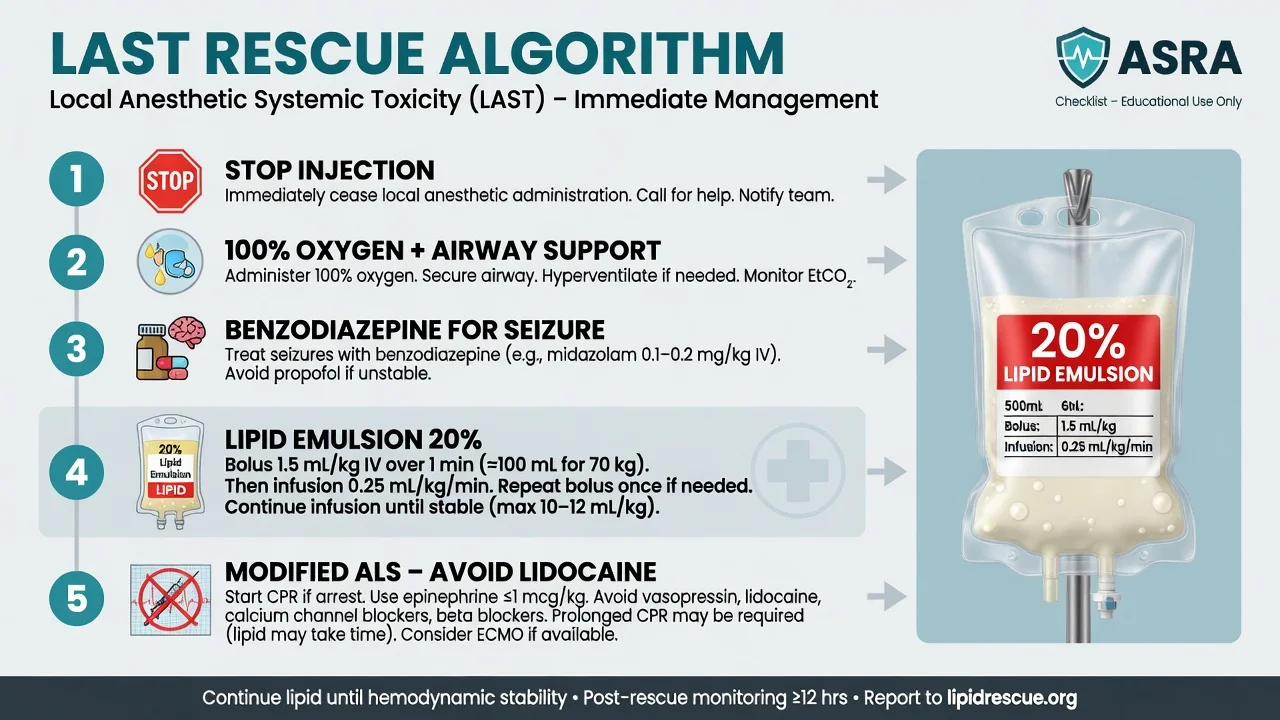
Local anaesthesia is the reversible blockade of nerve conduction by agents that bind the voltage-gated sodium channel from inside the axon, abolishing the action potential without loss of consciousness. In the emergency department it is the workhorse of procedural pain control — wound exploration and repair, abscess drainage, fracture and dislocation reduction, vascular access, lumbar puncture, and the arthocentesis — and it is the safest analgesic modality the proceduralist has, because it carries no airway risk and no central depression. The Fellowship candidate must master two things the examiner will press: the maximum safe doses (the number that, exceeded, produces local anaesthetic systemic toxicity) and the recognition and lipid-rescue of LAST itself, the one complication that kills.[1][2]
Definition and the two chemical classes
All local anaesthetics share a three-part structure — a lipophilic aromatic ring, an intermediate linker, and a hydrophilic amine — and they are classified by the linker into amides (metabolised by hepatic amidases) and esters (hydrolysed by plasma pseudocholinesterase). The class matters because it predicts allergy, metabolism and the toxicity profile. [1]
The clinical consequence is that a patient reporting "lidocaine allergy" is far more likely sensitised to a preservative or to latex, and a genuine ester allergy does not cross-react with an amide — the proceduralist can almost always find a safe agent by switching class. [1]
Indications
The indications are any ED procedure in which pain arises from a circumscribed, accessible tissue that can be reached by infiltration, field block, regional nerve block, or topical application. Infiltration anaesthesia serves wound exploration and repair, the laceration in a child, the incision and drainage of an abscess, the removal of a foreign body, the nail-bed repair after trephination, the lumbar puncture and the arthrocentesis. Field and nerve blocks extend coverage to the digital nerve (finger repair, nail procedures), the femoral and fascia iliaca (hip and femoral-shaft fracture analgesia), the intercostal (rib-fracture analgesia), the facial (lacerations of the forehead, lip and ear), and the wrist and ankle blocks for distal procedures. Topical anaesthesia covers intact skin before cannulation and venepuncture (EMLA, Ametop), open wounds before repair (LET gel), and mucous membranes for nasendoscopy, nasogastric tube placement, urethral catheterisation and ENT procedures (lidocaine spray, cocaine paste, tetracaine, lidocaine gel). The unifying test is that the procedure is brief, the pain is localised, and the agent can reach the nerve. When the pain is severe, the tissue is extensive, or the patient cannot cooperate, local anaesthesia gives way to regional blocks, procedural sedation, or general anaesthesia. [1]
Contraindications
There are few absolute contraindications. The first is true allergy to the chosen agent (rare for amides; more common for esters). The second is injection of an adrenaline-containing solution into an end-artery territory — the digits, the tip of the nose, the pinna, the penis and the toes — where vasoconstriction outlasts collateral supply and causes tissue necrosis. The third is local infection at the injection site for infiltration (the acid environment both inactivates the agent and risks spreading infection, though a field block proximal to the cellulitis is acceptable). The relative contraindications are the patient at high risk of LAST — low body weight and sarcopenia, extremes of age, hepatic or cardiac failure, pregnancy (increased cardiac output raises the plasma peak) — and the patient on drugs that interact (the patient on mexiletine or other class I antiarrhythmics has additive sodium-channel blockade). Anticoagulation is a relative concern for deep nerve blocks (compartment-syndrome risk from a haematoma) but is not a contraindication to infiltration. Methaemoglobinaemia risk (prilocaine, benzocaine) contraindicates those agents in patients already on oxidising drugs or with known haemoglobinopathy. [1]
Relevant pharmacology and the maximum safe doses
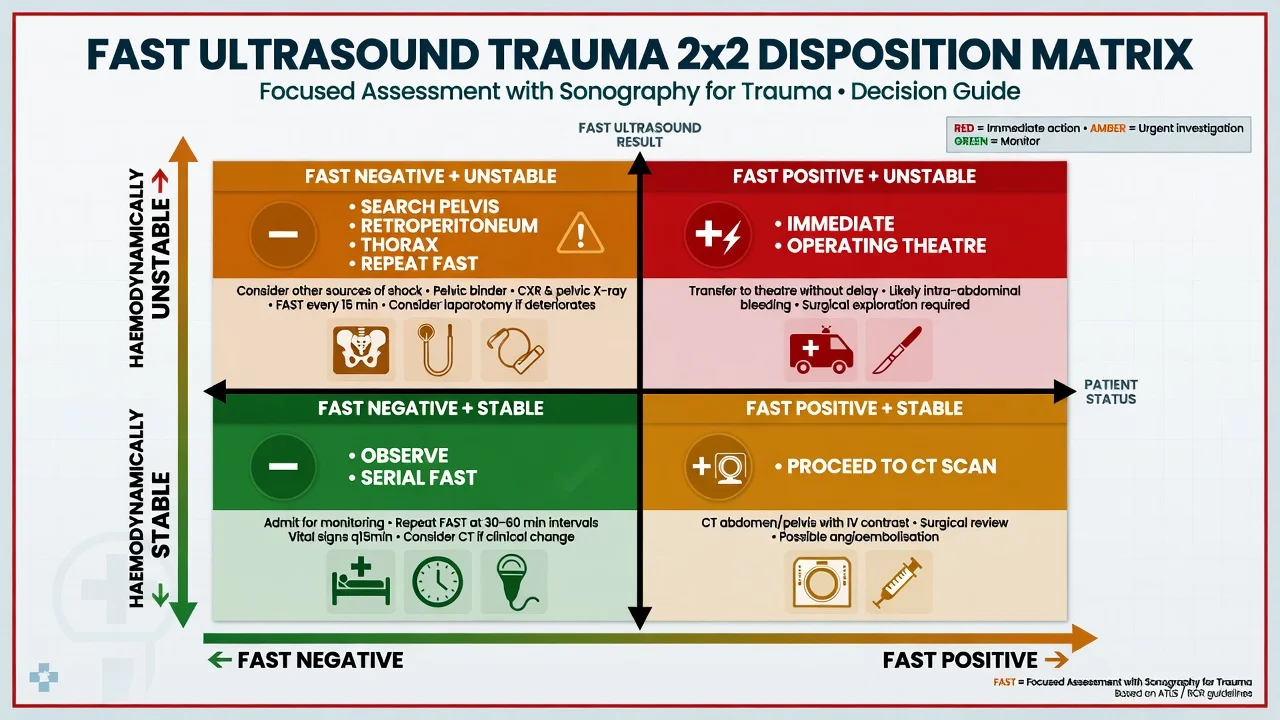
The pharmacology is governed by four properties — potency (lipid solubility, which sets how deeply the agent penetrates the nerve membrane), onset (the pKa; agents closer to physiological pH have more unionised fraction and faster onset), duration (protein binding; highly bound agents dissociate slowly and last longer), and the systemic toxicity threshold (the plasma concentration above which CNS then cardiovascular signs appear). The candidate must know the maximum dose for each agent because exceeding it is the direct cause of LAST. The concentrations to know are that 1 per cent is 10 mg per mL, 0.5 per cent is 5 mg per mL, and 2 per cent is 20 mg per mL — the calculation that converts the bedside syringe into milligrams. [1]
The maximum doses of the ED local anaesthetic agents
The addition of adrenaline (usually 1 in 200,000, or 5 micrograms per mL) constricts the local vasculature, slowing systemic absorption and so raising the maximum safe dose and prolonging duration — most usefully for lidocaine (the dose ceiling rises from 3 to 7 mg/kg) and less reliably for bupivacaine and ropivacaine, which are already highly protein-bound. Adrenaline also produces a bloodless field, which aids wound repair, but it is forbidden in the end-artery territories listed above. In the infected or inflamed tissue the local pH falls and the agent ionises, so the unionised fraction that crosses the membrane is reduced — the classic reason local anaesthesia "does not work" in cellulitis, and the reason a higher volume or a field block proximal to the inflammation is preferred.[2]
Differential diagnosis of deterioration during or after local anaesthetic injection
The can't-miss decision point is the patient who becomes unwell during or after a block. The Fellowship candidate must distinguish LAST from its mimics, because the treatment diverges sharply — only LAST mandates lipid emulsion. [1]
Local anaesthetic systemic toxicity (LAST)
- Minutes (or up to 30+ min) after injection or infusion; intravascular injection is immediate
- Prodrome: circumoral tingling, metallic taste, tinnitus, agitation, visual disturbance
- Progression to tonic-clonic seizure, then hypotension, conduction block, ventricular arrhythmia, arrest
- Treat: stop injection, airway, seizure control, lipid emulsion 20% 1.5 mL/kg bolus then 0.25 mL/kg/min; bupivacaine arrest is refractory to standard ALS
Vasovagal syncope
- Common with injection/needle procedures; pallor, diaphoresis, nausea, bradycardia, hypotension
- Brief, self-limiting with supine positioning and leg raise; full recovery within minutes
- No seizure prodrome of CNS toxicity, no metallic taste or tinnitus
- Treat: supine, legs up, oxygen, intravenous fluid; the diagnosis of exclusion in the awake-and-recovering patient
Anaphylaxis
- Rapid urticaria, angioedema, bronchospasm, hypotension; can follow any agent (more common with esters or the latex/preservative)
- Skin/mucosal changes are the discriminator from LAST; no focal CNS prodrome
- Treat: intramuscular adrenaline 0.5 mg, oxygen, fluid, antihistamine, steroid — the standard anaphylaxis algorithm
- True amide allergy is rare; suspect latex or preservative if the agent is an amide
Intravascular injection (epinephrine effect)
- Immediate — within seconds of injection; tachycardia, palpitations, hypertension, anxiety
- Caused by adrenaline-containing solution entering a vessel (or test-dose positive)
- Brief and self-limiting; stop injecting, aspirate before every aliquot to prevent it
- Distinguish from LAST: sympathetic excess rather than CNS depression; no seizure unless it progresses to true LAST from the local anaesthetic
Idiopathic or known seizure
- Coincidental seizure in a patient with epilepsy; no prodromal CNS-toxicity symptoms; no temporal tie to peak absorption
- No cardiovascular collapse, normal ECG, rapid postictal recovery
- Treat the seizure per the status-epilepticus pathway, but review the block timing
- Consider LAST if the timing fits absorption — assume LAST until proven otherwise in the freshly-blocked patient
The discriminating features are the timing (immediate for intravascular injection or anaphylaxis; minutes for LAST; brief for vasovagal), the prodrome (the metallic taste, tinnitus and circumoral tingling are nearly pathognomonic of LAST), and the cardiovascular pattern (bupivacaine LAST produces refractory conduction block and ventricular arrhythmia that does not respond to standard ALS). When in doubt after a block, treat as LAST and start lipid early.[1][2]
Equipment and patient preparation
Safe local anaesthesia needs a small, defined set: the chosen agent drawn into a labelled syringe, a 25- to 30-gauge needle for infiltration (the smaller gauge blunts less and hurts less), a 21- to 23-gauge needle for deeper field blocks, sterile skin preparation, gauze and the syringe of saline flush to aspirate before each aliquot, and resuscitation equipment within reach — oxygen, suction, a bag-valve-mask, and a lipid-emulsion 20% ampoule available in the department for any block involving bupivacaine or a large lidocaine dose. Patient preparation covers the focused history (allergy, bleeding disorder, pregnancy, the cardiac and hepatic comorbidity that lowers the LAST threshold), the consent with the procedure, the agent and the rare risks explained (infection, bleeding, LAST, nerve injury, adrenaline-related necrosis in the wrong territory), the positioning for access and comfort, and the skin preparation with chlorhexidine or povidone-iodine. The single most important preparation step is the mental dose calculation before drawing up — state the weight-based maximum, the volume that represents, and the margin remaining.[2]
Stepwise technique — infiltration and field block
The technique is run to a sequence so that no step is missed under procedural pressure. [1]
The local-anaesthetic infiltration sequence, in order
- Calculate the dose — weight in kg times the agent's maximum (lidocaine 3 mg/kg plain, 7 mg/kg with adrenaline); convert to millilitres from the concentration (1 per cent equals 10 mg/mL); declare the volume aloud.
- Prepare and consent — skin prep, drape, the patient informed of the pinch; draw up the agent with adrenaline only if the territory permits it.
- Insert through a puncture — use a 25- to 30-gauge needle; insert through a puncture in the dermis (or through the open wound edge, not intact skin over a laceration) to minimise pain and tracks.
- Aspirate before every aliquot — pull back the plunger; blood return means reposition. This single step prevents intravascular injection and most immediate LAST.
- Inject slowly, advancing into the infiltrated tissue — inject as the needle moves forward so that the agent runs ahead of the needle tip; inject in the subcutaneous plane; massage gently to spread the agent.
- Wait for onset — lidocaine 2 to 5 minutes; bupivacaine and ropivacaine 5 to 10 minutes; test the field with a sharp probe before proceeding.
- Top up within the dose ceiling — never exceed the calculated maximum; if coverage is incomplete, convert to a field or nerve block, or supplement with the topical agent, rather than over-infiltrate. [1]
The two structural errors are to inject before aspirating (the intravascular bolus) and to exceed the calculated dose by re-drawing "just a little more". Titration to the effect within the ceiling is the rule. For the field or nerve block, the sequence is identical with the addition of the relevant landmarks (the web space for the digital block, the inguinal ligament for the fascia iliaca, the rib angle for the intercostal), and the rule that a nerve block on the anticoagulated patient carries compartment-syndrome risk. [1]
The topical agents
The topical agents deliver anaesthesia without a needle, and each has a defined niche, onset time and pitfall. The Fellowship candidate must know the four named in the curriculum plus the mucosal agents. [1]
EMLA (Eutectic Mixture of Local Anaesthetic) is a 5 per cent cream of lidocaine 2.5 per cent and prilocaine 2.5 per cent, applied to intact skin under an occlusive dressing for cannulation and venepuncture. The onset is 60 minutes under occlusion, the depth is 3 to 5 mm, and a typical application is 1 to 2 g over 3 to 6 cm squared for up to 5 g on an adult limb. The pitfalls are the slow onset (too slow for the urgent cannula), the vasoconstriction-then-vasodilatation that can hide the vein, and the methaemoglobinaemia from prilocaine in infants (especially under three months or on other oxidising drugs) — EMLA is avoided or dose-limited in small infants. [1]
Ametop (tetracaine/amethocaine 4 per cent gel) is faster than EMLA: onset 30 to 45 minutes under occlusion, and the anaesthesia persists 4 to 6 hours after the dressing is removed, which is useful for the repeat attempt. It causes vasodilatation (the skin reddens, which aids vein visualisation). It is avoided in infants under one month, on broken skin or mucous membranes, and in patients with ester allergy. The faster onset and the longer post-removal duration make Ametop the better agent when time and venous access permit. [1]
LET gel (Lidocaine 4 per cent, Epinephrine 0.1 per cent, Tetracaine 0.5 per cent) is the agent for open-wound anaesthesia in laceration repair, applied directly into the wound on a cotton pledget or gauze for 20 to 30 minutes. It provides anaesthesia and vasoconstriction that reduce pain and bleeding for suturing, and it often converts the distressed child into a cooperative one. LET is avoided in mucous membranes (rapid absorption, adrenaline effect), in end-artery territories (the adrenaline), in patients with ester allergy, and the total dose is kept within limits in small children — a typical volume is 1 to 3 mL in the wound for 20 to 30 minutes. [1]
Ethyl chloride (cold spray) is a vapocoolant delivered by brief spray onto the skin until it frosts. It produces counter-irritant analgesia by cooling and a brief gate-control effect lasting seconds to a minute — enough to blunt the needle stick for venepuncture, an injection, or a superficial incision such as incising a small paronychia. It is flammable, it cannot be used near the eyes, and its analgesia is too brief for suturing. [1]
The mucosal agents complete the topical set: lidocaine 10 per cent spray for the oropharynx before awake intubation and nasendoscopy (max 20 mg per spray, watch the total dose), lidocaine 2 per cent gel (the urethral gel for catheterisation), and cocaine for ENT — cocaine 4 to 10 per cent paste or solution provides anaesthesia and the vasoconstriction prized for epistaxis management and nasal reduction (max 1.5 to 3 mg/kg; a controlled drug with its own sympathomimetic toxicity). Benzocaine, formerly a topical mucosal agent for dental and throat use, is now avoided because of methaemoglobinaemia. [1]
Local anaesthetic systemic toxicity — recognition
LAST is the syndrome of CNS then cardiovascular toxicity produced when the plasma concentration of local anaesthetic exceeds the safe threshold, by intravascular injection, by overdose across an absorptive surface, or by cumulative re-injection. The recogniser's task is to think of LAST in any patient who deteriorates during or after a block.[1][2]
The CNS toxicity unfolds in a characteristic sequence: the prodrome of circumoral tingling, a metallic taste, tinnitus, light-headedness, visual disturbance and agitation (or drowsiness), progressing to muscle twitching, then a tonic-clonic seizure, and at the highest plasma concentrations to coma and respiratory arrest. The cardiovascular toxicity follows because the same sodium channels govern conduction: the early signs are hypertension and tachycardia (a sympathetic surge) giving way to hypotension, conduction block (wide QRS, prolonged PR), bradycardia, ventricular arrhythmia and cardiac arrest. The cardinal point is that bupivacaine binds cardiac sodium channels tightly and slowly (a "fast-in, slow-out" pattern), which makes its cardiovascular toxicity severe, prolonged and refractory to standard resuscitation — the lethal edge of bupivacaine over ropivacaine, which is its deliberately safer near-equivalent.[3]
Management of LAST — the lipid-rescue protocol
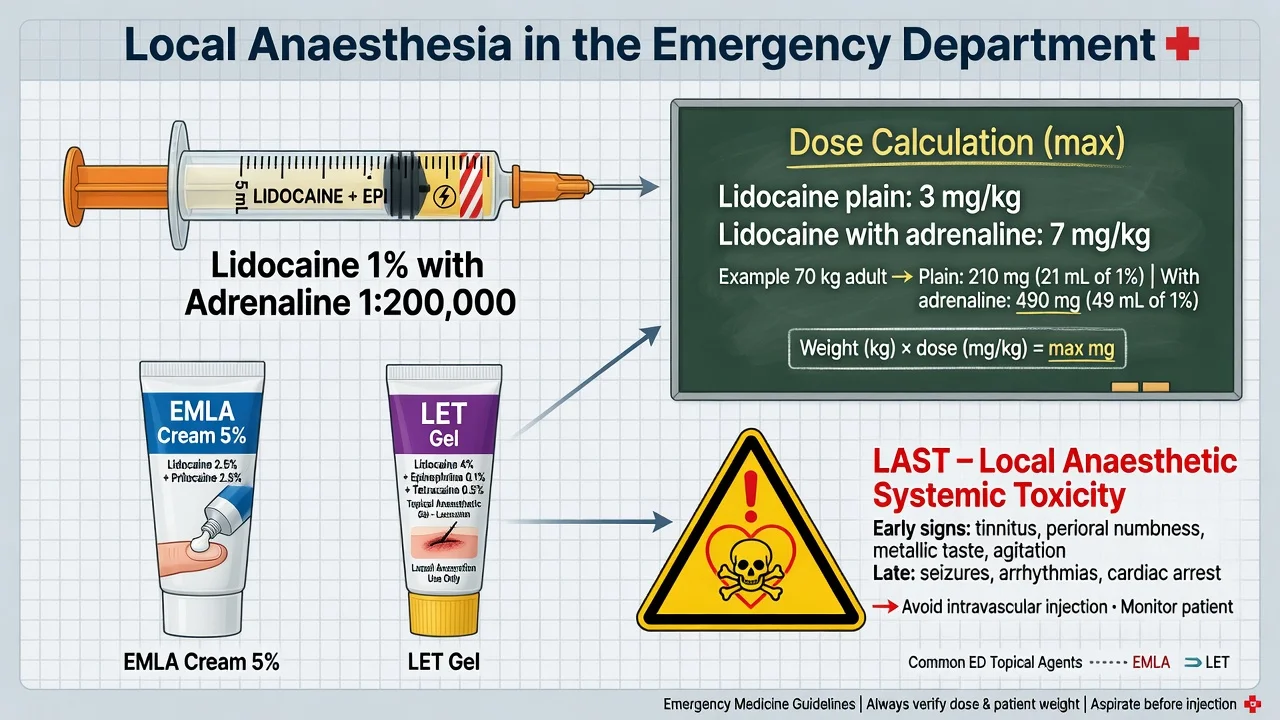
The treatment of LAST is one of the few resuscitations where a single drug is decisive. The ASRA 2020 checklist is the cognitive aid the candidate must reproduce.[1]
The ASRA 2020 LAST management sequence
- Stop the injection — immediately cease injecting the local anaesthetic; call for help and the lipid-emulsion 20% pack.
- Airway and ventilation — 100 per cent oxygen by mask, avoid hypoxia and acidosis (both potentiate toxicity); support ventilation with a bag-valve-mask; secure a definitive airway if coma or apnoea dictates.
- Control seizures — a benzodiazepine (midazolam 1 to 2 mg IV increments, or diazepam/lorazepam); avoid propofol in cardiovascular instability (it worsens hypotension); small doses of propofol are acceptable only if the patient is cardiovascularly stable and the seizure is brief.
- Manage the arrhythmia / arrest — run standard ALS but expect bupivacaine arrest to be refractory; avoid vasopressin and high-dose adrenaline (worsen arrhythmia in animal models); use small incremental adrenaline; amiodarone is preferred over lidocaine for the ventricular arrhythmia (do not treat LAST with lidocaine).
- Give lipid emulsion 20% — the specific antidote: 1.5 mL/kg bolus (lean body mass) over 2 to 3 minutes, then an infusion of 0.25 mL/kg/min. For persistent cardiovascular collapse, repeat the bolus once or twice and increase the infusion to 0.5 mL/kg/min. The upper limit is approximately 10 to 12 mL/kg over the first 30 minutes.
- Continue CPR for longer than usual — bupivacaine arrest can recover slowly as lipid extracts the drug; prolonged resuscitation (an hour or more) is justified and survivors with good neurological outcome are reported after extended CPR. [1]
The mechanism of lipid rescue is twofold: the lipid shuttle (a lipid phase in the plasma that scavenges the lipophilic local anaesthetic from the heart and brain and redistributes it to storage and detoxifying organs) and a direct cardiotonic and postconditioning effect (lipid activates prosurvival kinases and improves cardiac output directly).[3] The practical rules are to start lipid early — at the first sign of LAST that does not resolve with stopping the injection — and to keep the lipid-emulsion 20% available in any area where bupivacaine or large lidocaine doses are used.
Complications and adverse effects
Beyond LAST, the complications fall into procedure-related and agent-related groups. The procedure-related complications are bleeding and haematoma (worse in the anticoagulated, dangerous in a deep compartment), infection introduced by the injection (rare with sterile technique), direct nerve injury (the intraneural injection — felt as severe pain on injection, the reason to stop and reposition), and the vasovagal event. The agent-related complications are LAST, allergy (more common with esters and the preservative), the adrenaline necrosis of an end-artery territory, and methaemoglobinaemia from prilocaine (EMLA) or benzocaine — the cyanosis that does not clear with oxygen, the blood that looks chocolate-brown, the pulse oximetry fixed around 85 per cent and the PaO2 discordantly normal, treated with methylene blue 1 to 2 mg/kg intravenously. Cocaine additionally causes the sympathomimetic syndrome of hypertension, tachycardia, agitation and coronary vasospasm when over-absorbed from the nasal mucosa. [1]
Pitfalls and practical tips
The pitfalls invert the structure. Exceeding the maximum dose by re-drawing "just a little more" — the direct cause of LAST. Not aspirating before each aliquot — the intravascular injection. Adding adrenaline to an end-artery block — the digit or the penis that necroses. Expecting local anaesthesia to work in cellulitis — the acidic, inflamed tissue that ionises the agent; switch to a field block proximal to the inflammation. Forgetting that bupivacaine arrest is refractory — burning time on escalating inotropes instead of starting lipid. Treating the LAST arrhythmia with lidocaine — piling a local anaesthetic onto a local-anaesthetic arrest; use amiodarone. Misattributing a late seizure after a block to the patient's epilepsy — LAST is delayed as often as immediate. Using EMLA in a small infant without weighing the methaemoglobinaemia risk. Under-dosing the analgesia for a wound because of fear of LAST, leaving the patient in pain — calculate the dose, use it within the ceiling, and supplement with a block where infiltration is inadequate. The practical tips are the mirror: state the dose aloud, aspirate every aliquot, use the smallest needle, buffer lidocaine with sodium bicarbonate (9:1 lidocaine:bicarbonate reduces injection pain without delaying onset), warm the agent to body temperature, let the agent work (wait the onset time before testing), and have lipid 20% in the department. [1]
Special populations
The child is the population in whom topical agents (LET gel, EMLA, Ametop) are most valuable, because they convert the needle-phobic child into a cooperative one — LET gel in the wound before suturing is the standard for paediatric laceration repair, with weight-based volume limits. The child's weight-based maximum is the same per kilogram, but the small total mass makes the absolute ceiling low, so the syringe must be carefully calculated and the agent chosen for the lowest effective concentration. Pregnancy raises the LAST risk by increasing cardiac output (a higher plasma peak for the same dose) and reduces the MAC-equivalent threshold; the amides are safe in pregnancy, esters preferred where possible for their rapid hydrolysis, and adrenaline-containing solutions used cautiously. The elderly and the sarcopenic have less muscle mass for drug redistribution and a lower cardiac reserve, lowering the effective dose ceiling and raising the toxicity risk; smaller aliquots and slower injection are the rule. The hepatic and cardiac failure patient clears amides slowly and tolerates their cardiodepressant effect poorly — reduce the dose and extend the interval. The patient on class I antiarrhythmics (mexiletine, and the lidocaine itself given for arrhythmia) has additive sodium-channel blockade and a lowered LAST threshold. [1]
Evidence and the regional guidelines
The contemporary framework rests on the ASRA practice advisories — the third advisory (2017, executive summary 2018) and the 2020 checklist — which codified the prevention, recognition and lipid-rescue treatment of LAST, updated the epidemiology (LAST is less frequent with ultrasound guidance but still occurs, and its presentation has shifted toward the delayed pattern), and reaffirmed the lipid-emulsion 20% protocol (1.5 mL/kg bolus then 0.25 mL/kg/min).[1][2] The mechanistic evidence is summarised in the review of lipid-resuscitation mechanisms, which consolidated the lipid-shuttle and the direct cardiotonic/postconditioning effects and retired the calcium-channel and mitochondrial-metabolism hypotheses for lack of evidence.[3] In ANZ practice the ACEM supports the structured approach: the weight-based maximum dose declared before infiltration, aspiration before every aliquot, adrenaline excluded from end-artery territories, and lipid emulsion 20% stocked in every area where bupivacaine or large-dose lidocaine is used. The Cochrane-level evidence for lipid is limited because the condition is rare and ethically unrandomisable, but the case-series and animal data are sufficiently strong that lipid is the standard of care.
ANZ practice note. In Australian and New Zealand EDs the workhorse is lidocaine 1 per cent with adrenaline for wound repair (3 mg/kg plain, 7 mg/kg with adrenaline), bupivacaine 0.5 per cent for the long-acting nerve block (2 mg/kg), and ropivacaine where the safer long-acting profile is wanted (3 mg/kg). LET gel is the standard for paediatric laceration anaesthesia, EMLA and Ametop for cannulation, and cocaine for ENT under controlled-drug governance. Lipid emulsion 20% is a departmental stock item, and the dose (1.5 mL/kg bolus, 0.25 mL/kg/min) is taught alongside the ALS algorithm because bupivacaine arrest will not be reversed by standard ALS alone. [1]
SAQ — Maximum lidocaine dose calculation for a forearm laceration
10 minutes · 10 marks
A 28-year-old 75 kg man presents to the ED with a 6 cm jagged laceration over the volar forearm sustained 90 minutes ago from a fall onto broken glass. He has no drug allergies, no significant past history, and his last meal was 4 hours ago. The wound requires thorough washout and layered closure. You plan infiltration anaesthesia with lidocaine.
SAQ — Local anaesthetic systemic toxicity during a fascia iliaca block
10 minutes · 10 marks
A 72-year-old 65 kg woman with a displaced subcapital femoral neck fracture is brought to the ED. The orthopaedic team is preparing for theatre but analgesia is required. An ultrasound-guided fascia iliaca block is performed with 30 mL of 0.5 per cent bupivacaine. Ten minutes after the injection — and after an apparently uneventful block — the patient becomes drowsy, develops muscle twitching and then has a generalised tonic-clonic seizure. Her BP is 75/40, HR 50, sinus rhythm with a wide QRS.
Exam pearls [1]
- State the maximum dose before drawing up — lidocaine 3 mg/kg plain, 7 mg/kg with adrenaline; bupivacaine 2 mg/kg; ropivacaine 3 mg/kg; and know that 1 per cent equals 10 mg/mL.
- Aspirate before every aliquot — the single step that prevents most immediate LAST.
- No adrenaline in end-artery territories — fingers, toes, nose, ears, penis.
- The LAST prodrome — circumoral tingling, metallic taste, tinnitus, agitation, then seizure — is nearly pathognomonic.
- Bupivacaine arrest is refractory to standard ALS — start lipid emulsion 20% early (1.5 mL/kg bolus, then 0.25 mL/kg/min); prolonged CPR is justified.
- Treat the LAST arrhythmia with amiodarone, never lidocaine — and avoid vasopressin and high-dose adrenaline.
- LAST can be delayed — a seizure or arrest up to 30 minutes (or more, with infusion or liposomal bupivacaine) after the block is LAST until proven otherwise.
- Local anaesthesia fails in cellulitis — switch to a field block proximal to the inflammation; the acidic tissue ionises the agent.
- Topical onset times — EMLA 60 min, Ametop 30 to 45 min, LET gel 20 to 30 min, ethyl chloride seconds; match the agent to the time available.
- Methaemoglobinaemia — prilocaine (EMLA) and benzocaine; cyanosis unresponsive to oxygen, chocolate-brown blood, treat with methylene blue 1 to 2 mg/kg IV. [1]
Red flags
[1]References
- [1]Neal JM, Neal EJ, Weinberg GL. American Society of Regional Anesthesia and Pain Medicine Local Anesthetic Systemic Toxicity checklist: 2020 version Reg Anesth Pain Med, 2021.PMID 33148630
- [2]Neal JM, Barrington MJ, Fettiplace MR, Gitman M, Memtsoudis SG, Morwald EE, Rubin DS, Weinberg G. The Third American Society of Regional Anesthesia and Pain Medicine Practice Advisory on Local Anesthetic Systemic Toxicity: Executive Summary 2017 Reg Anesth Pain Med, 2018.PMID 29356773
- [3]Fettiplace MR, Weinberg G. The Mechanisms Underlying Lipid Resuscitation Therapy Reg Anesth Pain Med, 2018.PMID 29356774