EM · Hypertensive disorders of pregnancy
Pre-eclampsia and eclampsia
Also known as Pre-eclampsia · Eclampsia · Severe pre-eclampsia · HELLP syndrome · Hypertensive disorder of pregnancy
Pre-eclampsia is new hypertension (at or above 140 over 90) after 20 weeks of gestation with proteinuria or end-organ dysfunction, progressing on a spectrum through severe pre-eclampsia to eclampsia (the seizure) and HELLP syndrome (haemolysis, elevated liver enzymes, low platelets). The pathophysiology is the failed trophoblastic invasion of the spiral arteries and the release of the anti-angiogenic factors that drive the systemic endothelial dysfunction. Management rests on three pillars: magnesium sulphate for seizure prophylaxis and treatment (4 g IV loading over 20 minutes then 1 g per hour for 24 hours, with calcium gluconate 10 mL of 10 per cent as the antidote for toxicity), blood-pressure control to the severe range (labetalol, hydralazine or nifedipine; target 140 to 150 over 90 to 100; no ACE inhibitors, ARBs or renin inhibitors), and delivery as the only cure. The differential is gestational hypertension, chronic hypertension and HELLP. ACEM-primary, globally tagged.
On this page & tools
Your progress
Saved locally on this device.
5 MCQs with explanations
Target exams
Red flags
Pre-eclampsia and eclampsia sit at the severe end of the hypertensive-disorders-of-pregnancy spectrum, and they remain a leading cause of direct maternal death in Australia, New Zealand and the United Kingdom. The Fellowship candidate must recognise the spectrum from gestational hypertension through pre-eclampsia to eclampsia and HELLP syndrome, give magnesium sulphate for seizure prophylaxis and treatment, control the severe-range blood pressure with a safe agent, and understand that delivery is the only cure. The three pillars — magnesium, blood-pressure control and delivery — are the non-negotiables of the ED resuscitation.[1][4]
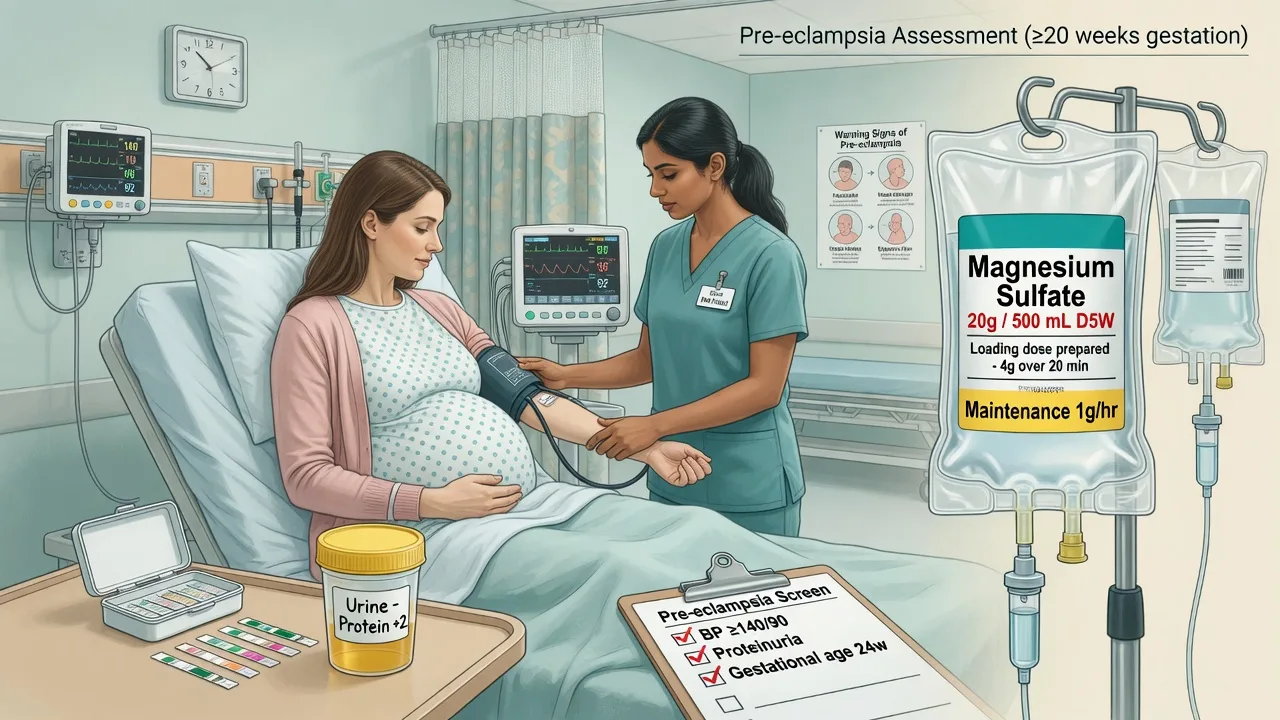
Definition and the spectrum (classification)
The hypertensive disorders of pregnancy form a spectrum, classified by the International Society for the Study of Hypertension in Pregnancy and adopted across ANZ, UK and US guidelines.[1]
Gestational hypertension is new hypertension (140 systolic or 90 diastolic, or both, on two occasions four hours apart) arising after 20 weeks of gestation, in the absence of proteinuria or end-organ dysfunction. It may evolve into pre-eclampsia. [1]
Pre-eclampsia is new hypertension after 20 weeks plus proteinuria (300 mg per 24 hours, or a protein-to-creatinine ratio of 30 mg per mmol or above) or maternal end-organ dysfunction. It is divided into pre-eclampsia without severe features and pre-eclampsia with severe features, the latter defined by a severe-range blood pressure, thrombocytopenia, progressive renal insufficiency, impaired liver function, pulmonary oedema, or new-onset cerebral or visual symptoms. [1]
Eclampsia is the new-onset, generalised tonic-clonic seizure in a woman with pre-eclampsia. HELLP syndrome — haemolysis, elevated liver enzymes and low platelets — is a severe variant that may arise with only modest blood-pressure elevation. Chronic hypertension predates the pregnancy (before 20 weeks), and chronic hypertension with superimposed pre-eclampsia carries the worst prognosis. [1]
[1]Epidemiology and risk
Pre-eclampsia complicates roughly 2 to 8 per cent of pregnancies worldwide and is responsible for a substantial share of severe maternal morbidity and of iatrogenic prematurity. In ANZ and the UK it ranks among the commonest single causes of direct maternal death, most often through intracranial haemorrhage, hepatic rupture or eclampsia itself. [1]
The risk factors cluster into the maternal, the obstetric and the medical. Nulliparity is the strongest single risk factor; other drivers are a previous pregnancy with pre-eclampsia (recurrence around 15 to 20 per cent), a multiple pregnancy, extremes of maternal age (over 35 or under 18), obesity, IVF conception and a family history. Medical risk factors are pre-existing hypertension, renal disease, diabetes, antiphospholipid syndrome and systemic lupus erythematosus. A woman carrying twins with chronic hypertension is the textbook high-risk patient the examiner will describe. [1]
Pathophysiology
Pre-eclampsia is a two-stage disease of the placenta and the maternal endothelium. In stage one, the trophoblast fails to complete its normal second-wave invasion of the spiral arteries during the early second trimester, so the spiral arteries remain narrow, high-resistance muscular vessels instead of transforming into dilated, low-resistance conduits. The placenta is rendered chronically ischaemic.[1]
In stage two, the ischaemic placenta releases anti-angiogenic factors — principally soluble fms-like tyrosine kinase-1 (sFlt-1) and soluble endoglin — that bind and deplete the pro-angiogenic placental growth factor (PlGF) and vascular endothelial growth factor (VEGF). The result is generalised maternal endothelial dysfunction: vasoconstriction, enhanced sensitivity to pressor agents, capillary leak, microthrombosis and activation of the coagulation cascade. This single mechanism explains every end-organ manifestation — hypertension and proteinuria from the renal endothelium, transaminitis and hepatic capsule pain from the hepatic endothelium, pulmonary oedema from the pulmonary capillary leak, thrombocytopenia from consumption, and the cerebral vasospasm and oedema that produce headache, visual disturbance and eclamptic seizures. [1]
Clinical presentation
Mild or early pre-eclampsia is frequently asymptomatic, detected on routine antenatal blood-pressure measurement. The symptoms of severe disease reflect the end-organ involved: a persistent frontal or occipital headache unresponsive to simple analgesia, visual disturbance (scotomata, flashing lights, diplopia, or cortical blindness from posterior reversible encephalopathy syndrome), epigastric or right-upper-quadrant pain from hepatic capsular distension, nausea and vomiting, sudden facial or hand oedema, and reduced fetal movements from placental insufficiency. [1]
Eclampsia presents as a generalised tonic-clonic seizure, usually self-limiting but carrying the risk of hypoxia, trauma, aspiration and intracranial haemorrhage. Atypical presentations the candidate must not miss: eclampsia with a blood-pressure reading that is only mildly elevated, eclampsia in the postpartum period with no antenatal history of hypertension, and HELLP presenting as malaise and right-upper-quadrant pain mistaken for gastritis or cholecystitis. [1]
[1]Differential diagnosis
The differential splits into the other hypertensive disorders of pregnancy (which determine the obstetric plan) and the mimics of the individual end-organ presentation (which determine the investigation). [1]
Gestational hypertension
- New hypertension after 20 weeks with NO proteinuria and NO end-organ dysfunction
- Up to a quarter progress to pre-eclampsia, so re-test the urine and the bloods
- Magnesium is not routine; blood-pressure control if severe-range
- Distinguished from pre-eclampsia by the absence of proteinuria and end-organ features
Chronic hypertension
- Hypertension present BEFORE 20 weeks, or carried on treatment between pregnancies
- No proteinuria of new onset, no acute end-organ injury
- May develop SUPERIMPOSED pre-eclampsia — the worst combination
- Distinguished by the pre-pregnancy or early-pregnancy blood-pressure history
Chronic hypertension with superimposed pre-eclampsia
- A known hypertensive woman who develops NEW proteinuria or a sudden rise in blood pressure or new end-organ damage
- Higher risk of eclampsia, abruption and fetal death
- Manage as severe pre-eclampsia
- The diagnosis is the change in the pre-existing condition
HELLP syndrome
- Haemolysis (LDH raised, schistocytes, bilirubin raised), elevated liver enzymes, low platelets (below 100)
- A severe VARIANT of pre-eclampsia, not a separate mimic; blood pressure may be only mildly raised
- High risk of DIC, hepatic haematoma and rupture; magnesium and delivery as for severe pre-eclampsia
- Distinguished by the lab triad; may present as isolated right-upper-quadrant pain
Acute fatty liver of pregnancy (AFLP)
- The HELLP mimic — hypoglycaemia, marked transaminitis, coagulopathy, encephalopathy and renal failure
- Typically third trimester; the Swansea criteria support the diagnosis
- Delivery is also the cure; correct the hypoglycaemia and the coagulopathy first
- Distinguished from HELLP by the encephalopathy, the hypoglycaemia and the profound coagulopathy
For an eclamptic seizure the broader differential is epilepsy, subarachnoid or intracerebral haemorrhage, hypoglycaemia, cerebral venous sinus thrombosis, thrombotic thrombocytopenic purpura and amniotic fluid embolism — but in any woman over 20 weeks (or recently delivered), eclampsia is the diagnosis until excluded, and magnesium sulphate is given first. [1]
Bedside assessment
Assessment runs in parallel with resuscitation and is both maternal and fetal. The ABCDE sets the priority: secure the airway of the post-ictal woman, give high-flow oxygen if hypoxic, establish two large-bore cannulae, and place the woman in the left lateral tilt to relieve aortocaval compression. Measure the blood pressure in both arms and repeat it. The neurological examination looks for hyperreflexia (a marker both of pre-eclampsia severity and of impending magnesium toxicity), visual fields, and any focal deficit that would suggest intracranial haemorrhage. Examine the lungs for pulmonary oedema, the abdomen for tender hepatomegaly, and assess the fetal condition with continuous cardiotocography. A urine dipstick of 1+ or more triggers quantification; send the baseline bloods (below) at the moment of cannulation. [1]
ANZ practice note. Bedside assessment follows the SOMANZ (Society of Obstetric Medicine of Australia and New Zealand) approach: simultaneous maternal and fetal assessment, continuous CTG, blood pressure in both arms, and the early obstetric and anaesthetic call. The emergency physician stabilises and transfers to the obstetric unit with magnesium sulphate running; rural and remote centres stabilise and retrieve with the infusion in progress. [1]
Investigations — values and criteria
The investigations confirm the diagnosis, grade the severity, and guide the timing of delivery. The blood pressure defines the severe range at 160 systolic or 110 diastolic. The urine is screened by dipstick and quantified by the protein-to-creatinine ratio (30 mg per mmol or above) or a 24-hour collection (300 mg or more). [1]
The blood panel — every value carries a severe-feature threshold — is the full blood count (platelets below 100 times ten to the ninth per litre is a severe feature), the urea and electrolytes (creatinine above 1.1 mg per decilitre, or doubled from baseline), the liver function tests (transaminases twice the upper limit of normal), the lactate dehydrogenase and haemolysis screen for HELLP (LDH raised, schistocytes on the film, bilirubin raised), and the coagulation (INR, APTT and fibrinogen) to detect the disseminated intravascular coagulation of severe disease or abruption. A venous gas gives the lactate and the acid-base status. The fetal assessment is the cardiotocography plus the ultrasound for growth, liquor volume and the umbilical-artery Doppler. [1]
The fullPIERS model (full Pre-eclampsia Integrated Estimate of RiSk) is a validated bedside tool that estimates the probability of a major adverse maternal outcome within 48 hours, and supports the decision to escalate or to transfer.[5]
Immediate management — the three pillars
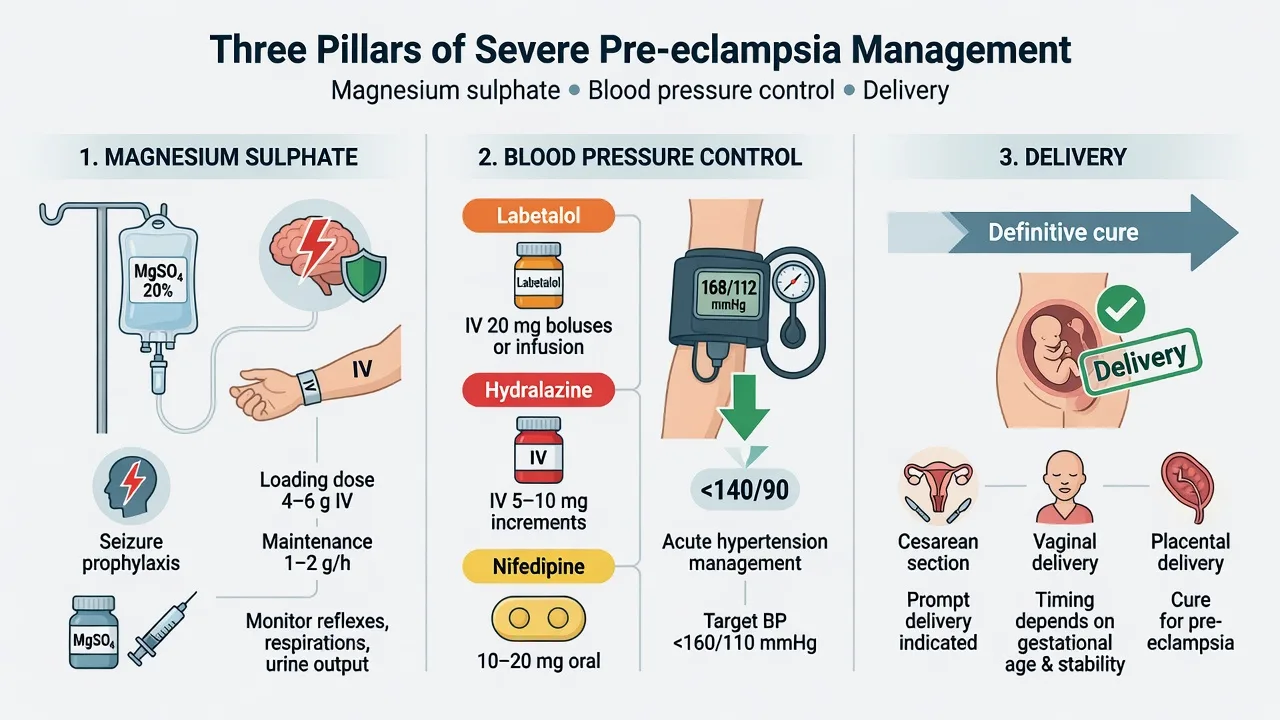
The management of severe pre-eclampsia and eclampsia rests on three pillars, run in parallel: seizure prophylaxis and treatment with magnesium sulphate, blood-pressure control to the severe range, and delivery as the definitive cure. The obstetric, anaesthetic and neonatal teams are called at the moment of suspicion — this is never a solo emergency-medicine resuscitation.[1][4]
First, the ABCDE, intravenous access, continuous maternal and fetal monitoring, and the careful fluid balance. Pre-eclampsia is a capillary-leak state, so aggressive crystalloid loading precipitates pulmonary oedema — restrict the maintenance fluid to roughly 80 mL per hour and aim for a urine output above 0.5 mL per kg per hour. [1]
The magnesium sulphate and the antihypertensive doses
Magnesium sulphate — seizure prophylaxis and treatment
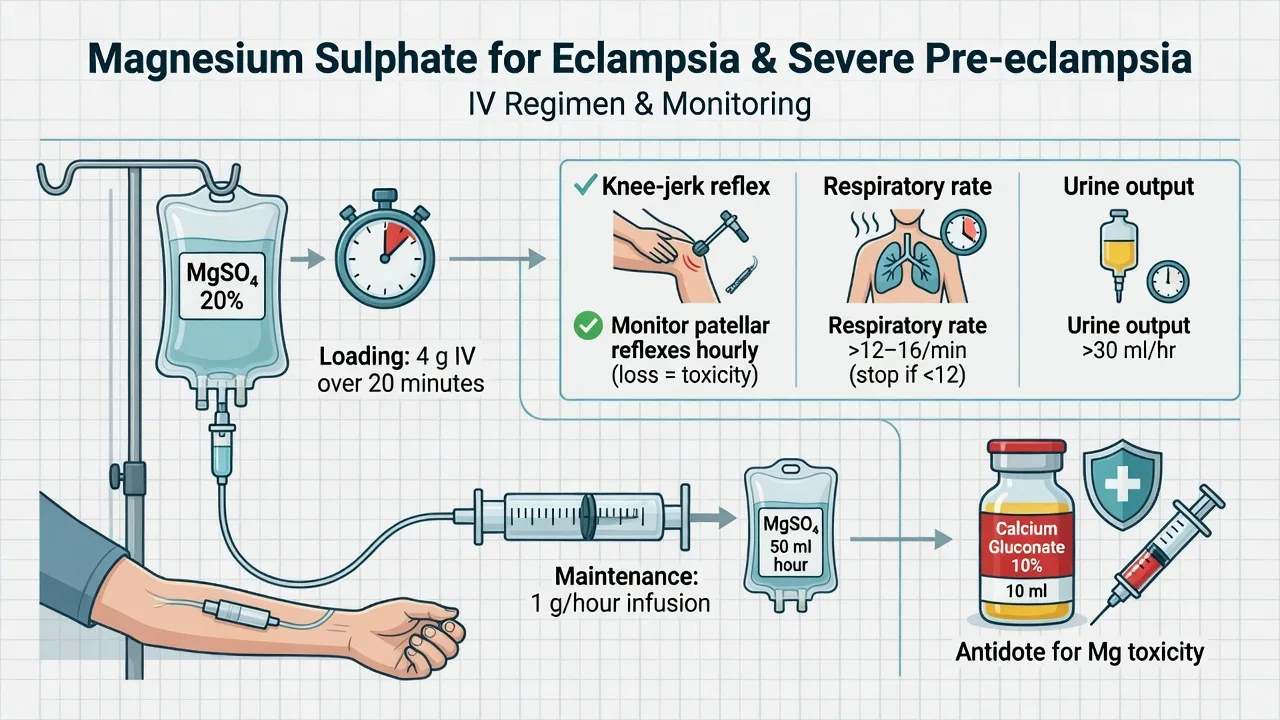
Magnesium sulphate is the cornerstone for both the prevention of the first seizure (in severe pre-eclampsia) and the treatment of the eclamptic seizure, and it is superior to diazepam and phenytoin.[2][3][4] The Magpie Trial demonstrated that magnesium sulphate at least halves the risk of eclampsia in women with pre-eclampsia, and the Collaborative Eclampsia Trial established it as the anticonvulsant of choice for the woman who has already seized.
The standard IV (Zuspan) regimen is a 4 g loading dose in 100 mL of crystalloid over 20 minutes, followed by a 1 g per hour maintenance infusion for 24 hours. (The intramuscular Pritchard alternative is 4 g IV plus 10 g IM loading, then 5 g IM every four hours.) For the woman who seizes despite the loading dose, a further 2 g IV bolus over five minutes is given. Magnesium is renally excreted, so the infusion rate is halved and the level checked if the urine output falls or the renal function is impaired. [1]
Model answer — the magnesium regimen and its monitoring
Magnesium toxicity and its antidote
Magnesium toxicity is the dose-dependent, life-threatening complication of the therapy itself, and the candidate who cannot describe it fails the station. The progressive sequence is the loss of the deep tendon reflexes (the earliest sign), then somnolence and slurred speech, then respiratory depression (respiratory rate under 12 per minute), then cardiac arrest. The therapeutic range is a plasma level of 2 to 4 mmol per litre; loss of reflexes begins around 5, respiratory depression around 6 to 7, and cardiac arrest above 12. [1]
[1]The antidote is calcium gluconate, 10 mL of 10 per cent (1 g) given intravenously over 10 minutes. Toxicity is prevented by the bedside monitoring of the reflexes, the respiratory rate and the urine output at least hourly, and by dose reduction in renal impairment. The myth that nifedipine and magnesium are absolutely contraindicated together is just that — a myth; the synergy is mild and the combination is safe with blood-pressure monitoring. [1]
Blood-pressure control
Severe-range blood pressure (160 systolic or 110 diastolic, or both) must be lowered promptly, because the uncontrolled severe range is what causes the intracranial haemorrhage. The aim is not to normalise the blood pressure but to bring it to the 140 to 150 over 90 to 100 range. Over-correction precipitates uteroplacental hypoperfusion (fetal distress, abruption) and maternal cerebral and renal hypoperfusion — the chronically vasoconstricted circulation depends on the higher pressure.[1]
The first-line IV agents are labetalol 10 to 20 mg IV every ten minutes (to a maximum of 300 mg, then an infusion), or hydralazine 5 mg IV slowly, repeated every 20 minutes to a maximum of 20 mg then an infusion. Oral nifedipine 10 mg is used for the less acute case or as a step-down. The agents that are absolutely contraindicated are the angiotensin-converting-enzyme inhibitors, the angiotensin-receptor blockers and the direct renin inhibitors — they are teratogenic and fetotoxic, causing fetal renal agenesis, oligohydramnios and neonatal renal failure. [1]
Delivery — the only cure
The definitive treatment of pre-eclampsia is the delivery of the baby and the placenta, which removes the ischaemic placenta driving the disease. The timing balances the maternal risk of continuing the pregnancy against the fetal risk of prematurity.[1]
At term (37 weeks or more), delivery is recommended for any pre-eclampsia. For severe pre-eclampsia at 34 weeks or more, stabilise with magnesium and blood-pressure control and then deliver. For severe pre-eclampsia under 34 weeks, stabilise the mother, give corticosteroids for fetal lung maturation (betamethasone 12 mg IM, two doses 24 hours apart), transfer to a tertiary centre with neonatal facilities, and deliver if the maternal or fetal condition deteriorates — expectant management is only considered in a stable inpatient under specialist obstetric care. The mode of delivery depends on the gestation, the cervical favourability and the fetal and maternal status; eclampsia itself is not an indication for Caesarean section but the unstable mother usually is delivered operatively after stabilisation. Magnesium sulphate is continued for 24 hours postpartum regardless of the mode of delivery. [1]
HELLP syndrome
HELLP — haemolysis, elevated liver enzymes, low platelets — is a severe variant of pre-eclampsia, and it may present with only modest hypertension and little or no proteinuria, which makes it easy to miss. The Mississippi and Tennessee classifications grade the severity by the platelet count, the transaminases and the LDH. The complications are the dangerous ones: disseminated intravascular coagulation, placental abruption, acute kidney injury, pulmonary oedema, and the catastrophic hepatic haematoma and rupture (sudden severe right-upper-quadrant pain and shock in a woman with HELLP is a surgical emergency). [1]
The management is the same three pillars — magnesium sulphate, blood-pressure control, and prompt delivery — with the addition of active correction of any coagulopathy before delivery. Dexamethasone is no longer recommended for the treatment of established HELLP; it has no role beyond fetal lung maturation. [1]
Complications and pitfalls
The maternal complications are eclampsia, intracranial haemorrhage and stroke (the leading causes of death), pulmonary oedema, hepatic rupture and infarction, HELLP, disseminated intravascular coagulation, placental abruption, acute kidney injury or renal cortical necrosis, posterior reversible encephalopathy syndrome, retinal detachment and death. The fetal complications are intrauterine growth restriction, abruption, iatrogenic prematurity and intrauterine death. [1]
[1]Prognosis and disposition
With rapid magnesium sulphate, blood-pressure control and delivery, the maternal mortality is low in the developed setting, but the morbidity — intensive-care admission, transfusion, hepatic or cerebral injury and psychological trauma — is substantial. All women with severe pre-eclampsia, eclampsia or HELLP are admitted under the obstetric team to the labour ward or the high-dependency unit; intensive care is reserved for the woman with organ failure, refractory pulmonary oedema or an eclamptic seizure complicated by aspiration or intracranial haemorrhage. Magnesium sulphate continues for 24 hours postpartum, and the blood pressure often peaks at three to six days postpartum before it settles. A woman with pre-eclampsia should be counselled at discharge on the future cardiovascular and metabolic risk — pre-eclampsia is a marker of later hypertension, stroke and ischaemic heart disease — and on aspirin prophylaxis (150 mg nocte from 12 weeks) in the next pregnancy. [1]
Special populations
The postpartum presentation is the trap: pre-eclampsia and eclampsia may arise de novo after the delivery, most often within the first 48 hours but up to six weeks postpartum, peaking at 48 hours to two weeks. A normal antenatal course does not exclude it, and the postpartum seizure or the new severe-range blood pressure in a recently delivered woman is managed exactly as the antenatal disease — magnesium sulphate, blood-pressure control, and exclusion of intracranial haemorrhage and the other mimics.[6]
The woman with a previous pregnancy affected by pre-eclampsia is offered aspirin prophylaxis and enhanced surveillance in the next pregnancy. The woman with pre-existing hypertension, renal disease or antiphospholipid syndrome is at high risk of superimposed pre-eclampsia, the combination that carries the worst outcomes. In the rural and remote setting the role of the emergency physician is to diagnose, give the magnesium sulphate and control the blood pressure, and to organise the retrieval with the infusion running. [1]
Evidence and regional guidelines
The contemporary evidence base rests on four landmark contributions. The Collaborative Eclampsia Trial (1995) established that magnesium sulphate is superior to diazepam and to phenytoin for the treatment of eclampsia.[3] The Magpie Trial (2002) showed that magnesium sulphate at least halves the risk of eclampsia in women with pre-eclampsia and reduces maternal mortality.[2] The Duley Cochrane review (2010) consolidated the anticonvulsant evidence for pre-eclampsia.[4] The fullPIERS model (2011) provided the validated bedside prediction of the adverse maternal outcome.[5] The guidelines are the ISSHP 2021 classification (Magee 2022), the NICE NG133, the RCOG, the ACOG Practice Bulletin 222, and the SOMANZ guidance in Australia and New Zealand.[1][6]
Severe features — the thresholds the examiner recites
The single most common short-answer question is the list of severe features that trigger magnesium sulphate and expedited delivery. Pre-eclampsia is reclassified as pre-eclampsia with severe features when any one of the following is present, on a background of new hypertension after 20 weeks.[1]
[1] [1]The angiogenic biomarkers — sFlt-1 and PlGF
The failed second-wave trophoblastic invasion shifts the placental balance of the angiogenic factors. The ischaemic placenta over-secretes soluble fms-like tyrosine kinase-1 (sFlt-1), a decoy receptor that binds and depletes the placental growth factor (PlGF) and the vascular endothelial growth factor, producing the generalised endothelial dysfunction that explains every end-organ manifestation. The sFlt-1 to PlGF ratio is now a validated adjunct: a ratio below 38 (Elecsys assay) excludes pre-eclampsia within one week with a very high negative predictive value, while a ratio above 85 (early-onset) or 110 (late-onset) predicts the imminent disease. The ratio does not replace the clinical judgement, but it shortens the "is it pre-eclampsia?" uncertainty in the woman with the borderline blood pressure and the atypical symptoms.[1]
[1]The eclamptic seizure in the ED — minute by minute
The eclamptic seizure is a generalised tonic-clonic convulsion in a woman with pre-eclampsia. It is usually self-limiting (one to two minutes) but it carries the risk of the hypoxia, the aspiration, the trauma and the intracranial haemorrhage. The ED response is run in parallel: protect the airway, give magnesium, control the blood pressure, and prepare for delivery AFTER the stabilisation.[3][4]
Eclampsia — the first ten minutes
Protect the airway and prevent injury
Call for help — obstetric, anaesthetic and neonatal. Place the woman in the LEFT LATERAL position to relieve the aortocaval compression and to protect the airway from the aspiration. Do NOT force a mouth guard or a tongue depressor between the teeth — it breaks teeth and obstructs the airway. Give the high-flow oxygen by mask and apply the oximeter.
Give the magnesium loading dose
Magnesium sulphate 4 g IV over 20 minutes, or the Pritchard intramuscular regimen if there is no IV access. This IS the treatment of the eclamptic seizure, superior to diazepam and phenytoin. If the seizure is ongoing at the moment of the cannulation, give the loading dose without waiting.
Start the maintenance infusion
Begin the maintenance 1 to 2 g per hour IV infusion for 24 hours. Have the calcium gluconate 10 mL of 10 per cent drawn up at the bedside from the moment the loading dose is given.
Recurrent seizure — the 2 g bolus
Up to 10 per cent of women re-seize despite the loading dose. Give a further 2 g IV magnesium over 5 minutes. Two recurrent seizures prompt a magnesium level — the aim is a therapeutic level, not a further bolus in the toxic range.
Control the severe-range blood pressure
Once the convulsion has terminated, bring a severe-range blood pressure to 140 to 150 over 90 to 100 with the IV labetalol or hydralazine. Do not over-correct.
Stabilise, then deliver
Delivery is the definitive treatment but it happens AFTER the maternal stabilisation, not during the active convulsion. The continuous CTG throughout. The mode of delivery depends on the gestation and the maternal and fetal status.
Severe pre-eclampsia — the first hour at the bedside
Severe pre-eclampsia — the parallel resuscitation
Triage and call for help
Recognise the severe features (BP at or above 160 over 110, platelets below 100, transaminases twice normal, creatinine above 1.1, pulmonary oedema, cerebral or visual symptoms). Call obstetrics, anaesthetics and neonatology at the moment of suspicion — this is never a solo emergency-medicine resuscitation.
Airway, breathing and access
ABCDE; two large-bore cannulae; high-flow oxygen only if hypoxaemic. The continuous maternal monitoring (BP every 5 minutes, SpO2, ECG) and the continuous CTG for the fetus. Restrict the maintenance fluid to roughly 80 mL per hour.
Send the baseline panel
Full blood count (platelets), urea and electrolytes (creatinine), liver function tests (transaminases), LDH and the haemolysis screen, coagulation (INR, APTT, fibrinogen), group and save, venous gas for the lactate. Quantify the proteinuria by the protein-to-creatinine ratio or the 24-hour collection. Calculate the fullPIERS score.
Start magnesium for the seizure prophylaxis
Loading 4 g IV over 20 minutes, then 1 g per hour for 24 hours. Check the reflexes, the respiratory rate and the urine output hourly; the calcium gluconate at the bedside.
Lower the severe-range blood pressure
Labetalol 20 to 40 mg IV every 10 minutes (max 300 mg), or hydralazine 5 mg IV every 20 minutes (max 20 mg), or oral nifedipine 10 mg. Target 140 to 150 over 90 to 100. Never normalise.
Plan the delivery with obstetrics
Timing by the gestation and the severity; give the corticosteroids (betamethasone 12 mg IM, two doses 24 hours apart) if under 34 weeks and the delivery can be deferred. Magnesium continues for 24 hours postpartum.
The magnesium regimens compared
The three named regimens all deliver magnesium sulphate for the seizure prophylaxis and treatment; the choice depends on the setting and the venous access.[3][4]
Zuspan (IV) — the standard
- Loading 4 g IV in 100 mL of crystalloid over 20 minutes, then 1 g per hour IV infusion for 24 hours
- The ANZ, UK and US first-line in the hospital with the IV access
- Easy to titrate and to stop; the level falls within minutes of the stopping
- Monitor the reflexes, the respiratory rate and the urine output hourly
Pritchard (IM) — the low-resource regimen
- Loading 4 g IV (20 per cent) plus 10 g IM (4 g into each buttock, then 5 g IM every 4 hours into alternate buttocks)
- Used where the infusion pumps and the close monitoring are unavailable — the WHO essential regimen for the low-resource setting
- Painful; the risk of the gluteal abscess; harder to stop in the toxicity
- The same monitoring applies — reflexes, respiratory rate, urine output
Belfort-Magee or Sibai (IV, higher dose)
- Loading 6 g IV over 20 minutes, then 2 to 3 g per hour IV titrated to the serum level
- Used in some North American centres for the woman who has seized despite the standard dose
- Higher risk of the toxicity; the level is checked at 4 to 6 hours
- Reserved for the refractory case under the specialist obstetric monitoring
The antihypertensive agents compared
The first-line agents for the severe range are labetalol, hydralazine and nifedipine; the choice is informed by the comorbidity and the onset required. [1]
Labetalol
- Combined alpha- and beta-blocker; 20 to 40 mg IV every 10 minutes to a max of 300 mg, then an infusion 1 to 2 mg per minute
- Onset 5 to 10 minutes; the first-line in most ANZ and UK units
- AVOID in asthma, heart block, decompensated heart failure
- The reflex tachycardia seen with hydralazine is blunted
Hydralazine
- Direct arteriolar vasodilator; 5 mg IV slowly, repeated every 20 minutes to a max of 20 mg, then an infusion
- Onset 10 to 20 minutes; an alternative first-line
- Causes the reflex tachycardia, the headache and the flushing; may worsen the maternal and fetal tachycardia
- Often co-administered with the fluid to offset the venodilation
Nifedipine
- Dihydropyridine calcium-channel blocker; 10 mg ORAL (never sublingual), repeat after 30 minutes if needed
- Onset 20 to 30 minutes; the oral agent for the less acute case or the step-down
- The sublingual nifedipine causes the precipitant hypotension and is abandoned; safe alongside the magnesium
- A useful single agent when the IV access is delayed
HELLP — the criteria, the classifications, the catastrophes
HELLP is Haemolysis, Elevated Liver enzymes, Low Platelets. It is a severe variant of pre-eclampsia, and uniquely it may present with only the modest hypertension and the minimal proteinuria, which makes the bedside recognition harder. [1]
[1] [1] [1]Delivery timing — the gestation ladder
The delivery-timing decisions by gestation
Prevention — aspirin and surveillance
The woman identified as moderate- or high-risk for pre-eclampsia in the first trimester is offered low-dose aspirin 150 mg nocte from 12 weeks until 36 weeks. The ASPIRIN trial and the meta-analysis of the individual-patient data established that the aspirin reduces the preterm (under 37 weeks) pre-eclampsia by about 60 per cent in the high-risk woman, with the greatest benefit when it is started before 16 weeks.[7] Calcium 1 to 1.5 g daily is recommended where the dietary intake is low. The surveillance in the high-risk woman includes the regular blood pressure, the urinalysis and the third-trimester growth and umbilical-artery Doppler scans.
[1]Long-term maternal cardiovascular sequelae
A woman who has had pre-eclampsia carries roughly a doubled lifetime risk of the cardiovascular disease — the ischaemic heart disease, the stroke, the hypertension, the venous thromboembolism and the chronic kidney disease. The risk is higher and earlier after the preterm pre-eclampsia, the recurrent pre-eclampsia and the HELLP. The discharge is the opportunity for the primary prevention: advise on the future risk, optimise the weight, the blood pressure and the lipids, and arrange the primary-care follow-up. The shared aetiology (the endothelial dysfunction and the metabolic syndrome) is the explanation, not the vindication.[6]
[1]Landmark trials — the evidence base
Collaborative Eclampsia Trial — magnesium vs diazepam and phenytoin (Lancet 1995)
Lancet
PMID 7769899
Key finding
An international multicentre randomised trial of 1,687 women with eclampsia, comparing magnesium sulphate against diazepam and against phenytoin for the control of the further seizures. Magnesium sulphate reduced the recurrent-seizure rate by roughly half against diazepam (and by a greater margin against phenytoin) and was associated with a lower maternal mortality.
Practice change
Established magnesium sulphate as the anticonvulsant of choice for eclampsia, displacing diazepam and phenytoin worldwide — the single most important trial in the field.<Cite id='3' />
Magpie Trial — magnesium sulphate to prevent eclampsia (Lancet 2002)
Lancet
PMID 12057549
Key finding
A randomised placebo-controlled trial of 10,141 women with pre-eclampsia in 33 countries, comparing magnesium sulphate against placebo for the prevention of eclampsia. Magnesium more than halved the risk of eclampsia (1.9 versus 0.8 per cent) and reduced the maternal mortality; the number-needed-to-treat was 63 overall and 36 in the severe-pre-eclampsia subgroup.
Practice change
Justified the routine use of magnesium sulphate for the seizure prophylaxis in severe pre-eclampsia — the prevention counterpart to the Collaborative Eclampsia Trial.<Cite id='2' />
fullPIERS — predicting the adverse maternal outcome (Lancet 2011)
Lancet
PMID 21185591
Key finding
A prospective multicentre cohort of 2,023 women with pre-eclampsia that derived and internally validated a bedside model (the fullPIERS model) predicting the probability of a major adverse maternal outcome within 48 hours from the gestation, the chest pain, the oxygen saturation, the platelets, the creatinine and the AST.
Practice change
Gave the ED and the obstetric team a validated tool to risk-stratify the woman with pre-eclampsia — a high score drives the escalation, the transfer and the timing of the delivery.<Cite id='5' />
CHIPS — less-tight versus tight blood-pressure control (NEJM 2015)
New England Journal of Medicine
PMID 26061848
Key finding
An international randomised trial of 987 non-proteinuric pregnant women with chronic or gestational hypertension, targeting a diastolic blood pressure of 100 mm Hg (less-tight) versus 85 mm Hg (tight). The tight control did NOT increase the risk of the small-for-gestational-age infant and reduced the frequency of the severe maternal hypertension (above 160 over 110).
Practice change
Supported treating the pregnant blood pressure to a diastolic target of 85 mm Hg — the avoidance of the severe range matters more than the risk of over-correction in chronic or gestational hypertension.<Cite id='8' />
ASPIRIN — aspirin to prevent preterm pre-eclampsia (NEJM 2017)
New England Journal of Medicine
PMID 28657417
Key finding
A multicentre randomised placebo-controlled trial of 1,779 women screened by the first-trimester FMF algorithm (the maternal factors plus the mean arterial pressure, the uterine-artery Doppler, the serum PlGF and the pregnancy-associated plasma protein-A) and at high risk of preterm pre-eclampsia, given aspirin 150 mg daily from 11 to 14 weeks until 36 weeks. Aspirin reduced the preterm pre-eclampsia from 4.3 per cent to 1.6 per cent — a greater than 60 per cent relative reduction.
Practice change
Established the first-trimester screening plus aspirin 150 mg strategy that now underpins the NICE and SOMANZ prevention guidance.<Cite id='7' />
Exam pearls
- New hypertension after 20 weeks plus proteinuria or end-organ dysfunction = pre-eclampsia; the seizure = eclampsia. Do not wait for the textbook blood pressure.
- Magnesium sulphate is the prophylaxis AND the treatment: 4 g IV over 20 minutes, then 1 g per hour for 24 hours. A further 2 g bolus for the recurrent seizure. Calcium gluconate 10 mL of 10 per cent is the antidote.
- Monitor magnesium hourly: reflexes present, respiratory rate 12 or above, urine output above 0.5 mL per kg per hour. Loss of reflexes is the earliest toxicity sign.
- Target the blood pressure to 140 to 150 over 90 to 100 — never normal. Labetalol, hydralazine or nifedipine only; ACE inhibitors, ARBs and renin inhibitors are forbidden.
- Delivery is the only cure; magnesium continues for 24 hours postpartum.
- HELLP is haemolysis plus elevated liver enzymes plus low platelets — a severe variant, may have only modest hypertension.
- Postpartum pre-eclampsia or eclampsia up to six weeks — a normal antenatal course does not exclude it.
- Capillary leak: do not fluid-load. Restrict maintenance fluid, watch for pulmonary oedema. [1]
Exam practice
SAQ — Eclamptic seizure in the ED at 36 weeks
10 minutes · 10 marks
A 26-year-old woman at 36 weeks presents to the ED with a two-day frontal headache and blurred vision, then has a generalised tonic-clonic seizure in the triage bay. She is post-ictal, BP 176/114, HR 110, SpO2 94 per cent on room air, with 3+ proteinuria on the dipstick, brisk reflexes and clonus.
SAQ — HELLP syndrome presenting as right-upper-quadrant pain
10 minutes · 10 marks
A 31-year-old woman at 33 weeks presents with three days of malaise and right-upper-quadrant pain dismissed by her GP as gastritis. BP 148/96, HR 102. Bloods: platelets 78, AST 240, LDH 1200, INR 1.3, bilirubin 36, haemoglobin 96 with schistocytes on the film.
Red flags
[1]References
- [1]Magee LA, Brown MA, Hall DR, et al. The 2021 International Society for the Study of Hypertension in Pregnancy classification, diagnosis & management recommendations for international practice Pregnancy Hypertens, 2022.PMID 35066406
- [2]Altman D, Carroli G, Duley L, et al. (Magpie Trial Collaboration) Do women with pre-eclampsia, and their babies, benefit from magnesium sulphate? The Magpie Trial: a randomised placebo-controlled trial Lancet, 2002.PMID 12057549
- [3]Eclampsia Trial Collaborative Group Which anticonvulsant for women with eclampsia? Evidence from the Collaborative Eclampsia Trial Lancet, 1995.PMID 7769899
- [4]Duley L, Gulmezoglu AM, Henderson-Smart DJ, Chou D. Magnesium sulphate and other anticonvulsants for women with pre-eclampsia Cochrane Database Syst Rev, 2010.PMID 21069663
- [5]von Dadelszen P, Payne B, Li J, et al. Prediction of adverse maternal outcomes in pre-eclampsia: development and validation of the fullPIERS model Lancet, 2011.PMID 21185591
- [6]Hauspurg A, Lemon L, Binstock A, et al. Postpartum preeclampsia or eclampsia: defining its place and management among the hypertensive disorders of pregnancy Am J Obstet Gynecol, 2022.PMID 35177218
- [7]Rolnik DL, Wright D, Poon LC, et al. Aspirin versus Placebo in Pregnancies at High Risk for Preterm Preeclampsia N Engl J Med, 2017.PMID 28657417
- [8]Magee LA, von Dadelszen P, Rey E, et al. Less-tight versus tight control of hypertension in pregnancy N Engl J Med, 2015.PMID 26061848