Psychiatry · Psychiatry
Depression
Also known as Major depressive disorder · Unipolar depression · Clinical depression · Major depression
Major depressive disorder is a common, relapsing-remitting mood disorder defined by 5 or more SIGECAPS symptoms present most of the day, nearly every day, for at least 2 weeks, including depressed mood or anhedonia. First-line treatment is an SSRI (sertraline) combined with CBT; ECT is reserved for severe, psychotic, or catatonic depression. Suicide risk must be assessed at every contact.
On this page & tools
Your progress
Saved locally on this device.
Practise this topic
Exam tags
Red flags
Overview & Definition
Depression (major depressive disorder, MDD) is a common, relapsing-remitting mood disorder characterised by a persistent lowering of mood and a pervasive loss of interest or pleasure, accompanied by disturbances in sleep, appetite, energy, concentration, self-worth, and psychomotor activity, severe enough to cause functional impairment. It is the leading cause of disability worldwide (Global Burden of Disease) and carries a substantially elevated risk of suicide. [1]
The cardinal diagnostic threshold (DSM-5 / ICD-11) requires 5 or more of nine specified symptoms present during the same 2-week period, representing a change from previous functioning, with at least one symptom being either (a) depressed mood or (b) anhedonia (loss of interest or pleasure). Symptoms must be present most of the day, nearly every day. Crucially, the episode must cause clinically significant distress or impairment and must not be better explained by a medical condition, substance, or another psychiatric disorder (notably, no prior manic/hypomanic episode — which would reclassify the diagnosis as bipolar disorder).[1]
Depression sits within the broader category of mood (affective) disorders, distinguished from bipolar disorders by the absence of any manic or hypomanic episode, and from persistent depressive disorder (dysthymia) by its episodic, more severe but less chronic course (a major depressive episode requires a minimum duration of 2 weeks, whereas dysthymia requires a depressed mood on more days than not for at least 2 years). [1]
Classification
Depression is classified along several axes: (1) by severity (mild, moderate, severe — with or without psychotic features), (2) by course (single episode vs recurrent, with or without inter-episode recovery), (3) by clinical specifier (melancholic, atypical, psychotic, catatonic, peripartum-onset, seasonal pattern, with mixed features, with anxious distress), and (4) by aetiology (primary/unipolar vs secondary to a general medical condition or substance). [1]
Within DSM-5, depression-related diagnoses include major depressive disorder (single or recurrent episode), persistent depressive disorder (dysthymia), disruptive mood dysregulation disorder (children, severe temper outbursts), premenstrual dysphoric disorder, substance/medication-induced depressive disorder, and depressive disorder due to another medical condition. ICD-11 uses a related structure with "single episode depressive disorder" and "recurrent depressive disorder" as distinct entities. [1]
Melancholic
- Profound anhedonia (pleasure lost even for normally pleasurable stimuli)
- Depression worse in the morning (diurnal variation)
- Early-morning awakening (at least 2 hours before usual)
- Significant weight loss or anorexia
- Marked psychomotor retardation or agitation
- Excessive or inappropriate guilt
- Distinct quality of mood (qualitatively different from grief)
Atypical
- Mood reactivity (mood brightens to positive events)
- Hyperphagia (weight gain) and hypersomnia (sleep more than 10 hours)
- Leaden paralysis (heavy arms/legs)
- Long-standing rejection sensitivity (interpersonal)
- More common in adolescents and bipolar depression
- Responds well to MAOIs
Psychotic
- Delusions or hallucinations during the episode (only when depressed)
- Mood-congruent: guilt, ruin, nihilistic (Cotard), hypochondriacal, persecution
- Mood-incongruent features worsen prognosis
- First-line treatment is ECT or antidepressant plus antipsychotic
- High recurrence and suicide risk
Catatonic
- Motoric immobility, stupor, posturing, waxy flexibility, mutism
- Negativism or stereotypy, echolalia/echopraxia
- May refuse food and drink (medical emergency)
- First-line treatment is ECT (also benzodiazepine challenge with lorazepam)
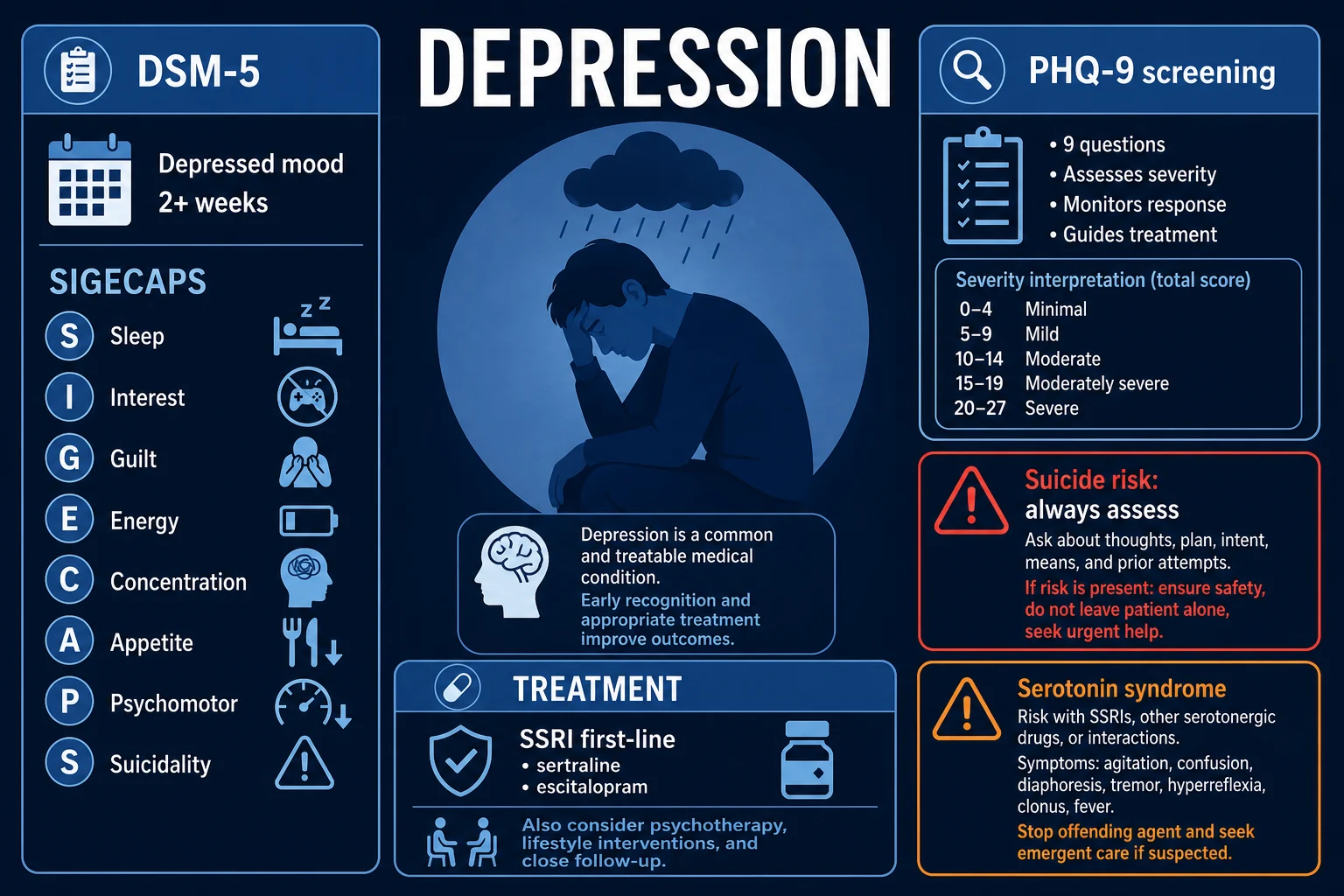
SIGECAPS — the nine depressive symptoms (prescribe capsules for depression)
SIGECAPS
Insomnia or hypersomnia, nearly every day
Anhedonia — diminished interest or pleasure
Worthlessness or excessive/inappropriate guilt
Fatigue or loss of energy
Diminished ability to think, or indecisiveness
Significant weight loss or gain; appetite change
Psychomotor retardation or agitation (observable, not just felt)
Recurrent thoughts of death or suicide, or a suicide attempt/plan
The mnemonic SIGECAPS encodes all nine criterion symptoms; depressed mood itself is added separately (Sleep, Interest, Guilt, Energy, Concentration, Appetite, Psychomotor, Suicide — plus Mood). For a diagnosis, 5 or more must be present for 2 or more weeks, including depressed mood or anhedonia. [1]
Epidemiology & Risk Factors
Depression — key numbers
- Prevalence: Lifetime prevalence approximately 15 to 17 percent; 12-month point prevalence around 5 to 7 percent. More than 300 million people affected worldwide (WHO).
- Sex: Females affected twice as often as males (2:1); the sex difference emerges at puberty and narrows after menopause.
- Age: Mean age of onset is the late teens to mid-20s (median about 25 years), but it may present at any age.
- Recurrence: Highly recurrent — after one episode the relapse risk is about 50 percent, after two episodes about 70 percent, and after three episodes approximately 90 percent.
- Socioeconomic: Higher rates with unemployment, low income, social isolation, urban dwelling, and chronic stress.
- Genetic risk factors: Heritability approximately 35 to 40 percent (twin studies). First-degree relatives have a 2- to 3-fold increased risk. The polygenic contribution involves many loci of small effect (no single "depression gene"); serotonin-transporter-linked polymorphic region (5-HTTLPR) interaction with stress is the classic gene-environment example.
- Psychosocial risk factors: Adverse childhood experiences (abuse, neglect, parental loss), recent stressful life events (loss, humiliation, entrapment), chronic interpersonal difficulty, low social support, domestic violence, and bereavement.
- Medical associations: Chronic pain, cardiovascular disease, stroke, Parkinson's disease, multiple sclerosis, cancer, hypothyroidism, chronic kidney disease, HIV, dementia, diabetes, and the postpartum period.
- Substance use: Alcohol misuse, benzodiazepine dependence, stimulant use and withdrawal, and opioid misuse all elevate risk. [1]
Pathophysiology
No single mechanism explains depression; current models integrate monoamine neurochemistry, neuroendocrine stress systems, neuroplasticity, inflammation, and psychosocial stress. [1]
1. Monoamine hypothesis (the classic pharmacological model). Depression is associated with functional deficiency of the monoamine neurotransmitters serotonin (5-HT) and noradrenaline, and to a lesser degree dopamine, in central synapses. Reserpine (depletes monoamines) and methyldopa precipitated depression, while drugs that increase synaptic monoamines (TCAs, MAOIs, SSRIs) relieve it. The therapeutic delay of antidepressants (weeks) despite immediate monoamine elevation showed the model is incomplete — downstream receptor down-regulation (e.g., presynaptic 5-HT1A autoreceptor desensitisation) and adaptive neuroplastic changes are required for clinical effect. [1]
2. Neuroendocrine — HPA axis dysregulation. Chronic stress activates the hypothalamic-pituitary-adrenal (HPA) axis, producing hypercortisolaemia. Roughly half of depressed patients fail to suppress cortisol on the dexamethasone suppression test (non-suppression correlates with melancholic/psychotic depression and predicts relapse). Sustained cortisol is neurotoxic to the hippocampus. [1]
3. Neurotrophin and neuroplasticity hypothesis. Brain-derived neurotrophic factor (BDNF) is reduced in the hippocampus and prefrontal cortex in depression and is normalised by antidepressant treatment, ECT, exercise, and repeated ketamine. Stress reduces hippocampal BDNF and impairs neurogenesis; antidepressants promote hippocampal neurogenesis over weeks — a candidate mechanism for the therapeutic lag. Volume loss of the hippocampus (8 to 10 percent reduction) and the subgenual anterior cingulate cortex is seen in recurrent depression. [1]
4. Neuroinflammation / cytokine hypothesis. About one-third of depressed patients show raised inflammatory markers (C-reactive protein, interleukin-6, tumour necrosis factor-alpha). Administration of interferon-alpha or interleukin-2 induces depression-like symptoms (sickness behaviour: anhedonia, fatigue, anorexia, sleep disturbance), supporting a cytokine-driven phenotype (especially with somatic symptoms and treatment resistance). [1]
5. Glutamate and rapid-acting model. Dysfunction of the glutamatergic system underlies the rapid antidepressant effect of ketamine (NMDA-receptor antagonist), which produces improvement within hours via synaptogenesis and BDNF/mTOR signalling — distinct from the monoamine delay. [1]
6. Cognitive and psychological models. Beck's cognitive triad describes negative views of the self, the world, and the future; automatic negative thoughts and cognitive distortions (overgeneralisation, catastrophising) are causal and modifiable by cognitive behavioural therapy. Learned helplessness (Seligman), arising from uncontrollable stress, parallels the motivational deficit of depression. [1]
7. Sleep architecture. Depression shortens sleep-onset latency, reduces slow-wave (stage N3) sleep, brings REM latency forward (shortened), and increases REM density — biological markers that normalise with recovery and ECT. [1]
[1]Clinical Presentation
The presentation is heterogeneous. The core features are depressed mood and anhedonia; surrounding symptoms cluster into emotional, cognitive, behavioural, somatic, and vegetative domains. Symptoms must be present most of the day, nearly every day for at least 2 weeks and represent a change from baseline. [1]
- Mood: Pervasive sadness, emptiness, "feeling flat", hopelessness, tearfulness, irritability (especially in adolescents, men, and the elderly). Children may present with irritability rather than sadness.
- Anhedonia: Loss of interest or pleasure in usually enjoyable activities; reduced reactivity.
- Cognition: Poor concentration, slowed thinking (bradyphrenia), indecisiveness, rumination, impaired short-term memory, negative cognitive triad, excessive or delusional guilt, suicidal ideation.
- Vegetative/somatic: Insomnia (early, middle, or terminal — early-morning wakening in melancholic depression) or hypersomnia; appetite/weight loss or gain; fatigue, loss of energy; loss of libido; constipation; generalised aches.
- Psychomotor: Retardation (slowed movement and speech, reduced facial expressiveness) or agitation (pacing, hand-wringing).
- Thought content: Worthlessness, hopelessness, helplessness, preoccupation with death, recurrent suicidal ideation, and (in psychotic depression) nihilistic, hypochondriacal, or persecutory delusions (mood-congruent). [1]
Atypical presentations
- Elderly: Often presents with somatic complaints, cognitive impairment ("pseudodementia"), agitation, somatic delusions, or unexplained pain rather than reporting sadness. Multiple physical complaints, weight loss, and refusal to eat may dominate. Suicide risk is high (especially elderly men). Onset after age 60 ("vascular depression") is associated with white-matter changes and executive dysfunction.
- Adolescents: Irritability, academic decline, school refusal, social withdrawal, conduct disturbance, self-harm, eating change, substance use — rather than verbalised depressed mood. Sleep and appetite may increase.
- Children: Somatic complaints (headaches, abdominal pain), school refusal, separation anxiety, behavioural regression, decline in school performance.
- Pregnancy and postpartum: Peripartum onset (within 4 weeks of delivery per DSM; clinically often up to 12 months). May include thoughts of harming the infant — must be asked about directly.
- Men: May present with anger, irritability, substance use, risk-taking, or work underperformance rather than acknowledged sadness; higher completed-suicide rate.
- Medically ill / immunocompromised: Symptoms overlap with the underlying disease (fatigue, anorexia, weight loss); assess anhedonia, guilt, hopelessness, and suicidal ideation, which are more specific to depression.
- Cultural: Some cultures emphasise somatic ("nerves", weakness, body heat) rather than affective complaints; culture-bound idioms must be elicited. [1]
Differential Diagnosis
A broad differential must be excluded because organic causes are reversible and antidepressants can be harmful if misdiagnosed (e.g., precipitating mania in bipolar depression). At least three distinguishing features are given for each. [1]
Bipolar depression
- History of at least one manic/hypomanic episode (screen with MDQ; ask about elevated mood, reduced sleep need, racing thoughts)
- Earlier age of onset, family history of bipolar, more atypical features
- Antidepressant monotherapy can trigger mania/hypomania/cycling — always screen for past hypomania before prescribing
Normal grief / bereavement
- Symptoms come in waves/pangs with preserved self-esteem; between waves the person functions
- Thought content centres on the deceased (not on worthlessness/hopelessness)
- Guilt is typically about the deceased ('I should have done more') rather than nihilistic self-blame
- May include a sense of the deceased's presence — not frank delusions
Adjustment disorder
- Onset within 3 months of an identifiable stressor, resolves within 6 months of stressor ending
- Does not meet full criteria for a major depressive episode
- Predominant features may be anxiety, conduct, or depressed mood
Persistent depressive disorder (dysthymia)
- Chronic depressed mood for at least 2 years (more days than not)
- Fewer/severity of symptoms than MDD at any one time but unremitting
- Often coexists with superimposed major depressive episodes ('double depression')
Substance-induced / medication-induced
- Temporal link to intoxication or withdrawal (alcohol, cocaine, opioids, benzodiazepines)
- Offending drugs: corticosteroids, interferon-alpha, isotretinoin, mefloquine, propranolol (controversial), combined oral contraceptive
- Resolves after substance cessation or medication withdrawal
Organic medical causes
- Hypothyroidism (check TSH), anaemia (FBC, ferritin, B12, folate)
- Hyperparathyroidism (hypercalcaemia), Cushing syndrome, Addison disease
- Parkinson disease, multiple sclerosis, stroke, dementia (esp. subcortical vascular)
- Vitamin D deficiency, occult malignancy, HIV, neurosyphilis
Dementia vs depressive pseudodementia
- Pseudodementia: abrupt onset, 'I don't know' answers, poor effort, variable performance, prominent depressed mood, improves with depression treatment
- Dementia: insidious onset, confabulated/near-miss answers, effort to answer, worsening course
- Pseudodementia patients complain bitterly about memory; dementia patients minimise deficits
Schizophrenia / schizoaffective
- Prominent psychotic features occur in the absence of mood symptoms
- Negative symptoms (alogia, avolition, blunting) can mimic depression
- Mood symptoms in schizoaffective disorder are present for the majority of the illness duration
Anxiety disorders
- Primary complaint is fear/apprehension rather than anhedonia
- Comorbidity very common — up to 60 percent of depressed patients have a comorbid anxiety disorder
- Antidepressants treat both, but distinguish to guide psychotherapy
Premenstrual dysphoric disorder
- Symptoms confined to the luteal phase, resolving shortly after menses begins
- Mood lability, irritability, tension
- Diagnosis requires prospective symptom diary over at least 2 cycles
Clinical & Bedside Assessment
Diagnosis is clinical, based on history and mental state examination. A structured assessment covers the present episode, psychiatric and medical history, drug and alcohol use, family history, psychosocial context, and risk. [1]
Mental state examination (MSE) in depression
- Appearance/behaviour: Psychomotor retardation (slow movement, reduced gestures, stooped posture, poor eye contact) or agitation; poor self-care; tearfulness; sometimes unkempt.
- Speech: Slow, low volume, long latency (retardation) — may progress to mutism in severe/catatonic depression.
- Mood (subjective) and affect (objective): Subjectively low; objectively constricted, blunted, or flat. Mood may be reactive (atypical) or non-reactive (melancholic).
- Thought: Slow (bradyphrenia), rumination, hopelessness, worthlessness, helplessness, guilt, suicidal/homicidal ideation; in psychotic depression — delusions of guilt, ruin, nihilism (Cotard syndrome — belief one is dead or organs are rotting), hypochondriacal or persecutory delusions.
- Perception: Second-person auditory hallucinations (derogatory) in psychotic depression; often mood-congruent.
- Cognition: Impaired attention and concentration; short-term memory reduced (pseudodementia pattern in the elderly).
- Insight: Usually preserved early; may be impaired in severe or psychotic depression. [1]
Suicide risk assessment — mandatory at every contact
Use a structured framework (e.g., the Columbia Suicide Severity Rating Scale, C-SSRS). Assess: [1]
- Ideation — passive (thoughts of being dead) vs active (thoughts of killing oneself); frequency, intensity, duration.
- Plan — specificity, lethality, method chosen.
- Intent — stated desire to act.
- Means — access to firearms, medication (especially antidepressants — prescribe limited quantities; tricyclics are lethal in overdose), ligature points.
- Preparatory acts — giving away possessions, writing a will, rehearsal, saying goodbye.
- Protective factors — family/responsibilities, religious/moral objection, future plans, social support, engagement with treatment.
- Risk factors — previous attempts (strongest predictor), male sex, older or adolescent age, living alone, unemployment, substance misuse, recent loss, chronic pain, hopelessness, psychotic depression, bipolar depression, access to lethal means. [1]
Risk stratification: any active plan plus intent plus means = high risk — do not leave alone; arrange urgent psychiatric assessment, consider admission, remove means, involve crisis team. Passive ideation without plan = lower risk but still arrange follow-up within 24 to 48 hours and a safety plan. [1]
SAD PERSONS — suicide risk factors
SADPERSONS
Male (completed suicide)
Elderly or adolescent/young adult
Especially severe, hopeless, or psychotic
Strongest single risk factor
Alcohol or substance misuse
Psychosis, delusions, command hallucinations
Isolation, living alone, unemployed
Specific, lethal method, rehearsals
Separated, widowed, divorced
Chronic medical illness, chronic pain, terminal disease
Investigations
There is no biological test for depression. Investigations aim to exclude organic mimics, establish a baseline before psychotropic drugs, and screen for comorbidity. [1]
- Bloods: Full blood count (anaemia), urea and electrolytes (chronic kidney disease, hyponatraemia), liver function tests, thyroid-stimulating hormone (TSH) (hypothyroidism is the classic mimic), vitamin B12 and folate, 25-hydroxyvitamin D, fasting glucose/HbA1c, lipid profile, calcium (hyperparathyroidism), and consider HIV/syphilis serology where indicated.
- Baseline before drug treatment: Weight, height, BMI, blood pressure, pulse, and (before QT-prolonging drugs such as citalopram/escitalopram) an ECG in patients with cardiac disease, electrolyte disturbance, the elderly, or those on other QT-prolonging drugs.
- Substance screen: Urine drug screen and alcohol history (AUDIT / CAGE) where suspected.
- Neuroimaging (CT/MRI brain): Only if focal neurology, new-onset psychosis, cognitive impairment, late-onset depression (over 55) with atypical features, or before ECT.
- EEG: Not routine; to distinguish pseudodementia or atypical presentations. [1]
Validated rating scales (reproduced for examination use)
PHQ-9 (Patient Health Questionnaire-9) — self-report of the nine DSM criteria over the last 2 weeks (0 = not at all to 3 = nearly every day; maximum score 27). Question 9 screens for suicidality. [1]
- 1 to 4: minimal/none
- 5 to 9: mild
- 10 to 14: moderate
- 15 to 19: moderately severe
- 20 to 27: severe
- A score of 10 or more has a sensitivity and specificity of approximately 88 percent for major depression. A change of 5 points is the minimal clinically important difference. [1]
HAM-D / HDRS-17 (Hamilton Depression Rating Scale) — clinician-rated (maximum score 52): [1]
- 0 to 7: normal (no depression)
- 8 to 13: mild
- 14 to 18: moderate
- 19 to 22: severe
- 23 or more: very severe
- Response is defined as a 50 percent reduction from baseline; remission as a final score of 7 or less. [1]
MADRS (Montgomery-Asberg Depression Rating Scale) — clinician-rated, 10 items, sensitive to change (maximum score 60): [1]
- 0 to 6: normal/suspected
- 7 to 19: mild
- 20 to 34: moderate
- 35 to 60: severe [1]
BDI-II (Beck Depression Inventory-II) — self-report, 21 items (maximum score 63): [1]
- 0 to 13: minimal
- 14 to 19: mild
- 20 to 28: moderate
- 29 to 63: severe [1]
CGI (Clinical Global Impression) — severity and improvement scales, 1 to 7. [1]
Rating scales — score-to-severity bands at a glance
Management — Resuscitation
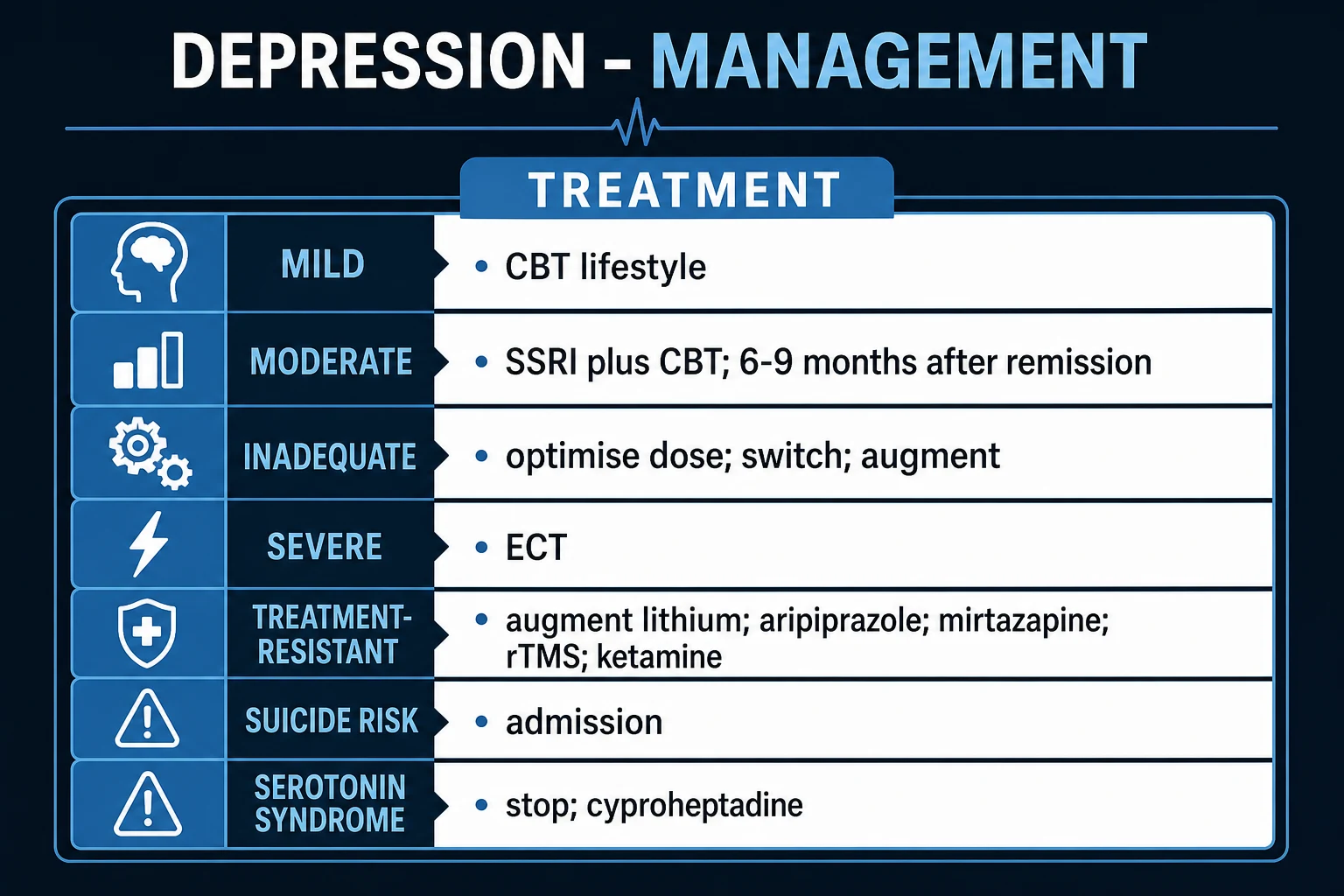
Depression itself is rarely a physiological emergency, but several presentations are time-critical: [1]
- Suicidal ideation with plan, intent, and means (acute suicide risk): Do not leave the patient alone. Remove means (medications, ligature points, firearms). Arrange urgent psychiatric assessment and consider involuntary admission under the relevant Mental Health Act if the patient lacks capacity or refuses admission and risk is high. Involve the crisis resolution/home treatment team. Prescribe antidepressants in limited quantities (especially tricyclics, which are lethal in overdose — avoid in those at active suicide risk).
- Catatonia with refusal to eat or drink: Medical emergency from dehydration and malnutrition. Admit; urgent ECT is first-line; a lorazepam challenge (1 to 2 mg IM) may produce dramatic but temporary improvement.
- Psychotic depression with severe self-neglect or command hallucinations to self-harm: Admit; treat with antidepressant plus antipsychotic, or ECT.
- Severe malnutrition or dehydration from profound retardation: Admit for nutrition/hydration and physical monitoring.
- Serotonin syndrome (iatrogenic): agitation, confusion, clonus, hyperreflexia, autonomic instability (tachycardia, hypertension, hyperthermia, sweating, diarrhoea), rigidity (severe). Stop all serotonergic agents; give benzodiazepines, active cooling, and (in severe cases) cyproheptadine. Diagnose with the Hunter Serotonin Toxicity Criteria (spontaneous clonus, inducible clonus plus agitation/agitation plus diaphoresis, ocular clonus plus agitation, tremor plus hyperreflexia, hypertonia plus temperature over 38 with ocular or inducible clonus). Onset is within hours; can be fatal. [1]
Management — Definitive & Stepwise
Treatment is stepped, matched to severity, and combines pharmacotherapy, psychological therapy, and social interventions. The bio-psycho-social model applies throughout. [1]
Step 1 — Recognition, assessment, psychoeducation, and risk
Establish the diagnosis, exclude organic/bipolar causes, assess suicide risk, explain the condition (it is common, treatable, biological, and tends to recur), agree a treatment plan, and address modifiable stressors and substance use.
Step 2 — Mild depression: low-intensity interventions
- Guided self-help based on CBT principles.
- Behavioural activation — structured re-introduction of rewarding activities.
- Group CBT, group mindfulness, or computerised CBT (cCBT, e.g., Beating the Blues).
- Exercise — moderate-intensity, 3 sessions per week (Cochrane-supported modest benefit).
- Sleep hygiene and problem-solving.
- For mild depression, antidepressants are not routinely first-line; consider them only if symptoms persist, history of moderate/severe episodes, or patient preference after an inadequate response to low-intensity care.
Step 3 — Mild to moderate depression not responding, or moderate depression
High-intensity psychological intervention (CBT, interpersonal therapy IPT, or behavioural activation) OR an antidepressant, chosen with the patient. Combination (antidepressant plus high-intensity psychotherapy) is the most effective first-line option for moderate-to-severe depression (NICE).[3]
Step 4 — Moderate to severe depression: antidepressant plus psychotherapy
Initiate an SSRI as first-line, combined with high-intensity CBT or IPT, with structured follow-up.
Step 5 — Severe, treatment-resistant, psychotic, or catatonic depression
Combination and augmentation strategies, ECT, and specialist multidisciplinary input (see below).
Pharmacological therapy — antidepressants by class
SSRIs (selective serotonin reuptake inhibitors) — first-line. Inhibit reuptake of serotonin at the synaptic cleft; safer in overdose than older agents. [1]
| Drug | Starting dose | Typical effective/max | Key points |
|---|---|---|---|
| Sertraline | 50 mg OD | 50 to 200 mg OD | First-line (NICE, BAP); best evidence in cardiac disease; least drug interactions; first-line in pregnancy and post-MI |
| Fluoxetine | 20 mg OD | 20 to 60 mg OD | First-line in children and adolescents (TADS); long half-life (least discontinuation syndrome); activating; approved down to age 8 |
| Citalopram | 20 mg OD | 20 to 40 mg OD (max 20 mg if over 65) | Dose-dependent QT prolongation (MHRA); ECG if cardiac risk; least sedating |
| Escitalopram | 10 mg OD | 10 to 20 mg OD (max 10 mg if over 65) | QT prolongation (like citalopram); among the most effective (Cipriani 2018) |
| Paroxetine | 20 mg OD | 20 to 50 mg OD | Most sedating SSRI; most discontinuation syndrome (short half-life); avoid in pregnancy (cardiac defects); most sexual dysfunction and weight gain |
| Fluvoxamine | 50 mg OD | 100 to 300 mg OD | Useful in OCD; multiple interactions |
Common SSRI adverse effects: nausea/GI upset (transient), headache, agitation/insomnia, sexual dysfunction (anorgasmia, reduced libido, delayed ejaculation), sweating, hyponatraemia due to SIADH (especially elderly — check sodium), increased bleeding risk (platelet dysfunction — caution with NSAIDs/warfarin/DOACs), and rarely serotonin syndrome. [1]
SNRIs (serotonin-noradrenaline reuptake inhibitors).
- Venlafaxine — start 75 mg OD (37.5 mg if anxious), titrate to max 375 mg/day; more effective at higher doses; raises blood pressure (monitor BP, especially over 150 mg/day); severe discontinuation syndrome.
- Duloxetine — 30 to 60 mg OD, max 120 mg/day; also licensed for neuropathic pain and stress incontinence; check BP. [1]
Norepinephrine-dopamine reuptake inhibitor (NDRI).
- Bupropion — 150 to 300 mg/day; activating, no sexual dysfunction or weight gain; lowers seizure threshold (avoid in eating disorders, seizure disorders, alcohol withdrawal); also used for smoking cessation. [1]
Atypical / 5-HT modulators.
- Mirtazapine — 15 to 45 mg at night; sedating (histamine), weight gain; useful when insomnia/poor appetite dominate; combines safely with SSRIs/SNRIs ("California rocket fuel").
- Trazodone — 150 to 300 mg/day; very sedating (alpha-1 blockade); useful for insomnia; rare priapism.
- Vortioxetine — 5 to 20 mg; pro-cognitive claims; low sexual dysfunction.
- Vilazodone — 10 to 40 mg; 5-HT1A partial agonist.
- Agomelatine — 25 to 50 mg at night; melatonergic; check LFTs (hepatotoxicity); sleep-restoring, no sexual dysfunction. [1]
Tricyclic antidepressants (TCAs) — second-line, lethal in overdose. Inhibit reuptake of serotonin and noradrenaline; also block histamine (sedation), muscarinic (anticholinergic), and alpha-1 (postural hypotension) receptors, and sodium channels (cardiotoxic in overdose — QT prolongation, QRS widening, arrhythmia).
- Amitriptyline — 75 to 150 mg at night (start 25 to 50 mg); also used for neuropathic pain and migraine prophylaxis.
- Nortriptyline — therapeutic plasma level 50 to 150 ng/mL; less sedating than amitriptyline.
- Imipramine, clomipramine (also for OCD), lofepramine (less toxic in overdose — preferred if a TCA is needed).
- Contraindicated immediately post-MI, in cardiac conduction defects, severe hepatic disease, prostatism, glaucoma, and epilepsy. Avoid in patients at risk of suicide (narrow therapeutic window — a 2-week supply can be fatal). [1]
Monoamine oxidase inhibitors (MAOIs) — specialist use.
- Phenelzine, tranylcypromine (irreversible, non-selective), moclobemide (reversible inhibitor of MAO-A, RIMA).
- Risk of hypertensive "cheese" crisis with tyramine-rich foods (aged cheese, cured meats, fermented soy, red wine) — dietary restriction needed for irreversible MAOIs.
- Fatal interaction with serotonergic drugs (SSRIs, tramadol, pethidine, dextromethorphan, St John's wort) — serotonin syndrome; a washout of at least 2 weeks (5 weeks after fluoxetine) is required before switching.
- Useful for atypical depression. [1]
Reproduction of doses for high-yield drugs (memorise):
- Sertraline 50 mg OD start, max 200 mg OD.
- Fluoxetine 20 mg OD start, max 60 mg OD.
- Citalopram 20 mg OD, max 40 mg OD (20 mg OD if over 65, hepatic impairment, or QT risk).
- Mirtazapine 15 to 45 mg at night.
- Venlafaxine 75 to 375 mg/day, monitor BP.
- Amitriptyline 75 to 150 mg at night. [1]
Prescribing principles
- Start low, go slow; review at 1 to 2 weeks (for tolerability and emerging suicidality) and at 4 weeks for efficacy.
- Full effect takes 4 to 6 weeks. If partial response, continue to 8 weeks before declaring failure.
- Treat for at least 6 to 9 months after remission for a first episode; longer (at least 2 years, often indefinite) for recurrent depression (3 or more episodes, severe episodes, residual symptoms, strong family history).
- Do not stop abruptly — taper over at least 4 weeks to avoid discontinuation syndrome (most pronounced with paroxetine and venlafaxine; least with fluoxetine).
- Choose drug by previous response, side-effect profile, comorbidity, interactions, and pregnancy status. If one SSRI is effective in a family member, that agent is favoured.
- Augmentation strategy after inadequate response to two antidepressant trials:
- Increase dose to maximum tolerated.
- Switch class (SSRI to SNRI, or to mirtazapine, bupropion, TCA).
- Augment with lithium (monitor plasma level 0.4 to 0.8 mmol/L, check renal/thyroid function, ECG in older patients) — robust evidence.
- Augment with triiodothyronine (T3) 25 to 50 micrograms.
- Augment with an atypical antipsychotic — aripiprazole (5 to 15 mg), quetiapine (50 to 300 mg), olanzapine — all licensed as adjuncts in MDD.
- Combination antidepressants (e.g., SSRI plus mirtazapine or bupropion).
- Brain stimulation — see below. [1]
FINISH — antidepressant discontinuation syndrome
FINISH
Myalgia, fatigue, chills, headache
Vivid dreams, nightmares
GI upset, abdominal cramps
Dizziness, light-headedness, vertigo
Paraesthesiae, 'electric shocks' / brain zaps
Anxiety, agitation, irritability
Onset is within days of stopping; duration 1 to 2 weeks (longer with long-acting fluoxetine accumulation). Worst with paroxetine and venlafaxine (short half-lives); least with fluoxetine (long half-life of norfluoxetine). [1]
Non-pharmacological biological therapies
- Electroconvulsive therapy (ECT) — most effective acute treatment for severe, psychotic, catatonic, or treatment-resistant depression, and for depression in pregnancy where drugs are contraindicated. Bilateral (or unilateral for cognitive sparing) under general anaesthetic; typically 6 to 12 treatments, 2 to 3 times per week. Rapid effect (within days). Side effects: transient confusion and anterograde/retrograde memory loss (usually recovers over weeks; some persistent gaps). Consent and (in urgent cases) Mental Health Act authority required.[2]
- Repetitive transcranial magnetic stimulation (rTMS) — high-frequency stimulation of the left dorsolateral prefrontal cortex; non-invasive, no anaesthetic; for treatment-resistant depression.
- Transcranial direct current stimulation (tDCS) — emerging.
- Vagus nerve stimulation (VNS) — implanted; chronic/recurrent.
- Deep brain stimulation (DBS) — research/specialist centres.
- Ketamine (intravenous) and esketamine (intranasal, Spravato) — NMDA-receptor antagonists producing rapid (within hours) but transient antidepressant and anti-suicidal effects; specialist use for treatment-resistant depression; monitor for dissociation, BP rise, and potential for misuse.
Psychological therapies
- Cognitive behavioural therapy (CBT) — modifies negative automatic thoughts and cognitive distortions (Beck's triad of self/world/future); first-line for mild-moderate and in combination for severe.
- Interpersonal therapy (IPT) — focuses on role transitions, grief, interpersonal disputes, and deficits.
- Behavioural activation — scheduling of rewarding activities; simple, effective.
- Mindfulness-based cognitive therapy (MBCT) — reduces relapse in recurrent depression when used in remission.
- Psychodynamic psychotherapy — for selected patients with chronic interpersonal difficulties.
- Couples/family therapy, problem-solving therapy, and guided self-help.
Social interventions
Address housing, finances, debt, employment, social isolation, domestic violence, and carer support. Signpost to peer support and voluntary organisations.
Specific Subtypes & Scenarios
- Single episode vs recurrent: Recurrent course (2 or more episodes) predicts further recurrence and warrants maintenance treatment for at least 2 years.
- Psychotic depression: Antidepressant plus antipsychotic (e.g., sertraline plus aripiprazole), or ECT; high recurrence and suicide risk; often needs maintenance antipsychotic.
- Catatonic depression: Urgent ECT is first-line; lorazepam 1 to 2 mg IM may give transient relief; address hydration/nutrition.
- Seasonal affective disorder (SAD): Autumn-winter onset with atypical features (hypersomnia, hyperphagia, weight gain, fatigue); treatment = light therapy (10,000 lux for 30 minutes each morning) plus SSRI/bupropion (bupropion XL is licensed for SAD prevention).
- Peripartum / postnatal depression: Onset during pregnancy or within 4 weeks of delivery (clinically up to 12 months). Always ask about thoughts of harming the infant. Treat aggressively — untreated depression harms mother-infant bonding and child development. Sertraline is preferred (lowest transfer into breast milk); ECT is safe and effective in severe/psychotic postpartum depression. Distinguish from transient "baby blues" (days 3 to 10, self-limiting) and postpartum psychosis (emergency, often bipolar-spectrum).
- Premenstrual dysphoric disorder (PMDD): Marked affective lability, irritability, depressed mood, and somatic symptoms in the luteal phase, resolving with menstruation; diagnose by prospective diary over at least 2 cycles; treat with SSRIs (continuous or luteal-phase dosing), combined oral contraceptive (drospirenone/ethinyl estradiol), or CBT.
- Persistent depressive disorder (dysthymia): Chronic depressed mood for 2 or more years; treat with CBT plus SSRI; "double depression" when a major episode is superimposed.
- Disruptive mood dysregulation disorder (DMDD): Children aged 6 to 18; severe recurrent temper outbursts grossly out of proportion, with persistently irritable/angry mood between outbursts, present 12 months or more; treat with parent training, CBT, and avoid stimulant-triggered mood diagnoses.
- Treatment-resistant depression (TRD): Failure to respond to two adequate trials of antidepressants (adequate dose, adequate duration of 6 to 8 weeks). Stepwise: optimise dose and adherence, switch class, augment (lithium, T3, atypical antipsychotic), combine, brain stimulation, ECT, ketamine.
- Vascular depression (late-onset): Onset after 55 to 60 with executive dysfunction, apathy, white-matter hyperintensities on MRI; poorer response to antidepressants; favours augmentation and management of vascular risk factors.
- Secondary depression: Treat the underlying cause (e.g., hypothyroidism) and the depression; drug-induced cases resolve on withdrawal. [1]
Complications & Pitfalls
- Suicide — the most important complication; completed suicide in approximately 10 to 15 percent of severely depressed patients (lifetime). Highest in older men, those with previous attempts, hopelessness, substance misuse, and psychotic or bipolar depression.
- Self-harm and suicide attempts, especially early in treatment — hence the 1 to 2 week review.
- Functional impairment — occupational, academic, social, and marital; absenteeism and presenteeism.
- Substance misuse — alcohol and drugs as self-medication, worsening the course.
- Cognitive impairment — concentration and memory deficits; pseudodementia in the elderly; possibly increased dementia risk with chronic untreated depression.
- Medical consequences — poor adherence to treatment of diabetes, cardiovascular disease, and HIV; increased mortality after myocardial infarction and stroke.
- Relapse and chronicity — recurrence risk rises with each episode; residual symptoms predict relapse.
- Antidepressant adverse effects:
- GI upset, headache, sexual dysfunction, sweating (SSRIs).
- Hyponatraemia (SIADH) — especially in the elderly; check sodium if confusion/drowsiness.
- Bleeding — platelet dysfunction (caution with NSAIDs, anticoagulants).
- QT prolongation — citalopram/escitalopram; max 40 mg (20 mg if over 65).
- Serotonin syndrome — see Resuscitation.
- Discontinuation syndrome (FINISH) — taper over 4 or more weeks.
- Switching to mania in bipolar depression — always screen for past hypomania.
- TCA cardiotoxicity in overdose (sodium-channel blockade — QRS widening, arrhythmia, hypotension, seizures) — avoid where suicide risk.
- MAOI hypertensive crisis and serotonin syndrome with serotonergic drugs.
- Weight gain, metabolic syndrome (mirtazapine, paroxetine, TCAs).
- Diagnostic pitfalls: missing bipolar depression (and triggering mania), missing organic causes (hypothyroidism, anaemia, B12, drug-induced), confusing grief with depression, and under-treating psychotic or catatonic depression (ECT delayed). [1]
Prognosis & Disposition
- First episode: approximately 50 percent recover fully; of those who recover, around 50 percent relapse within 2 years.
- Recurrence risk rises with each episode: 50 percent after one, 70 percent after two, 90 percent after three or more — justifying maintenance treatment after 2 to 3 episodes.
- Predictors of good outcome: early and vigorous treatment, good social support, no comorbidity, late age of onset of first episode of certain subtypes, good response to first treatment.
- Predictors of poor outcome: chronicity, psychotic features, comorbid anxiety/substance use/personality disorder, cognitive impairment, medical comorbidity, family history of bipolar disorder, non-adherence, severe psychosocial stressors.
- Mortality: raised from suicide, cardiovascular disease, and poor self-care. Depression reduces life expectancy.
- Disposition: most patients are managed in primary care with psychological therapy and an SSRI. Indications for psychiatric referral or admission: active suicide risk, psychotic features, catatonia, severe self-neglect, diagnostic uncertainty (suspected bipolar, organic cause), treatment resistance, need for ECT, child-protection concerns, and severe peripartum depression. Discharge planning includes a written safety plan, crisis contacts, follow-up within 1 to 2 weeks of starting treatment, and clear escalation pathways. [1]
Special Populations
Pregnancy and breastfeeding
- Treat actively — untreated antenatal depression harms mother and fetus (poor nutrition, substance use, non-attendance, postnatal depression, impaired bonding).
- Sertraline is preferred (lowest transfer into breast milk and least teratogenic signal); fluoxetine and citalopram are alternatives.
- Paroxetine is best avoided in the first trimester (associations with cardiac septal defects) and third trimester (neonatal irritability/poor neonatal adaptation syndrome).
- Do not stop antidepressants abruptly in pregnancy — relapse risk is high.
- ECT is safe and effective in pregnancy for severe/psychotic depression.
- Avoid MAOIs (hypertensive crisis, teratogenicity); avoid TCAs in overdose risk; bupropion has congenital cardiac concerns.
- Coordinate with obstetrics and perinatal mental health services; beware of postpartum psychosis (a separate emergency, usually bipolar-spectrum).
Elderly
- Higher completed-suicide risk (especially elderly men). Lower starting dose ("start low, go slow") — sertraline 25 to 50 mg, citalopram 10 to 20 mg (max 20 mg).
- Beware hyponatraemia (SIADH) and falls — check sodium.
- Beware QT prolongation — ECG before citalopram/escitalopram.
- Watch for pseudodementia, somatic and psychotic presentations, and drug interactions (polypharmacy).
- ECT is safe, effective, and often preferred in severe/psychotic/catatonic elderly depression. [1]
Children and adolescents
- Fluoxetine is first-line (most evidence; TADS showed fluoxetine plus CBT best). Sertraline and escitalopram are alternatives.
- CBT and IPT are first-line psychosocial treatments.
- Black-box warning: antidepressants may increase suicidality in those under 25 — close monitoring in the first 1 to 4 weeks.
- Avoid TCAs (cardiotoxic, poorly tolerated, limited evidence) and paroxetine (increased suicidality).
- Family involvement, school liaison, and safeguarding assessment are essential.
Patients with comorbid medical conditions
- Post-myocardial infarction / cardiac disease: sertraline is the SSRI of choice (safe on cardiac conduction; SERTRAP trial). Avoid TCAs (arrhythmogenic).
- Epilepsy: SSRIs (sertraline, citalopram) preferred; avoid bupropion (lowers seizure threshold).
- Hepatic impairment: reduce doses; avoid agomelatine (hepatotoxic); monitor LFTs.
- Renal impairment: reduce doses of renally cleared drugs (e.g., duloxetine, lithium).
- Diabetes: SSRIs may initially worsen glycaemic control, then stabilise; mirtazapine/paroxetine/TCAs worsen weight.
- Bleeding risk / anticoagulated: SSRIs increase bleeding — consider mirtazapine or bupropion; co-prescribe a proton-pump inhibitor if NSAIDs also used.
Evidence, Guidelines & Regional Differences
[1] [1]Landmark evidence
- Cipriani et al. 2018 (Lancet, network meta-analysis of 21 antidepressants in 522 trials): all 21 antidepressants were more efficacious than placebo; agomelatine, amitriptyline, escitalopram, mirtazapine, paroxetine, venlafaxine, and vortioxetine were the most effective; fluoxetine was the most tolerable. Head-to-head, amitriptyline, escitalopram, and mirtazapine had the best efficacy-tolerability balance.[3]
- STAR*D (Sequenced Treatment Alternatives to Relieve Depression): remission with citalopram at level 1 was about 28 to 33 percent; cumulative remission across four sequential levels approached 70 percent, but relapse rates were high — emphasising the chronicity of TRD.
- Mutz et al. 2019 (BMJ, network meta-analysis of brain stimulation): ECT was the most effective acute treatment for severe depression; rTMS also effective.[2]
- TADS (Treatment for Adolescents with Depression Study): fluoxetine plus CBT was the most effective and safest treatment for adolescent depression; fluoxetine alone increased suicidality signals — supports combination treatment and monitoring.
- GBD studies: depression is the single largest contributor to non-fatal health loss (years lived with disability) globally.
- MHRA/EMA warnings: citalopram and escitalopram QT prolongation (dose limits); antidepressant-related suicidality in under-25s.
Controversies
- Whether antidepressants are over-prescribed for mild depression (NICE now limits first-line use).
- The role of inflammation and the gut microbiome (emerging).
- Long-term risks of antidepressant use (sexual dysfunction, weight gain, withdrawal).
- Efficacy of ketamine/esketamine for routine TRD and suicide prevention.
- Whether screening programmes in primary care improve outcomes.
Exam Pearls
- Diagnosis: 5 or more symptoms for 2 or more weeks, including depressed mood or anhedonia (SIGECAPS).
- SSRIs are first-line; sertraline is the default; full effect 4 to 6 weeks; review at 1 to 2 weeks for suicidality.
- Serotonin syndrome — agitation, confusion, clonus, hyperreflexia, autonomic instability, hyperthermia (after SSRI plus a serotonergic drug such as tramadol, triptan, MAOI, linezolid); Hunter criteria; treat with benzodiazepines, cooling, cyproheptadine.
- Discontinuation syndrome (FINISH) — worst with paroxetine and venlafaxine, least with fluoxetine; taper over 4 or more weeks; never stop abruptly.
- Hyponatraemia (SIADH) is a classic SSRI complication, especially in the elderly.
- Citalopram: dose-dependent QT prolongation — max 40 mg (20 mg if over 65). Escitalopram: max 20 mg (10 mg if over 65).
- ECT is first-line for severe, psychotic, catatonic, or treatment-resistant depression, and depression in pregnancy; 6 to 12 treatments, 2 to 3 per week.
- Fluoxetine is first-line in children and adolescents. Paroxetine is avoided in under-18s (suicidality) and pregnancy.
- Always screen for bipolar disorder before starting an antidepressant (antidepressant monotherapy can precipitate mania).
- TCAs are lethal in overdose (cardiotoxicity — QRS widening, arrhythmia); avoid where suicide risk; lofepramine is the safest.
- MAOIs: tyramine "cheese" reaction (hypertensive crisis); fatal serotonergic interaction — washout of 2 weeks (5 weeks after fluoxetine) before SSRIs.
- Treatment-resistant depression = failure of 2 adequate antidepressant trials; augment with lithium (level 0.4 to 0.8 mmol/L), T3, or an atypical antipsychotic.
- Beck's cognitive triad — negative views of self, world, and future.
- Melancholic features: profound anhedonia, early-morning waking, worse in the morning, marked weight loss, excessive guilt.
- Atypical features: mood reactivity, hypersomnia, hyperphagia, leaden paralysis, rejection sensitivity; responds best to MAOIs.
- Cotard syndrome — nihilistic delusion that one is dead or rotting (severe psychotic depression).
- Grief vs depression: grief comes in waves, self-esteem preserved, thoughts of deceased; depression is pervasive, with worthlessness and hopelessness.
- Pseudodementia — abrupt onset, "I don't know" answers, poor effort, variable, improves with treatment (contrast dementia).
- PHQ-9 score of 10 or more suggests depression; question 9 screens suicidality.
- Postpartum "blues" (days 3 to 10, self-limiting, supportive care) vs postnatal depression (treat with sertraline or ECT) vs postpartum psychosis (emergency, often bipolar-spectrum). [1]
Exam application bank (NEET-PG / INICET)
One-line answer
Major depressive disorder is a common, relapsing-remitting mood disorder defined by 5 or more SIGECAPS symptoms present most of the day, nearly every day, for at least 2 weeks, including depressed mood or anhedonia. First-line treatment is an SSRI (sertraline) combined with CBT; ECT is reserved for severe, psychotic, or catatonic depression. Suicide risk must be assessed at every contact.
Worked stems (answer without another resource)
Stem 1 — Classic presentation. Map symptoms to mechanism; name the first investigation and first treatment step with dose/route if drug therapy is standard. [1]
Stem 2 — Unstable / complicated. List red flags that force immediate resuscitation, theatre, ICU, antidote, or reperfusion — and what you do in the first 15 minutes. [1]
Stem 3 — Atypical group. Elderly, pregnancy, child, or immunocompromised: how presentation and thresholds change. [1]
Stem 4 — Differential trap. Name the three closest mimics and one discriminator for each. [1]
Stem 5 — Disposition. Who goes home with safety-netting, who is admitted, who needs HDU/ICU/theatre, and what follow-up is mandatory. [1]
Rapid viva checklist
- Definition + classification
- Pathophysiology chain
- Bedside signs / criteria
- Score with exact components (if any)
- Emergency bundle
- Definitive therapy with doses
- Complications of disease and of treatment
- Special populations
- Guideline/trial name if classic
- Three exam traps
Coverage self-check
If you cannot answer any stem above from this page alone, re-read the matching section — the page is intended to be self-sufficient for final-prof and NEET-PG/INICET questions on Depression.
[1]References
- [1]McCarron RM, Shapiro B, Rawles J, Luo J. Depression. Ann Intern Med, 2021.PMID 33971098
- [2]Mutz J, Vipulananthan V, Carter B, Hurlemann R, Fu CHY, Young AH. Comparative efficacy and acceptability of non-surgical brain stimulation for the acute treatment of major depressive episodes in adults: systematic review and network meta-analysis. BMJ, 2019.PMID 30917990
- [3]Cipriani A, Furukawa TA, Salanti G, et al. Comparative efficacy and acceptability of 21 antidepressant drugs for the acute treatment of adults with major depressive disorder: a systematic review and network meta-analysis. Lancet, 2018.PMID 29477251