EM · Antimicrobial stewardship in the emergency department
Antimicrobial stewardship in the emergency department — right drug, dose, route and duration, syndromic empirical therapy, de-escalation and resistance
Also known as Antimicrobial stewardship · Antibiotic stewardship · Antimicrobial stewardship programme · Right drug dose duration route · Empirical antibiotic therapy · De-escalation · Syndromic empirical therapy · Antibiotic resistance · MRSA · VRE · ESBL · CPE · Carbapenem-resistant Enterobacterales · Beers criteria · STOPP START · Drug-bug mismatch
Antimicrobial stewardship in the emergency department — the coordinated set of interventions to optimise antimicrobial use, captured in the principle of the right drug, the right dose, the right route and the right duration, with de-escalation when culture and susceptibility data return; the syndromic empirical therapy matrix for the front door — sepsis (ceftriaxone 2 g), community-acquired bacterial meningitis (ceftriaxone plus vancomycin, plus ampicillin if Listeria is a risk), community-acquired pneumonia (ceftriaxone plus azithromycin), cellulitis (flucloxacillin 2 g) and urinary tract infection (trimethoprim or nitrofurantoin); the de-escalation rule of narrow-to-spectrum, stop-when-non-infectious and switch-to-oral when stable; the resistance patterns (MRSA, VRE, ESBL, CPE) and their treatment implications; the Beers 2023 and STOPP/START criteria for the elderly patient; and the regional stewardship frameworks (Australian Therapeutic Guidelines — Antibiotic and ACSQHC, NICE NG15, IDSA/SHEA and the CDC Core Elements). ACEM-primary, globally tagged.
On this page & tools
Your progress
Saved locally on this device.
1 MCQ with explanations
Target exams
Red flags
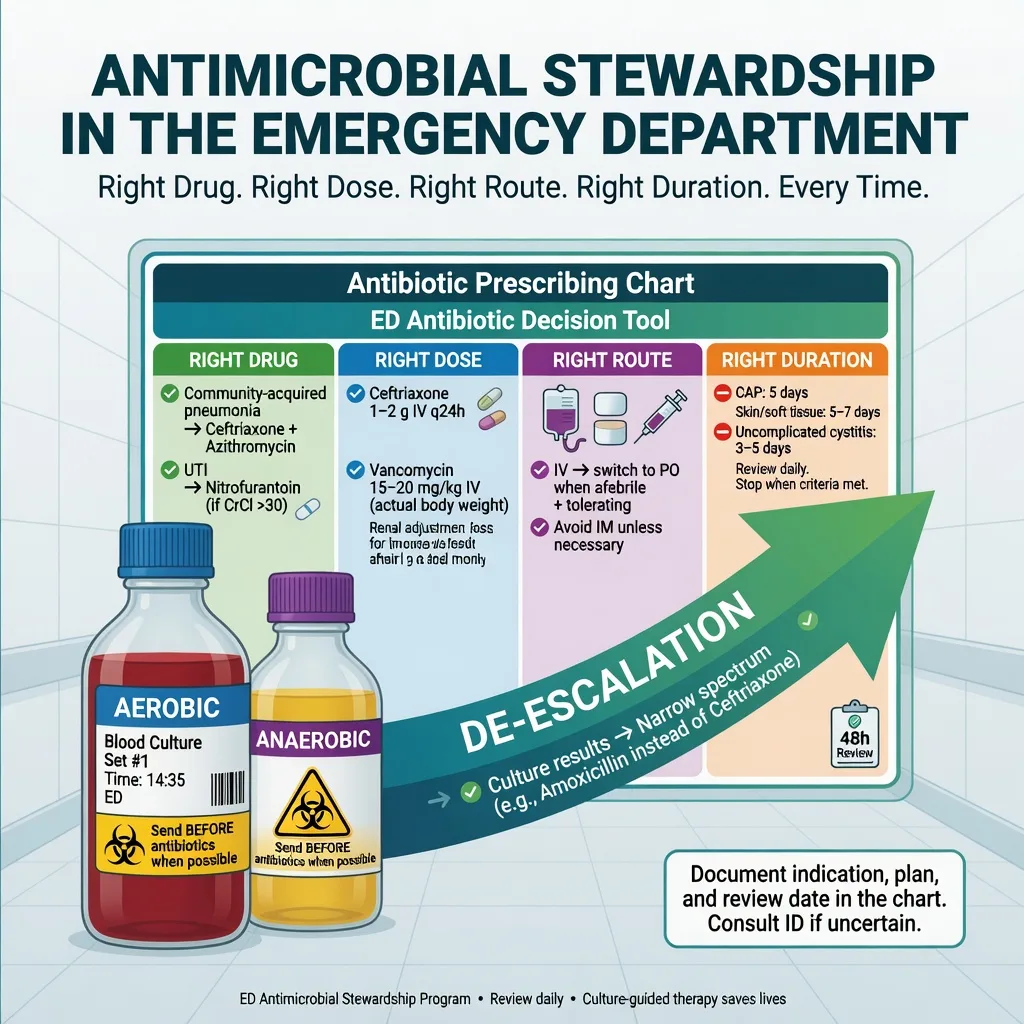
The emergency department is the largest empirical-prescribing environment in the hospital, and the antibiotics started at the front door set the trajectory for the entire admission — and increasingly for the patient's lifetime of microbiome and resistance risk. Antimicrobial stewardship is the coordinated set of interventions designed to optimise antimicrobial use so that every patient receives the right drug, at the right dose, by the right route, for the right duration, with de-escalation when culture and susceptibility data return. The Fellowship candidate is expected to apply the four Ds at the bedside, to deliver empirical therapy within the Surviving Sepsis Campaign Hour-1 window, to choose a syndromic regimen that matches the likely organism and the local resistance pattern, to dose for the patient's weight and renal function and for the pharmacokinetic and pharmacodynamic behaviour of the drug, and to de-escalate when the laboratory returns. The global burden of antimicrobial resistance is now beyond reasonable dispute: the Antimicrobial Resistance Collaborators estimated 4.95 million deaths associated with bacterial resistance in 2019 and 1.27 million deaths attributable to it, surpassing the global toll of HIV and malaria.[16] The emergency department cannot solve resistance, but it can stop feeding it.
Definition and scope — what stewardship is, and why the emergency department is the leverage point
Antimicrobial stewardship is the discipline of using antimicrobials only when they are needed, and using them well when they are. The Infectious Diseases Society of America and the Society for Healthcare Epidemiology of America define an institutional stewardship programme around accountability, drug expertise, and a set of interventions — pre-authorisation, prospective audit and feedback, dose optimisation, intravenous-to-oral switch, and the avoidance of redundant or duplicate therapy — delivered by a multidisciplinary team led by an infectious diseases physician and a clinical pharmacist.[15] In the emergency department, the programme translates into a culture: the right empirical choice at the moment of presentation, the culture sent before the dose when it can be, the dose matched to weight and renal function, the duration planned at the moment of prescribing, and the handover that carries the de-escalation plan forward.
The emergency department matters because it is where empirical therapy begins. Between 30 and 50 per cent of antibiotics prescribed in the emergency department are inappropriate — either unnecessary, too broad, too narrow, wrongly dosed, or wrongly prolonged — and the consequences land both on the individual (Clostridioides difficile infection, adverse drug events, lengthened stay) and on the population (selection of resistance).[15][17] Every antibiotic started at triage is also a decision the ward inherits, because the empirical regimen tends to be continued long after the cultures return, and the duration set at the front door is the duration the patient finishes. Good emergency department stewardship is therefore an upstream intervention with downstream leverage: a single empirical choice, made well, can prevent days of unnecessary therapy and a cascading series of complications.
[1]The framework — the four Ds plus route
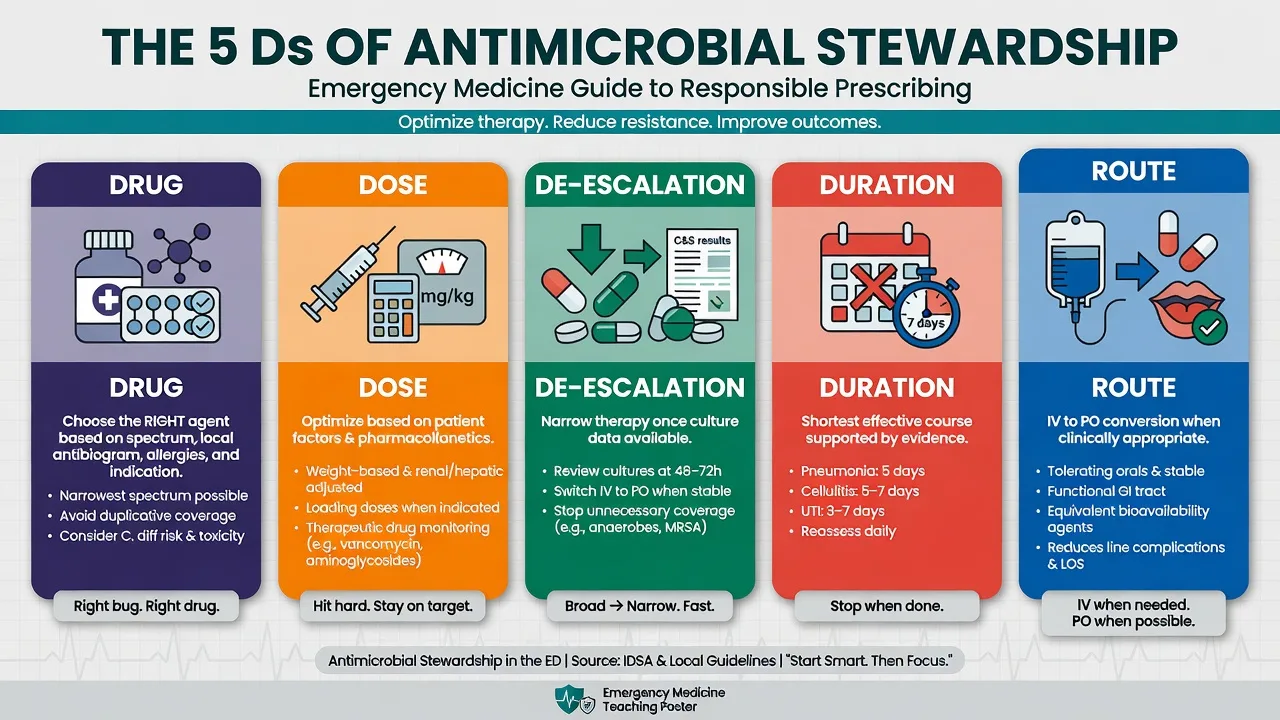
The candidate's mental scaffold for every empirical prescription is the four Ds — Drug, Dose, Duration and De-escalation — with Route as the operational fifth, and Allergy as the safety check. Each D is a discrete decision the prescriber makes consciously, never by default. [1]
Drug is chosen by matching the syndrome to the likely organism, the likely organism to the local antibiogram, and the antibiogram to the patient's allergies and comorbidities. A community-acquired pneumonia in a previously well adult is almost always a pneumococcus, a haemophilus or an atypical bacterium, and a beta-lactam plus a macrolide covers them; a nursing-home pneumonia in a patient with a recent urinary catheter raises the spectre of an ESBL-producing Enterobacterales, and ceftriaxone alone may fail. Dose is chosen by weight, renal and hepatic function, the severity of the infection, and the pharmacokinetic and pharmacodynamic behaviour of the drug. Duration is planned at the moment of prescribing, not deferred to the ward, and is set to the shortest effective course the evidence supports. De-escalation is the active narrowing of therapy when culture and susceptibility data return, or the cessation of therapy when a non-infective diagnosis is confirmed. Route is the choice between intravenous and oral — intravenous for the septic, the haemodynamically unstable, the patient with a poorly-absorbed oral option or with no functioning gut, oral for the stable patient in whom the chosen agent has bioavailability above 90 per cent. Allergy is the safety net that turns a routine prescription into a preventable anaphylaxis if it is not asked. [1]
The four Ds plus route, with allergy as the safety check
DDDR-A
Match the syndrome to the likely organism, the organism to the local antibiogram, the antibiogram to the patient — and check the allergy history before signing
Weight-based, renal-adjusted, hepatic-adjusted, severity-adjusted; respect the pharmacokinetic and pharmacodynamic behaviour of the drug — beta-lactams time above the MIC, vancomycin AUC over MIC 400 to 600, aminoglycosides peak over MIC
Plan the shortest effective course at the moment of prescribing — community-acquired pneumonia 5 days if afebrile 48 to 72 hours, cellulitis 5 to 6 days, pyelonephritis 7 days, uncomplicated cystitis 3 to 5 days, Streptococcus pyogenes pharyngitis 10 days
Intravenous for the unstable or the poorly-absorbed agent; oral when the patient is stable, the gut works, and the agent has greater than 90 per cent bioavailability — fluoroquinolones, doxycycline, trimethoprim–sulfamethoxazole, linezolid, metronidazole, fluconazole all qualify
Distinguish non-severe (delayed rash, childhood intolerance) from severe (anaphylaxis, angioedema, Stevens–Johnson syndrome); a non-severe history allows a cephalosporin with low cross-reactivity, a severe history demands an alternative class
Cultures before antibiotics — the timing rule, and why it has limits
The single most important procedural rule in emergency department stewardship is to send cultures before the antibiotic dose — but never to delay the antibiotic beyond one hour to do so. Kumar and colleagues' cohort study of septic shock established that the duration of hypotension before effective antimicrobial therapy is the critical determinant of survival, with mortality rising approximately 7.6 percentage points for every hour of delay in the first six hours.[1] Seymour and colleagues' evaluation of the New York State mandated sepsis care confirmed the finding at scale: among patients with sepsis and septic shock, initiation of antibiotics within one hour was associated with lower mortality, and the survival benefit was greatest in the most severely ill.[2] The 2021 Surviving Sepsis Campaign guideline operationalises the rule: antibiotics within one hour for sepsis or septic shock, with two blood cultures from separate sites sent before the dose when feasible without delaying therapy.[3]
The candidate must reconcile two truths that seem to contradict. First, cultures drawn after antibiotics are far less likely to grow the organism — blood culture yield falls by half within an hour of antibiotics, and a sterile culture forecloses the chance to de-escalate. Second, in septic shock, every minute spent on cultures is a minute of untreated hypotension, and untreated hypotension kills. The reconciliation is a hierarchy: in suspected septic shock or high-likelihood sepsis, draw blood cultures rapidly — two separate sites, two bottles each, before the antibiotic — but if the one-hour window is at risk, give the antibiotic and draw what cultures you can. Source control is the parallel and equally time-critical imperative — Reitz and colleagues linked every additional hour to source control in sepsis to higher 90-day mortality, and the debridement, drainage or device removal must accompany, not follow, the antibiotic.[4]
[1]Syndromic empirical therapy — the emergency department matrix
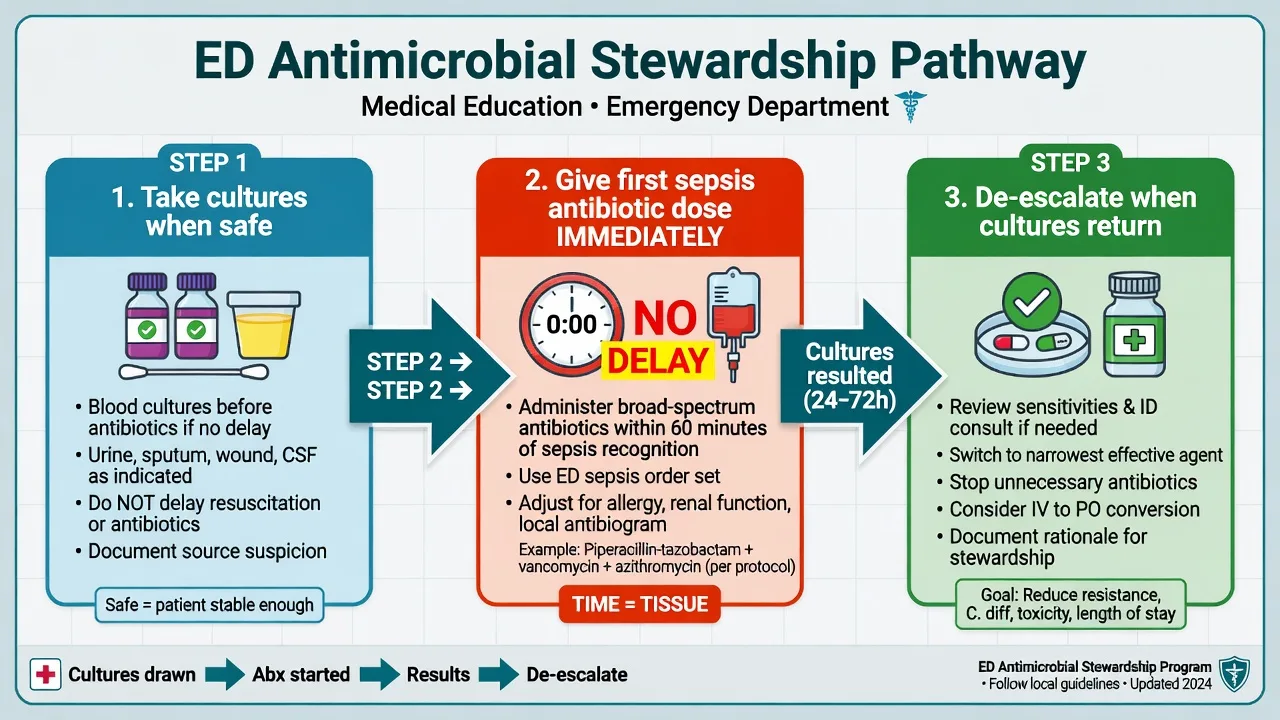
The empirical choice is made by syndrome, because at the moment of presentation the organism is unknown and the culture is hours to days away. The matrix below is the Australasian and IDSA-aligned consensus for the immunocompetent adult; each line is a starting point, to be adjusted for severity, allergy, pregnancy, renal and hepatic function, age, recent healthcare exposure, recent antibiotics, and the local antibiogram. [1]
Sepsis of unclear source (urinary tract most common source)
- Empirical cover: ceftriaxone 2 g intravenously — covers the common community Gram-negatives (E. coli, Klebsiella, Proteus) and the common Gram-positives (pneumococcus, meningococcus, group A streptococcus)
- Add metronidazole 500 mg intravenously if a biliary, intra-abdominal or pelvic source is suspected (ceftriaxone has no anaerobic cover)
- Escalate to piperacillin–tazobactam 4.5 g intravenously if healthcare-associated, recent antibiotics, recent urinary catheter or known prior resistant organism — to cover Pseudomonas and ESBL-producing Enterobacterales
- Source control in parallel — Reitz: every hour to source control increases 90-day mortality
Community-acquired bacterial meningitis (immunocompetent adult)
- Empirical cover: ceftriaxone 2 g intravenously plus vancomycin (loading dose 25 to 30 mg per kilogram, then 15 to 20 mg per kilogram every 8 to 12 hours) — ceftriaxone for pneumococcus and meningococcus, vancomycin for the beta-lactam-resistant pneumococcus
- Add ampicillin 2 g intravenously every 4 hours if the patient is over 50, immunocompromised, pregnant or alcoholic — to cover Listeria monocytogenes, which ceftriaxone does not treat
- Dexamethasone 10 mg intravenously before or with the first antibiotic dose — reduces pneumococcal meningitis mortality and hearing loss
- Send cerebrospinal fluid for cell count, Gram stain, culture, protein and glucose; do not delay antibiotics for the lumbar puncture
Community-acquired pneumonia (CAP)
- Empirical cover: ceftriaxone 2 g intravenously plus azithromycin 500 mg intravenously — the beta-lactam for pneumococcus, haemophilus and Klebsiella, the macrolide for the atypicals (Mycoplasma, Legionella, Chlamydia)
- Oral alternative for the mild inpatient: doxycycline 100 mg orally twice daily; monotherapy with a respiratory fluoroquinolone (moxifloxacin 400 mg) is an alternative but raises C. difficile and QT risk
- Add empirical MRSA cover (vancomycin 15 to 20 mg per kilogram) or Pseudomonas cover (piperacillin–tazobactam) only if local risk factors — recent IV antibiotics, prior respiratory isolation, healthcare exposure, post-influenza
- Duration 5 days minimum, provided the patient is afebrile for 48 to 72 hours and clinically stable — Metlay 2019 ATS/IDSA guideline
Cellulitis and non-purulent skin and soft tissue infection
- Empirical cover: flucloxacillin 2 g intravenously — the agent of choice for the beta-haemolytic streptococci and the methicillin-susceptible Staphylococcus aureus that cause most community cellulitis
- Mild disease oral: dicloxacillin 500 mg orally four times daily, or cephalexin 500 mg orally four times daily; clindamycin 300 mg orally four times daily if penicillin-allergic
- Purulent infection (abscess, furuncle): cover community-acquired MRSA — incise and drain the abscess first; add clindamycin 600 mg intravenously, or trimethoprim–sulfamethoxazole, or doxycycline
- Add vancomycin 15 to 20 mg per kilogram for severe purulent infection, sepsis, immunocompromise, or failed initial therapy — Stevens 2014 IDSA SSTI guideline
Uncomplicated lower urinary tract infection (cystitis)
- Empirical oral: trimethoprim 300 mg orally daily for 3 days, or nitrofurantoin 100 mg orally twice daily for 5 days — both first-line in Australasia and the United Kingdom
- Avoid ceftriaxone, fluoroquinolones and nitrofurantoin as routine empirical cystitis therapy where trimethoprim or nitrofurantoin will do — preserve the broad agents and reduce resistance selection
- Nitrofurantoin is contraindicated when the creatinine clearance is below 30 mL per minute (inadequate urinary concentration, pulmonary and hepatic toxicity) and in the third trimester of pregnancy (haemolytic anaemia in the fetus)
- Pregnancy: use cephalexin 500 mg orally twice daily for 5 days or amoxicillin; avoid trimethoprim in the first trimester (folate antagonist)
Pyelonephritis and complicated urinary tract infection
- Empirical intravenous: ceftriaxone 1 to 2 g intravenously daily, or gentamicin 5 to 7 mg per kilogram once daily (with renal dosing and monitoring)
- Add amoxicillin 2 g intravenously if enterococcus is suspected (ceftriaxone does not treat enterococcus); escalate to piperacillin–tazobactam if healthcare-associated or prior resistant organism
- Duration 7 days for pyelonephritis with prompt response, 10 to 14 days for slower response; switch to oral when afebrile and haemodynamically stable
- Send urine culture before the antibiotic — the urine is the one culture that is almost always obtained before therapy and the basis for de-escalation
Pharmacokinetic and pharmacodynamic dosing — why the dose matters as much as the drug
The dose is not a formality — it is the variable that determines whether the drug reaches the site of infection at a concentration that kills the organism without poisoning the patient. The governing principle is the pharmacokinetic and pharmacodynamic index of the drug class, and the candidate is expected to know the three patterns and the agents that follow each. [1]
Time-dependent killing is the pattern of the beta-lactams (penicillins, cephalosporins, carbapenems), the macrolides and the lincosamides. The killing is proportional to the proportion of the dosing interval during which the free drug concentration exceeds the minimum inhibitory concentration of the organism — written as the fT greater than MIC. The clinical implication is that beta-lactams are more effective when given by prolonged or continuous infusion in severe sepsis, and that missed or delayed doses erode efficacy. Concentration-dependent killing is the pattern of the aminoglycosides, the fluoroquinolones, the polymyxins and the daptomycin. The killing is proportional to the peak concentration relative to the MIC — written as the Cmax over MIC — and the clinical implication is that high once-daily dosing (gentamicin 5 to 7 mg per kilogram once daily) is both more effective and less nephrotoxic than divided dosing. Concentration-dependent killing with time-dependence is the pattern of vancomycin and the glycopeptides, and the index is the area under the concentration–time curve divided by the MIC — the AUC over MIC — with the consensus target for serious MRSA infection set at 400 to 600 (the 2020 consensus guideline replaced trough-only monitoring with AUC-guided dosing).[10]
Augmented renal clearance is the sepsis-specific trap. The hyperdynamic state of early sepsis, especially in the younger, the previously well and the patient with normal or supranormal renal function, accelerates the renal clearance of hydrophilic antibiotics (beta-lactams, aminoglycosides, vancomycin, linezolid) and produces subtherapeutic plasma concentrations at standard doses. The candidate should consider higher doses, prolonged infusions, or therapeutic drug monitoring for the critically ill patient with augmented renal clearance — the standard dose of piperacillin–tazobactam may be inadequate for the young septic patient with a creatinine clearance above 130 mL per minute. The opposite trap is the patient with unrecognised renal impairment — the gentamicin dose that is therapeutic in normal renal function is nephrotoxic in a clearance below 30 mL per minute — which is why the dose is always matched to a measured or estimated creatinine clearance and the trough is monitored. [1]
[1]De-escalation — when the cultures return
De-escalation is the active narrowing of empirical therapy when the pathogen and its susceptibilities are identified, and the cessation of therapy when the working diagnosis of infection is overturned. It is the single most powerful stewardship intervention available to the inpatient team, and the emergency department sets it up by sending the right cultures at the right time and by writing the de-escalation plan into the chart at the moment of prescribing. The de-escalation conversation at 48 to 72 hours — the antibiotic time-out — is where the empirical regimen is reviewed against the culture, the clinical response and the working diagnosis. [1]
Three de-escalation moves are recognised. Narrow to the narrowest-spectrum agent active against the identified organism: an E. coli susceptible to trimethoprim in the urine is treated with trimethoprim, not ceftriaxone; a methicillin-susceptible Staphylococcus aureus in the blood is treated with flucloxacillin (cephalothin equivalent), not vancomycin, because the beta-lactam kills faster and clears bacteraemia sooner. Stop when a non-infective diagnosis is confirmed — the chest X-ray that showed pulmonary oedema, not pneumonia; the abdominal pain that was biliary colic, not cholecystitis; the confusion that was hyponatraemia, not encephalitis. Switch from intravenous to oral when the patient is haemodynamically stable, afebrile for 24 to 48 hours, has a functioning gastrointestinal tract, has an oral agent with bioavailability greater than 90 per cent available, and is improving clinically. The intravenous-to-oral switch shortens stay, reduces line-associated infection and reduces cost without harming outcomes; the agents with high enough bioavailability are the fluoroquinolones, doxycycline, trimethoprim–sulfamethoxazole, linezolid, metronidazole and fluconazole. [1]
[1]Differential — when empirical therapy appears to fail
Empirical therapy that fails at 48 hours demands a structured differential, because the failure is rarely solved by simply broadening the spectrum — a reflexive escalation that hides the real cause and amplifies resistance selection. The candidate must work through five families of cause, because each has a different remedy. [1]
Wrong organism — the empirical regimen does not cover the pathogen
- A ceftriaxone-treated cellulitis that worsens may be a community-acquired MRSA infection — add vancomycin, clindamycin or trimethoprim–sulfamethoxazole
- A ceftriaxone-treated pneumonia that worsens may be a post-influenza Staphylococcus aureus pneumonia, an adenovirus, or a Pneumocystis — re-take the history for viral prodrome, HIV risk and immunosuppression
- A ceftriaxone-treated pyelonephritis that worsens may be an enterococcus (ceftriaxone does not treat enterococcus) — add amoxicillin, or escalate to piperacillin–tazobactam
- A ceftriaxone-treated meningitis that worsens may be Listeria — add ampicillin; or a beta-lactam-resistant pneumococcus — check the vancomycin level and dose
Resistant organism — the pathogen is covered by class but not by the specific agent
- ESBL-producing E. coli or Klebsiella — third-generation cephalosporins fail despite in-vitro susceptibility in some labs because of the inoculum effect; switch to a carbapenem for severe infection, nitrofurantoin or trimethoprim–sulfamethoxazole for cystitis if susceptible (Tamma 2024)
- Carbapenemase-producing Enterobacterales (CPE/CRE) — carbapenems fail; the active agents are ceftazidime–avibactam, meropenem–vaborbactam, imipenem–cilastatin–relebactam, colistin, fosfomycin, and tigecycline, in consultation with infectious diseases
- Vancomycin-resistant enterococcus (VRE, usually E. faecium) — vancomycin fails; treat with linezolid or daptomycin (daptomycin is inactivated by pulmonary surfactant and cannot be used for pneumonia)
- Methicillin-resistant Staphylococcus aureus (MRSA) — flucloxacillin and the cephalosporins fail; treat with vancomycin (AUC-guided), or clindamycin, linezolid, daptomycin or ceftaroline by syndrome
Inadequate source control — the antibiotic cannot reach the infection
- Undrained abscess, undrained empyema, retained infected foreign body, obstructed biliary or urinary tract, infected prosthetic material, necrotising soft tissue infection
- Reitz: every additional hour to source control in sepsis raises 90-day mortality — the antibiotic is adjunctive to source control, not a substitute for it
- The remedy is surgical or radiological drainage, debridement, device removal, or relief of obstruction — re-imaging and surgical or interventional review, not a broader antibiotic
- A persistently febrile or bacteraemic patient with an undrained source will not improve on antibiotics alone — the failure is anatomic, not pharmacologic
Inadequate dose — pharmacokinetic under-dosing
- Augmented renal clearance in the young, previously well, hyperdynamic septic patient — the standard beta-lactam dose is subtherapeutic at a clearance above 130 mL per minute; consider prolonged infusion or higher dose
- Under-dosed vancomycin by trough-only monitoring — the AUC over MIC target of 400 to 600 is missed; switch to AUC-guided dosing for serious MRSA infection (Rybak 2020)
- Failure to weight-dose the obese patient — vancomycin loading 25 to 30 mg per kilogram of total body weight, not the standard 1 g
- Inadequate tissue penetration — daptomycin inactivates in the lung, linezolid has variable penetration in bone, beta-lactams under-achieve in the cerebrospinal fluid at standard doses for meningitis (use high-dose ceftriaxone, cefepime, or cefotaxime)
Wrong diagnosis — the patient was never infected
- Drug fever — the antibiotic itself is the cause of the persistent fever; eosinophilia, rash and the temporal relationship to the antibiotic support the diagnosis
- Non-infective inflammatory disease — vasculitis, adult-onset Still disease, malignancy with tumour fever, haematoma, pancreatitis, gout
- Pulmonary embolism or myocardial infarction presenting with fever and a raised inflammatory marker
- The remedy is to re-examine the diagnosis, stop the antibiotic if infection is excluded, and avoid the reflex of spectrum escalation
Resistance patterns — what they mean for the empirical choice
The four resistance patterns the candidate must know — MRSA, VRE, ESBL and CPE — are not abstractions; each translates into a specific empirical and definitive choice, and each is the answer to the question "why did ceftriaxone fail?". [1]
Methicillin-resistant Staphylococcus aureus (MRSA) is staphylococcus that has acquired the mecA gene, altering its penicillin-binding protein so that all beta-lactams (penicillins, cephalosporins, carbapenems) fail. It is community-acquired (skin and soft tissue, post-influenza pneumonia, septic arthritis in the young) and nosocomial (line, surgical, ventilator-associated). Treatment is vancomycin (AUC-guided, loading 25 to 30 mg per kilogram for serious infection), or — by syndrome — clindamycin, linezolid, daptomycin, ceftaroline, or trimethoprim–sulfamethoxazole. The Liu 2011 IDSA MRSA guideline remains the reference standard.[8]
Vancomycin-resistant enterococcus (VRE) is almost always Enterococcus faecium that has acquired the vanA or vanB gene, altering its cell-wall precursor so that vancomycin fails. It is nosocomial, often line-associated, and problematic in bacteraemia, endocarditis and intra-abdominal infection. Treatment is linezolid or daptomycin (high dose, 8 to 10 mg per kilogram); daptomycin is inactivated by pulmonary surfactant and cannot treat pneumonia. [1]
Extended-spectrum beta-lactamase-producing Enterobacterales (ESBL) are E. coli, Klebsiella and Proteus that have acquired a beta-lactamase hydrolysing the third-generation cephalosporins (ceftriaxone, cefotaxime, ceftazidime) but not the carbapenems. They are increasingly community-acquired, especially in urinary tract infection, and pose the inoculum-effect problem — a ceftriaxone-susceptible isolate in vitro may fail in vivo at the high inoculum of severe infection. The Tamma 2024 IDSA guidance recommends a carbapenem for severe ESBL infection (pyelonephritis, bacteraemia, intra-abdominal), and nitrofurantoin, trimethoprim–sulfamethoxazole, ciprofloxacin, or oral fosfomycin for cystitis if susceptible.[9]
Carbapenemase-producing Enterobacterales (CPE, also termed CRE) are Enterobacterales that have acquired a carbapenemase (KPC, NDM, OXA-48, VIM, IMP) and are resistant to the carbapenems as well as the third-generation cephalosporins. They are nosocomial, often in the heavily healthcare-exposed patient, and carry mortality in bacteraemia in excess of 40 per cent. Treatment is with the novel beta-lactam–beta-lactamase inhibitor combinations — ceftazidime–avibactam, meropenem–vaborbactam, imipenem–cilastatin–relebactam — or, where these fail, colistin, tigecycline, or fosfomycin, in mandatory consultation with infectious diseases.[9]
Special populations — the elderly, the neutropenic, the pregnant, the allergic, the renally impaired
The empirical choice is modified by the patient in front of the candidate, and four populations demand specific consideration at the front door. [1]
The elderly patient carries two stewardship burdens — inappropriate prescribing and polypharmacy — and the Beers 2023 criteria and STOPP/START version 2 are the structured filters the candidate is expected to apply.[13][14] The high-yield antimicrobial pitfalls in the elderly are several. Nitrofurantoin is inappropriate when the creatinine clearance is below 30 mL per minute (inadequate urinary concentration, pulmonary toxicity, hepatic toxicity) — both Beers and STOPP flag it. Trimethoprim–sulfamethoxazole with an ACE inhibitor, an angiotensin receptor blocker or spironolactone precipitates hyperkalaemia and acute kidney injury within days in the elderly, and it potentates warfarin, raising the INR and the bleeding risk — both lists flag it. The fluoroquinolones (ciprofloxacin, levofloxacin) raise the risk of tendinopathy and rupture, QT prolongation, aortic aneurysm dissection or rupture, C. difficile infection, delirium and dysglycaemia in the elderly, and Beers 2023 advises avoidance where an alternative exists. Long-term nitrofurantoin for urinary suppression is inappropriate (pulmonary, hepatic and neuropathic toxicity). Asymptomatic bacteriuria is over-diagnosed and over-treated in the elderly — the Nicolle 2019 IDSA guideline explicitly states that asymptomatic bacteriuria in the catheterised, the institutionalised or the confused elderly patient should not be treated, because treatment does not improve outcomes and selects resistance.[11]
The neutropenic patient (neutrophil count below 0.5 × 10⁹ per litre, or below 1.0 with an expected nadir below 0.5) is treated empirically for any fever above 38.3 °C single or 38.0 °C sustained, with an anti-pseudomonal beta-lactam — piperacillin–tazobactam 4.5 g intravenously, cefepime 2 g intravenously, or meropenem 1 g intravenously — within one hour, after blood cultures are drawn. Vancomycin is added only for suspected catheter infection, haemodynamic instability, severe mucositis, or known MRSA colonisation. The Freifeld 2011 IDSA neutropenic fever guideline remains the standard.[12]
The pregnant patient is constrained by teratogenicity and fetal toxicity. Trimethoprim–sulfamethoxazole is avoided in the first trimester (folate antagonist — neural tube defect risk) and the third trimester (kernicterus risk); nitrofurantoin is avoided in the third trimester (haemolytic anaemia in the fetus, especially with G6PD deficiency); the fluoroquinolones and tetracyclines are contraindicated throughout (cartilage and tooth/bone effects). The safe empirical agents in pregnancy are the penicillins, the cephalosporins, azithromycin, clindamycin and metronidazole. The penicillin-allergic patient is stratified by the severity of the history: a non-severe history (delayed rash, childhood intolerance, vague gastrointestinal symptoms) permits a cephalosporin, because the cross-reactivity between penicillin and the third-generation cephalosporins is below 1 per cent and the side chain, not the beta-lactam ring, drives the allergy; a severe history (anaphylaxis, angioedema, Stevens–Johnson syndrome) demands avoidance of all beta-lactams and an alternative regimen — vancomycin plus aztreonam for severe sepsis, clindamycin or doxycycline for skin and soft tissue, aztreonam for urinary tract. The renally impaired patient is dosed against the creatinine clearance — vancomycin, the aminoglycosides, the beta-lactams, the fluoroquinolones and the antifungals all require dose adjustment below specific thresholds, and the dose is reviewed against the most recent renal function, not the historical value. [1]
Model answer — applying STOPP and Beers to an elderly patient with a urinary tract infection
Common errors and pitfalls
The recurring failures are themselves examinable, because each is the failure mode the stewardship programme is designed to prevent. Treating asymptomatic bacteriuria in the catheterised, the institutionalised or the confused elderly patient — the most common inappropriate antibiotic prescription in the emergency department, and the one Nicolle 2019 explicitly condemns.[11] Continuing empirical therapy unchanged for the whole admission despite a positive culture and clinical improvement — the empirical regimen is continued long after the culture returns, and the chance to narrow is lost; the antibiotic time-out at 48 to 72 hours is the remedy. Using ceftriaxone for everything — a ceftriaxone-treated cellulitis that is MRSA fails; a ceftriaxone-treated pyelonephritis that is enterococcus fails; a ceftriaxone-treated meningitis that is Listeria fails; the empirical choice is matched to the syndrome, the patient and the resistance pattern, not defaulted. Prolonging intravenous therapy when the oral switch criteria are met — the patient who is afebrile, stable and improving on day three stays on intravenous antibiotics for the rest of the admission, with line-associated infection, longer stay and higher cost. Ignoring drug interactions — the warfarin patient who is started on ciprofloxacin, metronidazole, trimethoprim–sulfamethoxazole or a macrolide and returns with an INR above 8 and a bleed within days. Under-dosing the septic patient with augmented renal clearance — the standard beta-lactam dose that is subtherapeutic at a clearance above 130 mL per minute, and the patient who fails to improve until the infusion is prolonged or the dose raised. Over-using vancomycin for empirical MRSA cover when the local MRSA prevalence is low and the risk factors are absent — selecting VRE and C. difficile without benefit. Failing to send cultures before the antibiotic dose, so that the empirical regimen cannot be narrowed when the patient improves. Treating a colonisation rather than an infection — the urine culture that grows a coloniser in a catheterised patient, the sputum culture that grows Candida, the wound swab that grows Staphylococcus epidermidis.
Evidence and regional guidelines
The evidence base for emergency department antimicrobial stewardship rests on three pillars — the timing-and-mortality literature, the syndrome-specific empirical therapy guidelines, and the institutional stewardship programme literature. The timing literature is anchored by Kumar and colleagues' cohort study of septic shock (the duration of hypotension before effective antimicrobial therapy is the critical determinant of survival) and by Seymour and colleagues' evaluation of mandated New York sepsis care (antibiotics within one hour associated with lower mortality).[1][2] Reitz and colleagues extended the timing principle to source control.[4] The empirical therapy guidelines are the 2021 Surviving Sepsis Campaign (Evans), the 2019 ATS/IDSA community-acquired pneumonia guideline (Metlay), the 2014 IDSA skin and soft tissue infection guideline (Stevens), the 2004 IDSA bacterial meningitis guideline (Tunkel), the 2011 IDSA MRSA guideline (Liu), the 2024 IDSA guidance on ESBL-, AmpC- and carbapenemase-producing Enterobacterales (Tamma), the 2020 vancomycin consensus (Rybak), the 2019 IDSA asymptomatic bacteriuria guideline (Nicolle), and the 2011 IDSA neutropenic fever guideline (Freifeld).[3][5][6][7][8][9][10][11][12] The institutional stewardship literature is anchored by the 2016 IDSA/SHEA stewardship guideline (Barlam) and Drekonja's systematic review of outpatient stewardship.[15][17] The burden of resistance is documented by the Antimicrobial Resistance Collaborators' GRAM global burden analysis.[16]
ANZ practice note. The Australian Therapeutic Guidelines — Antibiotic (eTG, online subscription) is the day-to-day empirical therapy reference in most Australian and New Zealand emergency departments, and it specifies the empirical regimens for each syndrome with attention to the local resistance pattern. The Australian Commission on Safety and Quality in Health Care (ACSQHC) publishes the Antimicrobial Stewardship Clinical Care Standard and operates the AURA (Antimicrobial Use and Resistance in Australia) surveillance system, which publishes the annual Australian report on antimicrobial use and resistance.[1] Hospital accreditation under the NSQHS Standards requires an antimicrobial stewardship programme as Preventive Action 3. The 2021 Surviving Sepsis Campaign Hour-1 bundle is the standard for sepsis antibiotic timing. New Zealand operates the antimicrobial stewardship programme through the Health Quality and Safety Commission and the Antimicrobial Resistance Action Plan. Both countries encourage the shortest effective duration and the early intravenous-to-oral switch; outpatient parenteral antimicrobial therapy (OPAT) programmes are well established for the patient who is stable enough to discharge but needs continued intravenous therapy.
SAQ — Empiric antibiotic selection in septic shock with healthcare exposure
10 minutes · 10 marks
A 74-year-old man is brought to the emergency department from a residential aged-care facility with 14 hours of fever, worsening confusion and breathlessness. He has a long-term indwelling urinary catheter and completed a course of ciprofloxacin for a urinary tract infection three weeks ago. On arrival: temperature 38.9 degrees C, heart rate 132, blood pressure 78/46 (MAP 57) after a 30 mL per kilogram crystalloid bolus, respiratory rate 30, SpO2 91 per cent on room air, GCS 13. Lactate 4.2 mmol/L, creatinine 185 micromol per litre. The chest X-ray shows right lower lobe consolidation; the urine dipstick is nitrite- and leucocyte-positive. The sepsis pathway has been activated and the intensive care team is en route.
SAQ — Antimicrobial stewardship at the front door: asymptomatic bacteriuria and the 48-hour antibiotic time-out
10 minutes · 10 marks
An 84-year-old woman is transferred from a nursing home with a three-day history of reduced oral intake and reduced mobility. Her baseline cognition is mildly impaired (usually GCS 14, today 13). She has a long-term indwelling urinary catheter. Temperature 37.4 degrees C, heart rate 88, blood pressure 128/74, respiratory rate 16, SpO2 96 per cent on room air. The urine dipstick is nitrite- and leucocyte-positive; the urine culture grows greater than 10 to the 5 colony-forming units per millilitre of E. coli sensitive to trimethoprim. Blood cultures are negative. WCC 9.2, CRP 12, lactate 1.0. The nursing home has faxed requesting that antibiotics be commenced for her urinary tract infection. Thirty minutes later you are also asked to review a 64-year-old man admitted 48 hours ago with community-acquired pneumonia on ceftriaxone 2 g intravenously daily and azithromycin, whose blood culture has just returned Streptococcus pneumoniae sensitive to penicillin — he is now afebrile, eating, RR 16, SpO2 97 per cent on room air, and the team has asked for the antibiotics to be continued for the full week.
Exam pearls
- The four Ds — Drug, Dose, Duration, De-escalation — plus Route and Allergy. Every empirical prescription is the conscious answer to all six.
- Antibiotics within one hour for sepsis and septic shock. Kumar 2006 (mortality rises 7.6 percentage points per hour of delay), Seymour 2017 (antibiotics within one hour reduce mortality at scale), Surviving Sepsis Campaign 2021 (Hour-1 bundle). Cultures before the dose when you can — never delay the dose for cultures in septic shock.
- Ceftriaxone 2 g intravenously is the workhorse empirical agent for community sepsis, urinary sepsis, community-acquired pneumonia (with azithromycin) and meningitis (with vancomycin, plus ampicillin if Listeria is a risk). It does not cover MRSA, enterococcus, ESBL-producing Enterobacterales, CPE, Listeria, atypicals, or anaerobes — know what it does not do.
- Cellulitis is flucloxacillin 2 g intravenously. Add MRSA cover (vancomycin, clindamycin, TMP-SMX) for purulent infection, severe sepsis, immunocompromise, or failed initial therapy. Drain the abscess.
- Cystitis is trimethoprim or nitrofurantoin. Avoid nitrofurantoin at a creatinine clearance below 30 mL per minute and in the third trimester; avoid trimethoprim in the first trimester. Avoid ciprofloxacin and ceftriaxone as routine empirical cystitis therapy.
- De-escalation is narrow, stop or switch. Narrow when the organism and susceptibilities are known; stop when the diagnosis is overturned; switch intravenous to oral when stable, afebrile, the gut works and an oral agent with greater than 90 per cent bioavailability is available.
- MRSA — vancomycin AUC over MIC 400 to 600 (Rybak 2020). VRE — linezolid or daptomycin (daptomycin not for pneumonia). ESBL — carbapenem for severe infection, nitrofurantoin or TMP-SMX for cystitis if susceptible (Tamma 2024). CPE — ceftazidime–avibactam, meropenem–vaborbactam, consult infectious diseases.
- The elderly patient. Avoid nitrofurantoin at a clearance below 30 mL per minute; avoid TMP-SMX with ACEi/ARB/spironolactone (hyperkalaemia, AKI) and with warfarin (INR potentiation); avoid fluoroquinolones (tendon, QT, aorta, delirium, C. difficile). Do not treat asymptomatic bacteriuria (Nicolle 2019).
- Source control is parallel, not sequential. Reitz 2022 — every hour to source control raises 90-day mortality. The antibiotic is adjunctive to the surgery or the drainage. [1]
Red flags
[1]References
- [1]Kumar A, Roberts D, Wood KE, Light B, Parrillo JE, Sharma S, et al. Duration of hypotension before initiation of effective antimicrobial therapy is the critical determinant of survival in human septic shock Crit Care Med, 2006.PMID 16625125
- [2]Seymour CW, Gesten F, Prescott HC, Friedrich ME, Iwashyna TJ, Phillips GS, et al. Time to Treatment and Mortality during Mandated Emergency Care for Sepsis N Engl J Med, 2017.PMID 28528569
- [3]Evans L, Rhodes A, Alhazzani W, Antonelli M, Coopersmith CM, French C, et al. Surviving Sepsis Campaign: International Guidelines for Management of Sepsis and Septic Shock 2021 Crit Care Med, 2021.PMID 34605781
- [4]Reitz KM, Lehtonen SM, Tonna JE, Perman SM, Pronovost PJ, Cosgrove SE, et al. Association Between Time to Source Control in Sepsis and 90-Day Mortality JAMA Surg, 2022.PMID 35830181
- [5]Metlay JP, Waterer GW, Long AC, Anzueto A, Brozek J, Crothers K, et al. Diagnosis and Treatment of Adults with Community-acquired Pneumonia. An Official Clinical Practice Guideline of the American Thoracic Society and Infectious Diseases Society of America Am J Respir Crit Care Med, 2019.PMID 31573350
- [6]Stevens DL, Bisno AL, Chambers HF, Dellinger EP, Goldstein EJ, Gorbach SL, et al. Practice guidelines for the diagnosis and management of skin and soft tissue infections: 2014 update by the Infectious Diseases Society of America Clin Infect Dis, 2014.PMID 24973422
- [7]Tunkel AR, Hartman BJ, Kaplan SL, Kaufman BA, Roos KL, Scheld WM, et al. Practice guidelines for the management of bacterial meningitis Clin Infect Dis, 2004.PMID 15494903
- [8]Liu C, Bayer A, Cosgrove SE, Daum RS, Fridkin SK, Gorwitz RJ, et al. Clinical practice guidelines by the infectious diseases society of america for the treatment of methicillin-resistant Staphylococcus aureus infections in adults and children Clin Infect Dis, 2011.PMID 21208910
- [9]Tamma PD, Aitken SL, Bonomo RA, Mathers AJ, van Duin D, Clancy CJ. Infectious Diseases Society of America 2024 Guidance on the Treatment of Antimicrobial-Resistant Gram-Negative Infections Clin Infect Dis, 2024.PMID 39108079
- [10]Rybak MJ, Le J, Lodise TP, Levine DP, Bradley JS, Liu C, et al. Therapeutic Monitoring of Vancomycin for Serious Methicillin-resistant Staphylococcus aureus Infections: A Revised Consensus Guideline and Review by the American Society of Health-system Pharmacists, the Infectious Diseases Society of America, the Pediatric Infectious Diseases Society, and the Society of Infectious Diseases Pharmacists Clin Infect Dis, 2020.PMID 32658968
- [11]Nicolle LE, Gupta K, Bradley SF, Colgan R, DeMuri GP, Drekonja D, et al. Clinical Practice Guideline for the Management of Asymptomatic Bacteriuria: 2019 Update by the Infectious Diseases Society of America Clin Infect Dis, 2019.PMID 31506700
- [12]Freifeld AG, Bow EJ, Sepkowitz KA, Boeckh MJ, Ito JI, Mullen CA, et al. Clinical practice guideline for the use of antimicrobial agents in neutropenic patients with cancer: 2010 update by the infectious diseases society of america Clin Infect Dis, 2011.PMID 21258094
- [13]By the 2023 American Geriatrics Society Beers Criteria Update Expert Panel. American Geriatrics Society 2023 updated AGS Beers Criteria® for potentially inappropriate medication use in older adults J Am Geriatr Soc, 2023.PMID 37139824
- [14]O'Mahony D, O'Sullivan D, Byrne S, O'Connor MN, Ryan C, Gallagher P. STOPP/START criteria for potentially inappropriate prescribing in older people: version 2 Age Ageing, 2015.PMID 25324330
- [15]Barlam TF, Cosgrove SE, Abbo LM, MacDougall C, Schuetz AN, Septimus EJ, et al. Implementing an Antibiotic Stewardship Program: Guidelines by the Infectious Diseases Society of America and the Society for Healthcare Epidemiology of America Clin Infect Dis, 2016.PMID 27080992
- [16]Antimicrobial Resistance Collaborators (Murray CJL, Ikuta KS, Sharara F, et al.). Global burden of bacterial antimicrobial resistance in 2019: a systematic analysis Lancet, 2022.PMID 35065702
- [17]Drekonja DM, Filice GA, Greer N, Olson A, MacDonald R, Rutks I, Wilt TJ. Antimicrobial stewardship in outpatient settings: a systematic review Infect Control Hosp Epidemiol, 2015.PMID 25632996