EM · Geriatric and medication-safety emergencies
Polypharmacy and adverse drug events
Also known as Polypharmacy in the elderly · Adverse drug event · Adverse drug reaction · Potentially inappropriate medication · Deprescribing · Medication reconciliation · Beers criteria · STOPP and START criteria
Polypharmacy and adverse drug events — the emergency presentation of medication harm in the older patient on five or more regular medicines, driven by the high-risk drug classes (anticoagulants, antiplatelets, insulin, sulfonylureas, opioids, benzodiazepines, antipsychotics, anticholinergics, NSAIDs), the pharmacology of ageing that amplifies each drug's effect, the ADE syndromes (falls, bleeding, hypoglycaemia, delirium, acute kidney injury) mapped to the culprit class, the screening tools (STOPP/START v2 and the 2023 AGS Beers criteria), the best possible medication history and seven-step reconciliation, and the deprescribing ladder (Scott — ascertain indications, weigh harm against benefit, rank, taper and cease with monitoring, document and communicate). ACEM-primary, globally tagged.
On this page & tools
Your progress
Saved locally on this device.
Target exams
Red flags
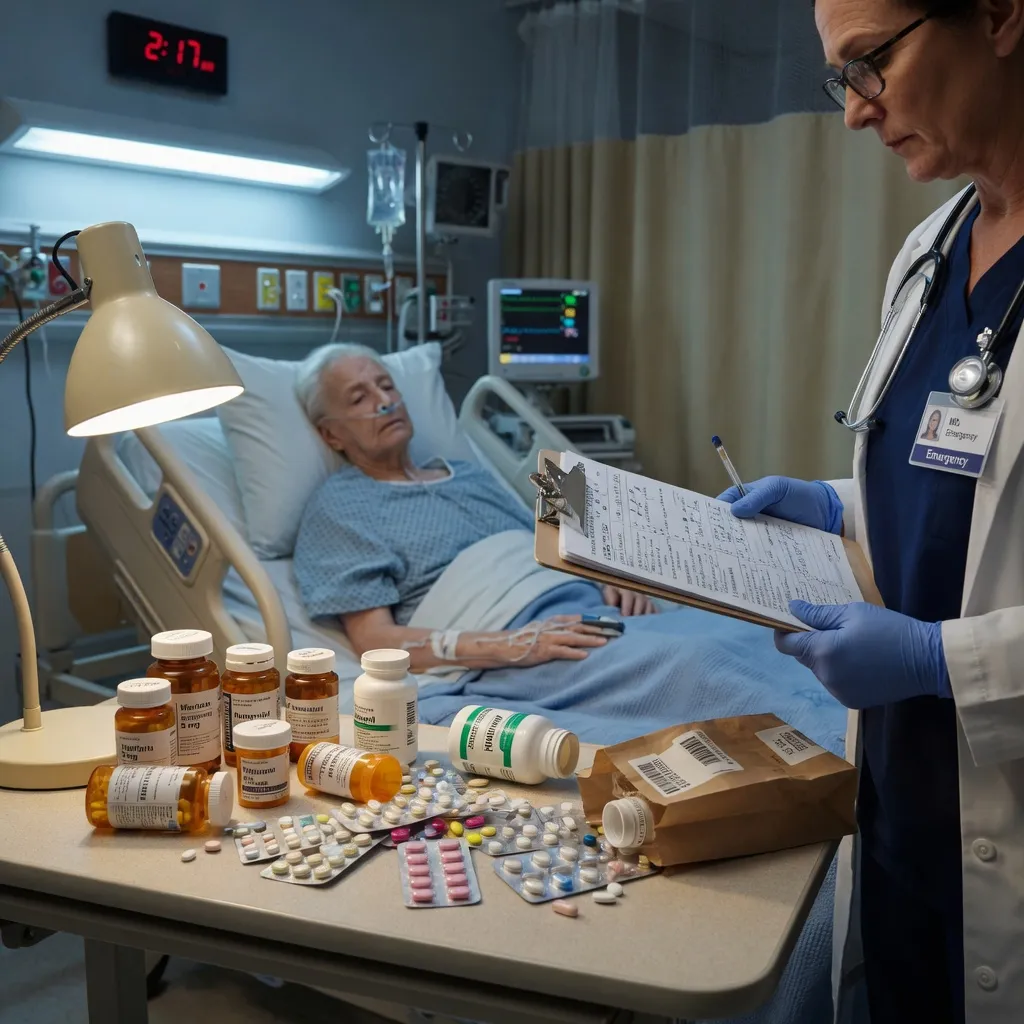
Polypharmacy is the commonest iatrogenic condition the emergency physician encounters, and its face is the adverse drug event — the fall, the bleed, the low glucose, the confusion, or the acute kidney injury that brings an older patient through the door. Polypharmacy is defined as the regular use of five or more medicines, and it is now the rule rather than the exception in patients over 65: around 40 per cent of community-dwelling older adults and up to 90 per cent of nursing-home residents take five or more agents, and the count rises steeply with each chronic disease.[1] The harm is not theoretical. Adverse drug events account for a substantial fraction of older emergency attendances — roughly one in twenty presentations in the over-65s is drug-related, and perhaps a third of those events are preventable.[1] The Fellowship candidate is examined on the whole chain: the definition and the high-risk drug classes, the pharmacology of ageing that turns a safe dose at fifty into a dangerous one at eighty, the screening tools that flag the offending prescriptions, the bedside reconciliation that finds them, the reversal agents that rescue the patient, and the deprescribing process that prevents the next attendance.
Definition and classification
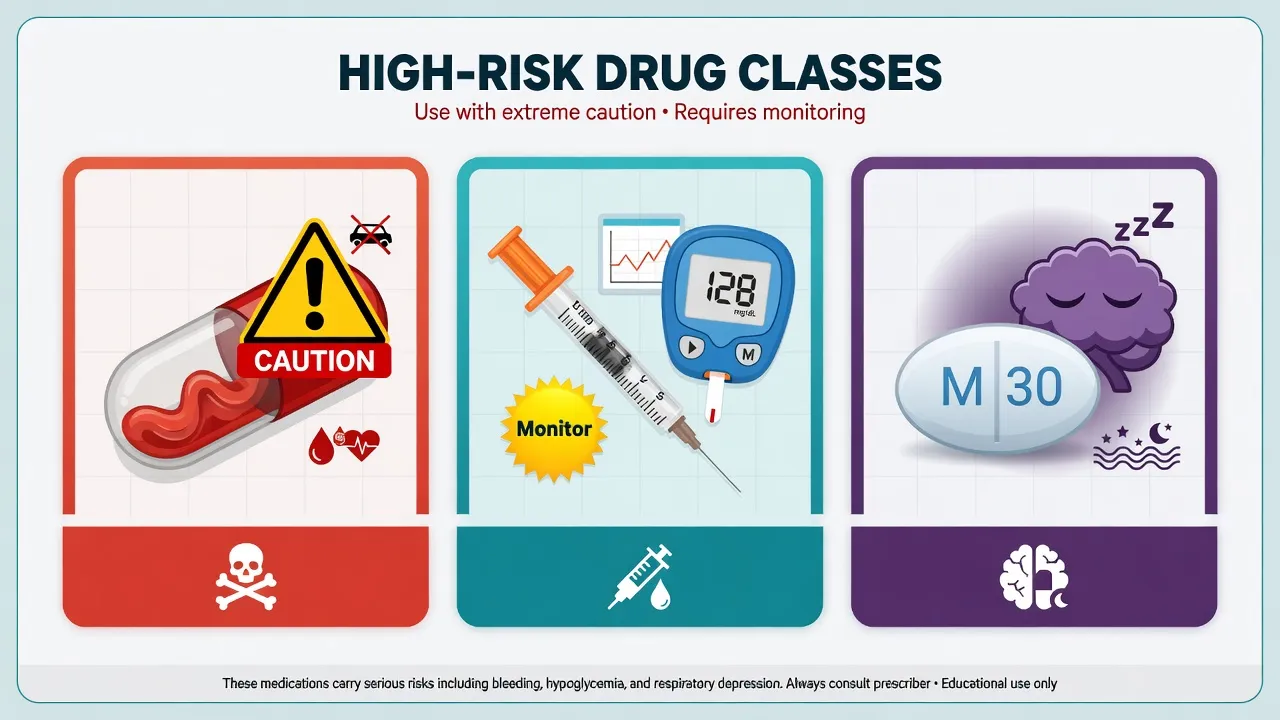
Polypharmacy is most simply defined by the drug count — five or more regular medicines — and its severe end, hyperpolypharmacy, is ten or more. The count is a proxy for risk rather than the harm itself: a patient on five carefully chosen, evidence-based medicines for five well-indicated diseases may be better off than a patient on three that interact. The term is therefore paired with two ideas that capture the real hazard. Appropriate polypharmacy is the evidence-based treatment of multiple comorbidities; problematic or inappropriate polypharmacy is prescribing in which the harm outweighs the benefit — duplicate drugs, drugs without an indication, drugs whose dose is wrong for the patient's age or renal function, and drugs that interact.[6]
A potentially inappropriate medication (PIM) is a drug whose risk in older people exceeds its benefit, either in general (benzodiazepines in any older adult) or in the presence of a specific condition (a non-steroidal anti-inflammatory in heart failure or chronic kidney disease). An adverse drug event (ADE) is any harm from a medicine, whether at normal dose (an adverse drug reaction) or from error (overdose, wrong drug, wrong patient); in the emergency department the two are managed identically because the harm is the same. The prescribing cascade is the archetype of iatrogenic accumulation: a drug's side effect is misread as a new disease and a second drug is added to treat it — a non-steroidal anti-inflammatory causes oedema, a diuretic is added; metoclopramide causes Parkinsonism, levodopa is added; an amlodipine causes oedema, a diuretic is added. Each step deepens the polypharmacy and its harm, and the cascade is invisible unless the drug chart is read against the indications. [1]
Appropriate polypharmacy
- Five or more medicines, each with a current and valid indication, matched to the patient and to each other
- Evidence-based treatment of genuine multimorbidity — beta-blocker, ACE-inhibitor, anticoagulant and diuretic in heart failure with atrial fibrillation
- Risk is monitored, doses are age- and renal-appropriate, and the list is reviewed at each encounter
- Not a target for automatic deprescribing — review yes, blanket cessation no
Problematic polypharmacy
- Five or more medicines with one or more lacking an indication, duplicated, interacting, or dosed wrongly for the patient
- The source of preventable adverse drug events and of the prescribing cascade
- Identified by STOPP/START and Beers screening and by reconciliation against indications
- The direct target of deprescribing
The prescribing cascade
- A new drug added to treat the side effect of an existing drug, mistaken for a new diagnosis
- Classic chains: non-steroidal anti-inflammatory to oedema to diuretic; metoclopramide to Parkinsonism to levodopa; calcium-channel blocker to oedema to diuretic
- Inflates the drug count and the harm, and is missed unless each drug is matched to an indication
- The remedy is to identify the original drug and stop or replace it, not to add the cascade drug
Epidemiology and why the older patient is at risk
Polypharmacy and its harm rise with age and with comorbidity. About four in ten community-dwelling older adults take five or more regular medicines, the proportion climbs to nine in ten in nursing-home residents, and the mean drug count on an older emergency patient's chart is often ten or more.[1] Adverse drug events are correspondingly common — they are implicated in a meaningful fraction of older emergency presentations and are a leading cause of unplanned admission in this group — and they are largely preventable, because the same drug classes recur as the culprits.[1] The risk is concentrated in the frail, in those with reduced renal function, and in those on the high-risk classes listed below.
The reason a dose that is safe at fifty harms at eighty is that ageing changes every step of drug handling, and the Fellowship candidate is expected to summarise the pharmacology. Renal clearance falls with the age-related loss of glomeruli, so renally excreted drugs and their active metabolites accumulate — dabigatran, the low-molecular-weight heparins, gabapentin, the digoxin, lithium, the water-soluble beta-blockers, and many antibiotics. Hepatic mass and blood flow fall, prolonging the half-life of hepatically metabolised drugs and the sedatives in particular. Total body water falls and body fat rises, so water-soluble drugs reach a higher peak concentration and lipid-soluble drugs (the benzodiazepines, the opioids, the antipsychotics) accumulate and linger, producing the prolonged sedation so characteristic of the older patient. Receptor sensitivity increases — the older brain is more sensitive to benzodiazepines and opioids, and the older patient more sensitive to anticoagulants at any given level — so the standard adult dose is an overdose in the elderly even when renal and hepatic function are normal. [1]
[1]The high-risk drug classes
A small number of drug classes account for most preventable drug-related admissions, and they are the spine of every polypharmacy question. The candidate should know each class, the harm it causes, and the specific high-risk agent within it. [1]
Differential — the adverse-drug-event syndromes distinguished
The older patient rarely presents with "polypharmacy" written on the chart. They present with a fall, a bleed, a low glucose, confusion, or acute kidney injury — and the polypharmacy is discovered when the drug chart is read. The differential below is the map from the presenting syndrome to the culprit drug class, and it is the structure the viva follows: for each presentation, name the drugs, the mechanism, and the bedside test that confirms it.[1][4]
Falls
- The commonest drug-related presentation in older adults; benzodiazepines, antipsychotics, antiepileptics and antidepressants carry the highest pooled odds ratios
- Antihypertensives and diuretics cause orthostatic hypotension — the morning fall after the night-time dose
- Opioids and sedatives impair balance and protective reflexes; the cumulative anticholinergic burden adds cognitive slowing
- Woolcott meta-analysis: nine drug classes significantly increase fall risk, and benzodiazepines and antihypertensives are the recurring culprits
Bleeding
- Warfarin and the direct oral anticoagulants — intracranial, gastrointestinal, and retroperitoneal; check the INR for warfarin and the renal function for the direct oral anticoagulants
- Antiplatelets — upper and lower gastrointestinal bleeding, especially in dual therapy or combined with an anticoagulant
- The new interacting drug (ciprofloxacin, amiodarone, metronidazole, fluconazole, cotrimoxazole) potentiates warfarin within days
- Non-steroidal anti-inflammatories cause gastric and small-bowel bleeding on top of the renal and cardiac harm
Hypoglycaemia
- Sulfonylureas — glibenclamide (glyburide) carries the highest risk and the longest duration; the elderly and the renally impaired are most susceptible
- Insulin — dosing error, missed meal, renal decline reducing insulin clearance; presents with confusion, collapse, seizure or coma
- Always check a bedside glucose in any confused, collapsed or fitting older patient — missing hypoglycaemia is inexcusable
- A single dextrose bolus rarely suffices for a sulfonylurea; admit, feed, and run a dextrose infusion with octreotide if refractory
Delirium
- Anticholinergics, opioids, benzodiazepines, anticonvulsants — the cumulative central load precipitates or worsens delirium in the vulnerable brain
- Withdrawal from a benzodiazepine or an opioid, or alcohol, produces delirium and is the one scenario where a benzodiazepine is treatment
- Cumulative anticholinergic burden is linked to long-term cognitive decline and incident dementia — the harm is not only acute
- The drug chart is audited before any antipsychotic is given — stop the offending agent, treat the cause, reorient the environment
Acute kidney injury
- The triple whammy — non-steroidal anti-inflammatory plus ACE-inhibitor plus diuretic — is the classic prescription-driven cause
- Contrast nephropathy in the already-dehydrated, renally impaired patient given iodinated contrast in the emergency department
- Accumulation of renally cleared drugs (digoxin, lithium, gabapentin) that both cause and worsen kidney injury
- Use the eGFR, not the creatinine — the latter overestimates renal function in the frail elderly because muscle mass is low
Bedside assessment — the best possible medication history and reconciliation
The single highest-yield intervention in the polypharmacy patient is an accurate medication list, because the harm is on the chart and the list is wrong in a large fraction of older presentations — drugs are missed, doses are wrong, ceased drugs are listed as current, and over-the-counter and herbal medicines are omitted. The instrument is the best possible medication history, a structured interview with the patient and a collateral source (the carer, the care-home nurse, the packed Webster-pak or blister pack, and the general practitioner's record), that records every medicine — prescribed, over-the-counter, herbal, as-needed, and recently ceased — with its dose, frequency, route, indication, and the last dose taken.[6]
Reconciliation then compares the historical list with the drugs actually being taken and with the drugs prescribed in the emergency department, and resolves every discrepancy. The seven steps are the structure the examiner expects: collect the best possible history, verify each medicine against an independent source (the dispensing record, the packed doses, the GP), clarify the indication for each, reconcile duplicate or interacting agents, communicate the reconciled list, document it in the record, and provide it to the next clinician and to the patient. The anticholinergic burden is scanned in parallel — every centrally acting anticholinergic is flagged for deprescribing because the cumulative load drives delirium and long-term cognitive decline.[5]
Model answer — what a best possible medication history captures
Investigations
Investigations serve to confirm the suspected adverse event, to quantify the risk, and to find the silent accumulation. The minimum panel for the older polypharmacy patient with an unexplained presentation is: a bedside glucose (mandatory — hypoglycaemia mimics anything and is reversed in minutes), a venous or arterial blood gas (pH, lactate, sodium, potassium, glucose, bicarbonate), urea, creatinine and electrolytes with the eGFR (the creatinine flatters renal function in the frail; the eGFR does not), a full blood count (the anaemia of occult bleeding), coagulation with the INR for any patient on warfarin or with bleeding, liver function, a 12-lead ECG (the bradyarrhythmia of beta-blocker or rate-control overdose, the QT prolongation before an antipsychotic, the digoxin-effect with the arrhythmia of toxicity), and a chest X-ray where infection, failure or aspiration is plausible. Drug levels are checked where the clinical picture fits — digoxin, lithium, valproate, phenytoin, theophylline, salicylate, paracetamol — and the calculation is the overdose level that informs antidote use, not the therapeutic trough. A non-contrast CT brain is performed after any fall with a head strike in a patient on an anticoagulant, and for any unexplained confusion, focal deficit or seizure in the older patient, because the intracranial bleed behind a minor fall is the catastrophic miss. [1]
[1]The screening tools — STOPP/START v2 and the 2023 AGS Beers criteria
Two explicit criteria dominate the identification of potentially inappropriate prescribing in older people, and the candidate must know what each tool is, what it flags, and how it differs from the other. They are complements, not alternatives, and a complete review uses both. [1]
The STOPP/START criteria (version 2) are the European consensus, organised into two halves.[2] STOPP (Screening Tool of Older Persons' Prescriptions) flags drugs that are potentially inappropriate because harm exceeds benefit — examples include any benzodiazepine in an older adult, a non-steroidal anti-inflammatory with heart failure or chronic kidney disease, a long-acting sulfonylurea (glibenclamide), a duplicate drug class, and a drug initiated for a side effect of another (the prescribing cascade). START (Screening Tool to Alert to Right Treatment) runs in the opposite direction, flagging the omission of a clearly indicated drug — an anticoagulant in atrial fibrillation at elevated stroke risk, a statin in established cardiovascular disease, an ACE-inhibitor in heart failure. A complete review therefore asks both "what should stop?" and "what should start?", because under-treatment coexists with over-treatment in the same patient.[2]
The 2023 AGS Beers Criteria are the North American equivalent — an explicit list of potentially inappropriate medications, organised by drug class, by disease (drugs to avoid in specific conditions), by drug that should be dose-reduced for renal function, and by drug combinations to use with caution.[3] Beers flags the benzodiazepines, the non-steroidal anti-inflammatories, the first-generation antihistamines, the anticholinergics (oxybutynin, amitriptyline, promethazine), the sliding-scale insulin, and the long-acting sulfonylureas, and it specifies that antipsychotics in dementia-related psychosis carry a black-box mortality warning. Both tools agree on the core offenders — the sedatives, the anticholinergics, the long-acting sulfonylureas, and the non-steroidal anti-inflammatories — and the examiner accepts either as the basis for identifying a PIM.[3]
What each screening tool asks
STOPP vs START
Potentially inappropriate — harm exceeds benefit; benzodiazepines, non-steroidal anti-inflammatories in heart failure or chronic kidney disease, glibenclamide, duplicate classes, drugs started for another drug side effect
Potentially prescribing omissions — a needed drug that is missing; anticoagulant in atrial fibrillation, statin in cardiovascular disease, ACE-inhibitor in heart failure, bone protection in long-term steroids
The 2023 AGS Beers Criteria cover the same ground for North American practice — explicit lists by drug class, by condition, and by renal dose reduction; both flag the sedatives, anticholinergics, sulfonylureas and non-steroidal anti-inflammatories
A complete review asks both questions: what should stop, and what should start — under-treatment and over-treatment coexist in the same elderly patient
Management — resuscitate the adverse event, then deprescribe
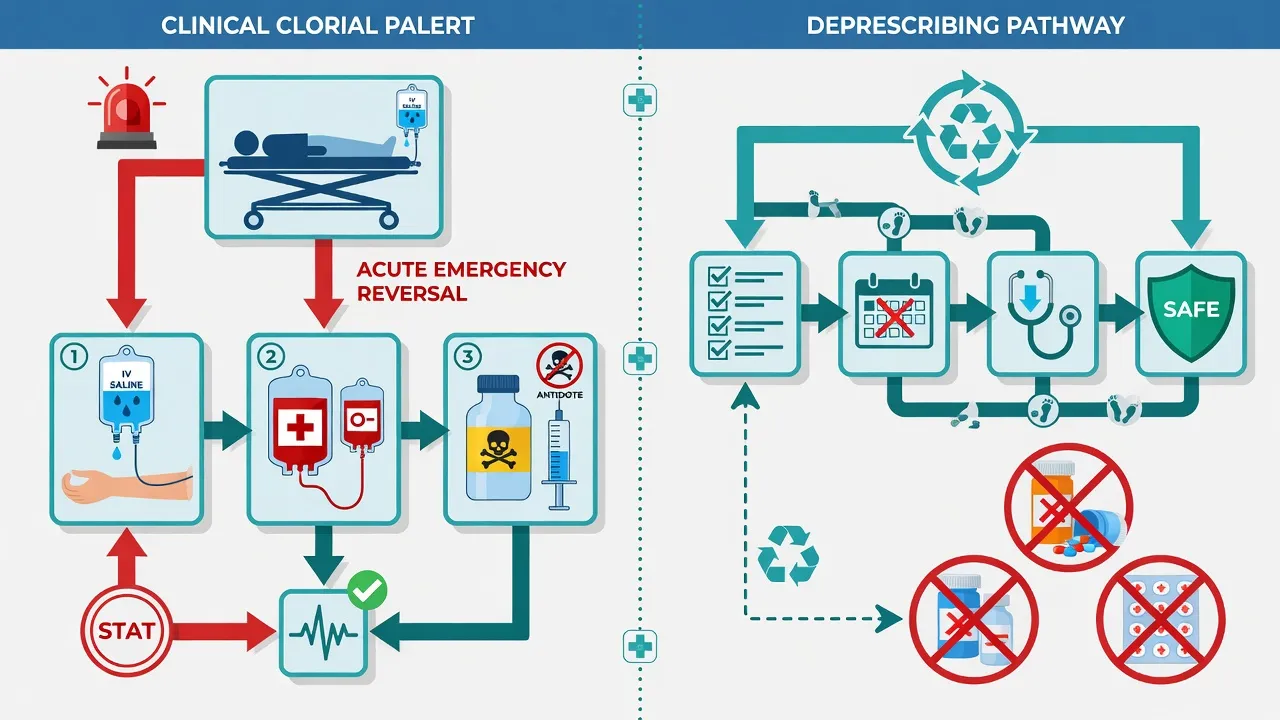
Management proceeds in two layers that the candidate must hold in order. First, resuscitate the adverse drug event with the specific reversal or antidote that the culprit demands, because the immediate harm is what endangers the patient. Second, deprescribe — the structured process of reducing or stopping the drugs whose harm outweighs their benefit — to prevent the recurrence.[6]
The reversal agents are the highest-yield drug doses in the topic, and each is paired with its culprit. For opioid overdose or over-sedation give naloxone 0.4 mg intravenously, titrated in 0.04 to 0.1 mg increments to restore the respiratory rate and arousal without precipitating withdrawal or pain, and an infusion at two-thirds the effective bolus per hour for long-acting opioids. For benzodiazepine overdose give flumazenil 0.2 mg intravenously over fifteen seconds, repeated at one-minute intervals to a maximum of 2 mg, with caution in the dependent patient because it lowers the seizure threshold. For hypoglycaemia give 50 mL of 50 per cent dextrose intravenously (or 25 g intravenously), or glucagon 1 mg intramuscularly where intravenous access is absent, and admit for a dextrose infusion after a sulfonylurea because the hypoglycaemia recurs. For major bleeding on warfarin give prothrombin complex concentrate 25 to 50 units per kilogram intravenously plus intravenous vitamin K 5 to 10 mg, because prothrombin complex concentrate reverses within minutes where vitamin K alone takes hours. For dabigatran give idarucizumab 5 g intravenously (two 2.5 g vials), and for apixaban or rivaroxaban give andexanet alfa by bolus and infusion where available, or prothrombin complex concentrate 50 units per kilogram as the pragmatic alternative.[6]
The deprescribing process — Scott five steps
Subtypes and special scenarios
The prescribing cascade is the archetype scenario and earns its own sentence: a side effect of an existing drug is misread as a new disease and a second drug is added — the non-steroidal anti-inflammatory to oedema to diuretic, the metoclopramide to Parkinsonism to levodopa, the amlodipine to oedema to diuretic. The remedy is to identify the original drug and to stop or replace it, which dissolves the cascade at its source rather than adding the third and fourth agent. The drug interaction scenario is the other recurring trap: warfarin potentiated within days by a newly added ciprofloxacin, amiodarone, metronidazole, fluconazole or cotrimoxazole, presenting as an elevated INR and a bleed; the antibiotic is the silent culprit and the medication history is the only way to find it. The nothing-by-mouth patient whose oral hypoglycaemic, antihypertensive or diuretic is continued unchanged in the emergency department while they fast develops hypoglycaemia, hypotension or dehydration. The care-home resident arrives with the highest drug counts, the most omitted doses, the least accurate handover list, and the greatest susceptibility — the medication reconciliation earns its weight in this group.[1]
Complications and pitfalls
The complications are the consequences of the missed or the mistreated event. Missing an adverse drug event behind a banal label — attributing a fall to "she just fell", confusion to "dementia", hypoglycaemia to "she did not eat", an elevated INR to "she just has a high INR" — is the cardinal error, because the drug chart is not then read and the next attendance follows. Stopping a drug too abruptly — a beta-blocker (rebound tachycardia and ischaemia), clonidine (hypertensive crisis), an opioid or a benzodiazepine (withdrawal seizure or delirium) — converts a chronic medication into an acute emergency; these drugs are tapered, never ceased. Using the creatinine instead of the eGFR to dose renally cleared drugs leaves the accumulation of the direct oral anticoagulants, digoxin, lithium and gabapentin unrecognised. Forgetting the over-the-counter, herbal and as-needed medicines — the ibuprofen bought at the pharmacy, the St John's wort that induces warfarin metabolism, the chlorphenamine for a cold — leaves the culprit on the chart. Missing the prescribing cascade keeps the side-effect drug and adds the cascade drug, deepening the harm. Reversing a sulfonylurea hypoglycaemia with a single bolus and discharging is a guaranteed re-presentation, because glibenclamide drives recurrent hypoglycaemia for over twenty-four hours. [1]
[1]Prognosis and disposition
The disposition follows the harm. The adverse drug event that has caused or threatens serious harm — an intracranial bleed, a refractory hypoglycaemia, a delirium, an acute kidney injury, an over-sedation requiring reversal — is admitted, and the reversal, the monitoring and the deprescribing plan are handed to the receiving team. The patient at high risk of recurrence — the patient with a high drug count and a preventable event, the care-home resident, the patient on the interacting combination — is admitted or observed even when the immediate harm is controlled, so that the medication review and the deprescribing are completed before discharge. The discharge pathway has three non-negotiable elements: the reconciled and deprescribed medication list is documented in the record and communicated to the general practitioner and the community pharmacist; the patient and carer are told what was stopped, why, and what to watch for; and a review is scheduled, because deprescribing without follow-up invites both recurrence of the original symptom and re-prescribing by an uninformed clinician. Discharging the patient on the unchanged list that caused the presentation is the failure mode the whole process exists to prevent. [1]
Special populations
The frail older patient is the archetype: lower reserve, lower muscle mass, higher drug sensitivity, and the lowest tolerance of any adverse event; the deprescribing plan is more aggressive and the doses are lower in this group. The patient with chronic kidney disease accumulates every renally cleared drug, and the direct oral anticoagulants, digoxin, lithium, gabapentin and the water-soluble antibiotics are dosed on the eGFR, never on the creatinine. The patient with dementia carries the highest anticholinergic burden and the highest sensitivity to centrally acting drugs; the anticholinergic scan and the deprescribing of the sedatives are the priority, because the cumulative load accelerates cognitive decline.[5] The care-home resident has the highest drug counts and the most error-prone handover, and the best possible medication history is most valuable here. The patient at the end of life has different goals — the prevention of long-term harm recedes and the relief of symptom and burden advances, so the statin, the antihypertensive and the oral hypoglycaemic are deprescribed in favour of comfort, while analgesia and antiemetics are intensified.
Evidence and regional guidelines
The evidence base is anchored by six sources that recur in every question. Hajjar and colleagues' review established the epidemiology and the high-risk classes that frame the field.[1] O'Mahony and colleagues' STOPP/START version 2 is the European consensus for identifying inappropriate prescribing and prescribing omissions, and the candidate is expected to distinguish STOPP (what to stop) from START (what to start).[2] The 2023 AGS Beers Criteria are the North American equivalent, an explicit list of potentially inappropriate medications by class, condition and renal function.[3] Woolcott and colleagues' meta-analysis quantified the fall risk of nine drug classes and identified the benzodiazepines and the antihypertensives as the recurring culprits.[4] Gray and colleagues' prospective cohort linked cumulative anticholinergic use to incident dementia, grounding the urgency of anticholinergic deprescribing beyond the acute delirium.[5] Scott and colleagues articulated the five-step deprescribing process that operationalises the whole field into bedside practice.[6]
ANZ practice note. Medication safety is a National Safety and Quality Health Service Standard under the Australian Commission on Safety and Quality in Health Care, which requires medication reconciliation at admission, transfer and discharge, and a best possible medication history at the emergency presentation. The National Inpatient Medication Chart and the "Round Up" reconciliation tool are the practical instruments. The Pharmaceutical Society of Australia and the Society of Hospital Pharmacists support home-medicines-review and the residential medication management review for the community and care-home patient, and deprescribing tools (the Australian Deprescribing Network) are increasingly embedded in practice. STOPP/START and Beers are both used; STOPP/START is the more common reference in Australasian practice. [1]
SAQ — Polypharmacy and deprescribing in an 82-year-old care-home resident
10 minutes · 10 marks
An 82-year-old woman from a residential aged-care facility is brought to the ED after a mechanical fall with a head strike. She takes 14 regular medicines including warfarin for atrial fibrillation, glibenclamide for type 2 diabetes, amitriptyline for neuropathic pain, oxybutynin for urge incontinence, temazepam at night, amlodipine, frusemide, ramipril, metoprolol, aspirin, pantoprazole, calcium-vitamin D, a statin, and paracetamol. Her GCS is 14, BP 168/96, glucose 3.1 mmol/L, INR 7.2, and a CT brain shows a small 4 mm subdural haematoma with no midline shift.
SAQ — Adverse drug reaction and the triple whammy
10 minutes · 10 marks
A 78-year-old man presents with three days of oliguria, confusion, and a fall. He has heart failure, chronic kidney disease (baseline eGFR 45), type 2 diabetes, and gout. His GP started him on oral diclofenac 50 mg three times daily one week ago for a gout flare. His regular medicines are ramipril 10 mg daily, frusemide 40 mg daily, metformin 1 g twice daily, spironolactone 25 mg daily, and allopurinol 300 mg daily. On examination he is volume-depleted, confused, and has a systolic BP of 92. Bloods show sodium 132, potassium 6.4, creatinine 320 (baseline 145), eGFR 18, glucose 4.8, and lactate 3.2.
Exam pearls
- Polypharmacy is five or more; hyperpolypharmacy is ten or more — the count is a proxy for risk; the harm lives in the inappropriate, interacting, duplicate, and wrongly dosed drugs.
- The high-risk classes are few and recurring — anticoagulants, antiplatelets, insulin and sulfonylureas, opioids, benzodiazepines, antipsychotics, anticholinergics, non-steroidal anti-inflammatories, digoxin — know each class and the harm it causes.
- STOPP asks what to stop; START asks what to start — a complete review asks both, because under-treatment and over-treatment coexist.
- Beers is the North American list of PIMs — benzodiazepines, anticholinergics, long-acting sulfonylureas, non-steroidal anti-inflammatories, sliding-scale insulin; antipsychotics in dementia carry a black-box mortality warning.
- Glibenclamide (glyburide) is the sulfonylurea to deprescribe — deepest, most prolonged hypoglycaemia; admit after a sulfonylurea for a dextrose infusion.
- The creatinine lies in the elderly — use the eGFR; the direct oral anticoagulants, digoxin, lithium and gabapentin accumulate silently.
- The prescribing cascade hides on the chart — a side effect misread as a new disease; find the original drug and stop it.
- Never stop abruptly — beta-blocker (rebound ischaemia), clonidine (hypertensive crisis), opioid or benzodiazepine (withdrawal seizure or delirium); taper.
- Major bleed on warfarin is prothrombin complex concentrate plus vitamin K, not vitamin K alone — minutes matter in the intracranial bleed.
- Always check a bedside glucose in any confused, collapsed or fitting older patient — hypoglycaemia mimics anything and is reversible in minutes.
- Deprescribe in five steps — ascertain indications, weigh harm against benefit, rank, taper and cease with monitoring, document and communicate — and schedule the review. [1]
Red flags
[1]References
- [1]Hajjar ER, Cafiero AC, Hanlon JT. Polypharmacy in elderly patients Am J Geriatr Pharmacother, 2007.PMID 18179993
- [2]O'Mahony D, O'Sullivan D, Byrne S, O'Connor MN, Ryan C, Gallagher P. STOPP/START criteria for potentially inappropriate prescribing in older people: version 2 Age Ageing, 2015.PMID 25324330
- [3]By the 2023 American Geriatrics Society Beers Criteria Update Expert Panel. American Geriatrics Society 2023 updated AGS Beers Criteria® for potentially inappropriate medication use in older adults J Am Geriatr Soc, 2023.PMID 37139824
- [4]Woolcott JC, Richardson KJ, Wiens MO, Patel B, Marin J, Khan KM, Marra CA. Meta-analysis of the impact of 9 medication classes on falls in elderly persons Arch Intern Med, 2009.PMID 19933955
- [5]Gray SL, Anderson ML, Dublin S, Hanlon JT, Hubbard R, Walker R, Yu O, Crane PK, Larson EB. Cumulative use of strong anticholinergics and incident dementia: a prospective cohort study JAMA Intern Med, 2015.PMID 25621434
- [6]Scott IA, Hilmer SN, Reeve E, Potter K, Le Couteur D, Rigby D, Gnjidic D, Del Mar CB, Roughead EE, Page A, Jansen J. Reducing inappropriate polypharmacy: the process of deprescribing JAMA Intern Med, 2015.PMID 25798731