EM · Applied pharmacology for EM
Applied pharmacology for the emergency department
Also known as Resuscitation pharmacology · Emergency department drugs · Antidotes and reversal agents · Drug interactions in the ED · Cytochrome P450 interactions · Pharmacokinetics in special populations · High-alert medications · Look-alike sound-alike drugs · Renal and hepatic dose adjustment · Safe prescribing in the ED
Applied pharmacology for the emergency department — the drug knowledge a consultant exercises under pressure: the resuscitation drugs given from memory (adrenaline, noradrenaline, amiodarone, lignocaine, atropine, calcium, sodium bicarbonate, naloxone, flumazenil, NAC, tranexamic acid) each with dose, route, indication, mechanism, onset and duration; the pharmacokinetic framework of onset, duration, half-life and clearance that decides route and interval; the high-yield drug–drug interactions and the unifying cytochrome-P450 mechanism (warfarin plus macrolides, SSRI plus tramadol, statin plus macrolides); the dose modification in renal, hepatic, paediatric, elderly and pregnant patients; and the differential of the correct versus the incorrect drug — look-alike/sound-alike confusion, wrong indication, decimal and route errors, and renarcotisation after a short-acting reversal agent. ACEM-primary, globally tagged.
On this page & tools
Your progress
Saved locally on this device.
Target exams
Red flags
Related topics
- Tricyclic antidepressant poisoning (emergency department diagnosis and management)
- Paracetamol poisoning
- Opioid poisoning and the opioid toxidrome (emergency department diagnosis and management)
- Cyanide poisoning
- Lithium poisoning
- Damage control resuscitation in trauma
- Acute kidney injury
- Sepsis and septic shock — the emergency department approach
The emergency physician is the one clinician in the hospital who must give drugs from memory under time pressure and without a pharmacist's check: the arrested patient receives adrenaline, amiodarone and bicarbonate spoken aloud by name and dose within minutes; the anaphylactic patient receives adrenaline by a route and a concentration that changes with the syndrome; the poisoned patient receives an antidote whose timing determines whether the liver survives. Applied pharmacology for the emergency department is therefore not a course in receptor theory but a working knowledge of the resuscitation drugs, the antidotes, the high-yield drug–drug interactions, and the dose modification required by the renal, the hepatic, the paediatric, the elderly and the pregnant patient. The examinable unit is the drug by name, dose, route, indication, mechanism, onset and duration, and the single error to avoid — and behind it, the pharmacokinetic principles and the cytochrome-P450 mechanisms that allow the candidate to predict, rather than memorise, the interaction. [1]
Definition and scope — what applied EM pharmacology is
Applied pharmacology in the emergency department is the drug knowledge a consultant exercises in three settings: the resuscitation, where the drug is given from memory and the dose is spoken aloud; the antidote, where the agent reverses a toxin and the timing is the treatment; and the prescribing decision, where the new drug must fit the patient's existing list, the renal function and the liver function without harm. The three settings share a common demand for precision — agent, dose, route, timing and rationale — and a common vulnerability to the error that an omission, a decimal slip or a concentration confusion converts into harm. The high-yield drugs the Fellowship candidate must know by name and dose are the resuscitation eleven (adrenaline, noradrenaline, amiodarone, lignocaine, atropine, calcium, sodium bicarbonate, naloxone, flumazenil, N-acetylcysteine and tranexamic acid), the high-yield interactions (warfarin and macrolides, SSRI and tramadol, statin and macrolides), and the dose-modification logic for the special populations. [1]
The pharmacokinetic framework — onset, duration, half-life, clearance
The four parameters that decide a drug's route and its dosing interval are its onset, its duration, its half-life and its clearance. Onset is route- and formulation-dependent: an intravenous bolus acts within one circulation time, an intramuscular injection within five to 10 minutes, and an oral dose within 30 to 60 minutes. Duration is governed by redistribution into fat and by clearance — the lipophilic bolus (midazolam, fentanyl) acts briefly because it leaves the receptor site for fat, then wears off as clearance removes it. The half-life (t½) is the time for the plasma concentration to halve, and the time to steady state is approximately five half-lives. Clearance is renal (glomerular filtration plus tubular secretion for drugs excreted unchanged — vancomycin, gentamicin, digoxin, lithium, atenolol, gabapentin), hepatic (cytochrome-P450 metabolism followed by biliary excretion — most drugs), or organ-independent (plasma ester hydrolysis — remifentanilan, succinylcholine in part; Hofmann elimination — cisatracurium).[11]
[1]The three consequences the emergency physician draws from this framework are: a renally-cleared drug accumulates in acute kidney injury (vancomycin, gentamicin, lithium — the cause of many iatrogenic toxicities); a lipophilic drug redistributes and accumulates in the elderly who have more fat (diazepam, whose half-life in the elderly approaches 100 hours); and a high-Vd drug is not removed by haemodialysis (lithium and salicylate are the exceptions — both are dialysable despite a respectable Vd because of their kinetics). The framework predicts the interaction, the accumulation and the dialysability that the candidate would otherwise have to memorise. [1]
The resuscitation drugs — the high-yield eleven
The drugs below are the agents the Fellowship candidate must be able to draw up and give from memory in the resuscitation bay. Each is presented with its dose, route, indication, mechanism, onset and the single error to avoid. [1]
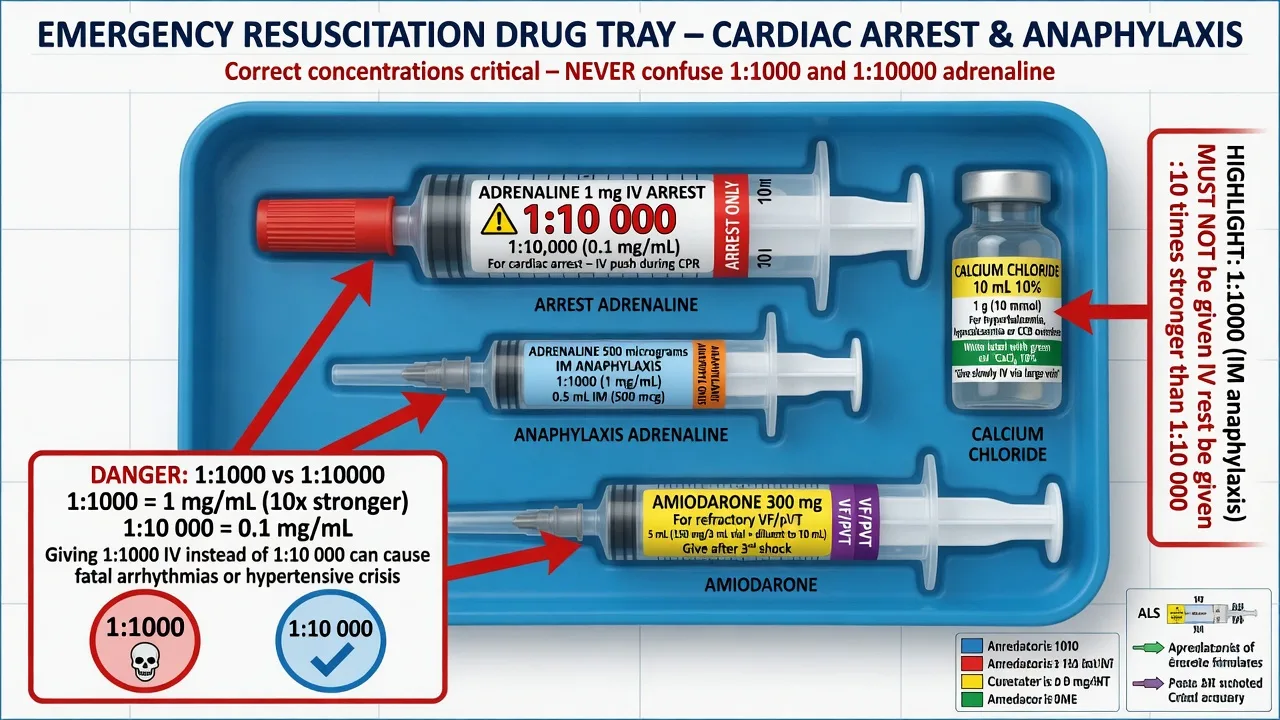
Adrenaline (epinephrine) is a non-selective α- and β-adrenergic agonist. In cardiac arrest the dose is 1 mg intravenously or intraosseously every three to five minutes; in anaphylaxis the dose is 500 micrograms intramuscularly (0.5 mL of 1:1000) in the adult, repeated at five-minute intervals; in shock it is given as an infusion at 0.05 to 0.5 micrograms per kilogram per minute. Onset is seconds intravenously and five to 10 minutes intramuscularly. The single error to avoid is the concentration confusion: 1:1000 contains 1 mg per millilitre and is the intramuscular preparation for anaphylaxis, while 1:10 000 contains 0.1 mg per millilitre and is the intravenous preparation for arrest. Giving the concentrated 1:1000 form intravenously in anaphylaxis — the well-meaning error of the practitioner who reaches for the wrong ampoule — produces cardiac ischaemia, ventricular dysrhythmia and death. [1]
[1]Noradrenaline (norepinephrine) is an α-adrenergic agonist with relative β sparing, the first-line vasopressor in septic and vasodilatory shock at 0.05 to 1 microgram per kilogram per minute titrated to the mean arterial pressure. The pitfall is extravasation necrosis: noradrenaline is sclerosing to tissue and should run through a central line where possible, with phentolamine 5 to 10 mg in 10 mL saline infiltrated locally if it extravasates. Adrenaline is preferred where there is a contractility component (cardiogenic shock), noradrenaline where the deficit is vasomotor tone (septic, anaphylactic-after-fluids, vasoplegic). [1]
Amiodarone is a mixed Vaughan-Williams antiarrhythmic (predominantly class III with class Ib, II and IV activity). In shockable cardiac arrest — ventricular fibrillation or pulseless ventricular tachycardia — the dose is 300 mg intravenously after the third shock, then 150 mg after the fifth shock, with a third dose considered. The ARREST trial established amiodarone over placebo for shock-refractory VF, and the larger ROC trial confirmed a short-term survival benefit over placebo for both amiodarone and lignocaine, with neither drug improving survival to discharge.[5][6] The pitfall is hypotension from the solvent (polysorbate/benzyl alcohol) — give through a large line over a minute or two. Lignocaine 100 mg intravenously (1 to 1.5 mg per kilogram) is the alternative antiarrhythmic when amiodarone is unavailable.
Lignocaine (lidocaine) is a class Ib antiarrhythmic and the prototype amide local anaesthetic. As an antiarrhythmic, 100 mg intravenously (1 to 1.5 mg per kilogram) for shockable rhythms if amiodarone is unavailable. As a local anaesthetic, the maximum safe dose is 3 mg per kilogram of plain lignocaine and 7 mg per kilogram with adrenaline (which delays systemic absorption). The pitfall is local anaesthetic systemic toxicity (LAST) — circumoral tingling, tinnitus and agitation progressing to seizure and then pulseless electrical activity or asystole — treated by stopping the injection, airway and circulatory support, and 20 per cent lipid emulsion at 1.5 mL per kilogram bolus then infusion. [1]
Atropine is a muscarinic anticholinergic used for symptomatic bradycardia. The dose is 500 micrograms intravenously every three to five minutes to a maximum of 3 mg, the dose at which the vagus is fully vagolysed and further atropine cannot help. The pitfall is the wrong indication: atropine is effective for sinus bradycardia and AV-nodal block (Mobitz I) but ineffective in Mobitz II second-degree block and complete heart block, which are infranodal and require pacing. Atropine is no longer in the cardiac arrest algorithm for PEA and asystole — removed from the algorithm in 2010 on the evidence of no benefit. [1]
Calcium stabilises the myocardial cell membrane and restores the depolarisation gradient in the hyperkalaemic, the calcium-channel-blocker-poisoned and the hypocalcaemic cell. Calcium chloride 10% 10 mL (1 g, delivering 6.8 mmol of elemental calcium) is given intravenously in arrest or severe hyperkalaemia; calcium gluconate 10% 10 mL delivers only 2.3 mmol of elemental calcium (roughly one-third) and must be metabolised by the liver to release its calcium. Calcium chloride is therefore preferred in arrest — more calcium per millilitre — but is sclerosing and must run through a central line or a large-bore cannula; calcium gluconate is the safer choice through a peripheral line for the non-arrested hyperkalaemic patient. [1]
[1]Sodium bicarbonate 8.4% buffers acid, provides a sodium load, is hyperosmolar, and alkalinises the serum and the urine. The indications are narrow and evidence-limited: tricyclic-antidepressant poisoning (the sodium load and the alkalosis overcome the fast-sodium-channel blockade, narrowing the QRS — Hoffman's work established the ECG endpoint), severe life-threatening hyperkalaemia, tricyclic arrest, and prolonged arrest with known severe acidosis.[4] The dose is 1 to 2 mmol per kilogram (50 to 100 mL of 8.4%); the endpoint in tricyclic poisoning is QRS narrowing to under 100 ms and a serum pH of 7.45 to 7.55. Sodium bicarbonate is not given routinely in cardiac arrest — the evidence shows no outcome benefit and a real risk of intracellular acidosis and hypernatraemia.
Naloxone is a competitive antagonist at the μ-opioid receptor, the antidote to opioid respiratory depression. The dose is 400 micrograms intravenously, titrated in 40 to 100 microgram increments to restore respiratory effort without precipitating withdrawal; the intramuscular and intranasal dose is 800 micrograms. The half-life is 30 to 90 minutes, shorter than most opioids, so the patient who wakes will re-sedate — the renarcotisation risk.[11] Observe for at least two hours after the last naloxone dose, and longer for the long-acting opioids (methadone, fentanyl, sustained-release morphine), for whom a naloxone infusion (two-thirds of the wake-up dose per hour) may be needed. The pitfall is the intravenous bolus in the opioid-dependent patient, which precipitates acute withdrawal, agitation and occasionally pulmonary oedema — titrate.
Flumazenil is a competitive antagonist at the benzodiazepine receptor. The dose is 200 micrograms intravenously, titrated every minute to a maximum of 1 mg (repeat to a total of 3 mg if needed). Like naloxone, its half-life (40 to 80 minutes) is shorter than most benzodiazepines, so re-sedation occurs. Unlike naloxone, its role is narrow: flumazenil is contraindicated in the chronic benzodiazepine user and in mixed overdose (especially with tricyclic co-ingestion), where it precipitates seizures. The poisoned patient who is benzodiazepine-sedated is generally allowed to sleep off the drug with airway support, and flumazenil is reserved for the isolated, iatrogenic, intra-procedural benzodiazepine over-sedation in the non-tolerant patient. [1]
N-acetylcysteine (NAC) is the glutathione precursor that repletes the detoxifying conjugate for the toxic paracetamol metabolite NAPQI, the antidote to paracetamol poisoning. It is given at or above the treatment line on the Rumack-Matthew nomogram (or empirically when the time of ingestion is unknown). The regimen is 200 mg per kilogram over 21 hours (the original Prescott regimen) or the simpler two-bag regimen of 100 mg per kilogram over one hour then 150 mg per kilogram over 20 hours.[3] NAC is most effective when given within eight hours of ingestion — the eight-hour rule — and effective even in established hepatotoxicity. The pitfall is the anaphylactoid reaction (non-IgE, rate-related) in the first hour of the infusion: slow or stop, give an antihistamine, and restart at a lower rate — it is not a true allergy and does not contraindicate the drug.
Tranexamic acid (TXA) is a lysine-analogue that inhibits plasminogen activation and stabilises clot. In traumatic haemorrhage the dose is 1 g intravenously over 10 minutes, then 1 g over 8 hours (CRASH-2), and the same dose is used in postpartum haemorrhage (WOMAN).[1][2] The treatment is most effective within three hours of injury, and a signal of harm was seen when TXA was given after three hours in trauma. The thrombosis concern is theoretical — it was not borne out in either trial at the population level.
Antidotes and reversal agents — the emergency department set
Beyond the resuscitation eleven, the Fellowship candidate should be able to name the antidote for each common toxin. The set, with the agent and the indication, is reproduced below; the principle is that the antidote is the treatment, and the timing of its administration determines the outcome. [1]
[1]Drug interactions — the three high-yield, and the unifying CYP3A4 mechanism
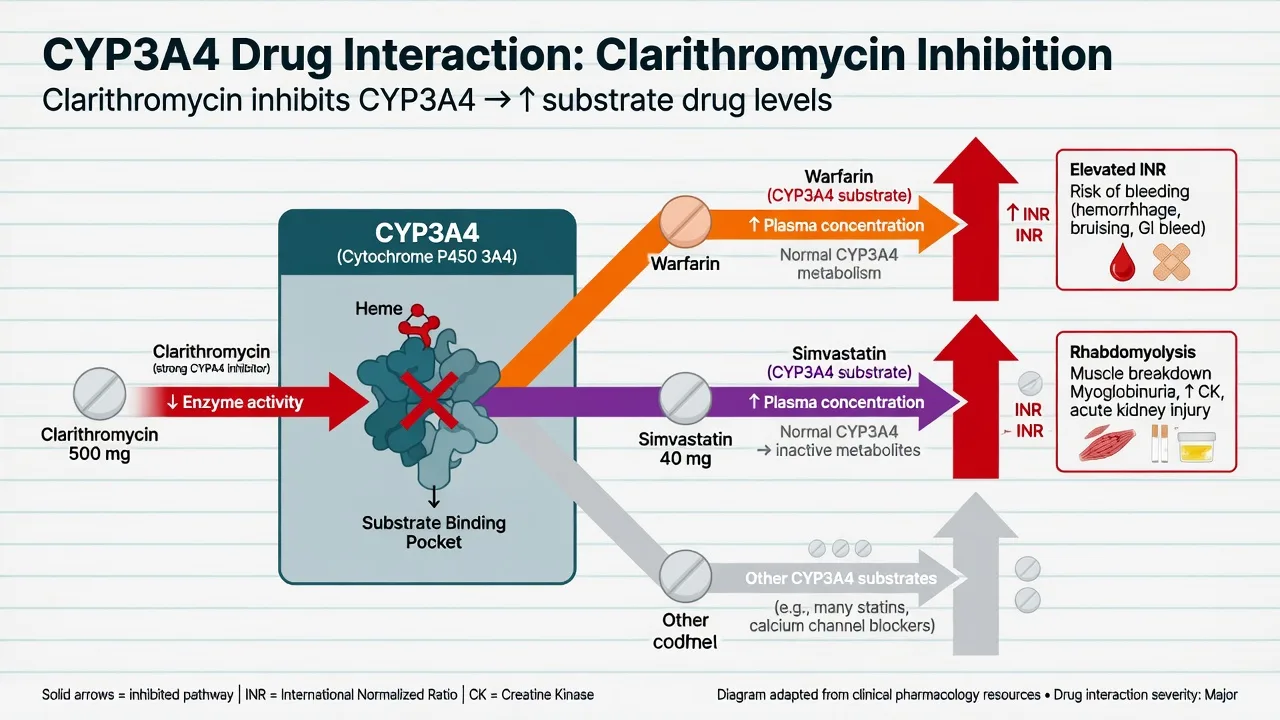
The Fellowship examination tests three interactions repeatedly, and all three are unified by a single mechanism the candidate must be able to explain: cytochrome-P450 inhibition, most often at CYP3A4, the enzyme that metabolises roughly half of all clinically-used drugs. An inhibitor raises the level of every substrate; an inducer lowers it. The high-yield inhibitors are the macrolides clarithromycin and erythromycin, the azole antifungals, ritonavir, grapefruit juice, and the non-dihydropyridine calcium-channel blockers diltiazem and verapamil. The high-yield inducers are rifampicin, phenytoin, carbamazepine, the newer antiepileptics and St John's wort. A second interaction axis is P-glycoprotein (the efflux transporter), which explains the digoxin–clarithromycin and the dabigatran–verapamil interactions. [1]
Warfarin + macrolide
- Clarithromycin and erythromycin inhibit CYP3A4, the enzyme that clears the more potent S-enantiomer of warfarin; the INR rises within two to four days and bleeding follows.
- The classic presentation is the patient anticoagulated for atrial fibrillation who starts a course of clarithromycin for a chest infection and returns with an INR above 8 and a bleed.
- Management: withhold the warfarin, give vitamin K (1 to 3 mg orally for an asymptomatic high INR, 5 to 10 mg intravenously for bleeding with prothrombin complex concentrate), and substitute a non-interacting antibiotic.
- Azithromycin is the macrolide that does NOT inhibit CYP3A4 meaningfully and is the safe substitute. Fluconazole, metronidazole and sulfamethoxazole also potentiate warfarin (CYP2C9 and 3A4).
SSRI + tramadol
- Tramadol is a weak serotonin and noradrenaline reuptake inhibitor and is metabolised by CYP2D6 to its active O-desmethyl metabolite; combined with an SSRI, SNRI or MAOI the serotonergic load produces serotonin syndrome.
- Onset is within hours; the toxidrome is the triad of autonomic instability (tachycardia, diaphoresis, fever), neuromuscular excitation (clonus — spontaneous, inducible or ocular — hyperreflexia, hypertonia, tremor) and altered mental state (agitation, confusion).
- Diagnose by the Hunter Serotonin Toxicity Criteria (clonus plus agitation, diaphoresis, tremor or hypertonia in a serotonergic patient) — more sensitive and specific than the older Sternbach criteria.
- Management: stop the serotonergic drug, benzodiazepine for agitation and rigidity, active cooling, and cyproheptadine in severe cases; severe hyperthermia is a paralysis-and-ventilate emergency.
Statin + macrolide
- Simvastatin, lovastatin and atorvastatin are CYP3A4 substrates; clarithromycin and erythromycin raise their levels several-fold, producing myalgia, myopathy and rhabdomyolysis with acute kidney injury.
- The Christensen systematic review confirmed the interaction is greatest for simvastatin and lovastatin and least for pravastatin, rosuvastatin and fluvastatin, which are cleared by non-CYP3A4 routes.
- Management: hold the statin for the duration of the macrolide course and review; substitute pravastatin or rosuvastatin if a statin must continue; check the creatine kinase and the renal function.
- The same course of clarithromycin that bleeds the warfarin patient rhabdolyses the simvastatin patient — one drug, one enzyme, two different presentations.
The three interactions are the surface of a deeper principle: every new prescription interacts with the existing list at a metabolic enzyme, a transporter or a pharmacodynamic target, and the safe prescriber checks the list before writing. The emergency physician who adds a macrolide to a patient on warfarin, a statin and an SSRI has, in a single prescription, created the conditions for bleeding, rhabdomyolysis and serotonin syndrome — and the candidate who can articulate the unifying mechanism will answer the interaction question from principle rather than memory.[7][8][10]
Special populations — dose modification for the renal, hepatic, paediatric, elderly and pregnant patient
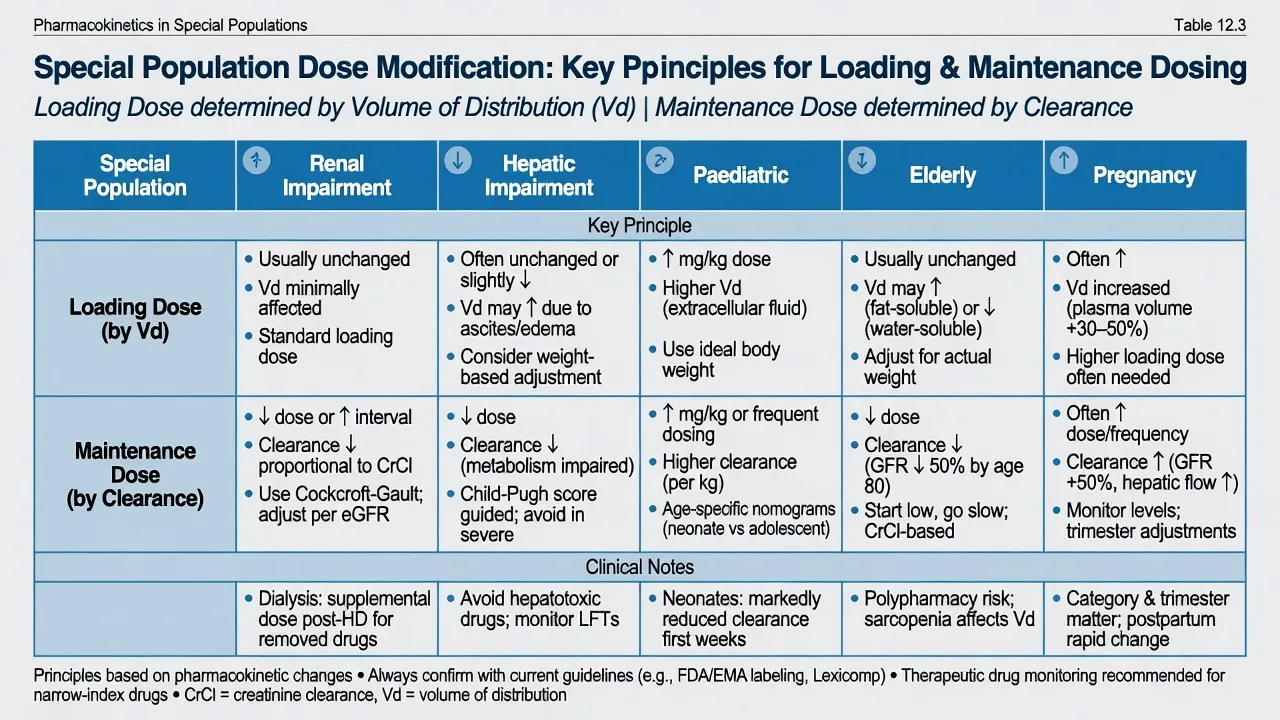
The dose that is right for the 70-kilogram adult with normal organ function is wrong for most of the patients in the emergency department. The five populations below each carry a modification rule the candidate must apply at the point of prescribing. [1]
[1]Renal dose adjustment is driven by the fraction excreted unchanged and the estimated glomerular filtration rate. A drug that is more than 40 per cent excreted unchanged (vancomycin, gentamicin, digoxin, lithium, gabapentin, atenolol, the water-soluble beta-blockers) accumulates in renal failure and needs dose reduction; a drug cleared by hepatic metabolism (most others) does not. Loading doses are usually unchanged because the volume of distribution is unaffected by renal failure; maintenance doses are reduced or the interval extended, and the aminoglycosides, vancomycin and digoxin require therapeutic drug monitoring with levels drawn at defined times. [1]
Hepatic dose adjustment is governed by the Child-Pugh score and by the two changes cirrhosis produces: reduced first-pass metabolism (oral bioavailability of high-extraction drugs rises — propranolol, morphine, midazolam) and reduced clearance (diazepam, the long-acting benzodiazepines). Hypoalbuminaemia raises the free fraction of highly-bound drugs (phenytoin — measure the free level; warfarin — a narrower therapeutic window in the coagulopathic). The rule is to start low and titrate, and to prefer the organ-independent or renally-cleared agent where one exists. [1]
Paediatric dosing is weight-based at milligrams per kilogram, with the paediatric clearance and volume of distribution differing from the adult: infants and young children have a higher per-kilogram clearance (the liver matures by months) and a larger volume of distribution (more body water), so many drugs need a higher per-kilogram dose and a shorter interval than the adult. Weight is estimated by the Luscombe-Owens formula (weight in kilograms = 3 × (age + 4) for one to ten years) or by the Broselow tape; doses are capped at the adult maximum; the paediatric formulary (the Royal Children's Hospital Melbourne or the BNFC) is checked for every drug. [1]
Elderly dosing accounts for the four age-related changes: reduced renal clearance (use the eGFR, not the creatinine, which is falsely reassuring in the muscle-wasted elderly), reduced hepatic mass, increased fat (longer half-life for the lipophilic — diazepam approaches 100 hours), and reduced albumin. Polypharmacy is the single biggest risk factor for adverse drug events, and the anticholinergic burden (antihistamines, tricyclics, oxybutynin) is the proximate cause of much delirium and many falls. The Beers criteria and the STOPP/START tools flag the inappropriate drug. The rule is start low and go slow, and to stop a drug whenever the indication has lapsed. [1]
Pregnancy modifies the dose and the choice. Physiologically the GFR rises by 50 per cent and the volume of distribution expands, lowering the levels of renally-cleared drugs (penicillins often need a higher dose); teratogenicity is gestation-dependent, with organogenesis (weeks three to ten) the most vulnerable window. The drugs to avoid are the ACE-inhibitors and angiotensin-receptor blockers (renal agenesis), warfarin (embryopathy, especially weeks six to twelve), the non-steroidal in the third trimester (premature closure of the ductus), tetracyclines (teeth and bone), valproate (neural-tube defects), retinoids and the sulfonylureas. The drugs that are safe are paracetamol, the penicillins and cephalosporins, metformin, labetalol for hypertension, and — importantly — adrenaline in anaphylaxis, where the maternal circulation is the priority and the dose is unchanged. [1]
Differential — the correct drug versus the incorrect drug
When a patient deteriorates after a drug is given, or when an adverse event is reviewed, the prescribing-error differential is the first frame: was the right drug given in the wrong way, or the wrong drug altogether? The patterns below are the high-yield errors the Fellowship candidate must distinguish, because each carries a different countermeasure.[8][12]
Look-alike sound-alike (LASA)
- Adrenaline 1:1000 (IM, anaphylaxis) versus 1:10 000 (IV, arrest) — the classic; NORadrenaline and adrenaline infusions swapped; hydralazine and hydroxyzine; ceFAZolin and cefTAZidime; potassium chloride and sodium chloride ampoules.
- Countermeasure: tall-man lettering on labels, separation of high-alert ampoules in the drawer, read-back of the drug, the concentration and the route before administration, and the independent double-check for high-alert medications.
Right drug, wrong indication
- Calcium gluconate given for a non-existent hypocalcaemia; flumazenil given to the chronic benzodiazepine user (seizure); atropine given for a Mobitz II or complete heart block (ineffective — pace); routine bicarbonate in the non-TCA arrest (no benefit, intracellular acidosis).
- Countermeasure: name the indication aloud before the drug — "calcium chloride 1 gram intravenously for a potassium of seven" — and resist the reflex dose that has no current indication.
Decimal or dose error
- The 10-fold error — insulin 70 units instead of 7, heparin 50 000 instead of 5000, morphine 10 mg instead of 1 mg — the single most lethal prescribing pattern; "u" written for units and read as a zero (40 units read as 400).
- Countermeasure: write "units" in full, never "u"; use a leading zero (0.5, never .5) and never a trailing zero (5, never 5.0); independent double-check of insulin, heparin, opioid and paediatric weight-based doses.
Wrong route
- Adrenaline 1:1000 meant for IM anaphylaxis given IV (cardiac ischaemia); vincristine given intrathecally when intended intravenously (fatal neurotoxicity — the classic never-event); paracervical or intrathecal instead of intravenous.
- Countermeasure: route confirmation at the point of administration, the separate storage and labelling of intrathecal chemotherapy, and the stop mandated when the route is uncertain.
Missed interaction or accumulation
- Clarithromycin added to warfarin (bleeding) or simvastatin (rhabdo); gentamicin continued in acute kidney injury (nephro- and ototoxicity); lithium continued with a thiazide or an NSAID (toxicity); the long-acting opioid outlasting the naloxone (renarcotisation).
- Countermeasure: a medication reconciliation at every ED encounter, a renal-function check before the renally-cleared drug, and the explicit "will this interact?" question for every new prescription.
Bedside assessment and investigations — drug levels and the proarrhythmic window
The bedside application of pharmacology draws on three classes of investigation. Therapeutic drug monitoring targets the drugs with a narrow therapeutic window and a level that predicts effect and toxicity — vancomycin (trough 15 to 20 mg per litre), the aminoglycosides (gentamicin trough under 1 and peak 5 to 10), digoxin (0.5 to 0.9, toxic above 2), phenytoin (total 10 to 20, or free 1 to 2 if hypoalbuminaemic), valproate (50 to 100), lithium (0.4 to 1.0), and the antiarrhythmics. The paracetamol and salicylate levels are drawn at four hours post-ingestion (the earliest reliable point on the nomogram) and plotted on the Rumack-Matthew or the Done nomogram respectively. The 12-lead ECG is the bedside monitor for the proarrhythmic drugs: the QRS width signals tricyclic cardiotoxicity (the target for bicarbonate), the QTc signals the torsadogenic risk (amiodarone, macrolides, ondansetron, methadone, antipsychotics), and the U wave and the bradycardia signal digoxin toxicity. The renal function and the electrolytes are checked before every renally-cleared drug and before the proarrhythmic drug in the patient on a diuretic (the hypokalaemia that provokes torsades). [1]
Common errors and pitfalls
The recurring failures are those the framework exists to prevent. The 10-fold decimal error in insulin, heparin and opioid — written without the leading zero, or with the trailing zero, or with the "u" read as a zero — is the single most lethal prescribing pattern in the department. The adrenaline concentration confusion — the 1:1000 ampoule given intravenously — is the second, and the read-back of the concentration and the route before administration is the defence. Atropine for Mobitz II or complete heart block is the reflex dose that cannot work; the infranodal block needs pacing. Routine bicarbonate in the arrest has no outcome benefit and a real risk of intracellular acidosis and hypernatraemia. Flumazenil in the chronic benzodiazepine user or the mixed overdose precipitates seizures and is a far narrower drug than naloxone. The naloxone bolus in the opioid-dependent patient precipitates acute withdrawal and pulmonary oedema; titrate. The NAC anaphylactoid reaction mislabelled an "allergy" leads to the drug being withheld when it is rate-related and non-IgE — slow, antihistamine, restart. Tranexamic acid after three hours in trauma carries a harm signal. The statin not held with clarithromycin produces rhabdomyolysis. The INR not checked when a macrolide is added to warfarin produces bleeding. Azithromycin avoided for "CYP" reasons that do not apply — azithromycin is the safe macrolide and the correct substitute. [1]
Evidence and regional guidelines
The resuscitation drug doses follow the ILCOR-consensus-aligned algorithms (ANZCOR in Australia and New Zealand, the Resuscitation Council UK, the American Heart Association and the European Resuscitation Council), which set adrenaline 1 mg intravenously every three to five minutes and amiodarone 300 mg after the third shock. The amiodarone evidence is grounded in the ARREST and the ROC trials.[5][6] The tranexamic acid evidence is the CRASH-2 trial in trauma and the WOMAN trial in postpartum haemorrhage.[1][2] The N-acetylcysteine regimen follows Prescott's original 1979 work.[3] The sodium-bicarbonate-in-tricyclic evidence follows Hoffman.[4] The naloxone pharmacokinetics and the renarcotisation principle are drawn from Saari's recent pharmacokinetic review.[11] The interaction evidence is the Christensen systematic review for the statin–macrolide pair, the Boyer review and the Dunkley Hunter criteria for serotonin syndrome, and the Recker report for warfarin–clarithromycin.[7][8][9][10][12]
ANZ practice note. The Australian Resuscitation Council and the New Zealand Resuscitation Council (ANZCOR) publish the resuscitation algorithm and the drug doses used in this topic. Therapeutic Guidelines (eTG) and the Australian Injectable Drugs Handbook are the standard references for the drug, the diluent, the compatible fluid and the infusion rate; the Royal Children's Hospital Melbourne Paediatric Injectable Guidelines are the standard for paediatric weight-based dosing. The Australian Commission on Safety and Quality in Health Care (ACSQHC) lists the high-alert medications (insulin, heparin and anticoagulants, opioids and sedatives, concentrated electrolytes, adrenaline, chemotherapy) for which an independent double-check is required. The NSW Clinical Excellence Commission's Tag (medication safety) tool and the national Tall Man lettering standard address the look-alike sound-alike drugs. [1]
Exam pearls
- Adrenaline arrest 1 mg IV/IO every three to five minutes; anaphylaxis 500 micrograms IM (1:1000); shock 0.05 to 0.5 microg/kg/min. The ampoule concentration is read before the dose.
- Amiodarone 300 mg after the third shock, 150 mg after the fifth; lignocaine 100 mg (1 to 1.5 mg/kg) is the alternative.
- Atropine 500 micrograms IV every three to five minutes to a maximum of 3 mg — ineffective in Mobitz II and complete heart block; not in the arrest algorithm.
- Calcium chloride 10% 10 mL (6.8 mmol elemental Ca) in arrest; gluconate (2.3 mmol) peripherally in the non-arrested.
- Sodium bicarbonate for tricyclic poisoning, severe hyperkalaemia, prolonged arrest with severe acidosis; endpoint in tricyclic is QRS under 100 ms and pH 7.45 to 7.55; not routine in arrest.
- Naloxone 400 micrograms IV titrated; half-life 30 to 90 min — renarcotisation; observe at least two hours.
- Flumazenil 200 micrograms IV titrated; contraindicated in the chronic benzodiazepine user and the mixed overdose — far narrower than naloxone.
- NAC 200 mg/kg over 21 h (or two-bag 100 then 150); most effective within eight hours; anaphylactoid reaction is rate-related, not a true allergy.
- TXA 1 g over 10 min then 1 g over 8 h; within three hours of trauma (CRASH-2) and in PPH (WOMAN).
- Loading dose by Vd, maintenance by clearance; Vd high — not dialysable; renal failure — reduce the maintenance, not the load.
- CYP3A4 inhibitors: clarithromycin, erythromycin, azoles, ritonavir, grapefruit, diltiazem, verapamil. Inducers: rifampicin, phenytoin, carbamazepine, St John's wort.
- Clarithromycin + warfarin = bleeding; + simvastatin = rhabdomyolysis; azithromycin is the safe macrolide.
- SSRI + tramadol = serotonin syndrome; Hunter = clonus (spontaneous, inducible or ocular) plus agitation, diaphoresis, tremor or hypertonia. [1]
Exam practice
SAQ — Polypharmacy and the interaction cascade in the elderly
10 minutes · 10 marks
An 82-year-old care-home resident is brought to the emergency department by her daughter with four days of increasing confusion, a nose bleed she could not stop, generalised muscle aching and a fall in her bedroom. Her baseline list is warfarin 5 mg for atrial fibrillation, simvastatin 40 mg, sertraline 100 mg, ramipril 10 mg, frusemide 40 mg, oxybutynin 5 mg and digoxin 125 micrograms. Four days ago her general practitioner started clarithromycin 500 mg twice daily for a productive cough. On arrival she is delirious (GCS 14), HR 42, BP 96/58, temperature 37.9 degrees C. The INR is 8.4, creatinine 188 (baseline 95), CK 4200, potassium 5.6, digoxin level 3.1 nmol per litre, and the ECG shows a bradycardic junctional rhythm.
SAQ — Rapid sequence induction pharmacology in septic shock
10 minutes · 10 marks
A 68-year-old man with urosepsis and septic shock is deteriorating on the resuscitation trolley. He is already on noradrenaline 0.3 micrograms per kg per minute, BP 92/54 (MAP 66), HR 128 in sinus tachycardia, RR 32, SpO2 90 per cent on high-flow nasal cannulae at 60 L and FiO2 1.0, and he is using accessory muscles with a rising work of breathing. The lactate is 5.2, the chest X-ray shows bilateral infiltrates, and the intensive-care team is ten minutes away. You are preparing to perform the rapid sequence induction.
Red flags
[1]References
- [1]CRASH-2 trial collaborators. Effects of tranexamic acid on death, vascular occlusive events, and blood transfusion in trauma patients with significant haemorrhage (CRASH-2): a randomised, placebo-controlled trial Lancet, 2010.PMID 20554319
- [2]WOMAN Trial Collaborators. Effect of early tranexamic acid administration on mortality, hysterectomy, and other morbidities in women with post-partum haemorrhage (WOMAN): an international, randomised, double-blind, placebo-controlled trial Lancet, 2017.PMID 28456509
- [3]Prescott LF, Illingworth RN, Critchley JA, Stewart MJ, Adam RD, Proudfoot AT. Intravenous N-acetylcystine: the treatment of choice for paracetamol poisoning Br Med J, 1979.PMID 519312
- [4]Hoffman JR, Votey SR. Effect of hypertonic sodium bicarbonate in the treatment of moderate-to-severe cyclic antidepressant overdose Am J Emerg Med, 1993.PMID 8216512
- [5]Kudenchuk PJ, Cobb LA, Copass MK, et al. Amiodarone for resuscitation after out-of-hospital cardiac arrest due to ventricular fibrillation N Engl J Med, 1999.PMID 10486418
- [6]Kudenchuk PJ, Brown SP, Daya M, et al. Amiodarone, Lidocaine, or Placebo in Out-of-Hospital Cardiac Arrest N Engl J Med, 2016.PMID 27043165
- [7]Hougaard Christensen MM, Bruun AB, Heiberg B, et al. Interaction potential between clarithromycin and individual statins-A systematic review Basic Clin Pharmacol Toxicol, 2020.PMID 31628882
- [8]Boyer EW, Shannon M. The serotonin syndrome N Engl J Med, 2005.PMID 15784664
- [9]Dunkley EJ, Isbister GK, Sibbritt D, Dawson AH, Whyte IM. The Hunter Serotonin Toxicity Criteria: simple and accurate diagnostic decision rules for serotonin toxicity QJM, 2003.PMID 12925718
- [10]Recker MW, Kier KL. Potential interaction between clarithromycin and warfarin Ann Pharmacother, 1997.PMID 9296238
- [11]Saari TI, Lilius J, Kalso E. Clinical Pharmacokinetics and Pharmacodynamics of Naloxone Clin Pharmacokinet, 2024.PMID 38485851
- [12]Baldo BA. Toxicities of opioid analgesics: respiratory depression, histamine release, hemodynamic changes, hypersensitivity, serotonin toxicity Arch Toxicol, 2021.PMID 33974096