EM · Toxicology and environmental emergencies
Snake envenomation
Also known as Australian snakebite · Elapid envenomation · Venom-induced consumption coagulopathy · VICC · Brown snake bite · Tiger snake bite
ANZ snake envenomation — elapid bites from the brown snake, tiger snake, taipan, death adder, mulga/black snake and rough-scaled snake. The four venom syndromes are venom-induced consumption coagulopathy (VICC — INR above 3, D-dimer markedly raised, fibrinogen low, from procoagulant prothrombin-activator venoms), neurotoxicity (descending paralysis — ptosis, ophthalmoplegia, bulbar palsy, respiratory failure — from presynaptic phospholipase A2 and postsynaptic three-finger toxins), rhabdomyolysis, and renal failure. First aid is the pressure immobilisation bandage. Diagnosis is clinical plus the snake venom detection kit (SVDK). Treatment is monovalent antivenom (brown snake 1 to 2 vials, tiger snake 2 to 4 vials) or polyvalent antivenom when the snake is unidentified, with adrenaline premedication and blood products only after antivenom. ACEM-primary, globally tagged.
On this page & tools
Your progress
Saved locally on this device.
Target exams
Red flags
Snake envenomation is the archetypal ANZ toxicology presentation and one of the few diseases in which a single blood test — the coagulation profile — gives both the diagnosis and the severity. The Fellowship candidate must read VICC off the INR, the D-dimer and the fibrinogen before the toxinologist returns the call, must place it on the right snake group from the venom syndrome and the geography, and must know that the first dose of antivenom is monovalent if the snake is known and polyvalent if it is not. The danger in snake envenomation is rarely the bite itself: it is the intracranial haemorrhage from uncontrolled VICC, the respiratory failure from presynaptic paralysis that antivenom cannot reverse, the renal failure from rhabdomyolysis, and the sudden prehospital cardiac collapse that takes the brown snake victim before they reach hospital. The candidate who can name the venom syndromes, link each to its snake group, explain why clotting factors fail without antivenom, and give the right antivenom dose will answer any question an examiner can set.[1][2]
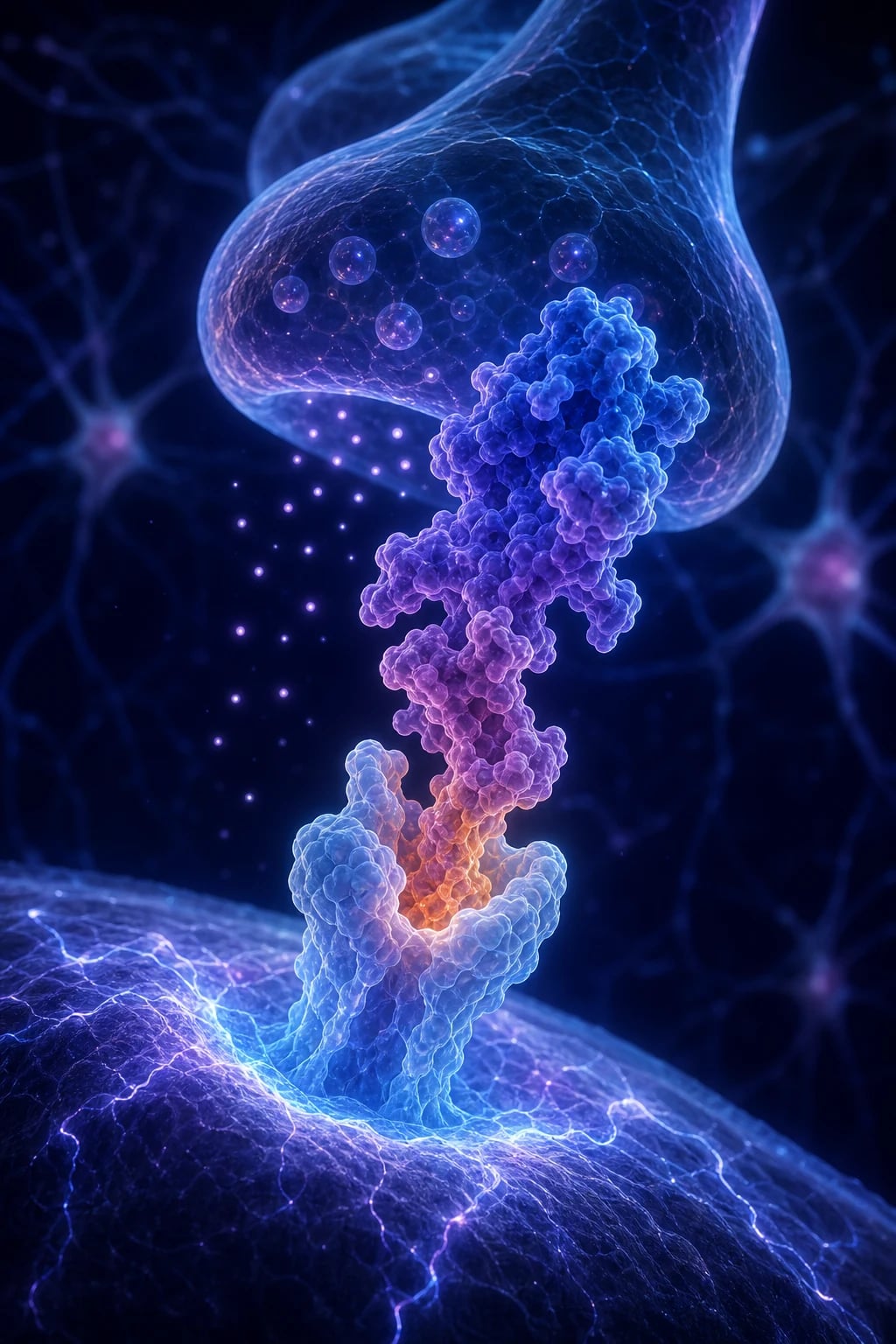
Definition and classification
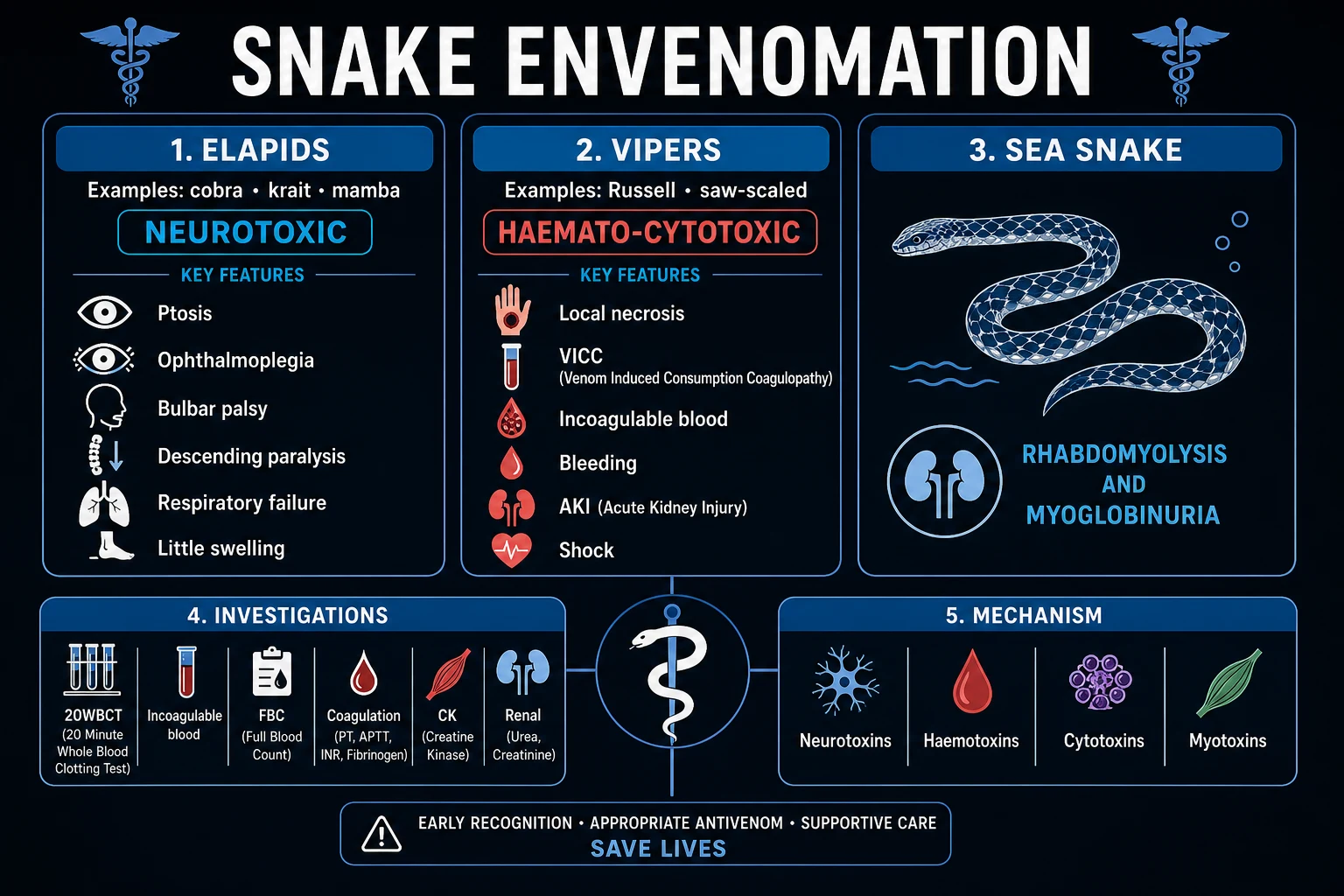
All medically important ANZ snakes are front-fanged elapids (family Elapidae) — short fixed fangs, predominantly neurotoxic and procoagulant venom, in contrast to the vipers of other continents. The terrestrial snakes of clinical importance fall into six groups, each with a characteristic venom signature that the candidate must hold as a single pattern rather than a list.[1]
The brown snake group (eastern brown Pseudonaja textilis, western brown or gwardir, dugite) is the commonest cause of envenomation and the leading cause of snakebite death in ANZ. Its venom is dominated by a prothrombin activator that produces isolated VICC, often with early prehospital cardiovascular collapse. The tiger snake group (mainland Notechis scutatus, Tasmanian, peninsula) produces VICC, presynaptic neurotoxicity and rhabdomyolysis — the full triad. The taipan group (coastal Oxyuranus scutellatus, inland O. microlepidotus) is the most venomous snake per yield; it produces the same triad as the tiger snake but more severe, with early cardiovascular collapse and a high mortality if untreated.[1][4]
The death adder group (Acanthophis spp.) is distinctive: its venom is dominated by postsynaptic three-finger (curare-like) neurotoxins with little or no VICC, producing a pure descending paralysis that, uniquely among ANZ snakes, is partly reversible by antivenom and by anticholinesterases. The mulga or black snake group (mulga or king brown Pseudechis australis, red-bellied black P. porphyriacus, collett's) is dominated by myolysis (rhabdomyolysis with renal failure); the mulga also produces an anticoagulant coagulopathy. The rough-scaled snake (Tropidechis carinatus) behaves like the tiger snake — VICC, neurotoxicity and myolysis — and is managed with tiger snake antivenom.[1]
Epidemiology
ANZ has roughly 3000 suspected snakebites per year, of which perhaps 500 to 1000 are genuinely envenomed. Most bites occur in the warmer months, in rural and regional areas, and in men working outdoors; a smaller but important group are recreational bushwalkers and snake handlers. The brown snake accounts for the majority of envenoming deaths, followed by the tiger snake and the taipan. Deaths are uncommon — fewer than five per year across ANZ — but they cluster in two patterns: the early prehospital cardiovascular collapse of brown snake envenomation (often a found-dead in the paddock), and the intracranial or other major haemorrhage from uncontrolled VICC. Children, the anticoagulated and the geographically remote carry disproportionate mortality. The Australian Snakebite Project (ASP) prospective cohort, now in its third decade, is the evidence base for every dose and every management decision.[1][3]
Pathophysiology — the four venom syndromes
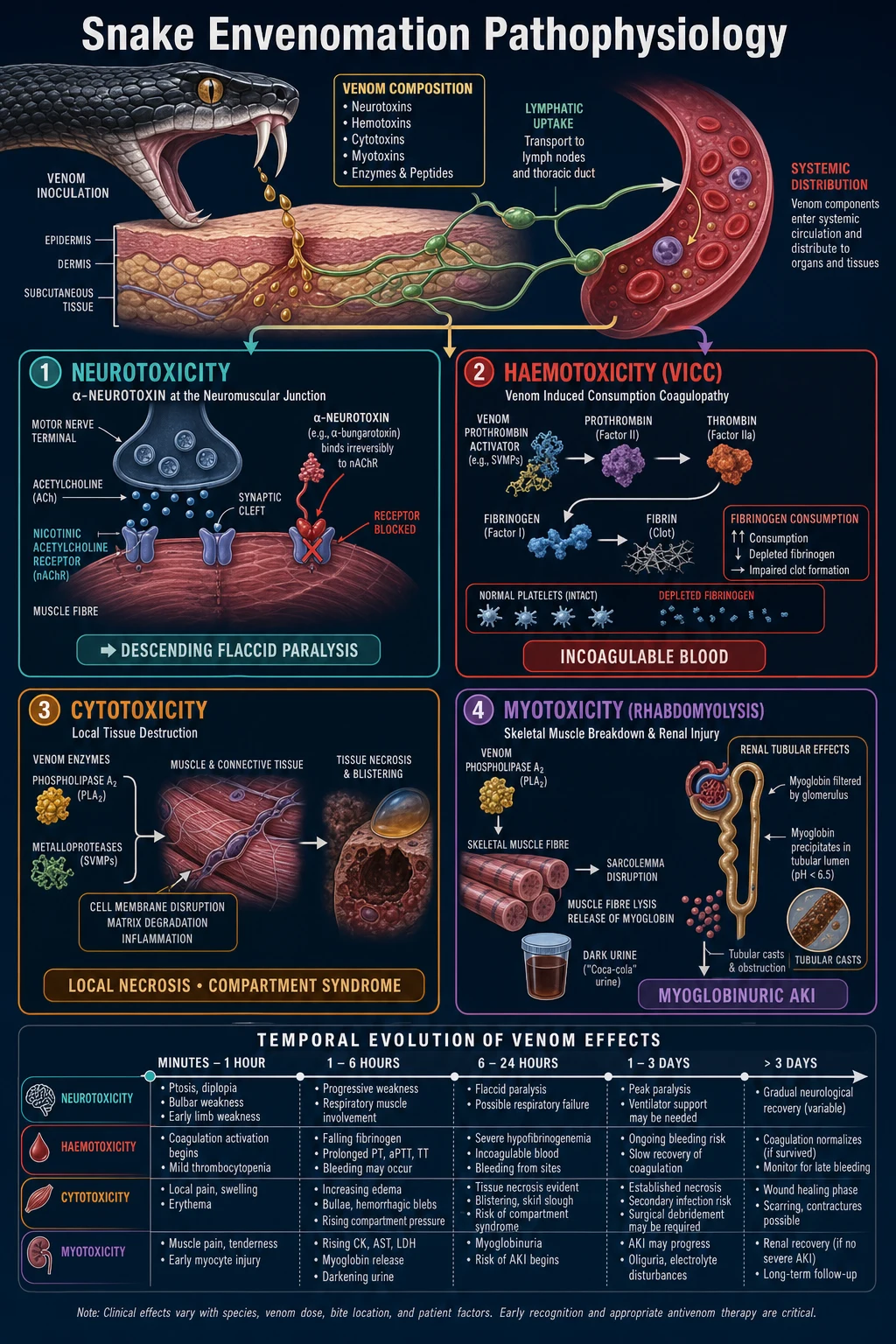
Elapid venom is a cocktail, and the clinical syndrome is the sum of the dominant toxin families. The candidate must hold four syndromes and the toxin class that drives each. [1]
The four venom syndromes and their toxin drivers
Venom-induced consumption coagulopathy (VICC) is the commonest and the most immediately measurable syndrome. The procoagulant venom contains a prothrombin activator — a protease that directly converts prothrombin to thrombin in the circulation, generating a burst of intravascular thrombin that is unregulated by the natural anticoagulants. The generated thrombin consumes fibrinogen and the clotting factors (V, VIII, X, prothrombin itself) and produces widespread microthrombi, which the fibrinolytic system then lyses, releasing cross-linked fibrin degradation products. The laboratory signature is therefore a markedly prolonged INR (above 3, often unrecordable), a markedly raised D-dimer, and a low fibrinogen, with a preserved platelet count. This is consumption, not failure of synthesis (liver function is normal) and not immune-mediated platelet destruction (platelets are preserved). VICC is mechanistically distinct from disseminated intravascular coagulation: in DIC the trigger is endogenous (sepsis, trauma, obstetric catastrophe) and the process is self-sustaining; in VICC the trigger is the circulating venom, and neutralising the venom with antivenom halts further consumption at once. Factor levels then recover by hepatic synthesis over the next 6 to 18 hours, with the D-dimer falling and the INR normalising first, fibrinogen recovering last.[1][2][5]
[1]Neurotoxicity is the second syndrome and the one that kills by respiratory failure. ANZ elapid venom contains two neurotoxin families that act at the neuromuscular junction in opposite ways. Presynaptic neurotoxins are phospholipase A2 enzymes that bind the motor nerve terminal and progressively destroy it (lysis of the presynaptic membrane, depletion of acetylcholine vesicles). Because the structural damage is irreversible once it has occurred, antivenom can only prevent further damage — it cannot reverse established paralysis. The presynaptic pattern (tiger snake, taipan, rough-scaled) is the more dangerous: the paralysis continues to progress after antivenom, the patient who is bulbar at presentation is likely to need intubation, and recovery is slow (days to weeks). Postsynaptic neurotoxins are three-finger (curare-like) peptides that competitively block the acetylcholine receptor on the motor endplate. Because the blockade is competitive and the toxin remains accessible in the circulation, antivenom neutralises it and the paralysis reverses; an anticholinesterase (neostigmine) can be used as a bridge. The postsynaptic pattern dominates the death adder and contributes to tiger snake envenomation.[4]
The clinical expression of either class is a descending flaccid paralysis. The earliest sign is ptosis (ask the patient to look up and hold — the lids droop within a minute) and ophthalmoplegia with diplopia. This descends to bulbar palsy — dysarthria, dysphagia, poor cough, pooled secretions — and then to respiratory muscle paralysis and respiratory failure. The candidate must monitor the trend serially: a patient with ptosis alone at one hour may be in ventilatory failure by three hours. [1]
Myolysis (rhabdomyolysis) is the third syndrome, driven by phospholipase A2 myotoxins that lyse skeletal muscle membranes. The clinical picture is muscle pain and tenderness, a rising creatine kinase (commonly above 10 000 units/L, sometimes above 50 000), myoglobinuria (dark urine, dipstick-positive for blood with few red cells), and acute kidney injury from myoglobin cast nephropathy compounded by hypotension and by VICC-driven microvascular thrombosis. The mulga and the tiger snake are the classic causes; the taipan and rough-scaled also produce it.[1]
Early cardiovascular collapse is the fourth and most lethal pattern. A subset of patients — most characteristically after brown snake envenomation — collapses within minutes to an hour of the bite, often before reaching hospital, with a cardiac arrest or a profound hypotensive bradycardia. The mechanism is incompletely understood and probably multifactorial: a direct cardiotoxic or autonomic effect of venom, sometimes compounded by VICC and by the patient being upright (venous pooling). This prehospital collapse is the leading reason brown snake envenomation is the leading killer despite a relatively modest venom yield, and it is the rationale for keeping any envenomed patient supine and under observation.[3]
Clinical presentation
Snakebite may declare itself with the bite, but more often it does not. The bite mark is frequently invisible (elapid fangs are short, the bite painless), and in over half of cases the snake is unidentified. The candidate therefore assesses the bite circumstances, the geography, the first-aid interval, and the evolving venom syndrome. [1]
Early non-specific features appear within the first hour: nausea, vomiting, headache, abdominal pain, diaphoresis, and tender regional lymphadenopathy. These do not, on their own, indicate systemic envenomation, but they are the prodrome in many cases. VICC manifests as bleeding from the gums, the bite site, intravenous cannulae, or the gastrointestinal or urinary tract; the catastrophic presentation is an intracranial haemorrhage with headache, falling consciousness and focal signs in a patient with an unrecordable INR. Neurotoxicity manifests as the descending paralysis described above. Myolysis manifests as muscle pain, weakness and dark urine. The patient may present having collapsed and been resuscitated, or — most feared — be found dead in the field.[1][3]
[1]Differential diagnosis
The differential splits into two axes: the cause of a VICC-pattern coagulopathy and the cause of a collapse with a coagulation disorder. The candidate must move through both, because several mimics require a fundamentally different treatment, and because snakebite is itself a missed diagnosis when the bite is not seen. [1]
Snake envenomation (VICC)
- INR above 3 to unrecordable; D-dimer markedly raised; fibrinogen low; platelets preserved
- Bush or outdoor exposure; tender regional lymphadenopathy; bite mark often absent
- No fever, no source; liver function normal
- Antivenom (monovalent by SVDK/geography or polyvalent); factors only after antivenom and only if bleeding
Warfarin / superwarfarin
- INR raised; D-dimer normal; fibrinogen normal; APTT may be raised
- Therapeutic or deliberate ingestion history; no muscle or neuro signs
- Reverses with vitamin K and prothrombin complex concentrate
- Vitamin K 5 to 10 mg IV; PCC 25 to 50 units/kg for major bleed
Disseminated intravascular coagulation (sepsis/trauma/obstetric)
- INR raised; D-dimer raised; fibrinogen low AND platelets low — the discriminator
- Septic, traumatised, or peripartum source; multi-organ failure
- Platelets fall, unlike VICC; smears show schistocytes
- Treat the trigger; blood products; never antivenom
Severe liver failure
- INR raised; D-dimer normal or mildly raised; fibrinogen low; platelets low (hypersplenism)
- Jaundice, encephalopathy, stigmata of chronic liver disease; AST/ALT and bilirubin markedly abnormal
- No D-dimer spike; no bush exposure
- Treat liver failure; vitamin K; transplant assessment
Massive transfusion / coagulopathy of trauma
- INR raised; fibrinogen low; platelets low; D-dimer variable
- Major haemorrhage history; hypothermia, acidosis, hypocalcaemia
- Dilutional pattern; correct with ratio-based transfusion
- Massive transfusion protocol; tranexamic acid 1 g IV
Anaphylaxis (collapse mimic)
- Collapse with hypotension; urticaria, stridor, wheeze; no coagulopathy
- Trigger (food, venom, drug) within minutes; rapid onset
- INR normal — the discriminator from snake collapse
- Adrenaline 0.5 mg IM; fluid; oxygen
The discriminator between VICC and the true consumptive or failure coagulopathies is the preserved platelet count combined with the disproportionate D-dimer: in DIC and liver failure the platelets fall; in VICC they do not. In the collapsed patient an INR should be sent as part of the routine work-up, and an unrecordable INR with a normal platelet count in a collapsed adult with bush exposure is snakebite until proven otherwise.[2]
Bedside assessment
The history establishes the circumstances (where, doing what), the time of the bite, the time the pressure immobilisation bandage was applied, the first-aid interval, the geography (which guides the likely snake group), the symptoms since the bite (bleeding, diplopia, dysphagia, muscle pain, dark urine), and any comorbidity (anticoagulants, pregnancy, renal disease). The examination documents the bite site (look but do not remove the bandage until ready), the vital signs including repeated measures, the conscious level, the cranial nerves (ptosis, extraocular movements, bulbar function), the muscle groups (tenderness, weakness), the regional lymph nodes, and the urine colour. A formal neurological assessment is repeated every 15 to 30 minutes, because the presynaptic paralysis is progressive and the point at which to intubate is judged on the trend (falling respiratory rate, weak cough, falling forced vital capacity), not on a single measurement.[1]
Investigations
The cornerstone investigations are the coagulation profile (INR, activated partial thromboplastin time, fibrinogen, D-dimer), the full blood count (platelet count is the discriminator), the biochemistry (urea, creatinine, electrolytes, creatine kinase, liver function, lactate), the urine (dipstick-positive for blood with few red cells indicates myoglobin), a group and hold or crossmatch, and a baseline electrocardiogram. The D-dimer is the most sensitive early marker of VICC — it rises within 30 to 60 minutes of envenomation, before the INR, and a normal D-dimer at two hours excludes significant VICC.[2]
[1]The snake venom detection kit (SVDK) is a bedside immunoassay that identifies the snake group from a bite-site swab (preferred) or urine (indicates systemic absorption). A bite-site swab positive for one group directs the choice of monovalent antivenom; a urine positive indicates envenomation but is less specific for the group. The SVDK is not required to diagnose envenomation (the coagulation profile does that) and it is not required before giving antivenom when the snake is clinically known, but it confirms the monovalent choice when the snake is unidentified. It must not delay resuscitation or antivenom in the collapsing patient. If the SVDK is unavailable, uninterpretable or delayed, the snake group is inferred from geography and the venom syndrome, and treatment proceeds.[1]
Immediate management and resuscitation
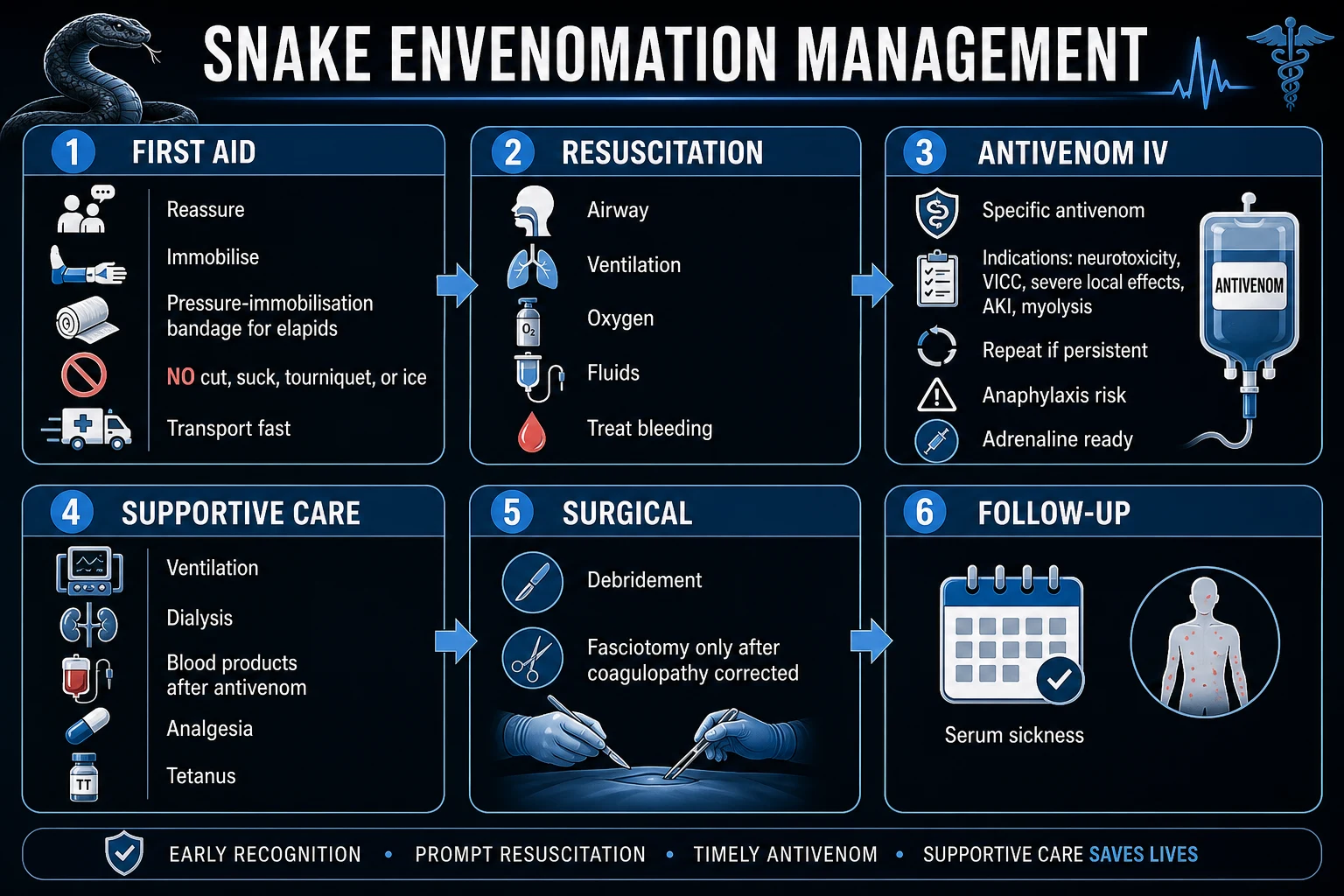
Resuscitation follows ABCDE with three overriding principles: leave the pressure immobilisation bandage on until antivenom is ready, manage the airway early in the neurotoxic patient, and avoid unnecessary movement of the envenomed patient (supine, no walking). [1]
[1]IV access is established (two large-bore cannulae in the unwell patient), bloods and the SVDK are sent, oxygen is given to the unwell or neurotoxic patient, and intravenous fluid (a balanced crystalloid, 10 mL/kg to 20 mL/kg bolus, titrated to perfusion) supports the cardiovascularly unstable patient. The airway is the priority in neurotoxic envenomation: the patient with bulbar palsy is intubated early and electively, before respiratory failure, because the paralysis is progressive and presynaptic damage cannot be reversed. Ventilatory adequacy is judged on the trend of the respiratory rate, the cough, the ability to clear secretions, and the bedside ventilatory parameters (a falling vital capacity is an indication to intubate).[1]
Definitive management — antivenom, premedication, and blood products
Antivenom is the definitive treatment and is given to any patient with clinical or laboratory evidence of systemic envenomation. CSL snake antivenoms are equine F(ab')2 fragments, supplied as monovalent preparations (one per snake group) and a polyvalent preparation (covers brown, tiger, taipan, death adder, and black snake). The choice is monovalent where the snake or the venom syndrome and geography identify the group, and polyvalent where the snake is unidentified and the SVDK is unavailable or uninterpretable — polyvalent carries a larger volume and a higher reaction rate, but it is the safe default when doubt remains. The modern doses, established by the Australian Snakebite Project, are far lower than the historical 5 to 10 vials; they are evidence-based and the candidate must know them.[1]
Antivenom doses by snake group
Antivenom is given intravenously, diluted 1 in 10 in normal saline, over 15 to 30 minutes (undiluted in the arrested or profoundly unstable patient). Acute reactions are common — urticaria, bronchospasm, hypotension, and anaphylaxis — and antivenom is administered in a monitored area with adrenaline drawn up and ready. Skin testing is not performed (it is unreliable and delays treatment). Premedication with adrenaline 0.25 mg intramuscularly, given 5 to 10 minutes before the antivenom, reduces the rate of acute reactions and is recommended; premedication with antihistamine or steroid alone does not. The patient is observed for serum sickness over the following two weeks — a flu-like illness with arthralgia, rash and fever, treated with oral prednisolone 50 mg daily for one to two weeks.[1][5]
Neostigmine has a defined role in death adder envenomation. Because the death adder neurotoxin is postsynaptic, an anticholinesterase improves neuromuscular transmission while the antivenom takes effect: neostigmine 1.5 mg to 2.5 mg intravenously (0.04 mg/kg in children) with glycopyrrolate 0.3 mg to 0.6 mg, titrated to clinical response. It does not help the presynaptic paralysis of tiger or taipan envenomation, where antivenom and ventilatory support are the only measures.[4]
Blood products are reserved for the actively bleeding patient — intracranial, gastrointestinal, or massive bite-site haemorrhage — and are given after the first dose of antivenom, never before. Giving clotting factors first simply provides substrate for the still-circulating venom to consume and does not correct the coagulopathy; the randomised ASP work established that antivenom alone is sufficient to halt VICC in the non-bleeding patient, with factor levels recovering by synthesis. For the bleeding patient, fresh frozen plasma 10 mL/kg to 15 mL/kg (4 units in the adult), cryoprecipitate 5 units to 10 units (fibrinogen target above 1.5 g/L), and packed red cells are given after antivenom, with the response monitored on the serial coagulation profile and the haemoglobin. The massively bleeding patient is managed on a massive transfusion protocol.[5]
Subtypes and scenarios — the snake groups
Each snake group produces a recognisable pattern, and the candidate must be able to predict one from the other. [1]
Brown snake envenomation presents with isolated VICC and a risk of early cardiovascular collapse. The venom yield is modest but the procoagulant potency is high; the characteristic scenario is the patient found collapsed in the field, or the patient with an unrecordable INR and a preserved platelet count an hour after a witnessed bite. Neurotoxicity is rare and late. Treatment is brown snake antivenom 1 to 2 vials, with early fluid and inotrope support if collapse occurs, and blood products for any major bleed.[1][3]
Tiger snake envenomation produces the full triad of VICC, presynaptic neurotoxicity, and myolysis. The patient develops ptosis and diplopia within hours, descending to bulbar and respiratory failure; the CK rises; the urine darkens; the INR is off-scale. Treatment is tiger snake antivenom 2 to 4 vials, early airway protection, fluid and renal support, and monitoring for the slow recovery of presynaptic paralysis. [1]
Taipan envenomation is the most severe, with VICC, neurotoxicity, myolysis, renal failure and a high risk of early collapse. The inland taipan has the most toxic venom of any snake; the coastal taipan is the commoner clinical encounter in northern ANZ. Treatment is taipan antivenom, 1 to 4 vials, with full intensive-care support.[4]
Death adder envenomation is the pure postsynaptic neurotoxic pattern — progressive descending paralysis with little or no VICC and no myolysis. It is the one ANZ pattern in which neostigmine is a useful adjunct and in which antivenom reverses established paralysis. Death adder antivenom 1 to 2 vials is given with neostigmine as a bridge.[4]
Mulga or black snake envenomation is dominated by myolysis — a painful, tender musculature, a markedly raised CK, myoglobinuria and acute kidney injury — with an anticoagulant (rather than procoagulant) coagulopathy in the mulga and minimal coagulopathy in the red-bellied black. Treatment is black snake antivenom 1 to 2 vials with aggressive fluid for rhabdomyolysis and renal support.[1]
Rough-scaled snake envenomation behaves like tiger snake envenomation and is treated with tiger snake antivenom 2 to 4 vials.[1]
Complications and pitfalls
The complications are the consequences of the venom syndromes and of the treatment. Intracranial haemorrhage is the feared complication of uncontrolled VICC — a patient with an off-scale INR who develops a sudden headache and a falling conscious level needs an urgent CT and factor replacement after antivenom. Acute kidney injury results from rhabdomyolysis, from VICC-driven microvascular thrombosis, and from the hypotension of early collapse; it may require renal replacement therapy. Respiratory failure is the endpoint of presynaptic paralysis and the indication for early, elective intubation. Antivenom reactions — anaphylaxis and serum sickness — are managed as above. Coagulopathy that does not resolve raises the possibilities of inadequate antivenom, an unidentified second snake, or a missed alternative diagnosis (warfarin, superwarfarin, liver failure).[1][5]
The pitfalls are well described. The first is treating the bite mark, not the patient — the asymptomatic patient with a possible bite is observed and investigated, not reassured by an absent bite mark. The second is removing the pressure immobilisation bandage prematurely, releasing the lymphatic venom bolus. The third is giving clotting factors before antivenom, which is consumed by the still-circulating venom and does not correct the coagulopathy. The fourth is under-dosing antivenom, particularly in the tiger snake and taipan patterns where the historical 5 to 10 vials have been mis-remembered as the modern 1 to 2 vials. The fifth is late or absent airway protection in the presynaptic paralysis, when the candidate waits for respiratory failure rather than intubating electively for bulbar failure. The sixth is missing serum sickness, which presents one to two weeks after the bite with a flu-like illness and responds to oral steroids.[1][4]
Prognosis and disposition
The prognosis with modern care is good — fewer than five deaths per year across ANZ — but deaths cluster in the early prehospital collapse of brown snake envenomation and in the intracranial haemorrhage of uncontrolled VICC. The envenomed patient is observed in a monitored area for a minimum of 12 to 24 hours, with serial coagulation profiles and neurological assessments; the patient with VICC alone and a normalising profile after antivenom is observed until two consecutive improving coagulation profiles confirm recovery of synthesis. The patient with neurotoxicity, myolysis, renal failure, or major haemorrhage is admitted to intensive care. The remote or rural patient is managed in consultation with a clinical toxinologist and a retrieval service; the pressure immobilisation bandage stays on during transport, and antivenom is given at the receiving centre if transfer is short, or at the referring centre if transfer is long. A patient with a suspected bite but no clinical or laboratory evidence of envenomation after 12 hours of observation (with normal D-dimer at 1 to 2 hours and serially thereafter) is discharged with advice on serum sickness.[1][2]
Special populations
Children carry a higher venom-to-body-mass ratio and a higher mortality; antivenom is dosed the same (one vial neutralises a fixed quantity of venom regardless of size), but fluid and blood-product doses are weight-based and the airway is protected earlier. Pregnancy complicates every venom syndrome — VICC threatens the mother and the fetus with haemorrhage, neurotoxicity threatens ventilation, and antivenom is given on the same indications (the equine fragments cross the placenta poorly and the benefit outweighs the small reaction risk). The anticoagulated patient (warfarin, direct oral anticoagulants, or antiplatelets) has a compounded coagulopathy and a higher bleeding risk; antivenom is given first, then factors, then the specific reversal agent (vitamin K, prothrombin complex concentrate, idarucizumab, andexanet) for the oral anticoagulant as indicated. The remote or rural patient benefits from early retrieval coordination, judicious use of the SVDK, and holding the pressure immobilisation bandage through transfer.[1]
Evidence and regional guidelines
The evidence base is the Australian Snakebite Project (ASP), a prospective multicentre cohort that has defined the venom syndromes, the antivenom doses, and the natural history of recovery. The ASP-20 report (Johnston, Medical Journal of Australia 2017) summarises the first decade and is the single reference for the epidemiology, the snake-group venom signatures, and the modern antivenom doses adopted across ANZ. The D-dimer study (Isbister, Medical Journal of Australia 2022) established the D-dimer as the early sensitive marker of VICC and the test that excludes significant envenomation when normal at two hours. The early cardiovascular collapse study (Isbister, Medical Journal of Australia 2025) characterised the prehospital collapse pattern that makes the brown snake the leading killer. The taipan envenoming report (Johnston, Clinical Toxicology 2017) defined the taipan venom syndrome and its severity. The clotting-factor-replacement study (Brown and the ASP Investigators, Intensive Care Medicine 2009) established that factor levels recover by synthesis after antivenom and that factor replacement is reserved for the actively bleeding patient. ANZ practice follows the ASP doses and the Therapeutic Guidelines, with all cases discussed with a clinical toxinologist via the national poisons information network.[1][2][3][4][5]
ANZ practice note. Suspected snakebite is managed with the pressure immobilisation bandage in place until assessment. Bloods (coagulation profile with D-dimer, full blood count, biochemistry with creatine kinase, group and hold) and a bite-site swab for the SVDK are taken on arrival. Envenomation is defined by clinical or laboratory abnormality, and antivenom is monovalent where the snake or the venom syndrome and geography identify the group (brown snake 1 to 2 vials, tiger snake 2 to 4 vials, taipan 1 to 4 vials, death adder 1 to 2 vials, black snake 1 to 2 vials) or polyvalent where the snake is unidentified and the SVDK unavailable. Adrenaline 0.25 mg intramuscularly is given 5 to 10 minutes before antivenom, which is administered diluted over 15 to 30 minutes in a monitored area. Blood products (fresh frozen plasma, cryoprecipitate, packed red cells) are reserved for the actively bleeding patient and given only after the first dose of antivenom. The patient is observed for 12 to 24 hours with serial coagulation profiles, advised on serum sickness at discharge, and every case is discussed with a clinical toxinologist via the poisons information centre. [1]
SAQ — The brown snake bite and the venom-induced consumption coagulopathy
10 minutes · 10 marks
A 45-year-old man is brought to the emergency department three hours after a witnessed snake bite on a rural property in New South Wales. He has a pressure immobilisation bandage in place. The bite mark is barely visible and the snake could not be identified, but the geography favours the brown snake. The INR is unrecordable, the activated partial thromboplastin time is unrecordable, the fibrinogen is 0.3 g per litre, the D-dimer is 45 mg per litre, and the platelet count is 230. He is alert, with no bleeding and no neurological signs.
SAQ — The tiger snake triad and the presynaptic paralysis
10 minutes · 10 marks
A 38-year-old woman is brought to the emergency department from a coastal area four hours after a snake bite. The pressure immobilisation bandage is in place. She has the ptosis, the diplopia, the dysarthria, and a weak cough. The INR is unrecordable, the fibrinogen is low, the creatine kinase is 12 000 units per litre, and the urine is dark.
Exam pearls
- VICC in one breath: a venom prothrombin activator generates uncontrolled intravascular thrombin, consuming fibrinogen and the clotting factors (V, VIII, X, prothrombin) and producing microthrombi that the fibrinolytic system lyses to D-dimer. The result is INR above 3 (often unrecordable), D-dimer markedly raised, fibrinogen low, platelets preserved — the discriminator from DIC.
- The antivenom doses: brown snake 1 to 2 vials, tiger snake 2 to 4 vials, taipan 1 to 4 vials, death adder 1 to 2 vials, black snake 1 to 2 vials, polyvalent when the snake is unidentified. These are the ASP doses, far lower than the historical 5 to 10 vials.
- Pre- vs post-synaptic neurotoxicity: presynaptic (PLA2, tiger/taipan/rough-scaled) destroys the nerve terminal and is irreversible — antivenom prevents further damage but the established paralysis continues to progress; intubate early for bulbar failure. Postsynaptic (three-finger, death adder) is reversible — antivenom plus neostigmine.
- Clotting factors after antivenom, never before: factors given before antivenom are consumed by the still-circulating venom; antivenom halts the driver and the factors recover by synthesis. Reserve factor replacement for the actively bleeding patient.
- The brown snake is the leading killer because of early prehospital cardiovascular collapse, not because of venom yield — the patient found dead in the paddock with an unrecordable INR has been envenomed until proven otherwise.
- The bite mark is often invisible and the snake unidentified in over half of cases — diagnose and treat on the venom syndrome, the geography and the coagulation profile. [1]
Model answer — A 45-year-old man, 3 hours after a witnessed brown snake bite in regional NSW. INR unrecordable, APTT unrecordable, fibrinogen 0.3 g/L, D-dimer 45 mg/L, platelets 230. GCS 15, no bleeding, no neurology. Outline the diagnosis, the investigations, the antivenom regimen, and the role of blood products.
Diagnosis. The diagnosis is venom-induced consumption coagulopathy (VICC) from brown snake envenomation. The INR and APTT are unrecordable, the fibrinogen is markedly low, the D-dimer is massively raised, and the platelet count is preserved at 230 — the discriminator from disseminated intravascular coagulation, where the platelets fall. The mechanism is a venom prothrombin activator generating uncontrolled intravascular thrombin with consumption of fibrinogen and factors V, VIII, X and prothrombin, and secondary fibrinolysis generating the D-dimer. [1]
Investigations. The coagulation profile (already done) is repeated every 3 to 6 hours until it is normalising; the full blood count, biochemistry with creatine kinase and renal function, group and hold, electrocardiogram and a bite-site swab for the SVDK complete the panel. The urine is examined for myoglobin (dipstick-positive for blood with few red cells). The serial D-dimer and INR are the response markers after antivenom; the INR falls first, then the D-dimer, then the fibrinogen recovers over 12 to 18 hours. [1]
Antivenom. The snake is clinically identified as a brown snake, so brown snake antivenom 1 to 2 vials intravenously (diluted 1 in 10, over 15 to 30 minutes) is given. Adrenaline 0.25 mg intramuscularly is given 5 to 10 minutes beforehand as premedication, and the antivenom is administered in a monitored area with adrenaline drawn up. The coagulation profile is repeated at one hour; if the INR is falling and the patient is stable, no further antivenom is given. If the INR is not falling and consumption is ongoing, a second vial is given. [1]
Blood products. This patient is not bleeding, so clotting factors are not given — antivenom halts the consumption and the factors recover by hepatic synthesis over hours, established by the ASP Investigators' work. Clotting factor replacement is reserved for the actively bleeding patient (intracranial, gastrointestinal, massive bite-site), and given after antivenom: fresh frozen plasma 10 mL/kg to 15 mL/kg (4 units in the adult), cryoprecipitate 5 units to 10 units to a fibrinogen target above 1.5 g/L, and packed red cells as indicated. Giving factors before antivenom provides substrate for the still-circulating venom and does not correct the coagulopathy. The patient is observed for 12 to 24 hours, advised on serum sickness at discharge, and every case is discussed with a clinical toxinologist. [1]
Red flags
[1]References
- [1]Johnston CI, Ryan NM, Page CB, Buckley NA, Brown SG, O'Leary MA, Currie BJ, Isbister GK. The Australian Snakebite Project, 2005-2015 (ASP-20) Med J Aust, 2017.PMID 28764620
- [2]Isbister GK, Ashworth KM, Marlin NA, Brown SG. D-dimer testing for early detection of venom-induced consumption coagulopathy after snakebite in Australia (ASP-29) Med J Aust, 2022.PMID 35670073
- [3]Isbister GK, Sazzad MA, Johnston CI, Brown SG. Early cardiovascular collapse after envenoming by snakes in Australia, 2005-2020: an observational study (ASP-31) Med J Aust, 2025.PMID 40058771
- [4]Johnston CI, Brown SG, O'Leary MA, Currie BJ, Greenberg R, Taylor M, Barnes C, White J, Isbister GK. Australian taipan (Oxyuranus spp.) envenoming: clinical effects and potential benefits of early antivenom therapy - Australian Snakebite Project (ASP-25) Clin Toxicol (Phila), 2017.PMID 27903075
- [5]Brown SG, Stone SF, Fatovich DM, Burrows SA, Holdgate A, Celenza A, Coulson A, Hartnett L, Greene SL, Isbister GK, et al; ASP Investigators. Clotting factor replacement and recovery from snake venom-induced consumptive coagulopathy Intensive Care Med, 2009.PMID 19547954