EM · Environmental emergencies
Heat illness and heat stroke
Also known as Heat stroke · Heat exhaustion · Heat hyperthermia · Exertional heat stroke · Classic heat stroke · Non-exertional heat stroke
Heat illness is the spectrum from heat cramps and heat syncope through heat exhaustion (core 37.5 to 40 degrees, sweating intact, mental state preserved) to heat stroke — core temperature above 40 degrees with central nervous system dysfunction and multi-organ failure, divided into exertional (young, fit, sweating usually preserved) and classic (elderly, heat wave, often anhidrotic). Heat stroke is hyperthermia, not fever: the hypothalamic set point is normal, so antipyretics do not work and the patient is cooled by physical means. The gold standard for exertional heat stroke is cold water immersion (about 0.15 degrees per minute); evaporative cooling (tepid mist plus fan) is the method of choice for classic heat stroke; ice packs to neck, axillae and groin are an adjunct. Cool to 39 degrees as rapidly as possible, then STOP active cooling to avoid overshoot hypothermia. Management is ABCDE, aggressive rapid cooling, intravenous balanced crystalloid, and a benzodiazepine (diazepam 5 to 10 mg intravenously) for shivering, agitation or seizure; dantrolene has no routine role. The differential is sepsis, malignant hyperthermia, neuroleptic malignant syndrome, serotonin syndrome and thyroid storm. ACEM-primary, globally tagged.
On this page & tools
Your progress
Saved locally on this device.
8 MCQs with explanations
Target exams
Red flags
Heat illness is the textbook example of a condition where a single number — the core temperature — and the speed of the response determine survival. The spectrum runs from heat cramps and heat syncope through heat exhaustion to heat stroke, defined as a core temperature above 40 degrees complicated by central nervous system dysfunction and multi-organ failure. Heat stroke kills by the same final common pathway as sepsis: heat-induced gut barrier breakdown, endotoxaemia, a systemic inflammatory response, and disseminated intravascular coagulation producing hepatic necrosis, rhabdomyolysis, acute kidney injury and the acute respiratory distress syndrome. The Fellowship candidate must recognise the spectrum, separate heat stroke from heat exhaustion by the central nervous system sign, and execute rapid physical cooling — cold water immersion for exertional heat stroke, evaporative cooling for the classic elderly patient — within the first 30 minutes, because cooling begun in that window reduces exertional heat stroke mortality to near zero. The drugs the examiner tests are not antipyretics (they do not work, because heat stroke is hyperthermia with a normal hypothalamic set point) but a benzodiazepine to abolish shivering, and intravenous fluid to restore perfusion.[1][2][3]
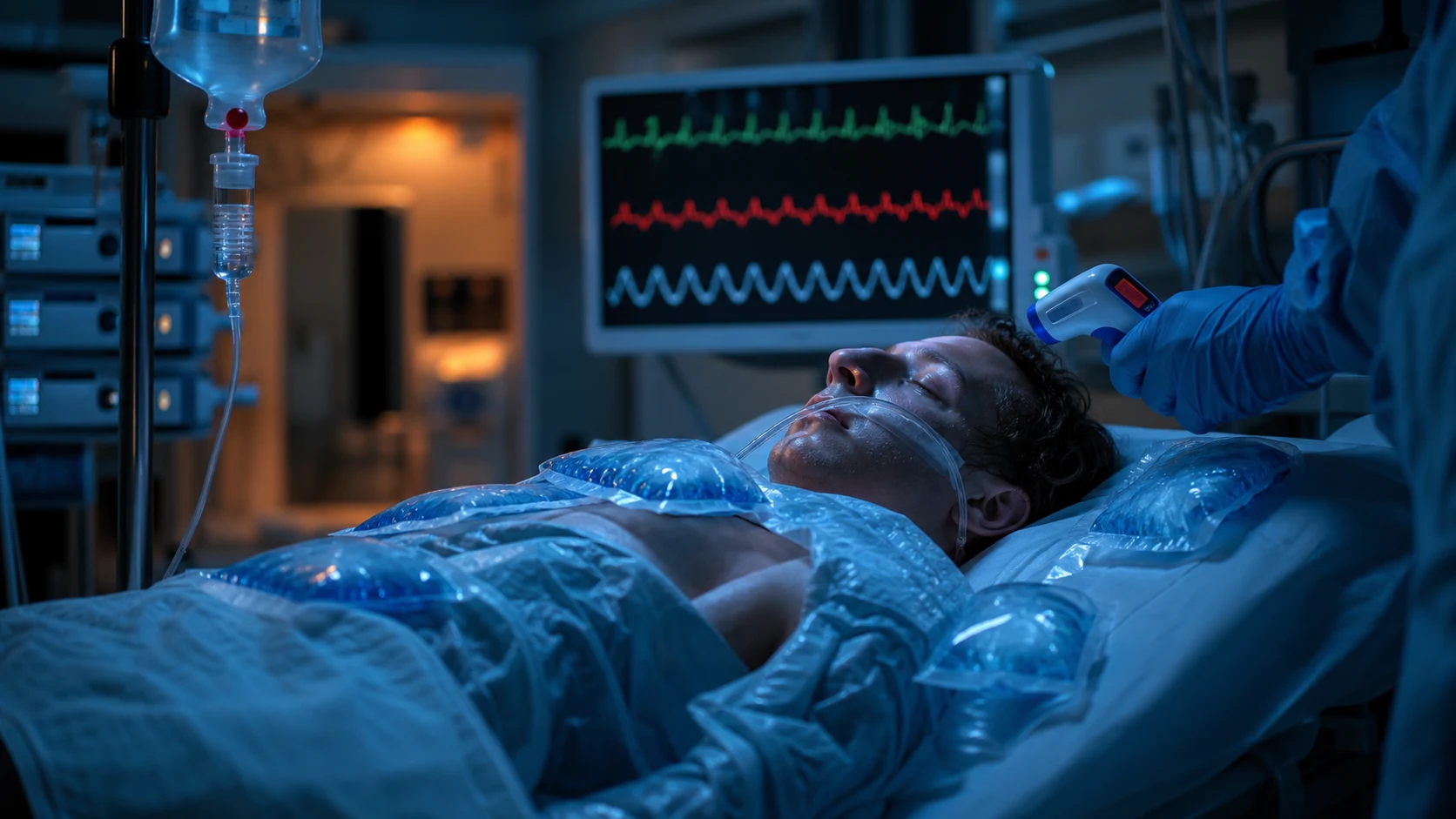
Definition and classification
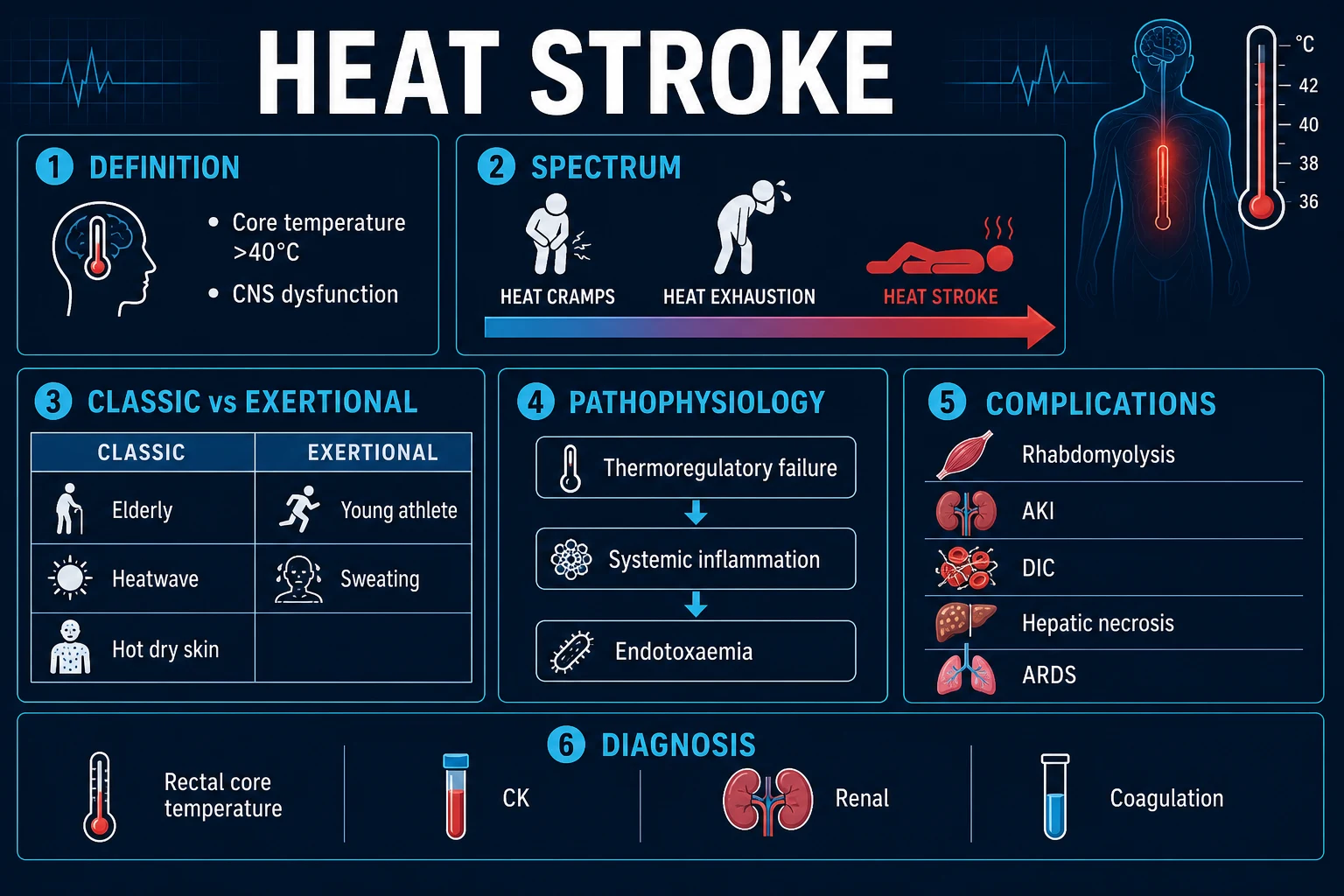
Heat illness is best understood as a spectrum, and the candidate who can name each rung can answer any classification question. The minor forms are heat rash (miliaria, from blocked sweat ducts), heat cramps (painful skeletal muscle spasms after exertion, from salt depletion in an acclimatised but rehydrated-with-water athlete), heat syncope (orthostatic collapse from volume depletion and peripheral vasodilatation) and heat tetany (carpopedal spasm from hyperventilation in heat). These are managed with rest, oral rehydration and salt replacement, and none is life-threatening.[4][6]
The two serious forms are the ones the examiner builds questions around. Heat exhaustion is a core temperature of 37.5 to 40 degrees with intact sweating, tachycardia, orthostatic hypotension, headache, nausea and weakness, and a preserved mental state — the patient is unwell but coherent. Heat stroke is a core temperature above 40 degrees with central nervous system dysfunction (confusion, agitation, seizure, coma) and multi-organ failure; sweating may be present (especially in exertional) or absent (the classic late anhidrotic patient). The central nervous system sign, not the temperature alone and not the skin, is what separates stroke from exhaustion.[1][2]
Heat stroke is then divided into two subtypes with different populations, triggers and investigation profiles, reproduced in the table below. [1]
| Feature | Exertional heat stroke | Classic (non-exertional) heat stroke |
|---|---|---|
| Population | Young, fit; athlete, soldier, labourer | Elderly, chronically ill, socially isolated |
| Setting | Exertion in heat; often the first hot day | Heat wave; sealed top-floor flat, no air-conditioning |
| Onset | Abrupt, over minutes to hours | Insidious, over hours to days |
| Skin | Usually sweating, flushed | Often hot and dry (anhidrosis is a late sign) |
| Lactate | Marked metabolic (lactic) acidosis | Often near-normal lactate |
| Creatine kinase | Markedly raised (rhabdomyolysis) | Mildly raised |
| Hypoglycaemia | Common | Uncommon |
| Disseminated intravascular coagulation | Common | Less common |
| Cooling method of choice | Cold water immersion | Evaporative (tepid mist plus fan) |
Heat illness at a glance
The heat illness spectrum side by side
| Feature | Heat cramps | Heat exhaustion | Heat stroke |
|---|---|---|---|
| Core temperature | Normal | 37.5 to 40 degrees | Above 40 degrees |
| Mental state | Normal | Preserved (irritable but oriented) | Altered — confusion, seizure, coma |
| Skin | Sweating, normal | Cool, pale, sweating | Hot; may be sweating (exertional) or dry (classic) |
| Hallmark symptom | Painful muscle cramps after exertion | Headache, nausea, weakness, thirst | CNS dysfunction + multi-organ failure |
| Sweating | Intact | Intact | Variable (often preserved in exertional; anhidrosis late in classic) |
| Mechanism | Sodium and water depletion in an acclimatised athlete who replaced water but not salt | Volume depletion + cardiovascular strain without thermoregulatory failure | Thermoregulatory failure → uncontrolled core rise → endotoxaemia, DIC, rhabdo, AKI |
| Treatment | Rest, oral electrolyte rehydration | Rest, move to cool area, oral or IV rehydration, monitor | RAPID PHYSICAL cooling, IV fluids, benzodiazepine for shivering/seizure, ICU |
| Disposition | Discharge with advice | Observe; discharge if resolves | Admit ICU/HDU |
Heat cramps
- Painful, involuntary skeletal-muscle spasms (calves, thighs, abdomen) DURING or AFTER exertion in heat
- Sodium depletion in the athlete who drank plenty of water but replaced no salt — dilutional hyponatraemia of sweat
- Core temperature NORMAL; mental state NORMAL — no CNS dysfunction
- Rest, stop activity, move to shade, oral rehydration with an electrolyte solution; IV normal saline if severe or vomiting
- Benign but a warning sign — can progress to exhaustion or stroke if exertion continues in heat
Heat exhaustion
- Core 37.5 to 40 degrees with intact sweating, tachycardia, orthostatic hypotension, headache, nausea, weakness
- Mental state PRESERVED — the patient is unwell but coherent, oriented and converses; this single feature keeps them OUT of the stroke category
- Skin cool, pale and sweaty; the patient is volume-depleted and cardiovascularly strained but NOT yet thermoregulatorily failed
- Move to cool area, undress, rest, oral rehydration (or IV balanced crystalloid 20 mL/kg if vomiting or hypotensive)
- The trap is calling early heat stroke "exhaustion" — re-check the GCS and core temperature continuously; any CNS change escalates to stroke protocol
Heat stroke
- Core ABOVE 40 degrees with CNS dysfunction — confusion, agitation, delirium, seizure or coma; the CNS sign is the DIVIDER
- Thermoregulatory failure with the same final pathway as sepsis: endotoxaemia, DIC, rhabdomyolysis, AKI, ARDS, hepatic necrosis
- Skin HOT — sweating often PRESERVED in exertional, anhidrosis a LATE sign in classic; do not exclude stroke because the patient is sweating
- RAPID PHYSICAL cooling within minutes (cold water immersion for exertional, evaporative for classic), IV fluids, benzodiazepine, ICU admission
- Mortality 10 to 50 percent; near zero if exertional stroke is cooled below 40 degrees within 30 minutes
Epidemiology and risk factors
Heat is the leading weather-related cause of death globally, and heat waves produce predictable surges in mortality that overwhelm emergency services. Classic heat stroke kills the elderly, the chronically ill, the socially isolated and those on psychotropic or diuretic medication; exertional heat stroke is among the leading causes of sudden death in young athletes and in military recruits, and it strikes the unacclimatised worker on the first hot days of summer. Heat waves in Europe (2003) and Russia (2010) killed tens of thousands, almost entirely through classic heat stroke in the elderly.[1][2]
The risk factors cluster into three groups. Environmental — high ambient temperature, high humidity (which cripples evaporative cooling), direct sun, still air, and lack of acclimatisation in the first days of a heat wave. Host — extremes of age, obesity, dehydration, poor physical fitness, fever or intercurrent illness, fatigue and sleep deprivation, and any disorder that impairs sweating (eczema, psoriasis, scleroderma, miliaria, extensive burns, cystic fibrosis). Drug — anticholinergics and antihistamines (impair sweating), diuretics (volume depletion), beta-blockers (impair cardiac compensation), antipsychotics and lithium (impair central thermoregulation), selective serotonin reuptake inhibitors, stimulants (amphetamine, cocaine, ecstasy), and alcohol. Any drug that disrupts the body's ability to lose heat or to raise cardiac output is a heat-stroke risk in a hot environment.[1][2][4]
ANZ practice note. The Australian climate produces both forms every summer — exertional heat stroke in rural and defence workers and in endurance events, and classic heat stroke in the elderly during prolonged heat waves. State health departments issue heat-health alerts; the emergency department should expect a surge of classic heat stroke in residential-care evacuees during a heat wave, and exertional heat stroke in athletes and firefighters. Cooling tubs at endurance events and on military ranges are an evidence-based preventive and field measure.[4][6]
Pathophysiology
The body defends a core temperature near 37 degrees through the preoptic area of the hypothalamus, which balances heat production (basal metabolism, muscle activity) against heat loss. Heat is lost by radiation (about 60 per cent at rest in a temperate environment), convection, conduction, respiration, and the evaporation of sweat — the dominant channel once ambient temperature exceeds skin temperature. When ambient temperature and humidity are high, radiation and convection reverse (the environment heats the body) and evaporation fails, so the only remaining defence is a rising cardiac output; when that fails, the core climbs unchecked.[1][3]
The single most exam-critical mechanism is the distinction between fever and hyperthermia. In fever, pyrogenic cytokines (interleukin-1, interleukin-6, tumour necrosis factor) raise the hypothalamic set point, and antipyretics restore it. In heat stroke, the set point is normal and the body is simply unable to shed an unregulated heat load — so paracetamol and non-steroidal anti-inflammatories do nothing to lower the temperature and add hepatic, renal and coagulation harm. This is the reason cooling is physical, not pharmacological.[1][3]
Above a core of about 40 degrees the heat-shock response collapses. The gut mucosal barrier breaks down, endotoxin translocates, and a systemic inflammatory response syndrome develops that is histologically and biochemically indistinguishable from sepsis — cytokine release, complement and coagulation activation, and nitric-oxide-driven vasodilation. Disseminated intravascular coagulation, hepatic necrosis (the transaminases may exceed 1000 in exertional heat stroke), acute tubular necrosis, rhabdomyolysis and the acute respiratory distress syndrome follow over hours to days. Direct thermal injury to the brain produces the central nervous system dysfunction that defines the condition.[2][3]
[1]Fever (sepsis, infection)
- Pyrogenic cytokines (IL-1, IL-6, TNF-alpha) RAISE the hypothalamic set point
- Antipyretics (paracetamol, NSAIDs) WORK — they block prostaglandin E2 and reset the set point downward
- Temperature rises to a regulated ceiling and is rarely exceeds 41 to 41.5 degrees
- Treat the cause; antipyretics and physical cooling both help
Hyperthermia (heat stroke)
- Set point is NORMAL; the body cannot shed an unregulated exogenous or exercise heat load
- Antipyretics are INEFFECTIVE — there is no raised set point to reset, and they add hepatic, renal and coagulation harm
- Temperature climbs UNCHECKED — cores of 42 to 44 degrees are seen and carry the highest mortality
- Only RAPID PHYSICAL cooling lowers the temperature; drugs are useless
Clinical presentation
Heat exhaustion presents as the unwell but coherent hot patient. The core temperature is 37.5 to 40 degrees; the skin is flushed and sweating; the patient complains of headache, nausea, dizziness, weakness, thirst and cramps; the pulse is tachycardic and the blood pressure may be orthostatic. The mental state is preserved — the patient may be irritable but is oriented and converses normally. This single feature — an intact conscious level — is what keeps the patient in the exhaustion category rather than stroke.[1][6]
Heat stroke presents as the hot patient with central nervous system failure. The core temperature is above 40 degrees (the threshold), and the defining feature is a disturbance of consciousness — confusion, agitation, delirium, seizure or coma. The skin is usually hot, but the classical teaching that it is dry is unreliable: in exertional heat stroke the patient is commonly still sweating profusely, and anhidrosis is a late sign of classic heat stroke. The patient is tachycardic, tachypnoeic, and may be hypotensive; the temperature may be very high (cores above 42 degrees carry the highest mortality). Multi-organ failure is already underway at presentation in the severe case — the patient may be oliguric, jaundiced, bleeding (from disseminated intravascular coagulation), hypoglycaemic (exertional) and acidotic. A heat stroke patient who looks well does not have heat stroke; look for the end-organ injury.[1][2]
The exertional and classic forms differ at the bedside in ways the examiner tests. Exertional heat stroke strikes the young athlete or soldier mid-effort, comes on over minutes, usually with preserved sweating and a markedly raised creatine kinase, metabolic acidosis and hypoglycaemia. Classic heat stroke strikes the elderly or chronically ill during a heat wave, comes on insidiously over days, often with dry skin (anhidrosis), milder creatine kinase rise, and is frequently compounded by pre-existing cardiac and renal disease and the medications that precipitated it.[2][4]
Differential diagnosis
Heat stroke enters the differential of any patient with a high core temperature and an altered mental state, and several mimics share its hyperthermic, agitated, rigid or hyperadrenergic profile. The distinction is made at the bedside by the history (heat exposure, exertion, a heat wave, a precipitant drug), the core temperature, and the presence or absence of rigidity, clonus and a drug trigger. Sepsis is the great mimic and is also the commonest precipitant of decompensation in the chronically ill, so the two often coexist — investigate and cover empirically if the source is unclear.[1][2]
Sepsis
- The commonest mimic AND the commonest precipitant in the chronically ill; fever, tachycardia, confusion and multi-organ failure overlap completely
- Look for an infective source, a high lactate, and a temperature that does not respond to physical cooling — but treat BOTH empirically if uncertain
- Blood and urine cultures, empirical antibiotics, fluid resuscitation in parallel with cooling
- Sepsis is cytokine-driven FEVER (raised set point); heat stroke is unregulated HYPERTHERMIA (normal set point) — but the bedside management of a hot, confused patient is identical: cool, resuscitate, investigate
Malignant hyperthermia
- Triggered by a VOLATILE anaesthetic or suxamethonium; rigidity (masseter spasm, generalised), a rapidly rising core, and a markedly raised creatine kinase and potassium
- A clear anaesthetic trigger within the last hour, hypercarbia refractory to ventilation, and rigidity distinguish it from heat stroke (no trigger, no rigidity)
- Stop the trigger, give DANTROLENE 2.5 mg per kg intravenously repeated to 10 mg per kg, cool, treat hyperkalaemia
- Malignant hyperthermia is a ryanodine-receptor calcium crisis; heat stroke is not — dantrolene has no routine role in heat stroke
Neuroleptic malignant syndrome
- Follows a DOPAMINE ANTAGONIST (antipsychotic) or its withdrawal; "lead-pipe" rigidity, bradyreflexia, a raised creatine kinase, and an onset over DAYS rather than minutes
- The antipsychotic history, the rigidity, the slower evolution and the lower temperature (usually under 40 degrees) distinguish it from heat stroke
- Stop the antipsychotic, active cooling, benzodiazepines; bromocriptine or amantadine in severe cases; supportive care
- NMS evolves over days; heat stroke over minutes to hours in a hot environment
Serotonin syndrome
- Follows a SEROTONERGIC drug (SSRI, SNRI, MAOI, tramadol, linezolid); the triad of clonus, hyperreflexia and autonomic instability with a raised core
- Spontaneous and inducible CLONUS, hyperreflexia (lower limbs especially), myoclonus and a recent serotonergic drug distinguish it from heat stroke (no clonus, no trigger drug)
- Stop the serotonergic drug, benzodiazepines, active cooling; cyproheptadine in moderate to severe cases
- Serotonin syndrome has clonus and hyperreflexia; heat stroke does not — and the serotonergic drug history is the key
Thyroid storm
- Hyperthermia, tachycardia, agitation and atrial fibrillation in a patient with known or suspected thyrotoxicosis; a goitre, exophthalmos and a thyrotoxic history
- A thyroid history or goitre, atrial fibrillation with a rapid ventricular response, and the absence of heat exposure point to storm
- Beta-blocker (propranolol), thionamide (propylthiouracil), iodine, hydrocortisone, cooling — the four-pill sequence
- Storm is sustained hyperthermia with a thyroid fingerprint; heat stroke has a clear heat or exertion exposure
Investigations and diagnostic targets
Heat stroke is a clinical diagnosis, and investigations run in parallel with — never before — the first cooling measure. A venous blood gas gives the immediate picture: the lactate, the acid-base status, the potassium and the glucose (hypoglycaemia is common in exertional heat stroke and must be corrected). Creatine kinase is sent on every case — rhabdomyolysis is the expected end-organ injury, and a level above 1000 units per litre or five times the upper limit of normal meets the definition. Liver function tests show a hepatitic picture with transaminases that may exceed 1000 in exertional heat stroke. Coagulation, platelets, fibrinogen and D-dimer screen for disseminated intravascular coagulation, which develops over the first 24 to 48 hours. Electrolytes reveal the sodium and potassium disturbance from sweat loss and from cell lysis. Troponine and an ECG are checked for myocardial injury and arrhythmia, urinalysis for myoglobin and casts, and blood and urine cultures for the septic precipitant (which is both a mimic and a complication). A chest radiograph screens for aspiration and the acute respiratory distress syndrome. A full blood count shows a high haematocrit from dehydration.[1][2][3]
There is no validated clinical score for heat stroke severity — the diagnosis rests on the threshold temperature (above 40 degrees) plus the central nervous system sign, and severity is judged by the end-organ injury. The candidate who reproduces the spectrum classification and the exertional-versus-classic table has answered the classification question.[1][4]
[1]Immediate management and resuscitation
The principle is simple and exam-defining: begin rapid cooling within minutes, because the outcome is determined by the duration of severe hyperthermia, not by anything else. Resuscitation runs in parallel with the cooling. Secure the airway and give high-flow oxygen; the patient with a depressed conscious level or seizures is intubated early. Establish two large-bore intravenous cannulae and attach cardiac monitoring (the hot, hypoxic myocardium is arrhythmogenic). Remove from heat, stop exertion, undress the patient completely, and check the bedside glucose. Obtain the core temperature with a rectal, oesophageal or bladder probe — oral, tympanic and forehead devices are unreliable at the extremes and underestimate the core.[1][2][6]
Intravenous fluids restore perfusion. Give a balanced crystalloid — 20 mL per kilogram (1 to 1.5 L for an adult) as an initial bolus, titrated to the blood pressure, the lactate and the urine output. Be cautious in classic heat stroke, where pre-existing cardiac failure is common; be aggressive in exertional heat stroke, where dehydration drives the shock. Avoid dextrose-only fluids in the exertional case until hypoglycaemia is excluded.[2][6]
Shivering, agitation and seizure are abolished with a benzodiazepine — diazepam 5 to 10 mg intravenously (or midazolam 2 to 5 mg). This is not a comfort measure: shivering generates heat and raises metabolic demand, and it actively defeats the cooling. A benzodiazepine is also first-line for the seizure and the agitation. Antipyretics have no role — paracetamol and non-steroidal anti-inflammatories do not lower a hyperthermic core and add hepatic, renal and coagulation harm. Dantrolene has no routine role — trials show no mortality benefit, and heat stroke is not a ryanodine-receptor crisis (see differential, malignant hyperthermia).[1][2][5]
The first 30 minutes of heat stroke in one breath
Recognise the syndrome — a hot patient with confusion, seizure or coma and a core above 40 degrees. Remove from heat, undress, give high-flow oxygen, secure two large-bore cannulae, attach the monitor, check glucose. Begin RAPID COOLING at once — cold water immersion for exertional heat stroke, evaporative (tepid mist plus fan) for classic, with ice packs to neck, axillae and groin as an adjunct. Give a balanced crystalloid 20 mL per kilogram (about 1 to 1.5 L) titrated to perfusion. If the patient shivers or seizes, give diazepam 5 to 10 mg intravenously (or midazolam 2 to 5 mg). Cool to a core of 39 degrees as rapidly as possible, then STOP active cooling. Send the venous gas, creatine kinase, coagulation, liver function, troponin and cultures; admit to intensive care. [1]
Definitive management — the rapid cooling ladder
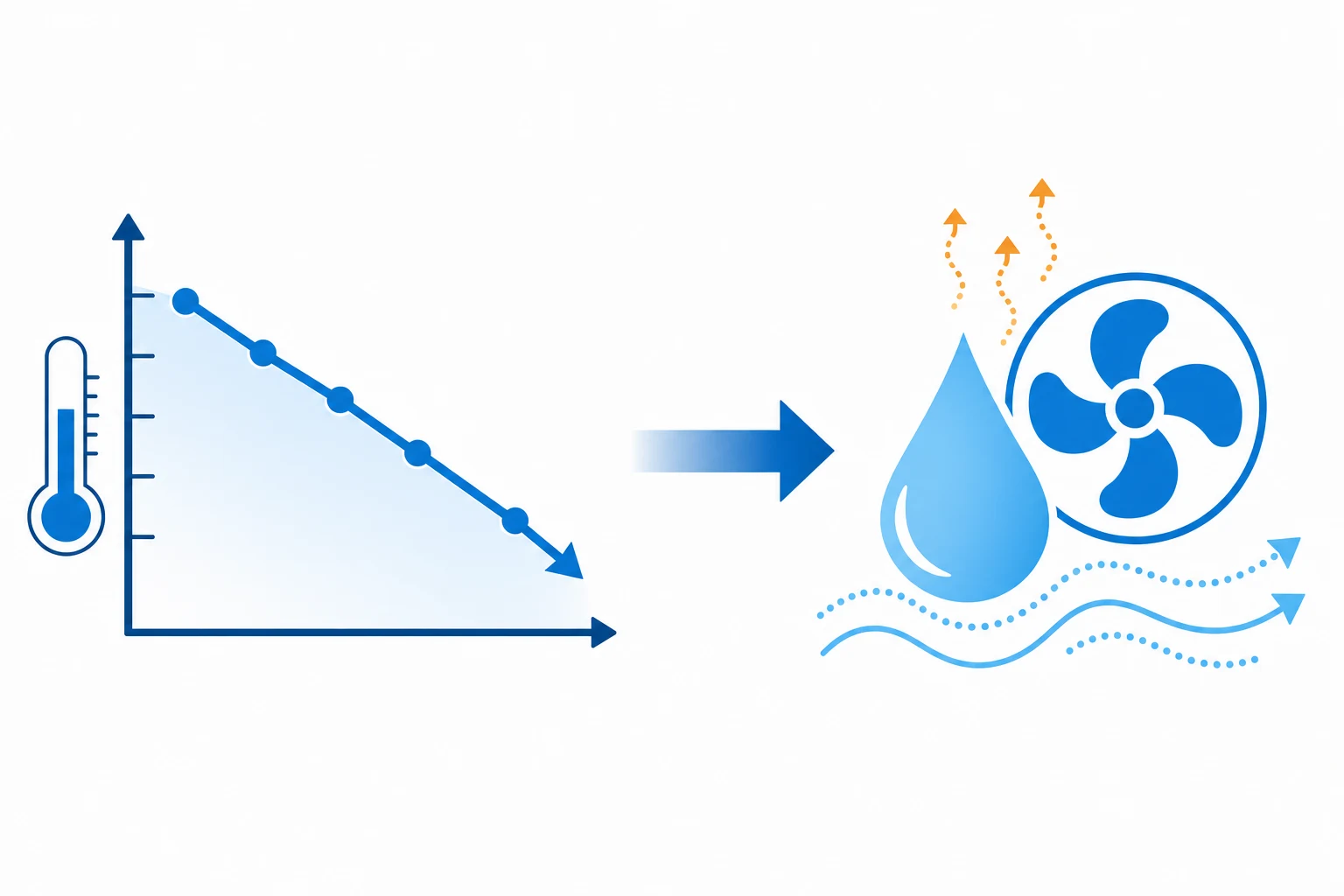
Rapid cooling is the definitive therapy, and the choice of method is the most frequently tested point in this topic. The cooling ladder runs from the fastest method down, and the exertional and classic forms have different first choices.[1][4][5]
| Method | Technique | Cooling rate | Role |
|---|---|---|---|
| Cold water immersion | Whole body (head out) in 2 to 15 degree water, stirred | About 0.15 degrees per minute (fastest available) | GOLD STANDARD for exertional heat stroke |
| Evaporative cooling | Tepid mist sprayed onto exposed skin with continuous high airflow (fan) | About 0.1 degrees per minute | METHOD OF CHOICE for classic heat stroke; viable where immersion impractical |
| Ice packs | Packs to neck, axillae and groin; combine with wet sheet and fan | Slower — adjunctive | Adjunct, or first available if no tub or fan |
| Cooled intravenous fluid | 30 mL per kg of 4 degree balanced crystalloid over 30 minutes | Modest adjunct | Adjunct to surface cooling |
| Body-cavity lavage, intravascular catheter, ECMO | Peritoneal or bladder lavage; endovascular heat-exchange; ECMO | Fast but invasive | Refractory cases, or cardiac arrest |
The gold standard for exertional heat stroke is cold water immersion — the method with the highest cooling rate, proven to reduce mortality to near zero when begun within 30 minutes. The athlete or soldier is placed head-out in a tub of iced water (2 to 15 degrees) that is continuously stirred; the limbs may be kept out if peripheral vasoconstriction limits cooling, and the patient is monitored. A common field improvisation is a kiddy-pool or body bag filled with iced water. Evaporative cooling — tepid mist sprayed onto the exposed skin with continuous high airflow from a fan — is the method of choice for the classic elderly patient, for whom immersion is impractical and for whom the cardiovascular stress of cold-water vasoconstriction is undesirable; it is also the field option where no tub is available. Ice packs to the neck, axillae and groin, combined with a wet sheet and a fan, are slower but universally available and used as an adjunct or a fallback.[1][4][5]
The cooling target is a core of 39 degrees (some guidelines 38.5 degrees), achieved as rapidly as possible. The moment the target is reached, active cooling is stopped, because the core continues to fall after cessation — overshoot hypothermia is a real and dangerous complication. The candidate who keeps cooling past 39 degrees fails the station. Continue to monitor the core, and resume gentle cooling only if it climbs again.[1][2][4]
[1]ED rapid-cooling protocol — step by step
The Fellowship candidate is asked to run the cooling station. Every step below is run in parallel, not in series — cooling is never delayed for any investigation.[1][4][5]
ED rapid cooling of heat stroke
Recognise and triage
Confirm core temperature with a rectal, oesophageal or bladder probe (NOT oral or tympanic). Any patient with core above 40 degrees PLUS confusion, seizure or coma is heat stroke — start the protocol immediately.
ABCDE and remove from heat
Move out of the sun and heat. High-flow oxygen; secure airway (intubate if GCS less than 8 or uncontrolled seizure); two large-bore cannulae; cardiac monitor; check bedside glucose (hypoglycaemia common in exertional).
Undress and start cooling WITHOUT delay
Remove all clothing. Choose the method: cold water immersion for exertional; evaporative (tepid mist plus fan) for classic; ice packs to neck, axillae and groin as a universal adjunct. Target cooling rate at least 0.15 degrees per minute.
IV fluid resuscitation
Balanced crystalloid 20 mL per kg (about 1 to 1.5 L) bolus, titrated to blood pressure, lactate and urine output. Cautious in classic (cardiac comorbidity); aggressive in exertional (dehydration drives shock). Avoid dextrose-only until hypoglycaemia excluded.
Control shivering, seizure and agitation
Diazepam 5 to 10 mg IV (or midazolam 2 to 5 mg). Shivering is thermogenic and must be abolished, not tolerated. Repeat benzodiazepine for recurrent seizure. Do NOT give antipyretics or dantrolene.
Monitor core continuously; send investigations in parallel
Continuous rectal/core probe. Venous gas, creatine kinase, coagulation, fibrinogen, D-dimer, LFTs, troponin, ECG, electrolytes, urinalysis, blood and urine cultures, chest radiograph.
STOP at 39 degrees
The moment the core reaches 39 degrees, cease active cooling — the core keeps falling and overshoot hypothermia is dangerous. Re-check every 5 minutes; resume gentle cooling only if the core climbs again.
Manage complications and admit to ICU
Treat rhabdomyolysis with IV fluid to target urine output; DIC with blood products; ARDS with lung-protective ventilation; arrhythmia per protocol; seizures with benzodiazepines. Admit all heat stroke to ICU or HDU.
Field protocol for exertional heat stroke (athlete, soldier, firefighter)
Recognise collapse with CNS change
Athlete or soldier down with confusion, ataxia, agitation or collapse during exertion in heat. Suspect exertional heat stroke — do not attribute it to dehydration or fatigue alone.
Measure rectal temperature
A field rectal thermometer is essential — oral and tympanic devices are unreliable and will miss the diagnosis. Core above 40 degrees with CNS change confirms exertional heat stroke.
Begin cold water immersion within minutes
Immerse head-out in a tub of iced water (2 to 15 degrees), continuously stirred. A kiddy-pool, stock tank or body bag filled with iced water is the field improvisation. Cooling rate about 0.15 degrees per minute.
Monitor and rotate
Continuous core monitoring; keep the patient calm. Remove from immersion when core reaches 39 degrees, then transport — the "cool first, transport second" principle reduces mortality.
Cool first, transport second
Do NOT delay cooling to move the patient — the 30-minute window is the determinant of survival. Field immersion begun within 30 minutes brings exertional heat stroke mortality to near zero.
Landmark evidence
Bouchama et al — Dantrolene in heatstroke RCT (1991)
Critical Care Medicine
Population: 52 adults with heatstroke (classic and exertional)
Key finding
No difference in cooling rate, length of stay or mortality
Douma et al — First-aid cooling meta-analysis (2020)
Resuscitation
Population: Systematic review of 98 studies of cooling techniques for exertional hyperthermia and heat stroke
Key finding
Cold water immersion is the FASTEST method (about 0.15 degrees per minute); evaporative cooling and ice-sheet methods are next; ice packs alone are slowest
Luhring et al — Modified cold-water immersion (2016)
Journal of Athletic Training
Population: Exercising adults rendered hyperthermic, then cooled by three immersion methods
Key finding
A continuously-stirred cold-water immersion method cools fastest without the cardiovascular penalty of still ice-water
Subtypes and scenarios
The two subtypes have been distinguished throughout, but several scenarios deserve their own mention. The paediatric case left in a parked car is a uniquely lethal form: the closed vehicle reaches lethal temperatures within minutes, the child develops classic heat stroke rapidly, and mortality is high. The drug-induced case — amphetamine, ecstasy, cocaine, or anticholinergic overdose — overlaps with the toxidrome differential and is cooled and managed with benzodiazepines. The malignant-hyperthermia-susceptible athlete may collapse with a clear exertional trigger; dantrolene is reserved for the documented ryanodine-receptor crisis with an anaesthetic trigger. The mass-casualty heat event during a heat wave overwhelms the emergency department with multiple classic heat stroke patients; pre-cooled fluid stocks, cooling tubs and a clear triage protocol are the institutional response.[2][4]
Complications and pitfalls
The complications are the end-organ injuries already described, and they declare themselves over the first 24 to 48 hours. Rhabdomyolysis with acute kidney injury demands early and adequate intravenous fluid to maintain a urine output; the role of urinary alkalinisation with bicarbonate is controversial and not routine. Disseminated intravascular coagulation peaks at 24 to 48 hours and is managed with blood-product support. Hepatic failure is usually self-limiting but may be severe. The acute respiratory distress syndrome may require lung-protective ventilation. Seizures recur and are treated with benzodiazepines.[1][2]
The pitfalls are the inverse of the protocol. The first is delaying cooling for investigations — the single most dangerous error, because outcome is determined by the duration of hyperthermia. The second is relying on antipyretics, which do not work and add harm. The third is tolerating shivering, which generates heat and defeats the cooling — abolish it with a benzodiazepine. The fourth is continuing to cool past 39 degrees, producing overshoot hypothermia. The fifth is using the tympanic or oral temperature, which underestimates the core and misses the diagnosis. The sixth is treating the confused hot patient as heat exhaustion (or vice versa) — the central nervous system sign is the divider. The seventh is missing coexisting sepsis, which is both a mimic and a precipitant. The eighth is dantrolene over-reliance, which has no evidence base in heat stroke.[1][2][5]
[1] [1]Rhabdomyolysis → AKI
- Creatine kinase above 1000 U/L or 5x upper limit; myoglobinuria (dark urine, positive blood on dipstick but no red cells)
- Direct thermal muscle injury plus exertion; compounded by hypovolaemia and acidosis
- IV balanced crystalloid to maintain urine output 1 to 2 mL/kg/h; treat hyperkalaemia; renal replacement therapy if refractory
- Bicarbonate alkalinisation is controversial and not routine — fluid is the cornerstone
DIC
- Peaks at 24 to 48 hours; rising INR/APTT, falling platelets and fibrinogen, rising D-dimer
- Thermal injury activates the coagulation cascade; manifests as bleeding from puncture sites, GI tract, mucosa
- Blood-product support — FFP, platelets, cryoprecipitate guided by the fibrinogen and bleeding pattern
- Re-check coagulation at 12, 24 and 48 hours even if normal on arrival
Hepatic failure
- Transaminases may exceed 1000 U/L in exertional heat stroke; a hepatitic picture dominates
- Direct thermal injury plus hypoperfusion; usually self-limiting but may be severe
- Supportive — avoid hepatotoxins (paracetamol!); monitor glucose and synthetic function
- A high AST/ALT in the collapsed athlete points to exertional heat stroke over simple dehydration
ARDS
- Develops over hours; hypoxaemia, bilateral infiltrates, non-cardiogenic pulmonary oedema
- Direct thermal lung injury plus aspiration in the obtunded patient plus the systemic inflammatory response
- Lung-protective ventilation (low tidal volume 6 mL/kg, plateau pressure under 30 cm water)
- Aspiration risk mandates early airway protection in the obtunded heat-stroke patient
Prognosis and disposition
Heat stroke carries a mortality of 10 to 50 per cent, driven by the maximum core temperature, the duration of hyperthermia, and the burden of end-organ failure. Exertional heat stroke cooled to below 40 degrees within 30 minutes has a mortality approaching zero — this single statistic is the rationale for field cooling. The elderly, the delayed-cooled, the patient with pre-existing cardiac or renal disease, and the patient who develops disseminated intravascular coagulation and the acute respiratory distress syndrome carry the worst prognosis. All heat stroke patients are admitted to intensive care or a high-dependency unit; heat exhaustion that resolves with rest and oral rehydration, with normal investigations, may be observed and discharged with advice. Most survivors of an isolated heat stroke recover fully, though a few are left with permanent neurological or renal injury.[1][2]
Special populations
Athletes and military personnel are the exertional population, and the evidence-based preventive measure is a cooling tub on the field, at the range and at endurance events, with acclimatisation protocols before deployment to heat. The elderly and chronically ill are the classic population, and the institutional response during a heat wave is air-conditioned cooling centres, hydration, and checks on the socially isolated. Children, with a high surface-area-to-mass ratio, develop heat stroke terrifyingly fast — the parked-car case is the archetype. The cardiac patient on a beta-blocker or diuretic cannot mount the tachycardic, vasodilatory response to heat and decompensates early; the offending drug is reviewed. The pregnant worker in heat is managed with removal, hydration and cooling, and monitored for fetal distress. The malignant-hyperthermia-susceptible patient is rare but the overlap with exertional heat stroke is the source of the dantrolene question.[2][4]
Evidence and regional guidelines
The contemporary framework rests on the Bouchama and Knochel review of heat stroke in the New England Journal of Medicine (2002), the classic mechanistic reference, and the Epstein and Yanovich review in the same journal (2019), the modern update. The Leon and Bouchama review in Comprehensive Physiology (2015) sets out the gut-barrier and endotoxin mechanism. The Wilderness Medical Society Clinical Practice Guidelines — the 2024 update by Eifling and colleagues and the 2019 update by Lipman and colleagues — are the authoritative source for the cooling recommendations and the exertional heat stroke field management. The Douma and colleagues systematic review and meta-analysis in Resuscitation (2020) confirms cold water immersion as the fastest available cooling method.[1][2][3][4][5][6] The American College of Sports Medicine, the European Resuscitation Council and the Australian and New Zealand emergency pathways converge on the same principles: rapid physical cooling within 30 minutes, cold water immersion for exertional heat stroke, evaporative cooling for classic, a benzodiazepine for shivering, and antipyretics avoided.
SAQ — Classic heat stroke in an elderly woman during a heat wave
10 minutes · 10 marks
An 82-year-old woman who lives alone is brought to the emergency department during a city-wide heat wave (ambient 42 degrees, high humidity, day five of the event) after neighbours found her confused and on the floor of her top-floor flat. She has heart failure with reduced ejection fraction (28 per cent), atrial fibrillation on metoprolol 50 mg and frusemide 40 mg daily, type 2 diabetes and chronic kidney disease (baseline creatinine 140). On arrival she is delirious and combative, GCS 12, hot and dry with no visible sweating, core rectal temperature 41.6 degrees, HR 112 irregularly irregular, BP 88/52, RR 28, SpO2 93 per cent on room air, capillary glucose 5.4 mmol/L. Venous gas: pH 7.28, lactate 4.6, sodium 150, potassium 5.8, creatinine 230. INR 2.4, platelets 95, fibrinogen 1.2 g/L, CK 850 U/L.
SAQ — Exertional heat stroke in an unacclimatised soldier
10 minutes · 10 marks
A 22-year-old infantry recruit collapses 8 km into a timed pack march in 36 degrees heat with high humidity on the third day of a heat wave; he deployed from a temperate climate two weeks ago and is unacclimatised. In the medical tent he is confused and combative, GCS 13, still sweating profusely, rectal temperature 41.8 degrees, HR 148, BP 96/58, RR 32, capillary glucose 2.6 mmol/L. A tub of iced water at 8 degrees with a stirrer is available; the evacuation helicopter is 90 minutes away.
Exam pearls
- Heat stroke is core above 40 degrees with central nervous system dysfunction — confusion, seizure or coma is the divider, not the skin and not the sweat.
- Heat stroke is hyperthermia, not fever — the hypothalamic set point is normal, so antipyretics do not work; cool by physical means only.
- Cold water immersion is the gold standard for exertional heat stroke (about 0.15 degrees per minute); evaporative cooling for the classic elderly patient.
- Cool to 39 degrees as fast as possible, then STOP — overshoot hypothermia is a real danger because the core keeps falling after cessation.
- Shivering generates heat and defeats cooling — abolish it with diazepam 5 to 10 mg intravenously, not a blanket.
- Check creatine kinase, coagulation and liver function on every heat stroke — rhabdomyolysis, disseminated intravascular coagulation and hepatitis are expected.
- Dantrolene has no routine role — reserve it for confirmed malignant hyperthermia with a clear anaesthetic trigger.
- Begin cooling within minutes — outcome is determined by the duration of hyperthermia; do not wait for investigations. [1]
Red flags
[1]Cooling methods compared in depth
Cold water immersion (CWI)
- GOLD STANDARD for exertional heat stroke — fastest available method at about 0.15 degrees per minute
- Whole-body head-out immersion in stirred 2 to 15 degree water; field improvisation is a kiddy-pool or body bag of iced water
- Proven to bring exertional heat stroke mortality to near zero when begun within 30 minutes
- Limitation: impractical for the monitored, ventilated classic patient; cardiovascular stress of peripheral vasoconstriction
- Keep limbs out if peripheral vasoconstriction limits cooling; stir the water continuously to maximise convection
Evaporative cooling
- METHOD OF CHOICE for classic heat stroke — tepid mist sprayed onto exposed skin with continuous high-airflow fan
- Cooling rate about 0.1 degrees per minute; practical for the elderly, monitored ICU patient
- Avoids the cardiovascular stress of cold-water vasoconstriction; viable where no immersion tub exists
- Less effective in very high humidity (water cannot evaporate) — switch to CWI or ice packs if the wet-bulb temperature is high
- Combine with ice packs to neck, axillae and groin for additive effect
Ice packs + fan
- Packs to neck, axillae and groin combined with a wet sheet and fan; universally available
- Slower cooling rate than CWI or evaporative — use as an ADJUNCT or first-available fallback
- Useful while setting up definitive cooling; bridges the gap during transport
- Do NOT use alone if CWI or evaporative is available — it is too slow for severe hyperthermia
- Massage the areas around the packs to maintain cutaneous blood flow
Cooled IV fluid + invasive
- 30 mL/kg of 4-degree balanced crystalloid over 30 minutes; modest adjunctive cooling
- Body-cavity lavage (peritoneal, bladder), endovascular heat-exchange catheter, ECMO — fast but invasive
- Reserved for REFRACTORY cases or cardiac arrest; ECMO for the haemodynamically collapsed patient
- Cooled IV fluid is a useful adjunct when surface methods are insufficient or delayed
- Invasive methods add complication risk — not first-line
Antipyretics (paracetamol, NSAIDs)
- INEFFECTIVE in heat stroke — the hypothalamic set point is normal, so there is nothing to reset
- Paracetamol adds HEPATIC harm in a patient with thermal hepatitis; NSAIDs add RENAL and COAGULATION harm
- Do NOT give antipyretics for the temperature — they do not work and they harm
- The only role for paracetamol is symptomatic treatment of an unrelated pain or fever AFTER recovery
- A candidate who reaches for paracetamol in heat stroke has misunderstood fever versus hyperthermia
Benzodiazepines (diazepam, midazolam)
- FIRST-LINE for shivering, agitation and seizure during cooling
- Shivering is thermogenic and raises metabolic demand — abolishing it accelerates cooling
- Diazepam 5 to 10 mg IV or midazolam 2 to 5 mg; repeat for recurrent seizure
- Also treats the seizure and the agitation; monitor for respiratory depression
- Do NOT use a blanket to suppress shivering — a benzodiazepine is the correct tool
Dantrolene
- NO routine role in heat stroke — the Bouchama RCT (1991) showed no benefit in cooling rate or mortality
- Heat stroke is NOT a ryanodine-receptor calcium crisis; dantrolene does not address the mechanism
- Reserve dantrolene for CONFIRMED malignant hyperthermia with a clear volatile-anaesthetic or suxamethonium trigger
- Some units use a trial dose in refractory hyperthermia, but this is not evidence-based
- Over-reliance on dantrolene is a recognised pitfall and an examiner trap
References
- [1]Bouchama A, Knochel JP Heat stroke N Engl J Med, 2002.PMID 12075060
- [2]Epstein Y, Yanovich R Heatstroke N Engl J Med, 2019.PMID 31216400
- [3]Leon LR, Bouchama A Heat stroke Compr Physiol, 2015.PMID 25880507
- [4]Eifling KP, Lipman GS, Stauffer GL, et al. Wilderness Medical Society Clinical Practice Guidelines for the Prevention and Treatment of Heat Illness: 2024 Update Wilderness Environ Med, 2024.PMID 38425235
- [5]Douma MJ, Aves T, Allan KS, et al. First aid cooling techniques for heat stroke and exertional hyperthermia: A systematic review and meta-analysis Resuscitation, 2020.PMID 31981710
- [6]Lipman GS, Gaudio FG, Eifling KP, et al. Wilderness Medical Society Clinical Practice Guidelines for the Prevention and Treatment of Heat Illness: 2019 Update Wilderness Environ Med, 2019.PMID 31221601
- [7]Bouchama A, Cafege A, Devol EB, et al. Ineffectiveness of dantrolene sodium in the treatment of heatstroke Crit Care Med, 1991.PMID 1989755
- [8]Luhring KE, Butts CL, Smith CR, et al. Cooling Effectiveness of a Modified Cold-Water Immersion Method After Exercise-Induced Hyperthermia J Athl Train, 2016.PMID 27874299