EM · Toxicology and environmental emergencies
Toxic alcohol poisoning (methanol and ethylene glycol)
Also known as Methanol poisoning · Ethylene glycol poisoning · Antifreeze poisoning · Windshield washer fluid ingestion · Toxic alcohol ingestion
Toxic alcohol poisoning — methanol (windshield washer, illicit spirits) and ethylene glycol (antifreeze) are small alcohols metabolised by alcohol dehydrogenase to the acids that do the harm: methanol to formaldehyde then formic acid (the blindness, the putaminal necrosis on CT, the high anion gap metabolic acidosis), ethylene glycol to glycolic acid and oxalic acid (the calcium oxalate crystals in the urine, the acute kidney injury). The bedside signature is a high anion gap metabolic acidosis paired with an elevated osmolar gap. Management is alcohol dehydrogenase blockade with fomepizole 15 mg/kg IV loading then 10 mg/kg every 12 hours (or 10 per cent ethanol at 10 mL/kg bolus then 1 to 2 mL/kg/h as the cheaper alternative), cofactors (folinic acid 1 mg/kg for methanol; thiamine and pyridoxine for ethylene glycol), and haemodialysis for the severe case. The differential is the high anion gap metabolic acidosis: lactic acidosis, DKA, salicylate, uraemia. ACEM-primary, globally tagged.
On this page & tools
Your progress
Saved locally on this device.
Target exams
Red flags
Related topics
Toxic alcohol poisoning is the disease in which the bedside blood gas and the calculated gaps make the diagnosis before the specific level returns. Methanol and ethylene glycol are themselves comparatively innocuous — they produce mild inebriation — but each is metabolised by alcohol dehydrogenase to a far more toxic organic acid that causes the blindness, the kidney injury, and the high anion gap metabolic acidosis that kills. The Fellowship candidate must hold two ideas together: a parent alcohol produces an elevated osmolar gap (the molecule is small and osmotically active), and its metabolism produces a high anion gap metabolic acidosis (the acids accumulate). The decisive early intervention is blockade of alcohol dehydrogenase with fomepizole, which halts the conversion to the toxic acid; the cofactors folinic acid, thiamine, and pyridoxine divert what has already formed toward non-toxic pathways; and haemodialysis removes the parent alcohol, the metabolites, and corrects the acidosis in the severe case. The history is often absent or misleading (illicit spirits, a suicide attempt, an industrial exposure), so the candidate who treats the gaps and the clinical picture rather than waiting for the level will answer every question on this topic.[1][2][6]

Definition and classification
A toxic alcohol is a small aliphatic alcohol whose oxidative metabolism generates a toxic organic acid. The two that dominate emergency practice are methanol (methyl alcohol, CH3OH) and ethylene glycol (1,2-ethanediol, HOCH2CH2OH). A third, diethylene glycol, is a recurring cause of epidemic poisoning from contaminated pharmaceuticals and produces a similar high anion gap acidosis with acute kidney injury and, characteristically, a severe encephalopathy and facial palsy; propylene glycol is a less toxic vehicle that accumulates in patients on high-dose infusions (lorazepam, phenytoin) to produce a lactic acidosis with an osmolar gap. The Fellowship syllabus concentrates on methanol and ethylene glycol, and the two are taught together because their diagnosis and management are identical up to the cofactor step.[6]
Methanol is found in windshield washer fluid, antifreeze blends, paint removers, fuel for camping stoves (methylated spirits, shellac thinner), bootleg or illicit spirits (the cause of epidemic outbreaks in regions where ethanol is taxed or restricted), and industrial solvents. Ethylene glycol is the major constituent of automotive antifreeze and coolant, where it is sweet-tasting, and is also found in brake fluid and some industrial heat exchangers. The characteristic delay of 12 to 24 hours (occasionally up to 72 hours) between ingestion and the appearance of severe toxicity reflects the time required for metabolic conversion — a delay that is abolished by co-ingested ethanol, which competitively occupies alcohol dehydrogenase and slows the toxic pathway, and lengthened by it.[1][2]
Pathophysiology — alcohol dehydrogenase, the toxic acids, and the two gaps
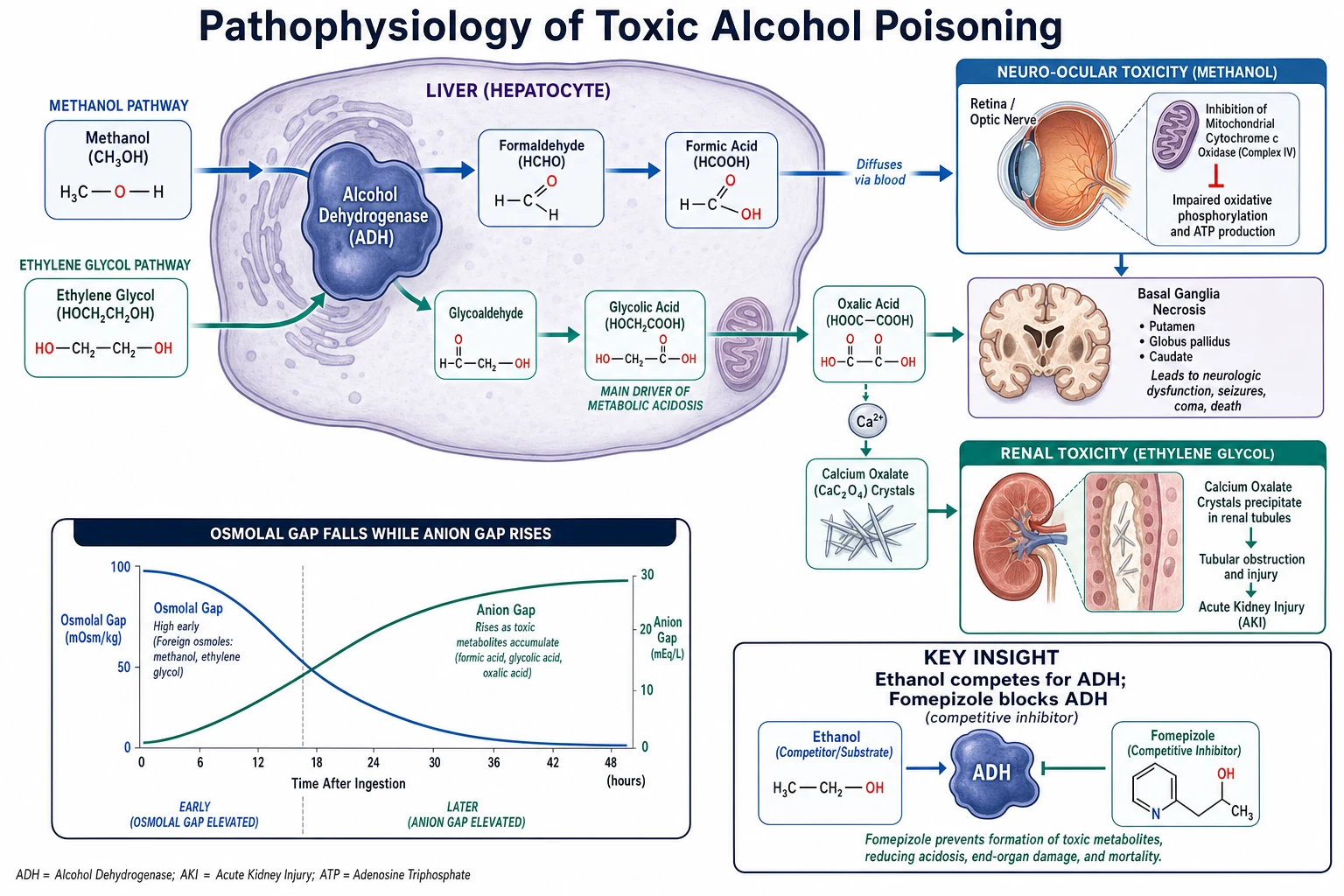
Both methanol and ethylene glycol are substrates of hepatic alcohol dehydrogenase (ADH), the same enzyme that oxidises ethanol. The parent alcohol produces mild inebriation and an elevated osmolar gap; the toxic injury is the work of the metabolites. The Fellowship candidate must trace each pathway to its toxic end-product and to its clinical sign.[1][2]
[1]The retinal and optic nerve injury of methanol poisoning is the work of formate: it demyelinates the optic nerve and destroys retinal ganglion cells, producing blurred vision, photophobia, the sensation of looking through a snowstorm, and — in the severe case — complete blindness. The basal ganglia injury is a haemorrhagic and ischaemic necrosis of the putamen, often bilateral, visible on CT 24 to 48 hours after a severe exposure and accompanied by a parkinsonian syndrome in survivors. The glycolate of ethylene glycol is responsible for the deep metabolic acidosis; the calcium oxalate deposition produces acute tubular necrosis, hypocalcaemia (calcium is chelated and precipitated), and occasionally crystalline deposition in the myocardium, blood vessels, and brain. Lactate accumulates in both, from the cytochrome oxidase inhibition (methanol) and the shock and seizures that accompany severe poisoning.[2][6]
The two diagnostic gaps are the central laboratory findings. The osmolar gap is the difference between the measured serum osmolarity (by freezing-point depression) and the calculated osmolarity: calculated osmolarity (mmol per L) = 2 times the sodium plus the glucose plus the urea. A normal osmolar gap is under 10 mOsm per L; a gap above 20 mOsm per L is significant. The parent alcohols are small molecules present in high molar concentration, so they raise the measured osmolarity disproportionately to the calculated value — producing the elevated osmolar gap early, before metabolism. The anion gap is sodium minus chloride minus bicarbonate (normal 8 to 12); it rises as the organic acids accumulate. The two gaps therefore move in opposite directions over time: the patient who presents early has a high osmolar gap and a near-normal anion gap; the patient who presents after metabolism has progressed has a high anion gap and a falling osmolar gap. A normal osmolar gap in a late presenter does not exclude a toxic alcohol.[6]
Sources and epidemiology
Methanol and ethylene glycol together account for a small fraction of poison-centre calls but a disproportionate share of poisoning deaths and intensive-care bed-days, because toxicity is delayed, the history is unreliable, and the diagnosis depends on a calculation the clinician must remember to make. Two epidemiological patterns dominate. Outbreak methanol poisoning follows the consumption of adulterated or illicit spirits in regions where ethanol is expensive or restricted; outbreaks of tens to hundreds of cases, with substantial mortality, are reported regularly from the Asia-Pacific, the Middle East, and parts of Africa and Europe, and present to the emergency department in waves. Sporadic exposure in Australasia, the UK, and North America is dominated by the deliberate self-harm ingestion of antifreeze (ethylene glycol) or windshield washer (methanol), and by the paediatric exploratory ingestion of brightly coloured, sweet-tasting antifreeze. Mortality is concentrated in the late-presenting patient with established acidosis, renal failure, or visual loss, and in the outbreak where the volume of patients overwhelms the supply of fomepizole and haemodialysis.[1][6]
Clinical presentation
The two alcohols share a prodrome and diverge at the end-organ. The common early phase, 2 to 12 hours after ingestion, is mild ethanol-like inebriation without the smell of ethanol — drowsiness, ataxia, slurred speech, and nausea — that may be misattributed to alcohol intoxication, especially in the patient who has indeed been drinking. As metabolism proceeds, the high anion gap metabolic acidosis declares itself: tachypnoea (a compensatory Kussmaul pattern), abdominal pain, vomiting, and a falling conscious level. Hypocalcaemia produces tetany, carpopedal spasm, and a prolonged QT in ethylene glycol poisoning.[6]
The distinguishing features appear 12 to 24 hours after ingestion (sooner after large doses, later with co-ingested ethanol). In methanol poisoning the retina and optic nerve are the target: the patient describes blurred vision, photophobia, the sensation of being in a snowstorm, and field defects; examination shows a hyperaemic optic disc, papilloedema, a relative afferent pupillary defect, and — in the severe case — fixed dilated pupils and blindness. Coma, seizures, and a parkinsonian rigidity may follow from the putaminal necrosis. In ethylene glycol poisoning the kidney is the target: flank pain, oliguria, and a rising creatinine from acute tubular necrosis accompany the deposition of calcium oxalate crystals; hypocalcaemia, hyporeflexia, tetany, and QT prolongation are the systemic expression of the calcium chelation, and crystals are found in the urine sediment. Oxalate deposition in the myocardium may produce arrhythmia and circulatory collapse.[2][4]
[1]Differential diagnosis — the high anion gap metabolic acidosis
The differential is the cause of the high anion gap metabolic acidosis, and the decisive discriminator is the osmolar gap: a metabolic acidosis with a markedly elevated osmolar gap points to a toxic alcohol, while a metabolic acidosis with a normal osmolar gap points to lactic acidosis, ketoacidosis, salicylate, or uraemia. The candidate must consider the other osmotically active causes of an elevated osmolar gap (ethanol, propylene glycol, isopropanol, mannitol, the unmeasured osmoles of sepsis and keystone of the laboratory artefact) and remember that a toxic alcohol may coexist with any of them. [1]
Methanol
- High AG metabolic acidosis PLUS an elevated osmolar gap
- Visual blurring, "snowstorm" field, photophobia, optic disc hyperaemia
- Putaminal necrosis on CT; parkinsonian signs
- Fomepizole or ethanol; folinic acid 1 mg/kg; haemodialysis
Ethylene glycol
- High AG metabolic acidosis PLUS an elevated osmolar gap
- Calcium oxalate crystals in urine; acute kidney injury; hypocalcaemia and QT prolongation
- Flank pain, oliguria; no visual symptoms
- Fomepizole or ethanol; thiamine and pyridoxine; haemodialysis
Lactic acidosis (sepsis, shock)
- High AG metabolic acidosis with a markedly raised lactate
- Hypotension, cold peripheries, septic or cardiogenic source
- Normal osmolar gap; no crystals, no visual loss
- Treat the underlying shock; fluids, antibiotics, source control
Diabetic ketoacidosis
- High AG metabolic acidosis with ketosis and hyperglycaemia
- Kussmaul breathing, dehydration, polyuria; ketones high
- Normal osmolar gap; glucose markedly raised
- IV insulin, fluid, potassium; treat the cause
Salicylate poisoning
- Mixed respiratory alkalosis AND high AG metabolic acidosis
- Tinnitus, hyperventilation, sweating, fever, agitation
- Normal osmolar gap; salicylate level raised
- Sodium bicarbonate alkalinisation; haemodialysis
Alcoholic ketoacidosis
- High AG metabolic acidosis with a beta-hydroxybutyrate-predominant ketosis
- Recent heavy drinking then withdrawal, vomiting, dehydration
- Osmolar gap may be mildly raised from ethanol; glucose low to normal
- Dextrose-containing saline, thiamine; resolves over hours
Uraemic acidosis
- High AG metabolic acidosis from retained organic acids
- Chronic kidney history; uraemic features; creatinine markedly raised
- Normal osmolar gap
- Renal replacement therapy; bicarbonate if acidotic
GOLD MARK
The mnemonic GOLD MARK has displaced the older MUDPILES in modern practice because it captures the glycols and oxoproline, both commonly missed. The candidate should generate the differential by asking two questions: is the osmolar gap elevated (pointing to a toxic alcohol or another osmole), and is there a lactate, a ketone, a salicylate level, or a renal failure to explain the anion gap.[6]
Bedside assessment
The history establishes the agent, the dose, the time, the formulation, the route (ingestion, inhalation, transdermal), and any co-ingestants, with particular attention to ethanol, which delays toxic-metabolite formation and may mask the early picture. An occupational, recreational, or suicidal context is sought (the mechanic with antifreeze on the hands, the distiller, the patient who has access to industrial solvents). The examination documents the conscious level, the vital signs, the depth and rate of breathing, the hydration, the abdominal findings, the eye examination (acuity, fields, pupils, optic disc), and a careful neurological examination for rigidity or tremor. Oropharyngeal and breath odour (ethanol-like but not ethanol), nystagmus, papilloedema, tetany, and oliguria are the bedside clues. A psychiatric and self-harm risk assessment is begun once the patient is stable, and public-health notification is mandatory in any outbreak (the index case of an illicit-spirit cluster).[6]
Investigations — the osmolar gap, the anion gap, the crystals, and the levels
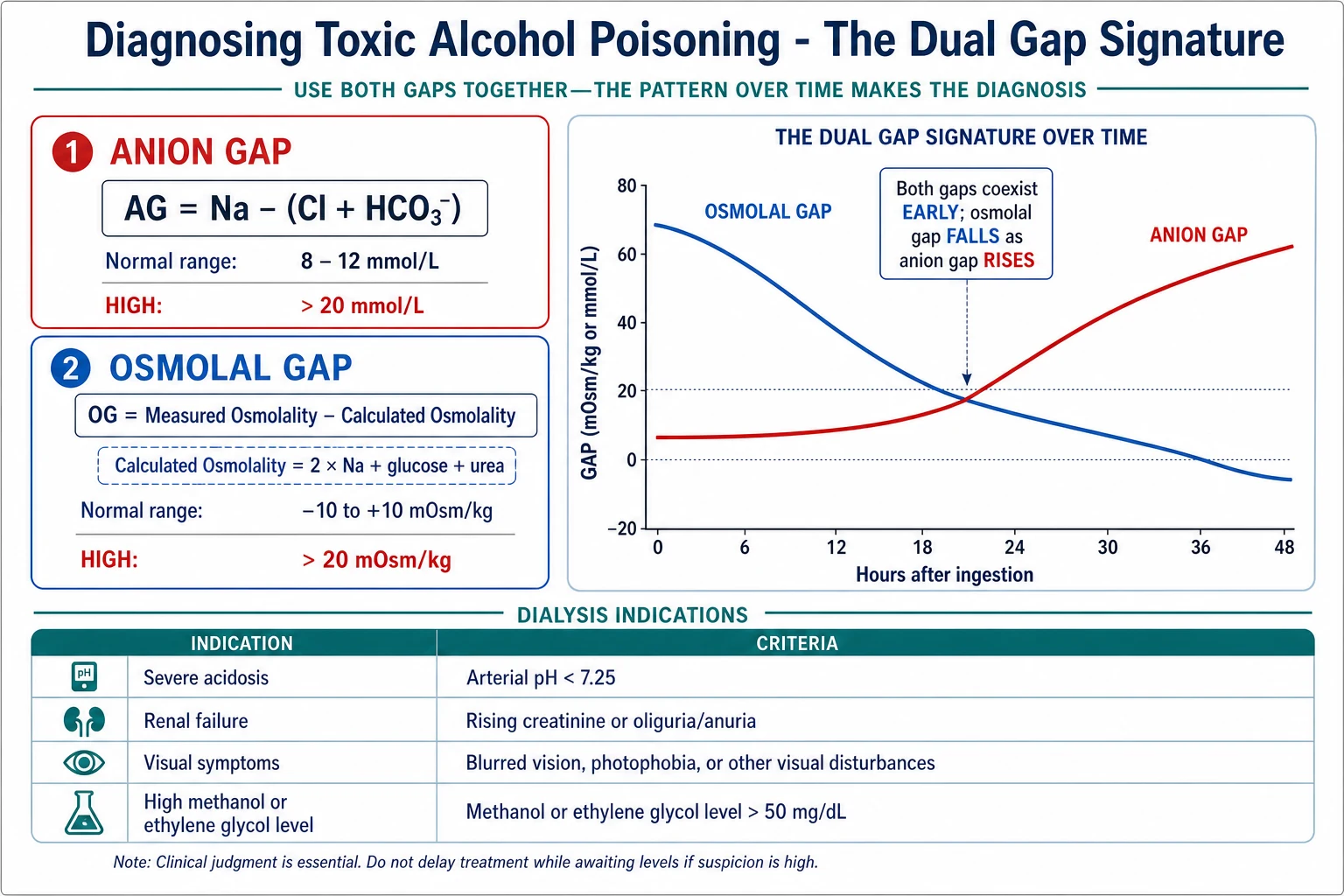
The cornerstone is the simultaneous serum osmolarity (measured by freezing-point depression), electrolytes, glucose, urea, and a venous (or arterial) blood gas. From these the candidate calculates the osmolar gap and the anion gap. The measured osmolarity should always be measured by the freezing-point method — the vapour-pressure method underestimates the contribution of volatile alcohols. A raised osmolar gap (above 20 mOsm per L) with a high anion gap metabolic acidosis is the toxic-alcohol signature; a high anion gap with a normal osmolar gap is still compatible with a late-presenting toxic alcohol and does not exclude the diagnosis.[6]
The serum methanol and ethylene glycol levels confirm the diagnosis and guide the duration of therapy, but they are sent to a reference laboratory and take hours; treatment must never be withheld while they are awaited. A methanol level above 6 mmol per L (20 mg per dL) or an ethylene glycol level above 3 mmol per L (20 mg per dL) supports the diagnosis and is an indication to continue ADH blockade until the level falls below the treatment threshold and the acidosis resolves. The accompanying panel includes lactate, ketones (beta-hydroxybutyrate), salicylate, paracetamol, and ethanol levels to exclude co-ingestants and alternative causes; calcium, magnesium, amylase, renal function, and a full blood count; an ECG to detect QT prolongation (ethylene glycol) or a co-ingested cardiotoxin; and a CT brain in any patient with coma, seizures, or focal neurological signs to demonstrate the bilateral putaminal necrosis of methanol poisoning and exclude alternative structural causes.[2]
[1]A worked example of the two gaps
The candidate who can compute both gaps at the bedside will not miss the diagnosis. Take the index case: a venous gas returns pH 7.15, HCO3 8, Na 138, Cl 98, glucose 6, urea 5, measured osmolarity 332. The anion gap = Na − (Cl + HCO3) = 138 − (98 + 8) = 32 (high; normal 8 to 12). The calculated osmolarity = 2 × Na + glucose + urea = 276 + 6 + 5 = 287. The osmolar gap = measured − calculated = 332 − 287 = 45 mOsm per L (markedly raised; normal under 10, significant above 20). The pairing of a high anion gap metabolic acidosis with a raised osmolar gap is the toxic-alcohol signature, and in this range the parent alcohol is still present (osmolar gap raised) and being actively metabolised (anion gap raised). The level of the toxic alcohol cannot be inferred from the gap, but a falling osmolar gap with a rising anion gap over serial measurements confirms ongoing metabolism.[6]
[1]Diagnostic workup of a suspected toxic alcohol (the order matters)
Recognise the trigger
Any unexplained high anion gap metabolic acidosis, especially with altered consciousness, hyperventilation, or 'drunk without ethanol smell', triggers the workup. Visual symptoms or crystals narrow the agent.
Send the primary panel
VBG/ABG, Na, Cl, HCO3, glucose, urea, creatinine, lactate, and a measured serum osmolarity by FREEZING-POINT. Calculate the anion gap (Na − Cl − HCO3) and the osmolar gap (measured − calculated). Insist on the freezing-point method; the vapour-pressure method under-reads volatiles.
Apply the signature
High anion gap PLUS elevated osmolar gap = toxic alcohol until proven otherwise. High anion gap with NORMAL osmolar gap does NOT exclude a late presentation — the parent alcohol has already been metabolised.
Exclude co-ingestants and mimics
Add lactate, beta-hydroxybutyrate, salicylate, paracetamol, ethanol, and an ethanol level. Check calcium (ethylene glycol hypocalcaemia), magnesium, amylase, lipase. Examine fresh urine for calcium oxalate crystals. ECG for QT. GOLD MARK mnemonic for the differential.
Confirm and quantify
Send serum methanol and ethylene glycol levels to the reference lab — they confirm the diagnosis and guide duration of therapy, but NEVER wait for them to start fomepizole.
Image the brain in the comatose
CT brain in any patient with coma, seizures, or focal neurology — to show the bilateral putaminal necrosis of methanol and exclude alternative structural causes.
START fomepizole on suspicion
The decisive action. Do not delay for any of the above results. 15 mg/kg IV over 30 minutes, then 10 mg/kg q12h. Add the appropriate cofactor (folinic acid for methanol; thiamine + pyridoxine for EG).
Early presentation (< 6 h)
- Mild ethanol-like inebriation; no smell of ethanol
- Elevated OSMOLAR gap; anion gap near-normal (metabolism incomplete)
- Visual symptoms and renal injury NOT yet developed
- Fomepizole alone; excellent prognosis if blocked before acids form
Intermediate (6–24 h)
- Deepening acidosis, Kussmaul breathing, falling GCS
- Both gaps elevated — parent alcohol AND acids both present
- Methanol: early visual symptoms; EG: crystalluria beginning
- Fomepizole + cofactors; assess dialysis criteria
Late presentation (> 24 h)
- Established acidosis, coma, end-organ injury
- Anion gap high; osmolar gap may be NORMAL (parent metabolised)
- Methanol: blindness, putaminal necrosis; EG: AKI, hypocalcaemia
- Fomepizole + cofactors + haemodialysis; substantial mortality
Co-ingested ethanol
- Presents 'late but well' — ethanol occupies ADH
- Ethanol level raised; osmolar gap from ethanol AND toxic alcohol
- Deteriorates once ethanol is cleared and ADH is freed
- Continue ADH blockade until the toxic alcohol is fully cleared
Immediate management and resuscitation
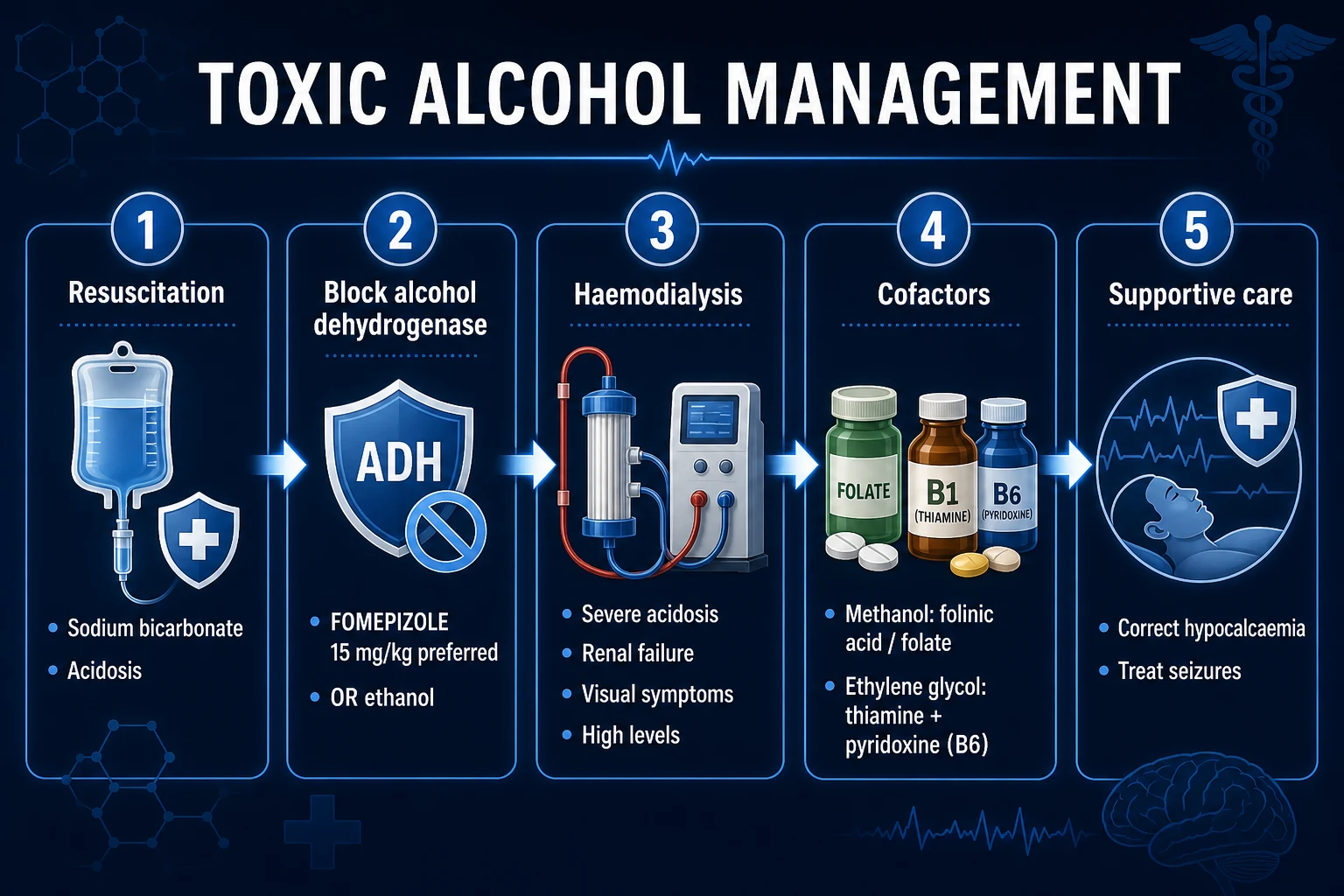
Resuscitation follows ABCDE. Most toxic-alcohol patients are cardiovascularly stable on arrival, but the late-presenting patient may be in shock from acidosis, arrhythmia, or volume depletion. Supplemental oxygen is given; IV access is established and a balanced crystalloid (1 to 2 L in the adult, titrated to perfusion and urine output) is started to support renal clearance of the parent alcohol and the metabolites. Hypoglycaemia is corrected (50 mL of 50 per cent dextrose IV in the adult, or 5 mL per kg of 10 per cent dextrose in the child). Seizures are treated with a benzodiazepine (lorazepam 4 mg IV or midazolam 5 to 10 mg IV); nausea and vomiting with ondansetron 4 mg IV. Activated charcoal 50 g (1 g per kg in the child) has no role for the small alcohols, which are rapidly absorbed and poorly adsorbed by charcoal; it is reserved for a confirmed co-ingestant. Haemodialysis-capable vascular access is sited early in any patient who is likely to meet dialysis criteria.[6]
The single decisive early action is to block alcohol dehydrogenase as soon as the diagnosis is suspected, before the level returns. Fomepizole occupies the active site of alcohol dehydrogenase and prevents the conversion of methanol to formate and of ethylene glycol to glycolate; given early, it converts a lethal poisoning into a problem of clearance. Brent and the Methylpyrazole for Toxic Alcohols Study Group demonstrated that fomepizole halts metabolite accumulation, prevents renal injury in ethylene glycol poisoning, and prevents visual loss in methanol poisoning.[1][2]
Definitive management — ADH blockade, cofactors, and haemodialysis
The definitive management is a three-part ladder: competitive ADH blockade, cofactor therapy to divert metabolism toward non-toxic products, and haemodialysis to remove the parent alcohol and the metabolites and to correct the acidosis. Fomepizole is the first-line agent in Australasia, the UK, and most of North America and Europe; intravenous ethanol is the alternative where fomepizole is unavailable or unaffordable, as it remains in many low- and middle-income settings.[5]
The fomepizole regimen (4-methylpyrazole, competitive ADH inhibitor)
Fomepizole is continued until the methanol or ethylene glycol level is undetectable (or below 20 mg per dL / the local treatment threshold) AND the metabolic acidosis has resolved — typically 24 to 48 hours, but considerably longer in the large methanol exposure, because methanol has a long half-life (around 30 to 50 hours on fomepizole, since renal and pulmonary clearance are slow). Headache, nausea, and a mild transient eosinophilia are the common adverse effects; the agent is safe in pregnancy and in hepatic impairment. McMartin and colleagues confirmed that the increased-dose schedule after 48 hours maintains a therapeutic fomepizole concentration as the drug induces its own clearance.[5]
The intravenous ethanol regimen (the cheaper alternative)
Ethanol competes for alcohol dehydrogenase because the enzyme has a much higher affinity for ethanol (Km about 1 to 2 mmol per L) than for methanol or ethylene glycol, so a blood ethanol of 100 to 150 mg per dL saturates the enzyme and protects the substrate from metabolism. The drawbacks are CNS depression, hypoglycaemia (especially in children), hepatotoxicity from prolonged infusion, and the difficulty of titrating the blood ethanol — which demands intensive-care monitoring. Fomepizole is preferred wherever it is available; the choice between the two is regional and resource-driven, not evidence-driven, since both protect ADH effectively.[6]
The cofactors divert the metabolic flux toward non-toxic products and are inexpensive, safe, and under-used. Folinic acid (leucovorin) 1 mg/kg IV (up to 50 mg) every 4 to 6 hours accelerates the oxidation of formate to carbon dioxide and water via the folate-dependent pathway and is specific to methanol poisoning — it is given to every methanol-poisoned patient until the acidosis resolves. Thiamine 100 mg IV and pyridoxine 50 mg IV daily divert glyoxylate away from oxalate: thiamine drives glyoxylate toward alpha-hydroxy-beta-ketoadipate and pyridoxine toward glycine, reducing oxalate formation and protecting the kidney. Both are given to every ethylene-glycol-poisoned patient. None of the cofactors is a substitute for ADH blockade or haemodialysis.[2][6]
Haemodialysis removes methanol, ethylene glycol, glycolate, and formate efficiently, corrects the metabolic acidosis, and relieves the volume and electrolyte load. The EXTRIP Workgroup produced the consensus indications for both alcohols. Roberts and the EXTRIP methanol panel (2015) gave a strong recommendation for extracorporeal treatment in severe methanol poisoning — defined by visual impairment, a metabolic acidosis with pH below 7.3, a methanol level above 15.6 mmol per L (50 mg per dL), or renal dysfunction — and recommended intermittent haemodialysis as the modality of choice, with fomepizole continued during and after the run.[3] Ghannoum and the EXTRIP ethylene glycol panel (2023) gave a strong recommendation for extracorporeal treatment when there is renal dysfunction, a pH below 7.3, or an ethylene glycol level above 8 mmol per L (50 mg per dL), and suggested stopping dialysis once the ethylene glycol level falls below 4 mmol per L and the acidosis resolves.[4]
EXTRIP indications for haemodialysis in toxic alcohol poisoning
The dialysis run is continued until the parent alcohol level is below the treatment threshold and the metabolic acidosis has resolved; methanol levels rebound after a single run in the large exposure, so a second run or continuous renal replacement therapy may be required, and fomepizole (or ethanol) is continued throughout to prevent ongoing metabolism of any residual parent alcohol. Bicarbonate (8.4 per cent, 1 to 2 mmol per kg then infusion) is given to correct the acidosis while dialysis is arranged, and calcium is replaced in ethylene glycol poisoning where symptomatic hypocalcaemia develops — but aggressively correcting calcium in the face of an ongoing oxalate load risks further tissue deposition, so replacement is reserved for symptomatic or ECG-documented hypocalcaemia.[3][4]
The management ladder — what to do and in what order
ABCDE resuscitation
Oxygen, IV access, balanced crystalloid 1–2 L titrated to perfusion and urine output, correct hypoglycaemia (50 mL of 50% dextrose in the adult). Treat seizures with a benzodiazepine. Activated charcoal has NO role for the small alcohols — reserve for a confirmed co-ingestant.
Block alcohol dehydrogenase (decisive)
Fomepizole 15 mg/kg IV over 30 min immediately on suspicion — do NOT wait for the level. Then 10 mg/kg q12h for four doses, then 15 mg/kg q12h after 48 h. Give every 4 h during dialysis. If fomepizole unavailable: 10% ethanol 10 mL/kg load then 1–2 mL/kg/h to a blood ethanol of 100–150 mg/dL.
Give the cofactor
Methanol → folinic acid (leucovorin) 1 mg/kg IV (up to 50 mg) q4–6h — accelerates formate oxidation via the folate pathway. Ethylene glycol → thiamine 100 mg IV + pyridoxine 50 mg IV daily — divert glyoxylate away from oxalate. Cheap, safe, and under-used; not a substitute for ADH blockade.
Correct the acidosis
Sodium bicarbonate 8.4% 1–2 mmol/kg IV then an infusion to raise the pH toward 7.30 while dialysis is arranged. Target HCO3 > 18 and pH > 7.25. Do NOT aggressively correct calcium in EG poisoning — reserve for symptomatic/ECG-documented hypocalcaemia.
Assess for haemodialysis (EXTRIP)
Dialyse for: pH < 7.3, visual impairment (methanol), renal dysfunction, toxic alcohol level > 50 mg/dL, or refractory deterioration. Fomepizole continued q4h during the run. Continue until level < threshold AND acidosis resolves.
Monitor for rebound
Serial methanol/EG levels and gases. Methanol has a long half-life on fomepizole (30–50 h); levels may rebound after a single dialysis run, requiring a second run or CRRT. Continue ADH blockade until the level is undetectable.
Disposition and follow-up
ICU for dialysis/visual symptoms/airway. Monitored ward for the stable patient on fomepizole alone. Psychiatric and self-harm risk assessment once stable. Public-health notification in any outbreak.
Fomepizole (4-MP)
- First-line in ANZ, UK, North America, Europe
- 15 mg/kg IV load → 10 mg/kg q12h → 15 mg/kg q12h after 48h
- No CNS depression, no hypoglycaemia — safe in children and pregnancy
- q4h during dialysis; rare adverse effects (headache, nausea, eosinophilia)
- Expensive; autoinduces its own clearance (dose up after 48h)
Ethanol infusion
- Fallback where fomepizole is unavailable or unaffordable
- 10 mL/kg load of 10% ethanol → 1–2 mL/kg/h; 1.5–2x rate in chronic drinkers
- Cheap, widely available, ADH affinity for ethanol >> for methanol/EG
- CNS depression, hypoglycaemia (children), hepatotoxicity, ICU monitoring required
- Must titrate to blood ethanol 100–150 mg/dL hourly — under-dosing is the commonest failure
The landmark evidence — trial cards
The Fellowship candidate must know the four studies that define the management of toxic alcohol poisoning: the two Methylpyrazole for Toxic Alcohols Study Group trials (which established fomepizole) and the two EXTRIP consensus statements (which defined the dialysis indications), plus the foundational AACT practice guidelines that codified the ADH-blockade paradigm.[1][2][3][4][7][8]
Brent 1999 — MEPiG ethylene glycol trial
Prospective, multicentre, open-label series of 19 consecutive patients with ethylene glycol poisoning
Population: EG level > 20 mg/dL, or strong history with an elevated osmolar gap and metabolic acidosis
Practice change
Fomepizole halts glycolate accumulation and prevents renal injury in ethylene glycol poisoning when given before established AKI — the foundation of modern first-line ADH blockade.
Brent 2001 — MEPiG methanol trial
Prospective, multicentre, open-label series of 11 consecutive patients with methanol poisoning
Population: Methanol level > 20 mg/dL, or strong history with elevated osmolar gap and metabolic acidosis
Practice change
Fomepizole halts formate accumulation and prevents visual loss in methanol poisoning. Established the dose-escalation schedule after 48h and fomepizole as first-line for both toxic alcohols.
EXTRIP methanol (Roberts 2015)
Systematic review + formal expert-panel consensus (GRADE-based) on extracorporeal treatment in methanol poisoning
Population: Acute methanol poisoning, all severities
Practice change
Defines the modern dialysis indications in methanol poisoning. Any visual symptom, pH < 7.3, level > 50 mg/dL, or AKI triggers urgent intermittent haemodialysis with ongoing ADH blockade.
EXTRIP ethylene glycol (Ghannoum 2023)
Systematic review + formal expert-panel consensus (GRADE-based) on extracorporeal treatment in EG poisoning
Population: Acute ethylene glycol poisoning, all severities
Practice change
Updates the dialysis criteria for EG: renal dysfunction, pH < 7.3, or level > 50 mg/dL. Defines a clear stopping point and reaffirms intermittent haemodialysis as first-line modality.
Subtypes and scenarios
Mass outbreak methanol poisoning presents the emergency department with a wave of patients — tens to hundreds in an illicit-spirit cluster — and exposes the resource constraints of fomepizole supply and dialysis capacity. Triage uses the clinical and gas severity: coma, visual loss, severe acidosis, and renal failure trigger immediate fomepizole, dialysis, and ICU; the mildly symptomatic receive fomepizole and observation. Intravenous ethanol is the pragmatic antidote when fomepizole stocks are exhausted, and folinic acid is given to all. Public-health notification and the identification and withdrawal of the contaminated source are part of the emergency-department response.[6]
Paediatric ingestion of sweet-tasting antifreeze is a particular trap: the small volume that produces a lethal dose in a toddler is well within the reach of an exploratory drink, the history is delayed, and hypoglycaemia complicates both the poisoning and the ethanol infusion. Fomepizole is preferred in children precisely because it avoids the hypoglycaemia and CNS depression of ethanol, and the dose is by weight (15 mg per kg load). Pregnancy does not alter the management: fomepizole is safe in pregnancy, the fetus is at risk from maternal acidosis, and haemodialysis is used on its usual criteria with obstetric involvement. The co-ingestion with ethanol delays the toxic-metabolite formation and is the reason some patients present 'late but well' — they are protected until the ethanol is metabolised, then deteriorate as ADH is freed; ADH blockade must be maintained until the toxic alcohol is cleared regardless of the early stability.[2][6]
Diethylene glycol and propylene glycol — the differential within the differential
The Fellowship candidate must hold two further glycols in mind, because both are ADH substrates that produce a high anion gap metabolic acidosis with an osmolar gap and are easily misdiagnosed as methanol or ethylene glycol. Diethylene glycol (DEG) is the recurring cause of epidemic mass poisoning from contaminated pharmaceuticals — cough syrups, toothpaste, glycerin vehicles — and has killed hundreds of children across the Pan American, African, and South-East Asian regions in repeated outbreaks linked to counterfeit and substandard medicines. Its metabolism by ADH yields 2-hydroxyethoxyacetic acid (HEAA), producing a high anion gap acidosis, and its clinical signature is a triad of acute kidney injury (oliguric, with proximal tubular injury), metabolic acidosis, and a distinctive neurological syndrome: an ascending flaccid paralysis with facial palsy (often bilateral VII), encephalopathy, and seizures that may emerge as the acidosis resolves. DEG poisoning is managed identically to ethylene glycol — fomepizole, haemodialysis, and supportive care — and the index of suspicion rises in any child presenting with unexplained AKI and acidosis in a region with substandard medicines.[6]
Propylene glycol (PG) is a far less toxic solvent used as a vehicle for intravenous medications — notably high-dose lorazepam, phenytoin, and esmolol infusions, and in some antifreeze as a 'safer' replacement for ethylene glycol. PG is metabolised to pyruvaldehyde and lactic acid, producing a lactic acidosis with an elevated osmolar gap in the patient on a prolonged high-dose infusion, especially the intensive-care patient with hepatic or renal impairment. The diagnosis is made by recognising the osmolar gap with a lactic acidosis in the setting of a PG-containing infusion; management is to reduce or stop the infusion and provide supportive care. PG rarely requires dialysis or ADH blockade, but fomepizole has been used in severe cases.[6]
Methanol
- ADH → formaldehyde → formic acid
- Target: retina, optic nerve, putamen
- Blindness, 'snowstorm' vision, parkinsonism
- Cofactor: folinic acid; dialyse for visual symptoms
Ethylene glycol
- ADH → glycoaldehyde → glycolic acid → oxalic acid
- Target: renal tubule (calcium oxalate crystals)
- AKI, hypocalcaemia, QT prolongation, flank pain
- Cofactors: thiamine + pyridoxine; dialyse for AKI
Diethylene glycol
- ADH → 2-hydroxyethoxyacetic acid (HEAA)
- Target: renal tubule + peripheral nerves
- AKI + ascending flaccid paralysis + facial (VII) palsy
- Epidemic poisonings from contaminated medicines; managed as EG
Propylene glycol
- Metabolised to lactate (mild toxicity)
- Iatrogenic: vehicle in lorazepam/phenytoin/esmolol infusions
- Lactic acidosis WITH an osmolar gap in the ICU patient
- Reduce/stop infusion; rarely needs dialysis or fomepizole
Complications and pitfalls
The complications are the consequences of the toxic acids and of the treatment. Visual loss in methanol poisoning may be partial or complete, transient or permanent; the parkinsonian syndrome of putaminal necrosis may declare weeks to months after recovery from the acute illness. Acute kidney injury in ethylene glycol poisoning is usually reversible but may progress to chronic disease; hypocalcaemia and the prolonged QT may precipitate arrhythmia. Pancreatitis is described with both. The treatment-related complications are the CNS depression, hypoglycaemia, and hepatotoxicity of the ethanol infusion, and the thrombophlebitis and rare hypersensitivity of fomepizole.[2][4]
[1] [1]The pitfalls are several. The first is failing to measure the osmolar gap in the unexplained high anion gap metabolic acidosis — the diagnosis is missed and the patient deteriorates while a lactic acidosis is chased. The second is waiting for the serum level before starting fomepizole — the level takes hours and the metabolites accumulate continuously; treatment is started on suspicion. The third is stopping fomepizole too early — methanol has a long half-life on ADH blockade, levels rebound after dialysis, and the acidosis may recur; the agent is continued until the level is undetectable and the acidosis resolved. The fourth is under-dosing ethanol in the chronic drinker, who clears it faster and falls below the protective concentration. The fifth is aggressively correcting calcium in ethylene glycol poisoning before the oxalate load is cleared, worsening tissue deposition. The sixth is omitting the cofactors — folinic acid for methanol, thiamine and pyridoxine for ethylene glycol — which are cheap, safe, and effective.[5][6]
Prognosis and disposition
The prognosis depends on the timing of ADH blockade and dialysis. A patient treated early, before the development of acidosis or end-organ injury, has an excellent prognosis — fomepizole converts the disease into a clearance problem and the patient recovers without sequelae. The late-presenting patient with established metabolic acidosis, renal failure, or visual loss has a substantial mortality and a high rate of permanent neurological and renal injury; the patient with bilateral putaminal necrosis has a poor outcome. Disposition is dictated by severity: the patient on fomepizole alone, with a normal gas and no end-organ injury, is admitted to a monitored ward with serial levels and gases; the patient meeting dialysis criteria, with acidosis, renal failure, visual symptoms, or a deteriorating conscious level, is admitted to intensive care for haemodialysis and ongoing ADH blockade. The patient is declared medically fit for discharge when the toxic alcohol level is undetectable, the metabolic acidosis has resolved, and end-organ function is recovering, and a psychiatric and self-harm risk assessment is completed in the deliberate overdose.[1][4]
Special populations
The chronic or alcoholic patient clears ethanol and fomepizole faster, requires higher maintenance doses of both, and is at risk of alcoholic ketoacidosis and Wernicke encephalopathy as confounders; thiamine is given prophylactically. The pregnant patient is managed identically — fomepizole is safe, the fetus is at risk from maternal acidosis, and haemodialysis is used on its usual criteria. The child is dosed by weight, is at particular risk of hypoglycaemia from ethanol, and is preferentially given fomepizole. The patient in renal failure at baseline tolerates the parent alcohol and the metabolites poorly and meets dialysis criteria earlier; the patient on dialysis already is started on fomepizole and dialysed on the standard toxic-alcohol criteria. The patient in a mass outbreak is managed within the resource constraints of fomepizole and dialysis supply, with ethanol and folinic acid as the fallback, and with a public-health response.[6]
Evidence and regional guidelines
The evidence base and the regional practice are well aligned across the Anglosphere. The two Methylpyrazole for Toxic Alcohols Study Group trials (Brent 1999 for ethylene glycol, Brent 2001 for methanol) established fomepizole as the standard ADH inhibitor in both poisonings, demonstrating the halt in metabolite accumulation, the prevention of renal injury and visual loss, and the safety of the agent.[1][2] The EXTRIP methanol recommendations (Roberts, Critical Care Medicine 2015) gave a strong consensus for haemodialysis in severe methanol poisoning — visual impairment, pH below 7.3, methanol above 15.6 mmol per L, or renal dysfunction — and recommended intermittent haemodialysis with fomepizole continued during the run.[3] The EXTRIP ethylene glycol recommendations (Ghannoum, Critical Care 2023) gave a strong consensus for haemodialysis in renal dysfunction, pH below 7.3, or ethylene glycol above 8 mmol per L, and suggested stopping dialysis below 4 mmol per L.[4] The McMartin pharmacokinetic study (2022) refined the prolonged fomepizole dosing schedule.[5] The Inman review (American Journal of Emergency Medicine 2023) is the current emergency-medicine overview.[6]
ANZ practice note. The Australasian approach treats fomepizole as first-line ADH blockade: a 15 mg per kg IV load over 30 minutes, then 10 mg per kg every 12 hours for four doses, then 15 mg per kg every 12 hours (increased after 48 hours for autoinduction), continued until the toxic alcohol level is undetectable and the acidosis resolves; the dosing interval is shortened to every 4 hours during haemodialysis. Ethanol (10 per cent, 10 mL per kg load then 1 to 2 mL per kg per hour to a blood ethanol of 100 to 150 mg per dL) is the fallback. Folinic acid 1 mg per kg every 4 to 6 hours is given for methanol; thiamine 100 mg IV and pyridoxine 50 mg IV daily for ethylene glycol. Haemodialysis follows the EXTRIP criteria (pH below 7.3, visual impairment or renal dysfunction, level above 50 mg per dL, or refractory deterioration). The osmolar gap is measured by freezing-point osmometry in every unexplained high anion gap metabolic acidosis, and a toxic-alcohol level is sent but not awaited. [1]
SAQ — Methanol poisoning with visual symptoms and the two gaps
10 minutes · 10 marks
A 52-year-old man presents 18 hours after drinking illicit spirits with a GCS of 12, a respiratory rate of 30, and blurred vision with photophobia. The venous gas shows pH 7.18, bicarbonate 9, anion gap 28, sodium 138, glucose 6, urea 5. The measured serum osmolarity is 328.
SAQ — Ethylene glycol overdose with acute kidney injury
10 minutes · 10 marks
A 38-year-old woman is brought in confused 24 hours after an overdose of antifreeze. She is hyperventilating, the heart rate is 110, the blood pressure is 96 over 60, and there is flank pain with oliguria. The venous gas shows pH 7.22, bicarbonate 11, anion gap 24, calcium 1.85 mmol per litre, and the urine shows the envelope-shaped crystals.
Exam pearls
- The mechanism in one breath: methanol is oxidised by alcohol dehydrogenase to formaldehyde then formic acid (the retinal and putaminal toxin); ethylene glycol is oxidised to glycolic acid (the acid) and oxalic acid (the renal toxin). The parent alcohol is osmotically active; the acids are the anion gap.
- The two gaps: an elevated osmolar gap with a high anion gap metabolic acidosis is a toxic alcohol until proven otherwise. Early, the osmolar gap dominates; late, the anion gap dominates and the osmolar gap may have normalised.
- Start fomepizole on suspicion — do not wait for the level. Fomepizole 15 mg/kg IV load, 10 mg/kg every 12 hours, increased to 15 mg/kg every 12 hours after 48 hours, every 4 hours during dialysis.
- Folinic acid 1 mg/kg for methanol; thiamine and pyridoxine for ethylene glycol. Cheap, safe, and under-used.
- Haemodialysis (EXTRIP): pH below 7.3, visual impairment (methanol), renal dysfunction, level above 50 mg/dL, or refractory deterioration.
- The differential is GOLD MARK; the discriminator is the osmolar gap. [1]
Model answer — A 48-year-old man, 'drunk' at a party, presents 18 hours later with a GCS of 12, RR 30, and photophobia. ABG: pH 7.18, HCO3 9 mmol/L, AG 28. Na 138, glucose 6, urea 5. Measured osmolarity 328. Outline the immediate management.
Immediate management. The diagnosis is a toxic alcohol, almost certainly methanol, given the visual symptom. The calculated osmolarity is 2 × 138 + 6 + 5 = 287 mOsm per L; the osmolar gap is 328 − 287 = 41 mOsm per L (markedly raised). The blood gas shows a high anion gap metabolic acidosis (pH 7.18, HCO3 9, AG 28). The elevated osmolar gap with the high anion gap acidosis and photophobia is the toxic-alcohol signature; methanol is the likely agent given the retina is the target. [1]
Resuscitation is ABCDE: oxygen, IV access, balanced crystalloid 1 L over the first hour, ondansetron 4 mg IV for nausea, and a dextrose check (treat hypoglycaemia). The decisive early action is ADH blockade: fomepizole 15 mg per kg IV over 30 minutes, then 10 mg per kg every 12 hours. It is started now, on suspicion; the serum methanol and ethylene glycol levels are sent to a reference laboratory but not awaited. A folinic acid (leucovorin) 1 mg per kg IV dose (up to 50 mg) every 4 to 6 hours is given for the methanol. [1]
He meets EXTRIP haemodialysis criteria: a metabolic acidosis with pH below 7.3 AND visual impairment (a strong indication in methanol poisoning). Nephrology and intensive care are contacted immediately; fomepizole is continued during and after the run (dosed every 4 hours during dialysis). Bicarbonate 8.4 per cent 1 to 2 mmol per kg IV is given to correct the acidosis while dialysis is arranged. A CT brain is ordered to assess for putaminal necrosis. He is admitted to intensive care for haemodialysis, ongoing fomepizole, folinic acid, and serial methanol levels and gases. Fomepizole is continued until the methanol level is undetectable and the acidosis has resolved. A psychiatric and self-harm risk assessment follows once he is stable, and public health is notified if an outbreak is suspected. [1]
Red flags
[1]References
- [1]Brent J, McMartin K, Phillips S, Burkhart KK, Donovan JW, Wells M, Kulig K, Hack J, Methylpyrazole for Toxic Alcohols Study Group. Fomepizole for the treatment of ethylene glycol poisoning. Methylpyrazole for Toxic Alcohols Study Group N Engl J Med, 1999.PMID 10080845
- [2]Brent J, McMartin K, Phillips S, Aaron C, Kulig K, Methylpyrazole for Toxic Alcohols Study Group. Fomepizole for the treatment of methanol poisoning N Engl J Med, 2001.PMID 11172179
- [3]Roberts DM, Yates C, Megarbane B, Winchester JF, Maclaren R, Gosselin S, Nolin TD, Lavergne V, Hofman RS, Mazer M, et al; EXTRIP Workgroup. Recommendations for the role of extracorporeal treatments in the management of acute methanol poisoning: a systematic review and consensus statement Crit Care Med, 2015.PMID 25493973
- [4]Ghannoum M, Roberts DM, Hoffman RS, Gosselin S, Mazer-Amirshahi M, Yan A, Yates C, Lavergne V, Nolin TD, Goldfarb DS, et al; EXTRIP Workgroup. Extracorporeal treatment for ethylene glycol poisoning: systematic review and recommendations from the EXTRIP workgroup Crit Care, 2023.PMID 36765419
- [5]McMartin K, Jacobsen D, Hovda KE. Analysis of Fomepizole Elimination in Methanol- and Ethylene Glycol-Poisoned Patients J Med Toxicol, 2022.PMID 34697779
- [6]Inman B, Mazer-Amirshahi M, Shikuma L, Bok L. High risk and low prevalence diseases: Toxic alcohol ingestion Am J Emerg Med, 2023.PMID 36796238
- [7]Barceloux DG, Krenzelok EP, Olson K, Watson W. American Academy of Clinical Toxicology Practice Guidelines on the Treatment of Ethylene Glycol Poisoning. Ad Hoc Committee on the Treatment Guidelines for Ethylene Glycol Poisoning. American Academy of Clinical Toxicology Practice Guidelines on the Treatment of Ethylene Glycol Poisoning. Ad Hoc Committee J Toxicol Clin Toxicol, 1999.PMID 10497633
- [8]Barceloux DG, Bond GR, Krenzelok EP, Cooper H, Vale JA. American Academy of Clinical Toxicology Practice Guidelines on the Treatment of Methanol Poisoning. American Academy of Clinical Toxicology practice guidelines on the treatment of methanol poisoning J Toxicol Clin Toxicol, 2002.PMID 12216995