EM · Toxicology and environmental emergencies
Lithium poisoning
Also known as Lithium toxicity · Lithium intoxication · Acute lithium overdose · Chronic lithium neurotoxicity · Lithium-induced nephrogenic diabetes insipidus
Lithium poisoning — the narrow-therapeutic-index cation handled entirely by the kidney, presenting in two distinct patterns. Acute overdose produces early gastrointestinal upset (nausea, vomiting, diarrhoea) and a fine tremor, with neurotoxicity developing hours later as lithium distributes into cells. Chronic toxicity (accumulation in the elderly, the dehydrated, the renally impaired, or after an interacting drug) presents with neurotoxicity at lower serum levels: coarse tremor, ataxia, confusion, fasciculations, seizures, and coma, often with nephrogenic diabetes insipidus. The ECG shows T-wave flattening or inversion and QT prolongation. Management is aggressive normal saline for enhanced renal elimination (lithium is reabsorbed with sodium in the proximal tubule) and haemodialysis for a level above 4 mmol/L in acute toxicity or above 2.5 mmol/L with symptoms in chronic toxicity, per the EXTRIP consensus. There is no specific antidote. Differential is serotonin syndrome and neuroleptic malignant syndrome. ACEM-primary, globally tagged.
On this page & tools
Your progress
Saved locally on this device.
8 MCQs with explanations
Target exams
Red flags
Related topics
- The toxidrome approach and the general management of the poisoned patient
- Salicylate poisoning
- Tricyclic antidepressant poisoning (emergency department diagnosis and management)
- Paracetamol poisoning
- Seizures and the first fit
- Coma and GCS assessment
- Acute kidney injury
- Electrolyte emergencies — potassium and sodium
Lithium poisoning is the prototype of the narrow-therapeutic-index drug whose toxicity is determined not by the peak serum level alone but by the kinetics of distribution and the duration of exposure. The Fellowship candidate must hold two pictures at once: the acute overdose with a high serum level and initially mild symptoms, and the chronic accumulation with a deceptively modest serum level and severe tissue toxicity. The mechanism is shared — lithium is a small monovalent cation handled like sodium by the kidney, freely filtered and substantially reabsorbed in the proximal tubule — and from that single pharmacological fact flow both the dangers (any state that contracts volume or lowers sodium drives lithium retention and toxicity) and the treatment (normal saline expands volume and shuts off proximal reabsorption, enhancing elimination; haemodialysis removes lithium directly when the level or the symptoms cross the EXTRIP thresholds). There is no antidote. The candidate who reaches for activated charcoal, or who is reassured by a serum level the chronic-toxicity table calls moderate, has failed the topic.[1][2][3]
Definition and classification
Lithium carbonate is a monovalent cation used as a mood stabiliser, principally for bipolar affective disorder and as an augmentation agent in refractory depression. It has the narrowest therapeutic window in routine psychiatric practice: the therapeutic range is 0.6 to 1.2 mmol/L, and toxicity becomes progressively likely above 1.5 mmol/L. Because lithium is not metabolised, not protein-bound, and cleared almost entirely by glomerular filtration with substantial proximal-tubule reabsorption, anything that reduces glomerular filtration or that increases proximal sodium (and therefore lithium) reabsorption raises the serum level and precipitates toxicity.[3][2]
Two clinical patterns are distinguished, and the distinction governs both the interpretation of the serum level and the threshold to dialyse. Acute poisoning is a single large ingestion in a lithium-naive or lithium-treated patient; the serum level is high early but tissue loading lags, because lithium distributes slowly into the intracellular compartment. Symptoms are initially gastrointestinal and mild, and the severe neurotoxicity emerges over hours as distribution completes. Chronic poisoning (also called acute-on-chronic or chronic accumulation) is the more dangerous pattern: the patient on long-term lithium develops toxicity over days from a precipitant — dehydration, an intercurrent illness, a new interacting drug, or deteriorating renal function — and presents with established tissue loading at a serum level the acute-toxicity table would call moderate. The threshold to treat and to dialyse is therefore lower in chronic toxicity.[1][2]
Epidemiology and risk factors
Lithium remains a leading cause of serious psychotropic toxicity wherever it is prescribed in volume, and chronic toxicity dominates the morbidity and mortality data because the at-risk patient is the long-term user whose renal function is slowly declining. The precipitants are the exam-worthy list, and the candidate should be able to name them by mechanism. Volume contraction and hyponatraemia — diarrhoea, vomiting, fever, hot weather, inadequate intake, a low-salt diet — increase proximal sodium and lithium reabsorption. Renal impairment of any cause reduces clearance. Drug interactions are the highest-yield precipitants: non-steroidal anti-inflammatory drugs (including selective COX-2 inhibitors) reduce renal prostaglandin and lithium clearance; angiotensin-converting enzyme inhibitors and angiotensin receptor blockers reduce glomerular filtration in the lithium-treated patient; thiazide and loop diuretics increase proximal lithium reabsorption by delivering more sodium distally and contracting volume; metronidazole, calcium-channel blockers and some antibiotics also interact. The elderly psychiatric patient who develops a tremor, ataxia and confusion while on lithium and a new NSAID is the canonical chronic-toxicity vignette.[2][3]
The precipitants — naming the mechanism
The precipitant is reversible in every case of chronic toxicity, and reversing it is as important as the saline. The Fellowship candidate must name the mechanism for each drug class, because the viva will ask "why". [1]
NSAIDs (incl. COX-2)
- Inhibit renal prostaglandin synthesis
- Prostaglandin normally maintains the afferent arteriolar blood flow
- Loss of prostaglandin reduces the glomerular filtration rate and lithium clearance
- Effect within days; ibuprofen is the classic offender in the elderly osteoarthritis patient
ACE inhibitors / ARBs
- Reduce angiotensin II-mediated efferent arteriolar tone
- Drop the intraglomerular pressure and the filtration fraction
- Lithium clearance falls and the serum level rises over one to two weeks
- Particularly dangerous in the volume-contracted patient
Thiazide diuretics
- Block sodium reabsorption in the distal tubule, depleting total body sodium
- Volume contraction drives increased proximal sodium (and lithium) reabsorption
- The lithium level rises within days of starting a thiazide
- Avoid in the lithium-treated patient; if essential, reduce the lithium dose by a third
Loop diuretics
- Contract the volume and deliver more sodium to the proximal nephron
- Increase proximal lithium reabsorption
- Less potent than the thiazide but still a precipitant
- Stop in any suspected lithium toxicity
Dehydration / hyponatraemia
- Diarrhoea, vomiting, fever, hot weather, low intake, low-salt diet
- Volume contraction and low sodium both upregulate proximal lithium reabsorption
- The commonest precipitant in clinical practice
- Restore with normal saline — the treatment is the mirror image of the cause
Renal impairment
- Any fall in the glomerular filtration rate reduces the lithium clearance directly
- Age-related decline, chronic interstitial nephropathy of long-term lithium, acute kidney injury
- Lowers the dialysis threshold
- Check the creatinine on every chronic-toxicity presentation
Pathophysiology — distribution, the sodium link, and the end-organ targets
Lithium distributes slowly into a volume approximating total body water (volume of distribution 0.6 to 0.9 L/kg), with an elimination half-life of 18 to 24 hours that lengthens considerably in chronic use and in renal impairment. Three pharmacological facts determine the toxicity, the kinetics and the treatment. [1]
[1]The end-organ targets explain the clinical picture. The central nervous system is the principal target and the source of mortality. Lithium substitutes for sodium and potassium in cellular transport and signalling, inhibits inositol monophosphatase (the basis of its mood-stabilising action at therapeutic dose), and disrupts a number of intracellular signalling kinases including glycogen synthase kinase 3-beta; in toxicity these effects produce a progressive neurotoxicity from tremor through ataxia and confusion to seizures and coma. The kidney is injured by two mechanisms: chronic interstitial nephropathy with long-term use, and a functional concentrating defect through inhibition of the cyclic AMP / aquaporin-2 axis in the collecting duct, producing nephrogenic diabetes insipidus. Poulsen and colleagues established that lithium-induced nephrogenic diabetes insipidus is mediated through adenylyl cyclase 6, the enzyme that generates the cyclic AMP required to traffic aquaporin-2 water channels to the luminal membrane; lithium entering the principal cell through the epithelial sodium channel downregulates this signalling and the collecting duct becomes impermeable to water.[4] The heart is affected through interference with cardiac potassium-channel repolarisation, producing T-wave changes and QT prolongation. The gastrointestinal tract is irritated directly in acute overdose.
Clinical presentation
The acute and chronic patterns diverge sharply and the candidate must hold both in mind. [1]
Acute overdose evolves over hours. Early (within the first 1 to 4 hours) the dominant features are gastrointestinal — nausea, vomiting, diarrhoea, and abdominal pain — reflecting the direct irritant effect of lithium on the gut. A fine postural or action tremor is the early neurological sign. Cardiovascular and severe CNS toxicity are initially mild because lithium has not yet distributed into cells; the serum level is high but the patient looks well. Over the next 6 to 24 hours, as distribution completes, neurotoxicity emerges — coarse tremor, hyperreflexia, ataxia, dysarthria, fasciculations, confusion, seizures, and coma — and it is this delayed phase that kills. A patient who looks well at four hours after a large acute ingestion is not yet safe.[2][3]
Chronic toxicity is the trap and the higher-mortality pattern. The patient is the long-term lithium user who develops toxicity over days from a precipitant. Neurotoxicity dominates from the outset: a coarse tremor, gait ataxia, slurred speech, muscle fasciculations, hyperreflexia, confusion progressing through delirium to coma, and seizures. The clinical cluster of a tremor with ataxia and confusion in any patient on lithium is lithium toxicity until the level proves otherwise. Nephrogenic diabetes insipidus is frequently present and contributes to the dehydration that worsens the toxicity: polyuria, polydipsia, a high-normal serum sodium, and a urine osmolality that is inappropriately low despite the water-depleting state. Thyroid dysfunction (lithium inhibits thyroid hormone release) and leucocytosis are common background findings. The ECG shows T-wave flattening or inversion and QT prolongation; bradyarrhythmias, sinus node dysfunction, and rare torsades de pointes are described. Because tissue levels exceed serum levels, symptoms appear at serum concentrations the acute-toxicity table calls moderate, and the decision to dialyse is made on symptoms plus a level above 2.5 mmol/L.[1][2]
[1]Acute versus chronic toxicity — the side-by-side comparison
The single most exam-critical distinction in lithium poisoning is acute against chronic, because the same serum level carries a different meaning in each, and the threshold to dialyse differs. Hold this table in mind for any viva stem. [1]
Acute overdose
- Single large ingestion in a lithium-naive or treated patient
- High serum level early; tissue levels lag (lithium distributes slowly into cells)
- Early symptoms are gastrointestinal — nausea, vomiting, diarrhoea, abdominal pain — plus a fine tremor
- Severe neurotoxicity (ataxia, seizures, coma) emerges over 6 to 24 h as distribution completes
- Serum level reflects the load reasonably well
- EXTRIP dialysis threshold: above 4.0 mmol/L with features, or above 5.0 mmol/L regardless
- Sustained-release preparations keep absorbing — serial levels for 12 to 24 h
Chronic (accumulation) toxicity
- Long-term user with a precipitant (dehydration, NSAID, ACE inhibitor, thiazide, renal decline)
- Lower serum level but tissue already loaded — tissue levels exceed serum
- Neurotoxicity from the outset: coarse tremor, ataxia, dysarthria, fasciculations, confusion, seizures, coma
- Nephrogenic diabetes insipidus commonly coexists and drives the vicious cycle
- Serum level understates severity — a level of 2.8 mmol/L with confusion is severe
- EXTRIP dialysis threshold: above 2.5 mmol/L with symptoms (the lower threshold)
- Higher mortality; recovery slower; SILENT a recognised sequel
Cardiac manifestations — the ECG in lithium toxicity
The heart is a recognisable target and a 12-lead ECG is part of the minimum dataset on every lithium-toxic patient. Three patterns are described, in rough order of frequency. Repolarisation abnormality is the commonest and most exam-friendly: diffuse T-wave flattening or inversion and QT prolongation, reflecting lithium interference with cardiac potassium-channel repolarisation; the corrected QT interval can exceed 500 milliseconds and rare torsades de pointes is reported. Conduction and bradyarrhythmia — sinus node dysfunction, sinus bradycardia, and first-degree atrioventricular block — are less common but mandate continuous cardiac monitoring. The Brugada pattern is the rarest and the most easily missed: a coved-type ST-segment elevation in the right precordial leads (V1 to V3) with a right bundle branch block appearance, produced by lithium's effect on the cardiac sodium channel — a drug-induced Brugada phenocopy that typically resolves as the lithium level falls.[6][2]
[1] [1]Differential diagnosis
The differential of lithium toxicity splits into the mimics of the tremor-ataxia-confusion cluster (the neurotoxic syndromes) and the mimics of the nephrogenic diabetes insipidus / polyuria picture. Lithium can itself precipitate serotonin syndrome when combined with a serotonergic agent, and the two conditions share clonus, hyperreflexia and tremor — a careful drug history and the recognition that lithium toxicity is dominated by ataxia and a coarse tremor rather than the spontaneous clonus and lower-limb rigidity of serotonin toxicity resolve most cases. The candidate must distinguish each, because the management diverges. [1]
Lithium toxicity
- Tremor (often coarse), ataxia, dysarthria, fasciculations, confusion, seizures, coma
- History of lithium use; precipitant (dehydration, NSAID, diuretic, renal impairment)
- Serum lithium level raised; urine osmolality low despite dehydration (nephrogenic DI)
- Normal saline for enhanced elimination; haemodialysis per EXTRIP; no specific antidote
Serotonin syndrome
- Spontaneous or inducible clonus, hyperreflexia (lower limbs worse), mydriasis, hyperthermia, autonomic instability
- On a serotonergic agent (SSRI, SNRI, MAOI, tramadol, linezolid) within hours; can be precipitated by lithium added to a serotonergic drug
- Lithium level normal; clonus is the bedside discriminator from lithium toxicity
- Stop the serotonergic agent; benzodiazepine, cooling, cyproheptadine for moderate-to-severe
Neuroleptic malignant syndrome
- Lead-pipe rigidity, profound hyperthermia, altered mental state, autonomic instability, raised creatine kinase, over days
- After neuroleptic exposure or withdrawal of dopaminergic therapy; bradyreflexia (not hyperreflexia)
- Lithium level normal; CK markedly raised; rigidity is the discriminator
- Stop the neuroleptic; benzodiazepine, cooling, IV fluids, bromocriptine or dantrolene in severe cases
Wernicke encephalopathy
- Ataxia, confusion, ophthalmoplegia (nystagmus, lateral rectus palsy, conjugate gaze palsy)
- Alcohol use disorder, malnutrition, hyperemesis; can mimic the ataxia-confusion of lithium toxicity
- Lithium level normal; MRI shows mammillary-body signal change
- Give IV thiamine 500 mg three times daily before glucose — do not delay
Cerebellar stroke
- Acute ataxia, dysarthria, vertigo, unilateral signs, headache
- Sudden onset; vascular risk factors; no lithium exposure or precipitant
- Lithium level normal; CT or MR angiography shows the lesion
- Stroke pathway; thrombolysis or thrombectomy if eligible
Sepsis-related encephalopathy
- Confusion or delirium with a septic source; fever, hypotension, raised lactate
- No specific relationship to lithium, though sepsis itself precipitates chronic lithium toxicity
- Lithium level normal or raised from precipitating sepsis; septic focus identified
- Sepsis Six; antibiotics, fluids, source control
The polyuria differential (central diabetes insipidus, hyperglycaemia, hypercalcaemia, diuretic use) is resolved by the serum glucose, calcium, and a paired serum and urine osmolality; the lithium-treated patient with dilute urine despite a high-normal sodium has nephrogenic diabetes insipidus until proven otherwise. [1]
Bedside assessment
The history establishes the pattern of toxicity (acute, chronic, or acute-on-chronic), the lithium preparation (immediate or sustained release), the dose and timing of any acute ingestion, the co-ingestants, and the precipitant in the chronic case. The precipitant search is mandatory in every chronic presentation: a recent illness with dehydration, a new NSAID or ACE inhibitor, a thiazide, deteriorating renal function, a low-salt diet, or a dose escalation. The focused examination documents the conscious level and the neurological signs that track severity — tremor (fine versus coarse), gait and heel-to-shin ataxia, dysarthria, fasciculations, reflexes and clonus, tone, and pupil size — and screens for the anticholinergic or serotonergic stigmata that would point to a co-ingestant or an alternative diagnosis. The vital signs, the hydration state, the temperature, and a careful abdominal examination (for ileus or rebound in severe toxicity) complete the bedside picture. A urinary catheter is placed early both for monitoring output and for the saline-driven diuresis that follows resuscitation.[2]
Investigations
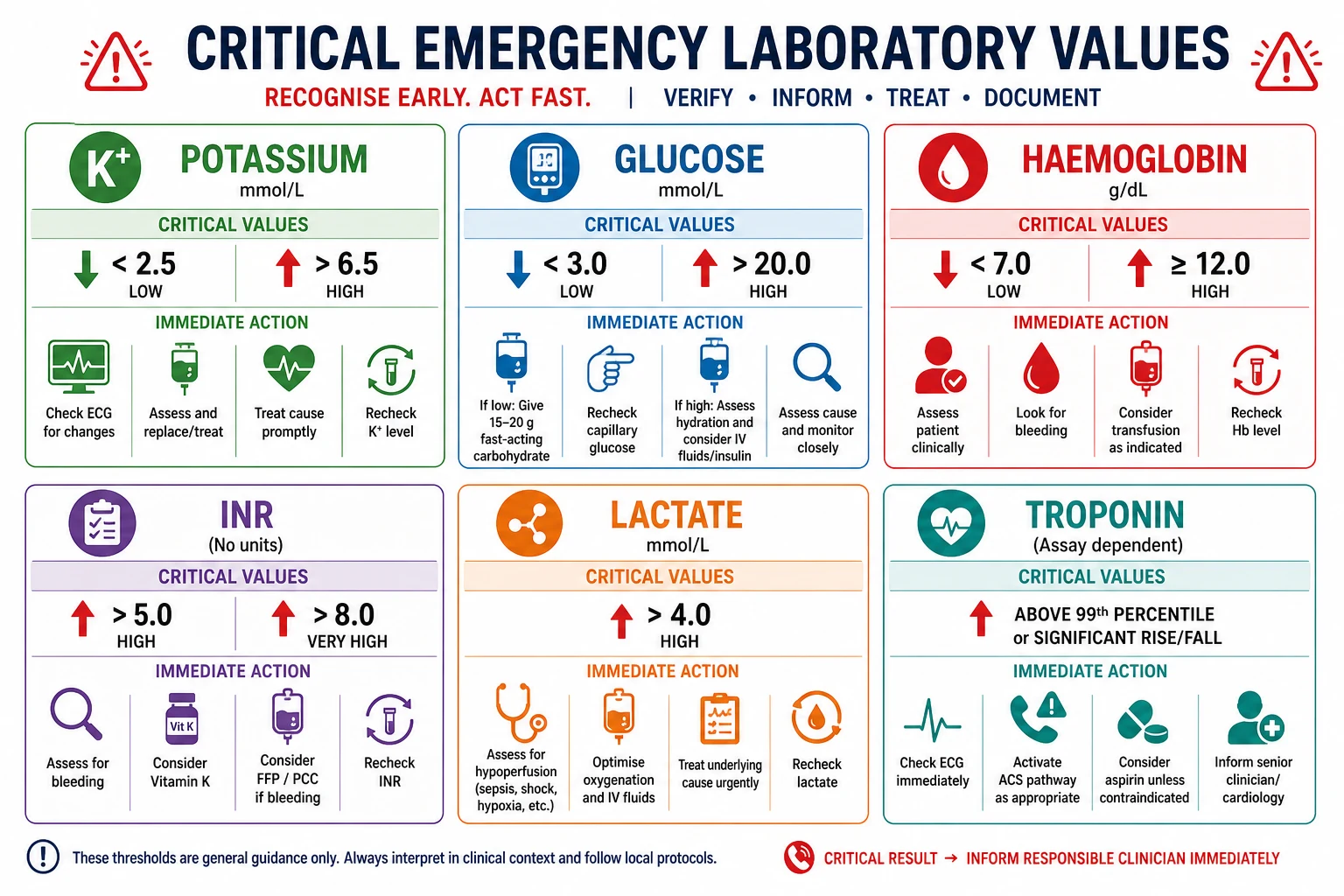
The cornerstone is the serum lithium level, drawn on arrival in any suspected case and repeated serially. In acute overdose the level is drawn at 2 to 4 hours and then every 2 to 4 hours, because the serum level may continue to rise for 12 to 24 hours as absorption completes from a sustained-release preparation or from delayed gastric emptying. A single early level underestimates the load in sustained-release ingestion, and a single "normal" level is not reassurance. In chronic toxicity the level on arrival is interpreted alongside the symptoms: a level between 1.5 and 2.5 mmol/L with significant neurotoxicity is severe chronic poisoning, not a borderline result.[1][2]
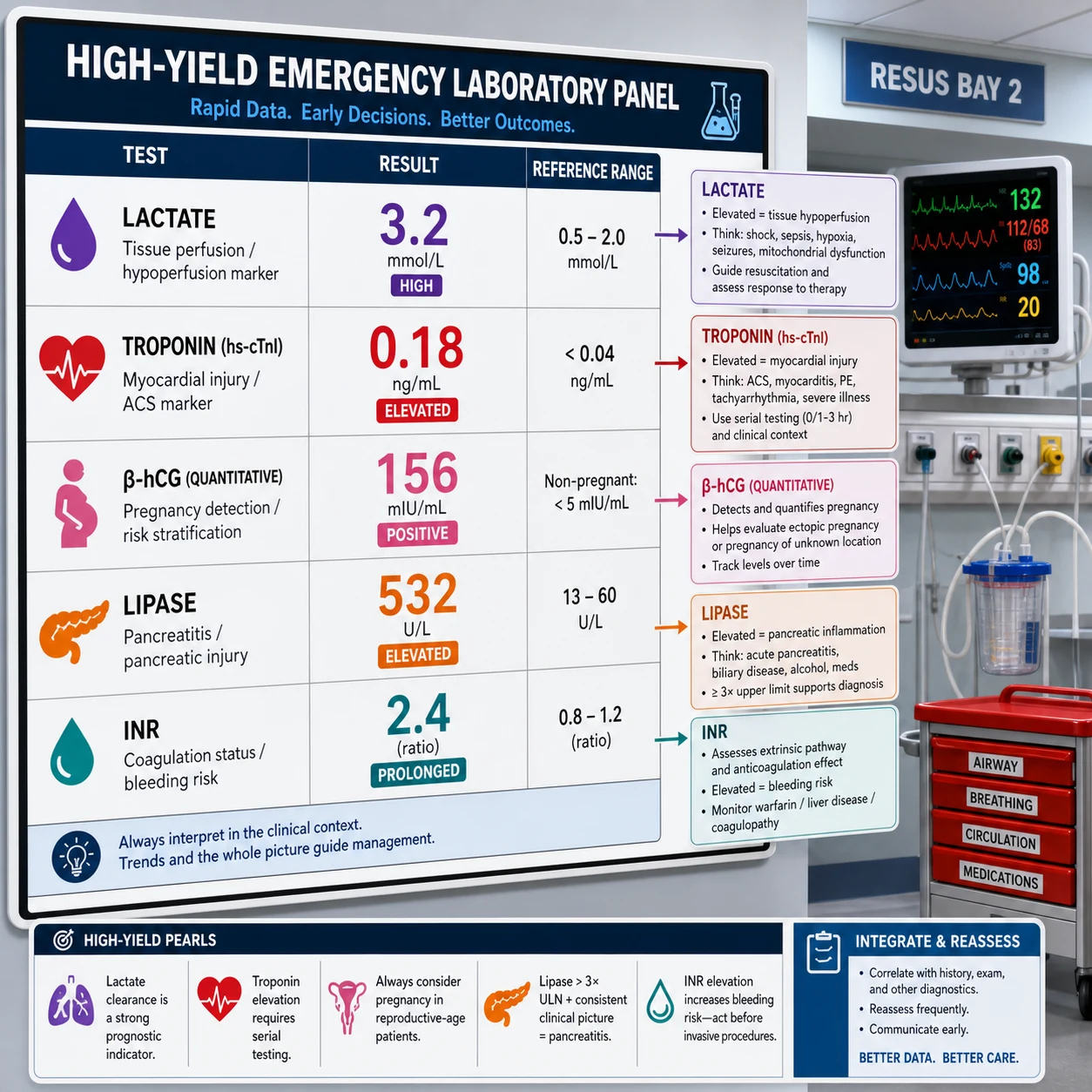
[1]The accompanying panel serves four purposes. Renal function and electrolytes identify the precipitant (acute kidney injury, hyponatraemia) and the consequences (hypernatraemia from nephrogenic diabetes insipidus); the creatinine and estimated glomerular filtration rate determine whether normal-saline diuresis is feasible and lower the dialysis threshold. A 12-lead ECG screens for the repolarisation abnormalities (T-wave flattening or inversion, QT prolongation, sinus node dysfunction) and for co-ingested cardiotoxins. Thyroid function, calcium, and glucose complete the metabolic picture; lithium causes hypothyroidism and hypercalcaemia with chronic use. A paired serum and urine osmolality confirms nephrogenic diabetes insipidus when polyuria is the presenting feature. Paracetamol and salicylate levels and a beta-human chorionic gonadotropin are sent on any deliberate self-harm ingestion to exclude a co-ingestant. A venous or arterial blood gas tracks the acid-base status and the lactate; a chest radiograph and a computed tomogram of the brain are reserved for the patient whose encephalopathy is disproportionate to the level or who fails to improve as expected.[2][3]
Investigation thresholds in lithium poisoning
Immediate management and resuscitation
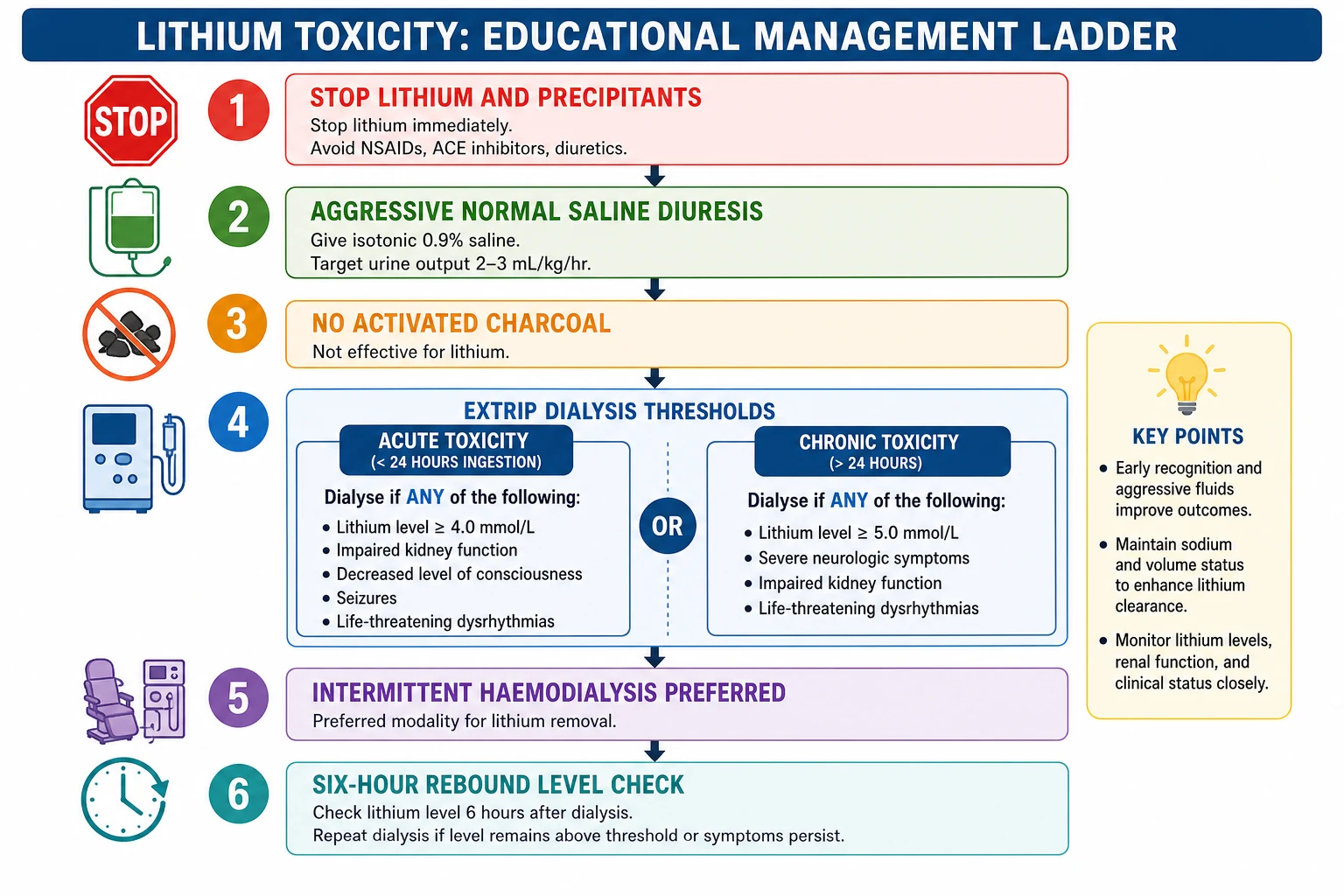
Resuscitation follows ABCDE with two overriding principles that distinguish lithium from every other overdose: there is no antidote, and elimination is enhanced by volume expansion rather than by alkalinisation or charcoal. [1]
[1]The airway is secured and ventilation established in any patient with reduced consciousness or seizures; hypoglycaemia is excluded at the bedside. Intravenous access is established and cardiac monitoring is continuous because QT prolongation and bradyarrhythmias can complicate severe toxicity. Aggressive intravenous normal saline is the cornerstone of elimination enhancement and is begun immediately in any symptomatic patient. The mechanism is the sodium link: lithium is reabsorbed with sodium in the proximal tubule, and volume expansion with isotonic saline suppresses proximal sodium (and lithium) reabsorption and increases lithium clearance several-fold. A 1 to 2 L bolus of normal saline (10 to 20 mL/kg) is given over the first 1 to 2 hours to restore intravascular volume, followed by an infusion titrated to a urine output of 1 to 2 mL per kg per hour and a normal serum sodium. Hypovolaemia is the commonest reason saline diuresis fails — restore the volume first.[2][3]
[1]Seizures are treated with a benzodiazepine — lorazepam 4 mg IV, midazolam 5 mg IV, or diazepam 10 mg IV — repeated to control. Phenytoin and fosphenytoin are ineffective in lithium-induced seizures and should not be relied upon; the definitive anticonvulsant is removal of the toxin by dialysis. Whole-bowel irrigation with polyethylene glycol 1 to 2 L per hour via nasogastric tube until the effluent clears is considered for a confirmed large ingestion of a sustained-release preparation within the first few hours, on the logic that a slow-absorbing preparation continues to deliver lithium for many hours and serial levels must be tracked until they fall. Haemodialysis is reserved for the severe case and is the most effective elimination method.[1][2]
The ED management pathway — acute lithium overdose
The acute overdose is managed as a time-critical resuscitation with an elimination strategy attached. Run the steps in parallel once the airway is safe. [1]
Acute lithium overdose — the first six hours
0 to 30 minutes — resuscitate and risk-stratify
Secure the airway and give the high-flow oxygen to the hypoxaemic; check the bedside glucose; establish the two large-bore cannulae and the continuous cardiac monitoring for the QT prolongation. Take the history — the preparation (immediate or sustained release), the dose, the time, the co-ingestants — and draw the first lithium level with the renal function, the electrolytes, the ECG, the paracetamol and salicylate levels, and the beta-hCG.
30 to 60 minutes — start the saline and stop the precipitants
Give the 0.9 per cent saline 1 to 2 L (10 to 20 mL per kg) over the first one to two hours to restore the intravascular volume, then titrate to a urine output of 1 to 2 mL per kg per hour. Hold the lithium, the NSAIDs, the ACE inhibitors, the ARBs and the diuretics. Do NOT give the activated charcoal (it does not adsorb lithium) and do NOT give a loop or thiazide diuretic.
1 to 6 hours — serial levels and the sustained-release trap
Recheck the lithium level every 2 to 4 hours; in the sustained-release ingestion the level keeps rising for 12 to 24 hours, so a single normal early level is never reassurance. Consider the whole-bowel irrigation with the polyethylene glycol 1 to 2 L per hour via the nasogastric tube for a confirmed large sustained-release ingestion within the first few hours. Treat the seizures with the lorazepam 4 mg IV (phenytoin is ineffective).
The dialysis decision — apply the EXTRIP criteria
Dialyse immediately if the level is above 5.0 mmol/L regardless of symptoms, above 4.0 mmol/L with features in the acute overdose, above 2.5 mmol/L with symptoms in the chronic pattern, or at any level in the end-stage kidney disease. The clinical indications (renal failure, decreased consciousness, seizures, life-threatening arrhythmia, deterioration despite the saline) override the number. Prefer the intermittent haemodialysis; add the continuous therapy after if rebound is anticipated.
Post-dialysis — expect the rebound
Recheck the lithium level at six hours after the session; lithium redistributes out of the cells and the serum level climbs. Re-dialyse if the level climbs above 1.0 mmol/L with the persistent symptoms. Admit the dialysed patient to the intensive care; admit the saline-managed patient to a monitored bed.
Safe for discharge
Observe until the patient is clinically well with a normal mental state, two consecutive falling serum levels, and a stable or normal renal function and sodium. Begin the psychiatric and the self-harm risk assessment once medically stable, and review the long-term lithium with the treating psychiatrist.
Definitive management — saline diuresis and haemodialysis
Definitive care is the maintenance of saline-driven elimination and the application of the EXTRIP haemodialysis criteria. Normal saline continues as the elimination vehicle: the infusion is titrated to a urine output of 1 to 2 mL per kg per hour and a normal serum sodium, with the serum lithium level checked every 2 to 4 hours until it is clearly falling and the patient is clinically improving. The candidate must monitor the serum sodium carefully because aggressive saline can cause hypernatraemia in the patient with nephrogenic diabetes insipidus who cannot concentrate the urine, and potassium because saline diuresis promotes kaliuresis. Hypokalaemia and hyponatraemia must be corrected because both impair lithium clearance and prolong toxicity.[3]
[1]Three drug classes are explicitly avoided in suspected lithium toxicity because each worsens the poisoning. Loop and thiazide diuretics increase proximal lithium reabsorption by contracting volume and delivering more sodium to the proximal nephron; non-steroidal anti-inflammatory drugs (including COX-2 inhibitors) reduce renal prostaglandin and lithium clearance; and angiotensin-converting enzyme inhibitors and angiotensin receptor blockers reduce glomerular filtration in the lithium-treated patient. Amiloride, which blocks the epithelial sodium channel through which lithium enters the principal cell, has a role in the long-term management of lithium-induced nephrogenic diabetes insipidus but no proven role in acute toxicity.[2][4]
Haemodialysis is the most effective elimination method and clears lithium substantially faster than saline diuresis, because lithium is small, water-soluble and not protein-bound. The Decker 2015 EXTRIP Workgroup systematic review is the consensus reference for dialysis in lithium poisoning, and its recommendations are followed across ANZ, the UK, North America and Europe.[1]
EXTRIP indications for haemodialysis in lithium poisoning
The clinical indications — renal failure, impaired consciousness, seizures, life-threatening arrhythmia, and clinical deterioration despite maximal saline therapy — override the level in the decision to dialyse. Intermittent haemodialysis is preferred over continuous renal replacement therapy because it clears lithium faster, though continuous therapy may be added after a session to prevent rebound. Rebound after dialysis is the rule rather than the exception, because lithium redistributes out of the intracellular compartment as the serum level falls; the level is rechecked at six hours after the session and a second session is undertaken if the level climbs above 1.0 mmol/L with persistent symptoms. The clinical picture and serial levels together guide the duration of treatment.[1]
The haemodialysis decision — applying EXTRIP at the bedside
The decision to dialyse is made on the serum level and the clinical picture together, never the level alone. Run the logic in this order. [1]
The dialysis decision and the rebound check
Step 1 — is this an EXTRIP level absolute?
A lithium level above 5.0 mmol/L warrants dialysis regardless of symptoms, in acute or chronic toxicity, because the risk of severe neurotoxicity is high. A level above 4.0 mmol/L with significant features (decreased consciousness, seizures, life-threatening arrhythmia) in acute toxicity, and above 2.5 mmol/L with symptoms in chronic toxicity, also meet the criteria. End-stage kidney disease meets the criteria at any level.
Step 2 — are there clinical overrides?
Renal failure, impaired consciousness, seizures, a life-threatening arrhythmia, or clinical deterioration despite maximal saline override the level and mandate dialysis. These clinical features are more reliable than the number in chronic toxicity, where the tissue load exceeds the serum.
Step 3 — choose the modality
Prefer the intermittent haemodialysis for the fastest clearance. Use the continuous renal replacement therapy after an intermittent session to blunt the rebound, or as the sole modality in the haemodynamically unstable patient.
Step 4 — anticipate and check for rebound
Lithium redistributes out of the intracellular compartment as the serum falls, so the level climbs again after the session. Recheck the lithium level at six hours; re-dialyse if it climbs above 1.0 mmol/L with persistent symptoms. Two consecutive falling levels confirm that redistribution is complete before discharge.
Decker et al — the EXTRIP Workgroup recommendations for extracorporeal treatment of lithium poisoning (CJASN 2015)
Clinical Journal of the American Society of Nephrology
PMID 25583292
Key finding
A systematic review and GRADE-based consensus from the international EXTRIP Workgroup, establishing the dialysis thresholds now used worldwide: dialyse at a lithium level above 5.0 mmol/L regardless of symptoms (grade 1D), above 4.0 mmol/L with significant features in acute toxicity, above 2.5 mmol/L with symptoms in chronic toxicity, and at any level in end-stage kidney disease. Intermittent haemodialysis is the recommended first-line modality, with a recommendation to recheck the level at six hours and re-dialyse for rebound. The review graded lithium as dialysable and confirmed that the clinical picture overrides the serum number in chronic poisoning.
Practice change
This is the consensus reference adopted across ANZ, the UK, North America and Europe, and the document to cite in the viva for any dialysis decision in lithium toxicity.
Subtypes and scenarios
Sustained-release ingestion is the acute overdose most likely to be underestimated. The slow-absorbing preparation produces a serum level that is initially low and then climbs over many hours; serial levels (every 2 to 4 hours for 12 to 24 hours) are mandatory, and whole-bowel irrigation is considered for confirmed large ingestion because ongoing absorption defeats saline diuresis. The candidate who discharges a sustained-release ingestion on a single normal early level has missed the diagnosis. [1]
Acute-on-chronic poisoning combines the worst of both patterns: a patient on long-term lithium takes an additional acute overdose, and the already-loaded tissues receive a rapid serum rise. Symptoms appear early and severely, the serum level is high, and the dialysis threshold is that of the chronic pattern (above 2.5 mmol/L with symptoms) because tissue levels are already elevated. [1]
Lithium-induced nephrogenic diabetes insipidus may be the presenting feature of chronic toxicity, with polyuria, polydipsia, and dehydration driving a vicious cycle of worsening toxicity. The diagnosis is confirmed by a dilute urine osmolality (under 300 mOsm per kg) despite a serum osmolality that is high-normal or raised, and by the exclusion of hyperglycaemia, hypercalcaemia and central diabetes insipidus. Aggressive normal saline, correction of hypernatraemia at a controlled rate, and dialysis for the toxicity complete the management.[4]
The syndrome of irreversible lithium-effectuated neurotoxicity (SILENT) is the rare and feared complication: persistent cerebellar and cognitive dysfunction persisting weeks to months after the serum lithium has normalised, following an episode of severe toxicity. It is a diagnosis of exclusion in the patient who fails to recover. There is no specific treatment; prevention by early and aggressive management of severe toxicity is the only defence.[2]
Pregnancy deserves a note. Lithium crosses the placenta and is associated with Ebstein anomaly (tricuspid valve malformation) in first-trimester exposure, though the absolute risk is small. Acute lithium toxicity in pregnancy is managed identically — normal saline and haemodialysis are not contraindicated — with obstetric and toxicology input, and the threshold to treat is lower because the fetal level may exceed the maternal. [1]
Complications and pitfalls
The complications of lithium poisoning are the consequences of the neurotoxicity, the renal injury and the treatment itself. Seizures and coma mark severe CNS toxicity and themselves generate acidosis and aspiration. Persistent neurotoxicity (SILENT) is the feared long-term complication. Hypernatraemia develops from nephrogenic diabetes insipidus compounded by saline diuresis, and acute kidney injury arises from the dehydration and the chronic interstitial nephropathy of long-term lithium use. Bradyarrhythmias and torsades de pointes from QT prolongation are described but uncommon.[2]
The pitfalls are well described and the candidate must name them. The first is missing chronic toxicity in the elderly confused patient with a tremor and ataxia — the lithium level is part of the unexplained-encephalopathy work-up in any patient on the drug. The second is false reassurance from a serum level that the acute-toxicity table calls moderate in a chronic patient with established tissue toxicity; the decision to dialyse is made on symptoms plus a level above 2.5 mmol/L. The third is failing to identify and reverse the precipitant — the NSAID, the thiazide, the dehydration — so that toxicity recurs after dialysis. The fourth is giving activated charcoal or alkalinisation, neither of which works for lithium, and delaying the saline and the dialysis. The fifth is using loop or thiazide diuretics to manage the polyuria or the fluid load, which worsens proximal lithium reabsorption. The sixth is relying on phenytoin for lithium seizures when a benzodiazepine and dialysis are the correct combination. The seventh is failing to check for rebound after haemodialysis and discharging the patient before two consecutive falling levels confirm that redistribution is complete.[1][2][3]
Prognosis and disposition
The prognosis depends on the pattern, the severity and the timing of treatment. Acute overdose treated early with saline and dialysis (where indicated) has a low mortality; chronic toxicity carries a higher mortality because tissue loading is established and the patient presents late. Recovery from acute toxicity is expected as the level falls; recovery from chronic toxicity is slower because redistribution from the intracellular compartment takes days, and a small minority develop SILENT. The patient is observed until clinically well with a normal mental state, two consecutive falling serum levels, and a normal or stabilised renal function and sodium. The patient managed with saline alone is admitted to a monitored bed; the patient meeting dialysis criteria is admitted to intensive care. A psychiatric and self-harm risk assessment is begun in any deliberate ingestion once the patient is medically stable. The lithium is held during the acute illness and the long-term psychiatric management — dose reduction, an alternative mood stabiliser, or a resumed dose at lower target — is decided with the treating psychiatrist after recovery.[1][2]
Special populations
The elderly are the highest-risk group: renal function declines with age, polypharmacy raises the likelihood of an interacting drug, and the atypical presentation of confusion with a tremor is easily attributed to delirium or dementia. The threshold to dialyse is lower and the precipitant search is mandatory. The patient with pre-existing renal impairment meets dialysis criteria earlier and may require dialysis to clear the drug at any serum level if the kidneys cannot. Pregnancy lowers the threshold to treat because fetal lithium levels may exceed maternal and Ebstein anomaly is a first-trimester risk; saline and haemodialysis are not contraindicated. Children are dosed by weight and develop toxicity at smaller absolute ingestions; the management is identical. The agitated or seizing patient needs early benzodiazepine (lorazepam 4 mg IV, or midazolam 5 mg IV) for seizure control and to reduce metabolic demand, with the dialysis under way to remove the toxin.[2][3]
Evidence and regional guidelines
The evidence base and the regional practice are well aligned across the Anglosphere. The Decker 2015 EXTRIP Workgroup systematic review and recommendations (Clinical Journal of the American Society of Nephrology) is the consensus reference for haemodialysis in lithium poisoning, with the level and clinical indications cited above and adopted across ANZ, the UK, North America and Europe; it grades the strongest indications (a level above 5.0 mmol/L, severe symptoms with a level above 2.5 mmol/L) as 1D and recommends intermittent haemodialysis with monitoring for rebound.[1] The Baird-Gunning 2017 review (Journal of Intensive Care Medicine) is the current emergency-medicine and intensive-care overview covering mechanism, presentation, and the integrated management pathway, including the avoidance of diuretics and NSAIDs and the role of whole-bowel irrigation for sustained-release ingestion.[2] The Timmer and Sands 1999 review (Journal of the American Society of Nephrology) established the renal-handling framework — the proximal-tubule reabsorption shared with sodium — that underpins saline-driven elimination and remains the clearest statement of the pharmacology.[3] The Poulsen 2017 work (JCI Insight) defined the adenylyl cyclase 6 mechanism of lithium-induced nephrogenic diabetes insipidus, providing the molecular basis for the concentrating defect.[4]
Landmark trials and reviews
McKnight et al — the lithium toxicity profile, a systematic review and meta-analysis (Lancet 2012)
Lancet
PMID 22265699
Key finding
A systematic review and meta-analysis of lithium safety that quantified the toxicity profile and the end-organ effects across hundreds of studies. Lithium reduced renal concentrating ability (the nephrogenic diabetes insipidus, with a mean urine osmolality fall and polyuria in roughly a quarter of long-term users), caused a clinically significant fall in the parathyroid and thyroid function (the hypercalcaemia and the hypothyroidism), and produced a small but real weight gain. The review established that the toxicity is dose-related and renal-handling-dependent, and that the chronic end-organ effects are the principal burden of long-term therapy.
Practice change
Codified the renal, thyroid, parathyroid and weight effects as the expected long-term toxicity profile of lithium, and underpinned the monitoring and the precipitant-avoidance guidance.
Diserens et al — lithium-induced ECG modifications from acute coronary syndrome mimic to Brugada syndrome (BMJ Case Reports 2021)
BMJ Case Reports
PMID 34108154
Key finding
A case report describing a patient on long-term lithium who developed Brugada-pattern ECG changes (the coved ST elevation in V1 to V3 with a right bundle branch block morphology) in the setting of lithium toxicity, alongside the more familiar T-wave flattening and QT prolongation. The pattern was a drug-induced Brugada phenocopy attributable to lithium's effect on the cardiac sodium current, and it resolved as the lithium level fell.
Practice change
Adds the Brugada pattern to the recognised cardiac manifestations of lithium toxicity and warns against the misdiagnosis of an acute coronary syndrome in the lithium-treated patient with chest pain and anterior ST changes.
ANZ practice note. The Australasian approach follows the integrated pathway: a serum lithium level on any symptomatic patient on the drug, with serial levels (every 2 to 4 hours) for acute ingestion and for sustained-release preparations; aggressive normal saline 1 to 2 L bolus then infusion to a urine output of 1 to 2 mL per kg per hour; explicit avoidance of activated charcoal, loop and thiazide diuretics, NSAIDs and ACE inhibitors; whole-bowel irrigation for confirmed large sustained-release ingestion; and haemodialysis per the EXTRIP criteria (level above 5.0 mmol/L regardless of symptoms, above 4.0 mmol/L with features in acute, above 2.5 mmol/L with symptoms in chronic, end-stage kidney disease at any level). Intermittent haemodialysis is preferred, with a six-hour post-dialysis level to detect rebound. Discussion with the regional toxicology service (Poisons Information Centre 13 11 26) and nephrology is the norm for any case meeting dialysis criteria. [1]
SAQs — exam practice
SAQ — Chronic lithium toxicity in an elderly woman started on ibuprofen
10 minutes · 10 marks
A 68-year-old woman with bipolar disorder on long-term lithium carbonate 600 mg twice daily is brought to the emergency department by her daughter after three days of progressive confusion, slurred speech, an unsteady gait and a coarse tremor of both hands. She began ibuprofen 400 mg three times daily for osteoarthritis one week ago and has had diarrhoea for two days. On arrival she is drowsy (GCS 13), afebrile, BP 108/68 (sitting 92/56), HR 96, RR 18, SpO2 96 per cent on room air. She has a coarse postural and intention tremor, gait ataxia requiring one-person support, dysarthria, generalised hyperreflexia and bilateral fasciculations. The serum lithium level is 2.9 mmol/L, creatinine 168 micromol/L (baseline 95), urea 11.4 mmol/L, sodium 146 mmol/L, potassium 4.1 mmol/L, chloride 102, bicarbonate 24, glucose 5.6 mmol/L, paired urine osmolality 220 mOsm/kg with a urine output over the last 12 hours of 3.2 L. The 12-lead ECG shows T-wave inversion in V3 to V6 and QTc 484 ms. Bedside ultrasound shows a normal-sized, non-obstructed kidney with no hydronephrosis.
SAQ — Acute sustained-release lithium overdose and the EXTRIP dialysis decision
10 minutes · 10 marks
A 32-year-old woman is brought to the emergency department 90 minutes after a deliberate overdose of an unknown quantity of sustained-release lithium carbonate 450 mg tablets; an empty blister pack of 30 tablets is found at the scene. She is alert (GCS 15), anxious and nauseated, with vomiting and diarrhoea, a fine postural tremor, no focal neurology, and no co-ingestant history aside from a small amount of alcohol. Observations: BP 118/72, HR 104, RR 18, SpO2 98 per cent on room air, T 36.8 degrees C, bedside glucose 5.8 mmol/L. The initial serum lithium level at 2 hours post-ingestion is 2.1 mmol/L, creatinine 78 micromol/L, sodium 140 mmol/L, potassium 4.0 mmol/L, urea 4.6 mmol/L. The paracetamol level is undetectable, the salicylate level is below the detection limit, the ECG shows normal sinus rhythm with QTc 412 ms, and a beta-human chorionic gonadotropin is negative. Six hours after ingestion she has vomited three more times, the tremor has become coarse, and a repeat lithium level is 3.6 mmol/L with the creatinine unchanged.
Exam pearls
- The mechanism in one breath: lithium is a monovalent cation handled by the kidney like sodium — freely filtered, substantially reabsorbed in the proximal tubule — so anything that contracts volume or lowers sodium (dehydration, hyponatraemia, diuretics, NSAIDs, ACE inhibitors) retains lithium and precipitates toxicity, and volume expansion with normal saline shuts off proximal reabsorption and enhances elimination.
- Acute versus chronic: acute overdose gives a high serum level with initially mild GI and tremor symptoms, with neurotoxicity emerging over hours as lithium distributes; chronic toxicity gives severe tissue neurotoxicity at a modest serum level. The threshold to dialyse is lower in chronic (above 2.5 mmol/L with symptoms) than in acute (above 4.0 mmol/L with features).
- There is no antidote. Activated charcoal does not adsorb lithium. The treatment is normal saline for enhanced elimination and haemodialysis for the severe case. Avoid loop and thiazide diuretics, NSAIDs and ACE inhibitors.
- The ECG shows T-wave flattening or inversion and QT prolongation; bradyarrhythmias and torsades are described. Send an ECG on every lithium-toxic patient.
- Rebound after haemodialysis is the rule — recheck the level at six hours and re-dialyse if it climbs above 1.0 mmol/L with symptoms.
- Lithium seizures are refractory to phenytoin — use a benzodiazepine (lorazepam 4 mg IV) and dialyse.
- The differential is serotonin syndrome (clonus, hyperreflexia, on a serotonergic agent) and neuroleptic malignant syndrome (lead-pipe rigidity, hyperthermia, raised creatine kinase) — both distinguished from lithium toxicity by the lithium level and the drug history.
- The pharmacology in one breath: the narrow therapeutic range is 0.6 to 1.2 mmol/L, the volume of distribution approximates total body water (0.6 to 0.9 L per kg), the half-life is 18 to 24 hours and lengthens in renal impairment — so lithium is cleared entirely by the kidney, is not metabolised, and is not protein-bound, which is why it is dialysable and why charcoal does not work.
- The Brugada pattern joins T-wave flattening, QT prolongation and sinus node dysfunction on the lithium ECG — a coved ST elevation in V1 to V3 is a drug-induced Brugada phenocopy, not an acute coronary syndrome, and resolves as the lithium clears.
- The nephrogenic diabetes insipidus is mechanistic: lithium enters the principal cell through the epithelial sodium channel and downregulates the adenylyl cyclase 6 / cyclic AMP / aquaporin-2 axis, making the collecting duct impermeable to water — the dilute urine despite the hypernatraemia is the bedside signature, and it drives the dehydration that worsens the toxicity.
- Reverse the precipitant every time — the NSAID, the thiazide, the ACE inhibitor, the dehydration, the renal decline — or the toxicity recurs after the dialysis as the lithium redistributes back.
- SILENT (the syndrome of irreversible lithium-effectuated neurotoxicity) is the persistent cerebellar and cognitive dysfunction that survives weeks after the level normalises — no treatment; the only defence is the early aggressive management of the severe case. [1]
Model answer — A 68-year-old woman on long-term lithium for bipolar disorder presents with a 3-day history of a coarse tremor, unsteady gait, slurred speech, and confusion. She started ibuprofen for osteoarthritis a week ago and has had diarrhoea for 2 days. Lithium level 2.9 mmol/L, creatinine 168 micromol/L, sodium 146 mmol/L, urine osmolality 220 mOsm/kg. ECG shows T-wave inversion and QTc 480 ms. Outline the immediate management.
Immediate management. The diagnosis is chronic lithium toxicity (acute-on-chronic) with established tissue neurotoxicity, precipitated by NSAID use (ibuprofen reduces lithium clearance) and dehydration from diarrhoea. The serum level of 2.9 mmol/L with significant neurotoxicity (coarse tremor, ataxia, dysarthria, confusion) and renal impairment meets EXTRIP dialysis criteria for chronic toxicity. The raised sodium with inappropriately dilute urine confirms lithium-induced nephrogenic diabetes insipidus contributing to the dehydration that worsens the toxicity. [1]
Resuscitate in parallel. Airway and breathing — high-flow oxygen, continuous cardiac monitoring (the QTc of 480 ms mandates monitoring for torsades), waveform capnography and IV access. Circulation — aggressive normal saline: 1 L bolus over the first hour, then an infusion titrated to a urine output of 1 to 2 mL per kg per hour and a normalisation of the sodium; the creatinine and the level guide the rate. Stop all precipitants — hold the lithium and the ibuprofen, and review the medication list for ACE inhibitors and diuretics. Do not give activated charcoal (it does not adsorb lithium) and do not give a loop or thiazide diuretic or any NSAID. [1]
The patient meets dialysis criteria: chronic lithium toxicity with a level above 2.5 mmol/L and significant neurotoxicity plus renal impairment. Contact nephrology and intensive care for intermittent haemodialysis, which clears lithium faster than continuous therapy. Expect rebound — recheck the lithium level at six hours after the session and re-dialyse if it climbs above 1.0 mmol/L with persistent symptoms. Seizures, should they occur, are treated with lorazepam 4 mg IV and the dialysis (phenytoin is ineffective). Serial lithium levels every 2 to 4 hours, daily electrolytes and renal function, and a psychiatric review with the treating team once she is medically stable. The long-term lithium dose, the NSAID use, and the renal function are addressed with her psychiatrist after recovery. [1]
Red flags
[1]References
- [1]Decker BS, Goldfarb DS, Dargan PI, et al.; EXTRIP Workgroup. Extracorporeal Treatment for Lithium Poisoning: Systematic Review and Recommendations from the EXTRIP Workgroup Clin J Am Soc Nephrol, 2015.PMID 25583292
- [2]Baird-Gunning J, Lea-Henry T, Hoegberg LCG, Gosselin S, Roberts DM. Lithium Poisoning J Intensive Care Med, 2017.PMID 27516079
- [3]Timmer RT, Sands JM. Lithium intoxication J Am Soc Nephrol, 1999.PMID 10073618
- [4]Poulsen SB, Chen J, Ye J, et al. Role of adenylyl cyclase 6 in the development of lithium-induced nephrogenic diabetes insipidus JCI Insight, 2017.PMID 28405619
- [5]McKnight RF, Adida M, Budge K, Stockton S, Goodwin GM, Geddes JR. Lithium toxicity profile: a systematic review and meta-analysis Lancet, 2012.PMID 22265699
- [6]Diserens L, Porretta AP, Trana C, Meier D. Lithium-induced ECG modifications: navigating from acute coronary syndrome to Brugada syndrome BMJ Case Rep, 2021.PMID 34108154